USMNT Goalkeeper Eras

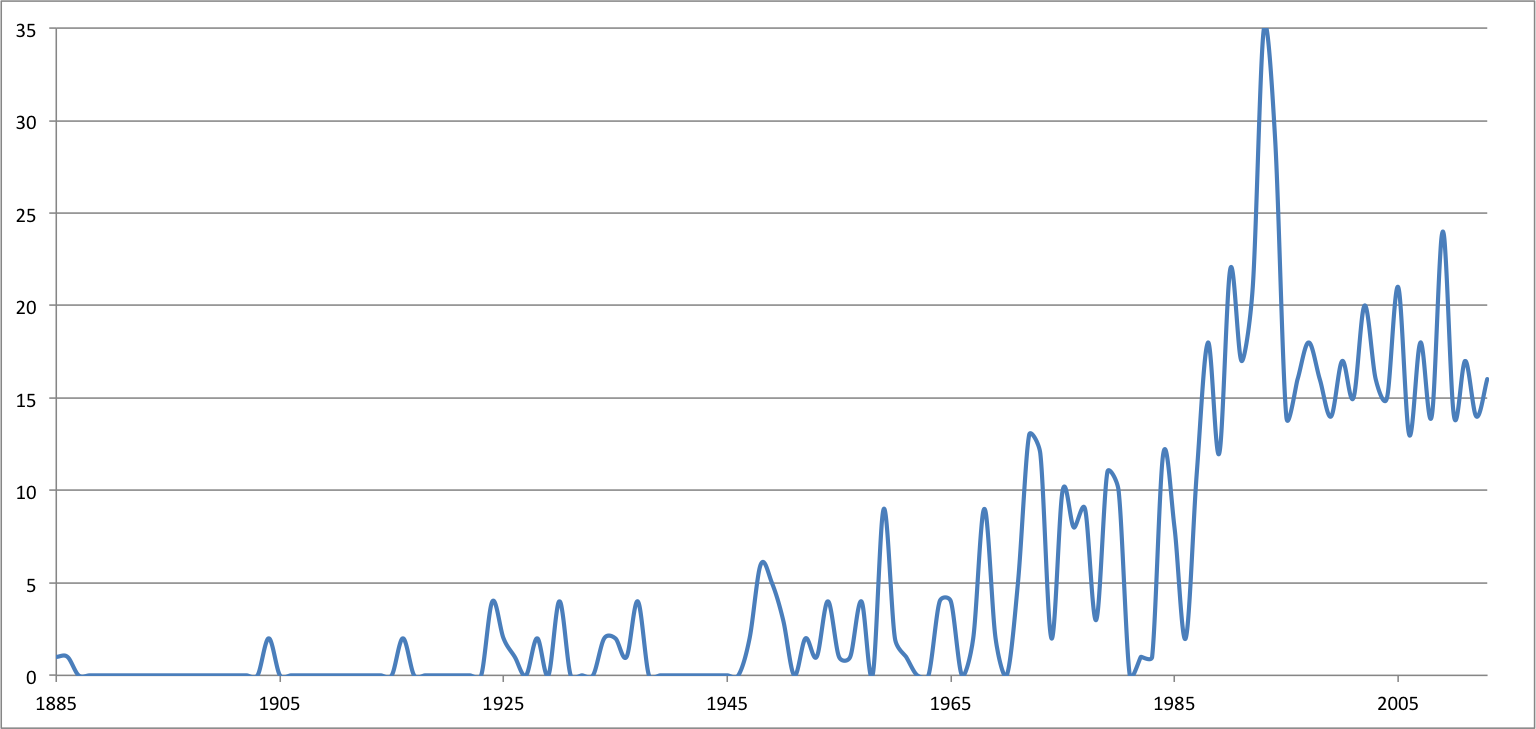
Breaking down the “eras” of goalkeepers with the USMNT typically gets boiled down to World Cup starters but the in’s and out’s of how active goalkeepers were is a bit messier. For starters, the number of caps and available games during one’s career has greatly varied since day one. For some reference, let's revisit the graph from "What Does 100 Caps Mean?"

When looking at the annual games played for the USMNT, it’s easy to see how erratic things were for such a long time. But even the graph can be misleading as the US played a fair number of universities and clubs throughout the late 20th century, although zero official matches in 1981 is unbelievable to see in today’s context. So a goalkeeper’s ability to establish themselves on the national team really wavered over the years. For some, the route in was more accessible while others had to take what they were given.

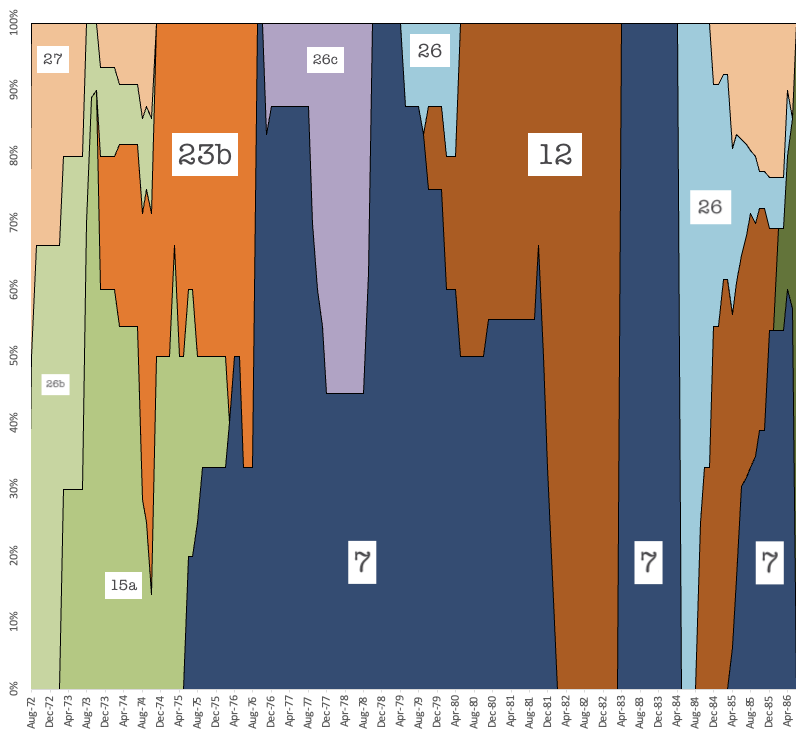
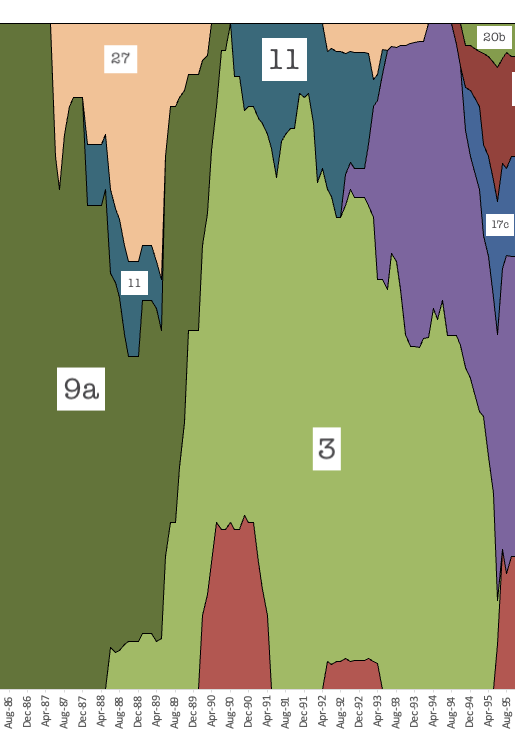
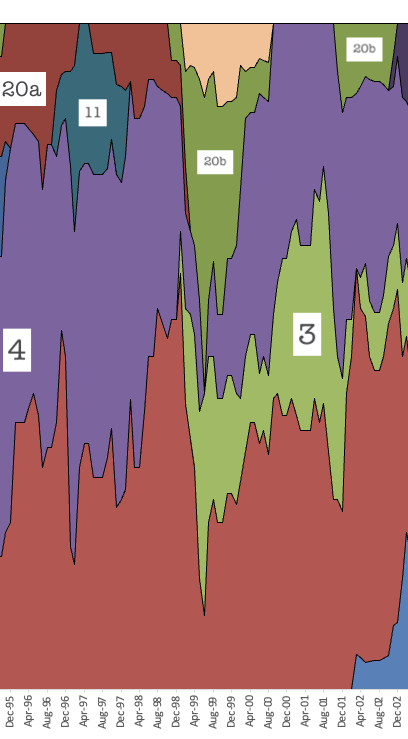
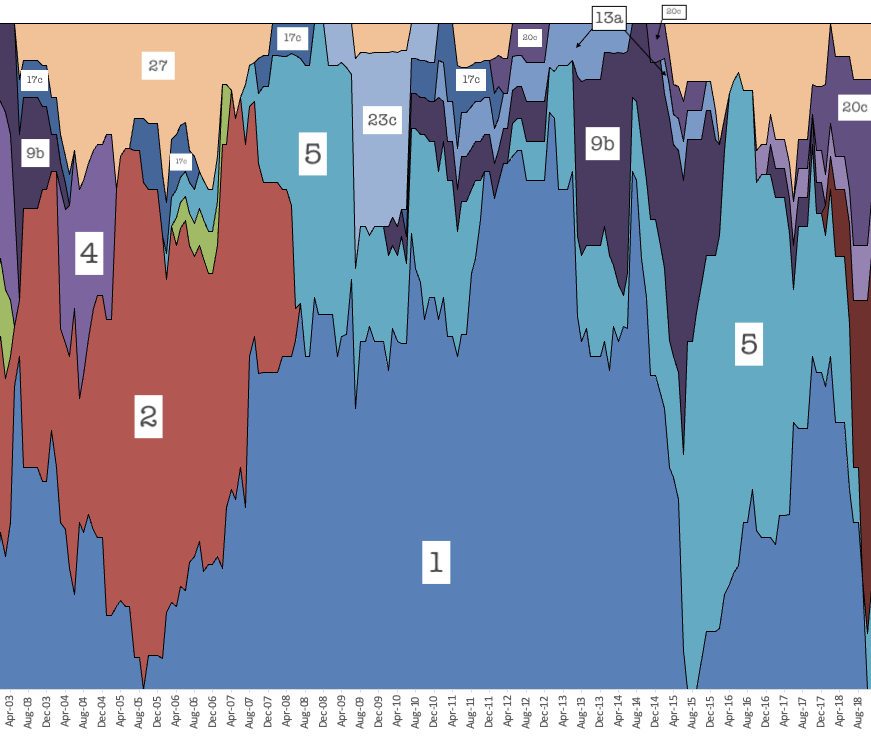
Understanding there are significant limitations, the total amount of caps collected were broken into yearly percentages to showcase the different rise and falls of goalkeepers with the national team. Each goalkeeper is charted monthly on how many games they played over the previous 12 months. For example, December 2024 shows that Matt Turner played in 80% of the games over the 12 months leading up to the end of the year (including December). Only goalkeepers with over five caps were included to simply the charts.

The main chart we’ll be using today is from 1972 through 2025. We’ll break down each section to take a closer look but hopefully the chaos of the graph is already a good sign that it’s very difficult to break the timeline into eras, although there are some standout sections.

January 1924 - Summer 1972

Not to completely over look our early pioneers but, as stated earlier, this time featured very few games. Even after the US had the match of their lives in beating England 1-0 at the 1950 World Cup, the federation did very little to follow up on the success, letting the national team decay and not qualify for another World Cup for 40 years. This graph also doesn’t show Patrick Hughes and George Tintle, both of who are absent from the graph. Hughes was technically the first to represent a US national team as a goalkeeper, although the USSF doesn't count their official start until 1913.

Jimmy Douglas recorded the first World Cup shutout in 1930 and the heroic Frank Borghi was featured with the US before and after his World Cup showing. Victor Gerley and Gary DeLong both earned caps, but again, the time wasn’t heavily organized, and there were long absences from the national team playing any games whatsoever.

Fall 1972 - Summer 1986

7. Arnie Mausser (35 caps)
12. Winston DuBose (14 caps)
15a. Mike Ivanow (10 caps)
23b. Bob Rigby (7 caps)
26. David Brcic (6 caps)
26b. Mike Winter (6 caps)
26c. Alan Mayer (6 caps)
27. Other

The NASL era features many forgotten stalwarts. Tampa Bay Rowdy Winston DuBose had a six year tenure with the national team, although it would have likely been longer if not for Arnie Mausser. Mausser, who skipped college and eventually signed with the NASL, earned 35 caps, which still ranks 7th all-time for American goalkeepers. Mike Ivanow (San Jose Earthquakes), Bob Rigby (Philadelphia Atoms), David Brcic (New York Cosmos), Mike Winter (St. Louis Stars) and Alan Mayer (San Diego Jaws / Las Vegas Quicksilvers) all competed for time with the national team while plying their craft with their NASL teams throughout the rest of the year.

Summer 1986 - Summer 1995

2. Kasey Keller (102 caps)
3. Tony Meola (100 caps)
4. Brad Friedel (82 caps)
9a. David Vanole (22 caps)
11. Mark Dodd (15 caps)
17c. Marcus Hahnemann (9 caps)
20a. Juergen Sommer (10 caps)
27. Other

In the lead up to Tony Meloa’s run, where he notched 90% of games played in 12 months leading up to January 1992, it was David Vanole who championed the net. Vanole was the last goalkeeper to hit the 100% mark, which again speaks to the lack of caps during the 1980s. Mark Dodd would feature in his first of three stints with the national team, as he will return in later sections (see below). Kasey Keller (small red sections at the bottom) and Brad Friedel (purple) would make their debuts with the national team at this time as well. Meola would start for the US in the 1990 and 1994 World Cup but fairly soon after the competition with Friedel and Keller would heat up. Marcus Hahnemann earned nine caps but they’re separated by 18 years.

Summer 1995 - End of 2002

1. Tim Howard (121 caps)
2. Kasey Keller (102 caps)
3. Tony Meola (100 caps)
4. Brad Friedel (82 caps)
9b. Nick Rimando (22 caps)
11. Mark Dodd (15 caps)
20a. Juergen Sommer (10 caps)
17c. Marcus Hahnemann (9 caps)
20b. Zach Thornton (8 caps)
27. Other

After two relatively successful World Cups, Tony Meola stepped away from the national team and Steve Sampson would pivot to giving chances to over half a dozen promising goalkeepers. Keller and Friedel would eventually separate themselves from the group and split time at the 1998 World Cup, 1999 Confederations Cup, and qualification for the 2002 World Cup, although Friedel would eventually win the starting spot out for the 2002 World Cup. Meola would eventually re-enter the picture for some friendlies and World Cup qualification during the 2002 cycle, his last and 100th cap would come in a 2006 friendly against Jamaica while a young upstart named Tim Howard would enter the scene in 2002.

This period would feature as the start of the Golden Age of Goalkeeping for the United States, which was heavily bolstered by the highly competitive nature for the number spot and each goalkeeper’s individual pursuit to climb the ladder overseas. The largest share any goalkeeper would gain during this period was 63% due to the competitive nature of the position.

Early 2003 - Fall 2018

1. Tim Howard (121 caps)
2. Kasey Keller (102 caps)
3. Tony Meola (100 caps)
4. Brad Friedel (82 caps)
5. Brad Guzan (64 caps)
8. Zack Steffen (30 caps)
9b. Nick Rimando (22 caps)
13a. Sean Johnson (13 caps)
15b. Ethan Horvath (10 caps)
17c. Marcus Hahnemann (9 caps)
20b. Zach Thornton (8 caps)
20c. Bill Hamid (8 caps)
23c. Troy Perkins (7 caps)
27. Other

Looking to build off the 2002 success, the United States would continue to feature a competitive battle for the number one spot. Brad Friedel would remove himself from the picture in 2005, voluntarily stepping down to focus more on his club career, while Kasey Keller locked down the 2006 World Cup spot, although the US would once again fail to leave the group stage. As the Golden Age came to a close with Howard’s retirement, the US would struggle to find not only one, but any goalkeeper to compete on the level their predecessors did for the past 20 years.

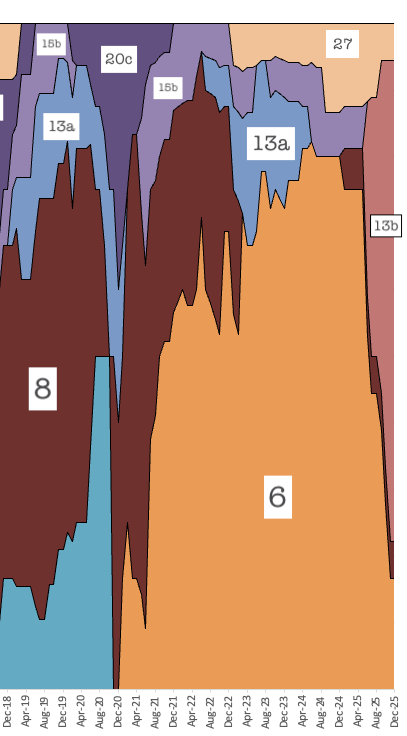
Fall 2018 - End of 2025

5. Brad Guzan (64 caps)
6. Matt Turner (52 caps)
8. Zack Steffen (30 caps)
9b. Nick Rimando (22 caps)
13a. Sean Johnson (13 caps)
13b. Matt Freese (13 caps)
15b. Ethan Horvath (10 caps)
20c. Bill Hamid (8 caps)
27. Other

The post-Howard era quickly revealed the lack of available goalkeepers. Although Guzan (teal) was once a peer in the English Premier League, he wasn’t that much younger than Howard and the baton was once again passed on. Steffen and Turner’s rise to gaining entry to the EPL and loss of footing within the league are showcased on the graph, eventually allowing Matt Freese to try his hand at the position.

::::::::::::::::::::::::::::::::::::::::::::::::::::::::::::::::::::::::::::::::::::::::::

So what are all the goalkeeper eras? It’s hard to concisely say X goalkeeper had such-and-such time as the number one. Even Howard, who had a long career with the national team, wasn’t always the most played goalkeeper, whether due to tough competition from Kasey Keller or stepping away for a one-year hiatus with the national team after the 2014 World Cup. Although there are some clear standouts (Mausser, Vanole, Meola), after that the timeline gets a little blurry until Howard gets the bulk of the time in net.

NCAA Women's Goalkeeper Rankings (Fall 2025)

Seniors

1. Pauline Nelles (Arizona State, Germany)
2. Jordan Nytes (Colorado)
3. Keara Fitzgerald (Washington State) #
4. Jordan Brown (Georgia) #
5. Teagan Wy (California)
6. Olivia Pratapas (NC State)
7. Taylor Rath (Utah State)
8. Erin Jones (Old Dominion)
9. Annabel Austen (Penn)
10. Molly Pritchard (Ohio State)

11. Bella Hollenbach (Milwaukee)
12. JLo Varada (Campbell, Puerto Rico)
13. Mac Titus (UT Martin)
14. Katie Bahn (Sam Houston State)
15. Sophine Kevorkian (LSU)
16. Addy Holgorsen (Clemson)
17. Belle Okoroafo (West Florida, D2)
18. Ally Zazzara (Tennessee)
19. Hannah Dickinson (Villanova)
20. Kamryn Willoughby (Eastern Washington)
21. Bella Grust (USC)
22. Caroline Duffy (Oklahoma)
23. Faith Nguyen (Texas Tech)
24. Camryn Miller (Cincinnati)
25. Tallulah Miller (Monmouth) #

# - did not finish season due to injury

Storylines to Watch: Although the NWSL followed the USL Super League’s footsteps in removing their annual college draft, every professional side is still narrowing down their top options to pull in for next season. Injuries unfortunately derailed Fitzgerald, Brown, and Miller’s momentum. We’re sending good vibes for a smooth recovery to the talented prospects and hopefully seeing them back on the field soon. Goalkeepers like Nytes, Wy, and Jones have significant strengths but are far from being rounded out goalkeepers, often relying too heavily on their athleticism to be the answer to opposing teams’ attacks. Some outside options like Austen, Miller, and Hollenbach might be viewed with high value for some pro clubs but the level of consistency is something that’s going to need to be cleaned up if they want to continue playing at the next level. Similar to the men’s seniors, it’ll be interesting to see which goalkeepers are viewed as just good college goalkeepers versus which ones are rated as untapped potential.

Juniors

1. Izzy Lee (Illinois)
2. Aubrey Brown (SMU)
3. Olivia Shippee (Boston College)
4. Victoria Safradin (Virginia)
5. Kate Phillips (Missouri)
6. Jayden Emmanuel (Florida)
7. Olivia Bodmer (Rutgers)
8. Mallorie Benhart (South Dakota State)
9. Audur Scheving (LSU, Iceland)
10. Laurynn Ziller (UC Irvine)
11. Atlee Olofson (Miami)
12. Jackie Hollomon (Notre Dame)

Storylines to Watch: Izzy Lee is the main standout here, leading the Fighting Illini to their first 13 win season since 2011. A few of these goalkeepers - Brown, Emmanuel, Benhart - have some of the toolkit professional scouts are looking for, but despite all standing at 5’11” or 6’0”, they’ve been off most scouts’ radars for one reason or another. On the other side of the coin, goalkeepers like Olivia Shippee and Olivia Bodmer are highly mobile goalkeepers who don’t shy away from the chaos of the game. For each goalkeeper here who can round out their game a little more by solving problems through athleticism and a detailed blueprint to their game, expect a professional side to invest in them in 2027.

Sophomores

1. Liv Geller (TCU)
2. Sonoma Kasica (Notre Dame)
3. Caroline Dysart (Duke)
4. Keegan Smith (Arkansas)
5. Valentina Amaral (Wake Forest)
6. Sydney Fuller (Texas A&M)
7. Cameron Gabrielson (Georgetown)
8. Nona Reason (Clemson)
9. Sarah Wommack (Mississippi State)
10. Hannah Johann (North Carolina, Germany)

11. Sarah Martin (Minnesota)
12. Paloma Pena Toro (Florida, Dominican Republic)
13. Liya Brooks (North Carolina)
14. Mariangela Medina (UCLA, Mexico)
15. Jamie Campbell (Colorado)
16. Azul Alvarez (Baylor)
17. Genesis Perez Watson (UCF, Costa Rica)
18. Jillian Medvecky (Pepperdine)
19. Addie Todd (Florida State)
20. Nimu Karani (St. Louis)
21. Amaris Franco (Santa Clara)
22. Sammy Widnick (Drexel)

Storylines to Watch: Following the thread of inconsistency from the seniors and juniors, the entire sophomore class seems plagued by this issue. At times, you’ll drop your jaw looking at saves from Geller, Kasica, Wommock, or Johann and the next moment you’re seeing them give up a soft goal. Karani, Campbell, and Gabrielson faced extremely limited minutes this fall, but all showed signs of more to come in 2026. As far as natural talent goes, the sophomores are loaded but none have showcased a consistent level of play you’d expect to see from a future pro. This offseason will be a silent proving ground to see who’s willing to put the work in to elevate their game from “good” to “great”.

First Years

1. Kate Ockene (Florida State)
2. Khadijah Cisse (Kentucky, Canada)
3. Caroline Birkel (Stanford)
4. Noe Henning (Michigan State, Canada)
5. Charlotte Wilfert (UC San Diego)
6. Hannah Folliard (Georgia)
7. Evan O'Steen (Florida State)
8. Nyamma Nelson (Northwestern)
9. Daphne Nakfoor (UCLA)
10. Molly Vapensky (Duke)
11. Talisa Perez (UC Riverside)

Storylines to Watch: Ockene’s journey last fall went from being a quiet three-star recruit to winning the NCAA All-Tournament Defensive Most Outstanding Player award. Notching only 145 minutes through August and September, Ockene only gained momentum throughout the season, including a last-second save in the semifinal against TCU and an eight-save shutout in the final over Stanford. As to Evan O’Steen’s future with the school, it’s hard to say, but we’ve surely not seen the last of the starting goalkeeper for the United States’ U17s. Canada represented well this fall with Cisse and Henning, goalkeepers that US fans may come to remember well over the years, while some smaller schools like UC San Diego and UC Riverside received a strong return on investment with Wilfert and Perez. Although starting for a top school understandably comes with immense pressure, taking the number one spot as a first year when you’re expecting to see multiple chances on goal a game takes a specific amount of confidence as well.

Past Collegiate Goalkeeper Rankings

2025: Preseason
2024: Preseason and Final
2023: Preseason and Final
2022: Preseason and Final
2021: Preseason and Final
2020: Preseason and Final
2019: Preseason and Final
2018: Preseason and Final
2017: Preseason and Final
2016: Preseason and Final
2015: Preseason and Final
NCAA Women's Goalkeeper Rankings (Preseason Fall 2025)

Seniors

1. Teagan Wy (California)
2. Pauline Nelles (Arizona State, Germany)
3. Olivia Pratapas (NC State)
4. Keara Fitzgerald (Washington State)
5. Jordan Brown (Georgia)
6. Ally Lynch (Purdue)
7. Addy Holgorsen (Clemson)
8. Camryn Miller (Cincinnati)
9. Bella Hollenbach (Milwaukee)
10. Kamryn Willoughby (Eastern Washington)

11. Shea Vanderbosch (Syracuse)
12. Caroline Duffy (Oklahoma)
13. Ally Zazzara (Tennessee)
14. JLo Varada (Campbell, Puerto Rico)
15. Jordan Nytes (Colorado)
16. Cara Martin (Georgetown)
17. Sally Rainey (Indiana)
18. Cassie Coster (Monmouth)
19. Blythe Braun (Syracuse)
20. Belle Okoroafo (Michigan State)

One to Watch: Keara Fitzgerald. Fitzgerald enters the 2025 season with hopes of finishing her long and winding road on a positive note, while Washington State looks to recapture some of the magic in their 2019 Final Four run. State’s middling past few years paired with Fitzgerald returning from ACL surgery raise some questions on what to ultimately expect to see, as it’s a situation that can easily go sour if one or two things turn the wrong way. However, if Fitzgerald can stay healthy and return to form, she might not only be able to get State to regain their postseason magic, but she might also give herself a chance at playing at the next level.

Juniors

1. Victoria Safradin (Virginia)
2. Olivia Bodmer (Rutgers)
3. Kate Phillips (Missouri)
4. Maddie Buckley (UC Santa Barbara)
5. Izzy Lee (Illinois)
6. Leah Parsons (UAB, Canada)
7. Abby Gundry (North Carolina)
8. Kyla Holmes (Yale)
9. Morgan Hobbs (UNC Wilmington)
10. Allison Deardorff (Loyola-Chicago)

One to Watch: Olivia Bodmer. Of Rutgers’ 21 games last season, 15 were decided by a goal or less, highlighting the importance of Bodmer’s play. There were certainly some low points in the season, notably Bodmer’s failed clearance against Maryland or the unfortunate deflection off the post against UConn, but the Jersey-native wasn’t afraid to put her body on the line to keep her side in the fight, as she did countless times last fall. Bodmer teeters on the cusp of good or great, depending on how much nuance Bodmer can instill in her game moving forward. Look to see how the upperclassman has added detail in her game as Rutgers will surely lean heavily on their goalkeeper this fall.

Sophomores

1. Liv Geller (TCU)
2. Hannah Johann (North Carolina, Germany)
3. Sonoma Kasica (Notre Dame)
4. Sydney Fuller (Texas A&M)
5. Jamie Campbell (Colorado)
6. Addie Todd (Florida State)
7. Sarah Wommack (Mississippi State)
8. Genesis Perez Watson (UCF, Costa Rica)
9. Jillian Medvecky (Pepperdine)
10. Nona Reason (Clemson)
11. Mariangela Medina (UCLA, Mexico)
12. Kennadie Marchand (Vanderbilt)

One to Watch: Sarah Wommack. Wommack looks to pioneer the Appalachian State-to-Mississippi State transfer pipeline as the freshman shocked opposing coaches with her continual rebuffing of opposing offenses. Now in the SEC, Wommack will have to take on even more responsibility as State’s expectations are at an all-time high, coming off one of its best seasons ever. Wommack has been granted the number one jersey for a reason but for a program that’s looking to move beyond a Sweet Sixteen appearance, Wommack will need more than athleticism to bolster the Bulldogs’ chances in November. If Wommack can continue to extend her skill set beyond shot-stopping, look for the rocket on Wommack’s back to grow even larger.

Freshmen

1. Lexi Baldwin (Mississippi)
2. Evan O'Steen (Florida State)
3. Molly Vapensky (Duke)
4. Caroline Birkel (Stanford)
5. Zoe Anderson (UNC Wilmington)
6. Nyamma Nelson (Northwestern)
7. Jacqueline Gabbert (Minnesota)
8. Kennedy Zorn (Michigan State)
9. Wicki Dunlap (Virginia)
10. Kaele Smith (NJIT)

One to Watch: Evan O'Steen. Although TST headlines were rightfully filled with Hope Solo and Lindsey Harris, the young Florida State commit had an impressive showing in the summer tournament at just 17 years old. O’Steen was active in organizing the defense, cutting off slotted balls into the 18, and playing well off her line in order to help maintain possession for her team. The confident keeper did well in most areas of the field but close range situations saw her caught between two minds too often. Assuming the YNT goalkeeper will get a chance on the field this fall, look to see how O’Steen does on a larger stage and in a larger goal with one of the top schools in the nation this fall.

Past Collegiate Goalkeeper Rankings

2024: Preseason and Final
2023: Preseason and Final
2022: Preseason and Final
2021: Preseason and Final
2020: Preseason and Final
2019: Preseason and Final
2018: Preseason and Final
2017: Preseason and Final
2016: Preseason and Final
2015: Preseason and Final

The Top 24 Goalkeepers Under 24 in Women's Football

In conjunction with the posts for the women’s best goalkeepers in the world, we’re taking a closer look at the world’s best U24 goalkeepers. Goalkeepers are rated on both current form as well as potential. Considering the demands of the modern game, goalkeepers with confident decision-making abilities, fluidness in the box, and strong athleticism scored high while others fell below or were left off the list entirely. For past lists, click here to see how the top 50 and top U24 rankings have changed over the years or click on the player to see highlights of their game, if available.

Rankings were last updated January 1, 2026

Women’s Top 24 Under 24 Years Old

rk. name - club, nationality (age)

1. Larissa Rusek - Juventus, Austria (21)
2. Ena Mahmutovic - Bayern Munich, Germany (22)
3. Smolarczyk Nelly - Wolfsburg, Germany (19)
4. Livia Peng - Werder Bremen, Switzerland (23)
5. Laura Dick - Hoffenheim, Germany (22)
6. Lina Altenburg - Eintracht Frankfurt, Germany (21)

7. Elene Lete - London City, Spain (23)
8. Antonia Canales - FC Badalona, Chile (23)
9. Irina Fuchs - 1. FC Koln, Switzerland (20)
10. Izzy Lee - Illinois, USA (22)
11. Teagan Wy - Gotham FC, USA (21)
12. Aubrey Brown - SMU, USA (21)

13. Khiara Keating - Manchester City, England (21)
14. Selma Panengstuen - SK Brann, Norway (23)
15. Elizabeth Beardsley - Tampa Bay Sun FC, USA (22)
16. Victoria Safradin - Virginia, USA (21)
17. Olivia Shippee - Boston College, USA (21)
18. Jordan Nytes - Denver Summit, USA (22)

19. Ellie Goodrich - Old Dominion, USA (21)
20. Jayden Emmanuel - Florida, USA (22)
21. Sofie Nielsen-Gron - Kolding IF, Denmark (23)
22. Cameron Gabrielson - Georgetown, USA (20)
23. Keegan Smith - Arkansas, USA (20)
24. Jamie Campbell - Colorado, USA (21)