Ronaldo's Career in Numbers: Age, Goals, and Teams

Ever wonder how Cristiano Ronaldo keeps dominating at his age? The Portuguese legend continues defying expectations honestly.

How Old Is Ronaldo?

Cristiano Ronaldo was born February 5, 1985 in Funchal, Madeira. That makes him 39 years old currently. Yeah, almost 40 and still playing professionally.

Most footballers retire by mid-30s. Physical demands get too much. Bodies start failing. Speed disappears. But Ronaldo? Different breed entirely.

Growing up on tiny Portuguese island, nobody predicted this longevity. Working-class family shaped his relentless mindset. Named after Ronald Reagan supposedly, which his dad admired for some reason.

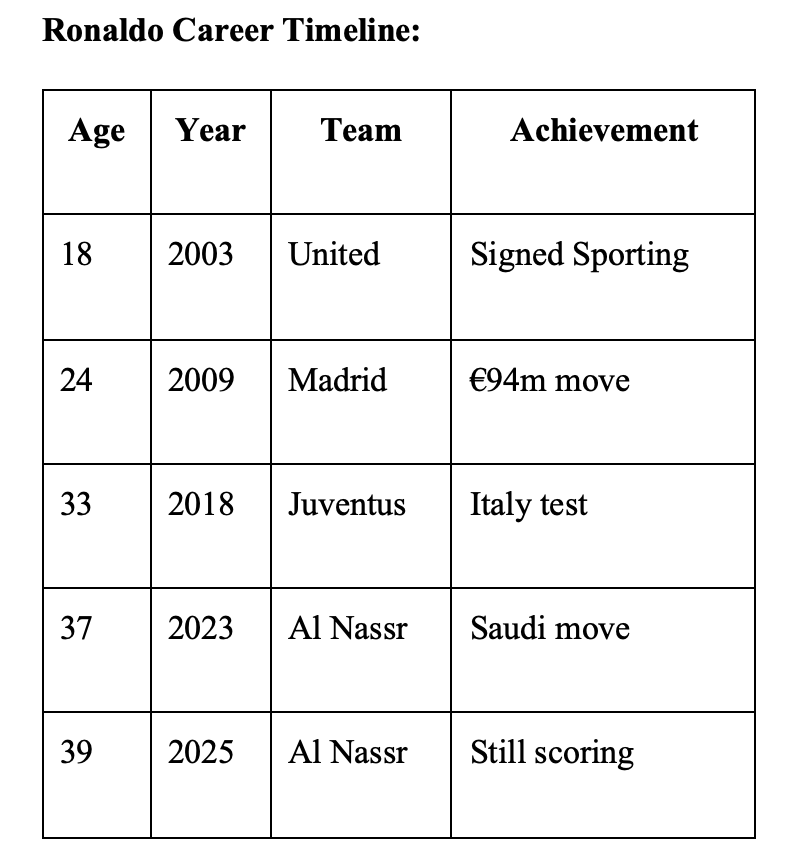
Ronaldo Career Timeline:
Sure, lost half step. Can't outrun everyone anymore. But positioning, timing, finishing? Elite still. Obsessive fitness dedication legendary. Zero alcohol, minimal sugar, strict sleep. Lives like robot basically.

Teammates joke about his diet craziness. Ice baths midnight. Six meals daily. Constant stretching routines. Most guys his age coaching somewhere. Ronaldo's banging goals.

What Team Does Ronaldo Play For?

Plays Al Nassr in Saudi Arabia now. Joined January 2023 on deal worth over $200 million yearly reportedly. Mental money.

Saudi move shocked people. "Retirement league" critics said. Chasing final payday. But Al Nassr's ambitious. Building something serious.

Career journey's wild. Started Sporting academy skinny kid. United spotted him 2003 friendly. Ferguson signed immediately seeing talent.

United years (2003-2009) transformed him. Promising winger became world-beater. Three league titles, Champions League, first Ballon d'Or. Ferguson built him up.

Madrid 2009 changed everything. €94 million shattered records. Nine Spain years defined legacy. 450 goals 438 games. Four Champions Leagues. Two La Ligas. Dominated completely.

Juventus 2018 presented new test. Won two leagues but Champions League failed. Frustrated everyone.

United return (2021-2022) started good, ended terrible. Manager relationship died. Piers Morgan interview burned bridges. Had to leave.

Al Nassr's probably final stop. Saudi league growing fast. Big investments everywhere. Benzema, Neymar followed. Still scoring despite weaker league.

For football fans wanting extra entertainment beyond matches, check db bet for options.

How Many Goals Does Ronaldo Have?

Over 900 career goals total. Nine hundred. Let that register.

Roughly: 450 Madrid, 145 United, 101 Juventus, 130+ Portugal, 60+ Al Nassr. Climbing still.

Five Ballon d'Ors (2008, 2013, 2014, 2016, 2017). Messi's got eight now though. Rivalry defined generation.

Champions League record crazy. 140 goals Europe's top competition. Nobody touching that soon.

Goal Records:

●      900+ goals everywhere combined

●      140 Champions League strikes, record

●      130+ Portugal strikes, international top

●      450 Madrid strikes 438 games

●      101 Juventus strikes three years

●      Five Ballon d'Or wins

Portugal-wise, beat Iran's Ali Daei becoming international top scorer ever. Sitting 130+ now. Euro 2016, Nations League 2019 gave major trophies needed.

Impressive part isn't just quantity. It's variety. Headers, screamers, tap-ins, free kicks. Both feet work. Complete package.

Consistency nuts. Double-digit goals yearly since United breakthrough. Twenty years excellence.

How Tall Is Ronaldo Jr?

Jr's roughly 5'3" (160cm) at 14. Born June 2010. Dad raised him. Mom identity secret.

Plays youth ball seriously. Al Nassr academy now. Previously Madrid, Juventus academies. Shows talent apparently. Pressure massive though.

Social media shows training clips. Following dad's path. Copying celebrations. Scrutiny intense teenager-wise.

More growth coming. Dad's 6'2" (187cm). Genetics good. Reaching pro level? Unknown. Expectations crazy high.

Dad pushes hard training reportedly. Wants success. Being Cristiano Ronaldo's son tough. Living shadow while finding yourself? Brutal.

Other kids exist. Twins Eva, Mateo 2017. Alana 2017. Bella 2022 (twin died sadly).

For folks exploring football wanting more stuff, try db bet maybe.

Physical Stats

Stands 6'2" (187cm). Perfect forward height. Aerials strong, agile enough.

Weighs 183 lbs (83 kg). Shredded. Body fat 7% roughly year-round.

Vertical jump 78cm reportedly. Hang time explains outjumping taller guys. Sampdoria header iconic.

Speed peaked 33.6 km/h prime. Slower now obviously but threatening still.

Career Wins

Five Champions Leagues. Three Madrid, one United, zero Juventus (annoying).

Seven leagues total. Three England, two Spain, two Italy. Different countries proved.

Five Ballon d'Ors. World's best recognition. Messi rivalry legendary.

Euro 2016 France. Nations League 2019 Portugal. Major tournaments wanted.

Ronaldo vs Messi

Never-ending fight. Who wins?

Ronaldo side: Physical beast, headers, both feet, multiple leagues, leadership.

Messi side: Dribbling, playmaking, steadier, World Cup, natural talent.

Stats edge Messi. Eight Ballon d'Ors beats five. World Cup huge.

But Ronaldo conquered leagues. England, Spain, Italy proved. Messi stayed Barca mostly. PSG meh. MLS retirement.

Both insane. Lucky seeing both. Fight continues.

Bottom Line

How old is Ronaldo? He's 39 years old, born February 5, 1985 in Madeira, Portugal.

What team does Ronaldo play for? Al Nassr in Saudi Arabia's Pro League since January 2023.

How many goals does Ronaldo have? Over 900 career goals across all club and international competitions combined.

How tall is Ronaldo Jr? Approximately 5'3" (160cm) at age 14, with more growth expected given his genetics.

Ronaldo's career trajectory has been extraordinary. From a small Portuguese island to conquering multiple leagues across Europe and now in Saudi Arabia. The numbers speak volumes – 900+ goals, five Ballon d'Ors, five Champions Leagues. His obsessive dedication to fitness and training allowed him to maintain elite performance well into his late 30s when most players have already retired.

Whether you admire him or not, there's no denying Ronaldo changed modern football. His rivalry with Messi elevated the sport to unprecedented heights. The GOAT debate will continue forever, but Ronaldo's legacy as one of football's greatest ever players is already cemented in history.

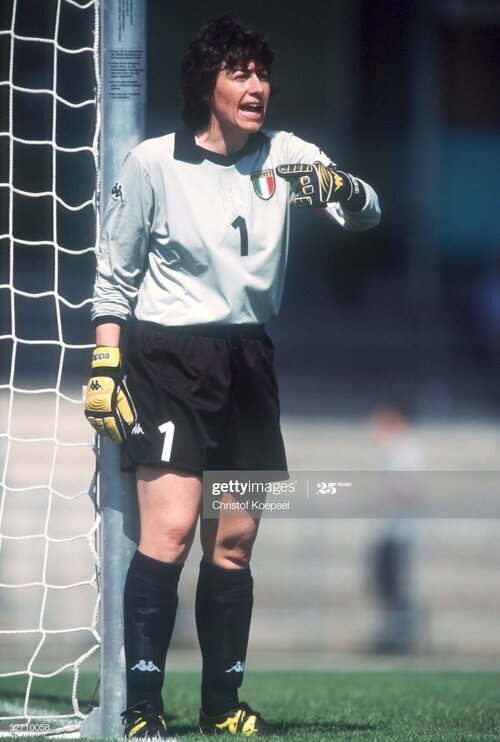
Women's Goalkeeper Hall of Fame

The Women’s Goalkeeper Hall of Fame honors the top goalkeepers in the history of women’s football. Starting in 1990, the Hall of Fame retroactively inducted the most qualified retired goalkeeper from each respective year and continued forward with an annual recipient. Eligible goalkeepers for the Hall of Fame are evaluated on their international and domestic accolades and the goalkeeper’s overall ability.

To help evaluate a goalkeeper’s playing career with proper context, Weighted Cap Total (WCT) is used as a guideline. WCT balances a player’s international appearances based on the number of available games during the player’s ages from 19-34 to show if the player’s cap count is inflated (due to an above-average amount of available games to play) or undervalued (due to a lack of available games). For example, if player A had the opportunity to play in 500 games during their career while player B only had 125 available matches, player A’s WCT would be cut in half while player B’s would be doubled, as the latter had fewer opportunities to receive caps.

Each goalkeeper is listed with their current cap total, their WCT, and highlights from their career. To learn more about each goalkeeper and why they’re considered one of the best goalkeepers of all time, click their name to read a short biography on their playing career.

Legend

* - estimates
RU = runner-up
SF = semifinal
WC = World Cup
Oly - Olympics
QF - Qualifying

Year Goalkeeper Country Caps WCT Major Accomplishments
1990 Annie Hastie England --- --- Dick, Kerr Ladies FC
1991 Wilma Seghetti Italy 35* 83* '70 WC RU, '79 Euro RU
1992 Birte Kjems Denmark 12* 48* 1971 WC Winner
1993 Marianne Riis Denmark 27 84 1979 Euro Winner
1994 Sue Buckett England 30 170 8x FA Cup Winner
1995 Theresa Wiseman England 60 167 1984 Euro RU
1996 Elisabeth Leidinge Sweden 112 239 '84 Euro Winner, '91 WC 3rd
1997 Marion Isbert Germany 58 85 '89/91 Euro Winner, '95 WC RU
1998 Manuela Goller Germany 45 47 '95 WC RU, '95 Euro Winner
1999 Eva Russo Italy 57 87 '84/86 Mundalito Winner
2000 Leslie King New Zealand 28 115 1991 WC Standout
2001 Margarete Pioresan Brazil 22* 212* 1996 Olympics 4th
2002 Daniela Sogliani Italy 27 71 1971 WC 3rd
2003 Giorgia Brenzan Italy 111 168 '93/97 Euro RU
2004 Gao Hong China 110* 114* '96 Olympics RU, '99 WC RU
2005 Pauline Cope England 60 114 '95 Euro SF, '95 WC 7th
2006 Svetlana Petko Russia 144 199 '99 WC 5th, '97/01 Euro
2007 Stefania Antonini Italy 32 44 '91 WC 6th, 5x Serie A Champ
2008 Marleen Wissink Netherlands 141 230 4x Euro QF, 6x Bundesliga Champ
2009 Silke Rottenberg Germany 125 124 '03 WC Winner, '00/04 Oly 3rd
2010 Bente Nordby Norway 172 159 '95 WC Winner, '00 Oly Winner
2011 Briana Scurry USA 175 125 '96/04 Oly Winner, '99 WC Winner
2012 Sandrine Roux France 70 127 6x French League Champ, '97 Euro 6th
2013 Caroline Jönsson Sweden 80 72 '01 Euro RU, '03 WC RU
2014 Carla Brunozzi Italy 55 66 3x Serie A, 2x Italian Cup
2015 Ursula Holl Germany 5 4 2x UEFA CL, 3x Bundesliga Champ
2016 Nadine Angerer Germany 146 134 '07 WC Winner, 2013 FIFA POTY
2017 Hope Solo USA 202 119 '15 WC Winner, '08/12 Oly Winner
2018 Emma Byrne Ireland 134 256 11x English League Champion
2019 Precious Dede Nigeria 99 182 '04 Oly 6th, 4x WC Starter
2020 Ingrid Hjelmseth Norway 138 125 2013 Euro RU, 2009 Euro SF
2021 Rachel Brown-Finnis England 82 98 '10 FA Cup, '07 WC 7th, '09 Euro 2nd
2022 Sari van Veenendaal Netherlands 91 94 '17 Euro, '19 WC RU, '19 World Best XI
2023 Karen Bardsley England 81 92 '15 WC 3rd, 8 trophies w/Man City
2024 Stephanie Labbé Canada 86 78 '16 Oly 3rd, '19 NWSL, '21 Oly Gold
2025 Hedvig Lindahl Sweden 189 169 '16/21 Oly + '03 WC RU, '11/19 WC 3rd

No, LA Galaxy Won’t Dominate MLS in 2026 - Here’s Why

They hoisted the MLS Cup in 2024 like gods among mortals. Twelve months later, the LA Galaxy were a dumpster fire. Seven wins. Eighteen losses. A goal difference so ugly it could scare small children. Fourteenth in the West, dead last among defending champions in league history. The question isn’t whether they’ll dominate in 2026 - it’s whether they’ll even matter.

The 2025 Season Was a Train Wreck in Slow Motion

Ten games. Zero wins. That’s where it started, and honestly, that’s where it ended. The Galaxy didn’t just stumble out of the gate; they face-planted into the pavement and stayed there. By the time the season mercifully wrapped, they’d conceded 66 goals - the second-worst defensive record in the Western Conference. For context, Vancouver Whitecaps, who finished first, had a +28 goal difference. The Galaxy? -20. That’s not a slump. That’s a full-blown identity crisis.

The CONCACAF Champions Cup exit to Tigres UANL was just salt in the wound. The Leagues Cup offered a flicker of hope - two wins, a draw, a +7 goal difference - but let’s be real, that’s like finding a single dry patch in a monsoon. The playoffs? Not even close. The defending champs didn’t just miss the postseason; they got lapped by half the league.

The Mountain to Climb in 2026 Is Steeper Than Ever

Here’s the thing about comebacks: they’re rare, especially when the fall was this hard. The Galaxy don’t just need a tweak here or a signing there. They need a full-blown exorcism. The defense is a sieve. The attack is inconsistent. And the Western Conference? It’s a gauntlet. LAFC and Vancouver didn’t just improve - they flexed, finishing with 60 and 63 points, respectively. Minnesota, Seattle, even San Jose looked sharper. The East, meanwhile, is a graveyard of ambition, with Philadelphia and Inter Miami setting standards the Galaxy can’t even see from the bottom.

No one’s talking about a 2026 roster yet, but the blueprint is obvious. GM Will Kuntz and coach Greg Vanney have to gut this team and start over. Draft picks, free agents, trades - whatever it takes to plug the leaks. But here’s the kicker: history isn’t on their side. No defending champ has ever cratered this badly and then rebounded to dominate the next season. The closest comparison might be the 2017 Seattle Sounders, who missed the playoffs after winning it all, but even they clawed back to relevance within a year. The Galaxy? They’re not just irrelevant. They’re a cautionary tale.

The Glimmer of Hope (And Why It’s Not Enough)

There’s one reason to think the Galaxy might not be doomed: the Leagues Cup. Five games, nine goals scored, two conceded. A +7 goal difference. That’s not nothing. It’s proof that when the pieces click, this team can still play. But let’s not confuse a tournament run with a season. The Leagues Cup is a sprint. MLS is a marathon, and the Galaxy have shown they can’t even walk the distance.

Home-field advantage at Dignity Health Sports Park? Sure, it helps, but it’s not a cure-all. The Galaxy need consistency, and right now, they don’t have it. They need a defense that doesn’t resemble Swiss cheese, and they need an attack that doesn’t disappear for weeks at a time. Maybe they’ll find it. Maybe they’ll sign a game-changing center back or a striker who actually scores. But dominate? That’s a stretch.

The Bold Prediction: They’ll Improve, But Don’t Expect a Dynasty

Here’s the truth: the Galaxy will be better in 2026. They’ll probably make the playoffs. They might even win a knockout round game or two. But dominate? No. The gap between them and the league’s elite is too wide, and the path back to the top is too steep. The West is too strong, the East is too deep, and the Galaxy’s own flaws are too glaring.

If you’re looking for a dark horse, don’t bet on the Galaxy. If you want to know who might actually run the table in 2026, check out what various tipsters predict - they’re already eyeing teams with actual momentum, not ones clinging to past glory. The Galaxy’s 2024 title might end up feeling like a fluke, a blip in a league that’s moved on without them.

So, What’s Next?

The offseason is coming, and with it, the chance for a reset. But resets don’t always work. Sometimes, they just delay the inevitable. The Galaxy have talent. They have history. They have a fanbase that won’t quit on them. But talent and history don’t win games - results do. And right now, the Galaxy don’t have them.

Will they turn it around? Maybe. But dominate? Not a chance. Not in 2026. Maybe not ever again.

Shot-Stopping Versus Sweeping In Tight Tactical Blocks

Coaches who favour compact defensive shapes have a recurring question to solve in goal: do you prioritise an elite line stopper or a proactive sweeper who trims danger at the source. Recent chatter around a high-profile Serie A coaching move has pushed that debate back under the microscope, as tacticians rethink how a keeper’s profile supports narrow lines, low distances between units and heavy traffic in Zone 14.

What a Tight Block Really Asks From a Keeper

A compact block compresses space between the forward, midfield and back lines. The centre backs stay connected, the full backs tuck in and the midfield screens central lanes. This limits clear shots from prime locations, yet it also funnels play wide and invites a high volume of crosses, cutbacks and deflected efforts. For the goalkeeper, that shifts the job description:

●      React through bodies and late sightlines

●      Command a crowded six-yard box

●      Judge early when to step out for aerial takes

●      Handle second balls after blocked shots

●      Restart possession cleanly to escape repeat pressure

In other words, the keeper operates in traffic. There is less room for sweeping long balls behind a high line and more need for brave decisions in compressed spaces.

When Shot-Stopping Carries the Day

Pure shot-stoppers thrive in these games because the opponent’s best chances often come from chaos inside the box. A compact team can block the optimal shooting lanes, but ricochets still happen and finishes are taken under pressure. This environment rewards goalkeepers who:

  1. Hold a powerful set position with narrow feet and quick hands

  2. Track deflections without over-committing

  3. Use strong wrists to steer saves away from the slot

  4. Access low, fast reaction saves without a full dive

Shot maps from compact sides usually show a dense cluster close to goal. That increases the share of low-to-mid xG attempts where reflex saves matter. A keeper who reliably turns those into routine collections will make a low block look smarter than it is, because the last line cleans up the untidy parts of the plan.

Red flags if you over-index on shot-stopping

●      Hesitant on crosses which concedes repeated second phases

●      Passive starting positions that trap the team too deep

●      Rebounds pushed central that keep the siege alive

If your team wants to counter quickly after a steal, a keeper who cannot relieve pressure with a confident catch or quick outlet can pin you in for long stretches.

The Hidden Value of a Sweeper in a Small Space

Sweeping is not only for high lines. In compact shapes it just changes flavour. Instead of sprinting forty metres to beat a striker to a through ball, the sweeper’s craft is about micro-aggression:

●      Two to five metre steps to cut out cutbacks

●      Near-post interceptions on rolled crosses

●      Early body shape to smother low balls across the six

●      Command on high floats to end the barrage

These acts are momentum killers. Each timely take lets the back line breathe, move up five metres and reset the block higher. A proactive keeper also reduces corner counts and restarts with better field position.

Risks when you over-index on sweeping

●      Over-committing and getting chipped or rounded

●      Collisions in traffic that shake team confidence

●      Vacating the line during second-phase shots

In a tight block, one misread is often a tap-in. So the sweeper’s aggression must be paired with elite timing and communication.

Building the Profile: How Coaches Should Choose

Rather than picking sides in a binary, match the keeper to how the block actually behaves.

Ask these questions:

●      Where do we concede entries. If most entries are wide and low, a keeper who wins cutbacks with short, sharp steps is ideal. If central shots through bodies dominate, prioritise frame-filling reactions.

●      How high do our full backs start. If they press out early and leave space for diagonal clips, you need someone confident under contact to claim floats.

●      How do we counter. If the plan is three passes and go, distribution and quick release matter more than raw save percentage.

Training priorities for any profile

●      Traffic drills with screened vision and late ball flight

●      Rebound control sessions that bias parries into safe zones

●      Micro-sweeps: one-to-three step interventions on cutbacks

●      Command voice work so defenders trust early calls

●      Restart cues: catch, breathe, scan, outlet

Case Study Lens From Italy

Coaching changes in Italy often signal tactical shifts around the back line, not only in midfield. When a new staff values compactness and risk control, keeper selection quickly becomes a headline decision. Staffs leaning pragmatic may pick the calmer box controller who ends waves with clean takes and quiet footwork. A group that still wants to counter-press out of a mid block might ride with a bolder starter who steals yards and turns crosses into throws before the opponent can organise. The noise around a big Serie A bench switch is a useful reminder that goalkeeper traits should be discussed on day one, not after the first streak of scrappy goals.

Practical Scouting Checklist For Compact Systems

When you evaluate candidates for a tight block, grade the following in match conditions rather than isolated drills:

●      Set shape under screens: shoulders square, heels light, hands ready

●      First step to cutbacks: short acceleration without lunging

●      Claim technique: knee drive, catch height, landing balance

●      Rebound geography: parries out of central lanes

●      Voice and timing: early, clear commands that stick

●      Restart speed: safe hold, quick scan, purposeful outlet

Final thought

Compact shapes are built to frustrate, not to thrill. The right keeper makes them sustainable. Blend the best of both worlds by choosing a goalkeeper who can win the messy saves you are bound to face, then end pressure with one decisive action. Get that balance right and the block feels sturdy, the crowd grows impatient and your attack plays with fresher legs.