Jeannette Williams Interview: From NAIA to Iceland's Premier League

Jeannette Williams is a American goalkeeper playing for Fimleikafélag Hafnarfjarðar (or FH for a much shorter term) in Iceland's premier division, the Pepsi League. FH was recently promoted to the Pepsi League after finishing second in the table and have signed the American goalkeeper to help bolster their goalkeeping depth chart. Williams talks about her journey to Iceland, the ins and outs of playing abroad, and what it takes to get to the next level.

How in the world did you end up playing for an NAIA school then working up to Iceland’s premier league?

I wasn't expecting to play my freshman year at RMU [Robert Morris University], because their senior keeper was also Ghana's National Team starting keeper with great experience and ability. Ghana ended up making it into the world cup that year, so my playing time came right away. Playing in the NAIA was competitive and my teammates were star players from all over the world: England, Norway, Brazil, Columbia and Ghana, to name a few. When I was looking at what college to play for, I chose the one that I thought would give me the best experience and allow me to truly enjoy playing soccer for four more years. Playing at Robert Morris University in the NAIA, from my teammates to my coaches and the overall experience was what gave me the work ethic and passion to continue pushing myself, simply for the love of the game. It also gave me the opportunity to compete for a national title. My senior year, we made it to the Elite Eight of the National Tournament.

From there, a former teammate of mine at FC Indiana, Lorena, got me in touch with Damon Wilson of Transfair Sports Group. He obtained my first offer from Olafsvik Vikingur in Iceland, a new team entering the first division. I spent three straight seasons with them and had a great experience. We played FH twice last season, which is the team I have now signed with for the upcoming season. I played well in both games against them which sparked their interest. They are moving back up to the top league this season, and I am excited to compete in this environment.

Ultimately, a college experience that further enhanced my love for the game and a good friend that pushed me to find playing opportunities gave me my chance. After that, the platform of playing at Vikingur and working hard to be ready come game day gave me the chance to be seen and make it to a higher level.


What advice would you have for a player trying to play professionally?

Most importantly, believe in yourself and surround yourself with people who believe in you just the same. My support system has always been great and is a big part of the reason that I have been successful. I cannot stress enough how important my parents, my family, and my friends have been through this journey. Find the people that push you to be your best, and keep them close.

For players that want to get to the next level, you must be willing to start where you can. I know many players turn down offers because they just "aren't good enough". They end up not having a career because they always wait for the perfect offer, and that never comes. The truth is, no offer will ever be perfect. The only question then is, am I going to pass up an offer and risk not playing, or am I going to play? Players need to know how to work their way up, and be determined and patient enough to put in the time and sacrifice it will take to make your goal, or dream, a reality.


Tell us about Icelandic football. What’s something outsiders probably don’t realize about their game? How does it compare to the American game?

Football in Iceland is huge! Iceland's women's soccer team is number nineteen in the world and the Premier League is considered one of the top leagues for women. Every town seems to have a team with a loyal fan base and community that supports them. Many teams are from the capital area, but there are also teams in smaller towns. Overall, the facilities, fields, and players are very professional on both the men's and women's side. Many kids play soccer and are there to watch and support their teams. It's rare to walk by an open field and not see kids playing a pick up game on it, even if it is 40 degrees out and raining.

The biggest difference I notice between playing in the states and playing in Iceland is the physical side of the game. My first couple of games in Iceland, I got hit hard after catching a couple of balls. I was shocked there was no foul called, but after a few hard hits and no whistles, I realized that's just the way the game is played. Since then, I focused on becoming stronger so that I can hold on to the ball even when I am hit late and I can better protect myself.

Many players turn down offers because they just ‘aren’t good enough’. They end up not having a career because they always wait for the perfect offer, and that never comes.
Screenshot_2016-01-29-17-24-07-1.png


What’s a common question you’re asked being an American foreigner?

Many Icelanders have asked me over the last few years why I chose to come to Iceland. I think people that have lived there their whole life are not as absorbed in the beauty of their country as most travelers are. It really is a phenomenal place to see. Being able to live there and make a living through soccer makes it a dream come true. So while some might be surprised at my choice to keep going back, I look at it as living my dream, and am happy to continue doing so.


What’s the outlook on FH's season? Where do you sit in the depth chart? I thought I read that you’ll also be in a coaching position there?

FH has experience in the Pepsi League. They have been there in past years. They spent the last season in the 1st division [the second level, underneath the Pepsi League] and were able to earn their way back into Pepsi. From what I saw playing against them, they have great team qualities, from effort to culture to organization.

I really enjoyed playing with Vikingur the last few years, so in order to make a move I had to be confident it was to a team with good team qualities, like FH. I hope we will have a successful season that includes being able to go for the win against any team we play. Their head coach, Orri Þórðarson, is a UEFA A License coach and I know I will learn from his guidance. I currently hold my USSF National C License, and when I retire from playing I have aspirations to coach at a high level. I was the assistant coach of Vikingur the last two years and I am eager to learn from Orri and his coaching methods this year. He is also the head of the youth club that supports over 900 players, so I will be coaching some of the youth players in my time there also.
Revisiting the 1989 U20 World Cup

1989 was a historic year for US soccer. Not only would the senior team return to the World Cup stage for the first time since 1950, but the U20s quietly had the best performance of any team before or since. The 1989 tournament saw the US finish fourth, losing to Nigeria in the knockout stage in overtime. However, the trip to the U20 World Cup began in bizarre fashion. Originally the American team did not qualify for the tournament, losing out to Costa Rica and Mexico. Soon after, rumors of Mexico using overage players during qualifying began to surface. FIFA came down heavy on Mexico, banning them from the U20 World Cup as well as the senior World Cup in 1990. (More on the scandal can be read here.) With Mexico removed, the third place team, USA, would take Mexico's place at the tournament in Saudi Arabia.

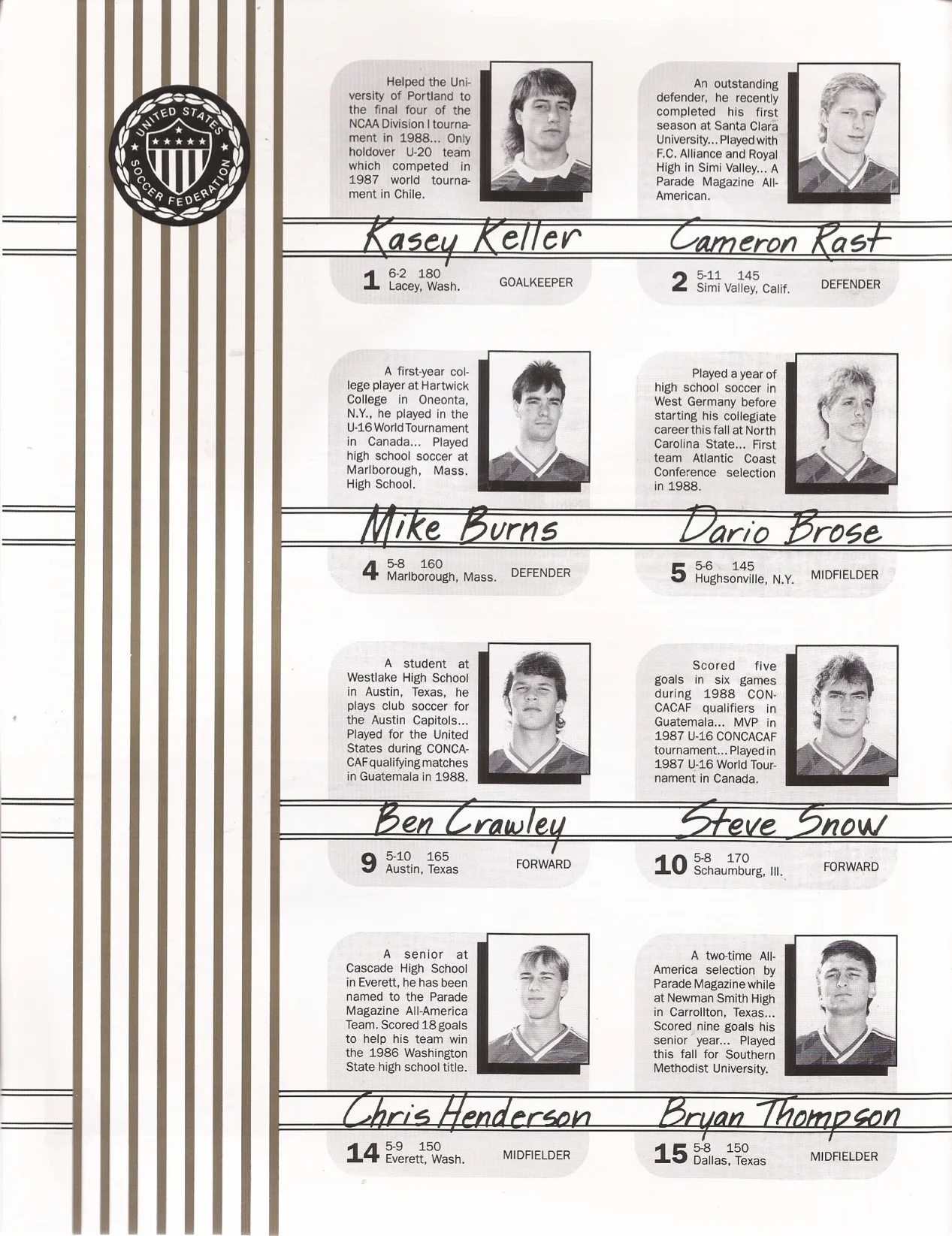
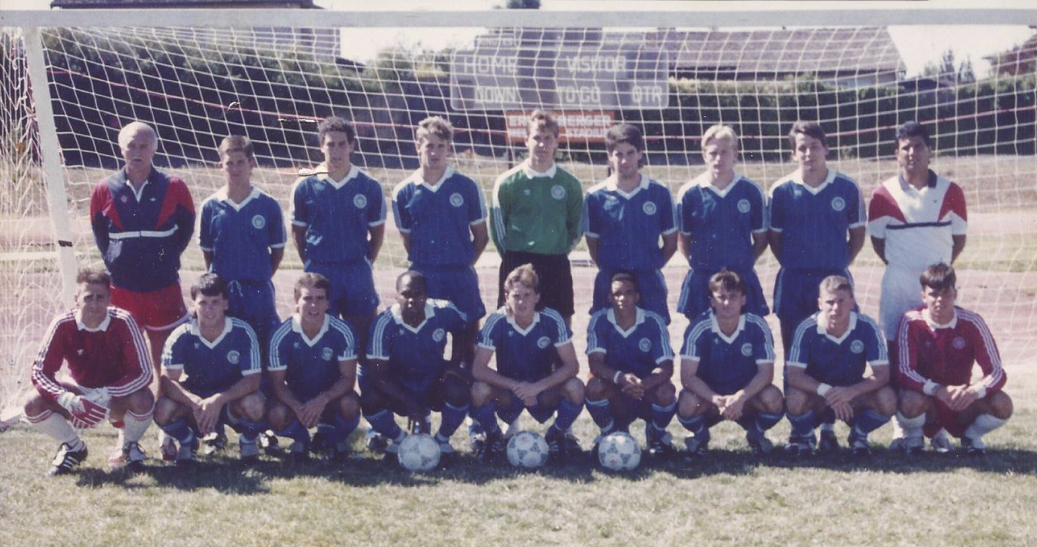
The two goalkeepers that travelled to Saudi Arabia would be future USMNT goalkeeper Kasey Keller and Markus Roy, who was a freshman at Northern Illinois at the time. Markus recounts memories from the World Cup, now seventeen years ago this February. Scroll down to the bottom to see memorabilia and photos that Markus did a great of job of holding on to from the tournament.


What was the qualifying process like, after initially not qualifying then hearing that you would be going to the U20 World Cup?

At the time, [qualifying] was in Guatemala. We trained in Mexico for some training and some friendly games. It was against Canada and... I’m trying to think... I want to say it was for a week, before qualifications, just to get used to the altitude and this and that. I think at that time either Coach [Bob] Gansler or Coach Perez, I’m assuming it was Coach Gansler, had the Mexican pro league’s big manual of all the teams and photos and players. It was a good scouting tool for Coach Gansler at the time and we didn’t think anything of it but he was looking at the players because it was basically a free, you know. You could look at all the players and what teams they played for and it gave their real age. So I think Coach Gansler used that to his advantage.

We ended going to Guatemala and obviously we didn’t qualify at the time but I think on the way to the airport, they told Kasey and I, “We’ll be seeing you guys again about all the stuff so don’t let it get you down.”

I’m not sure what time of year that was or when that happened but I don’t think we thought anything of it. We got a call - I’m not sure how much longer after the qualifying round - that said, “Get ready to go. We’re going to qualify.” So it was pretty exciting obviously for the players from not qualifying to having a team disqualified for using ineligible players.

What was your time like playing with Kasey Keller?

He was there, I think, a couple three years before me, maybe more. So he had always been there and always was there, for years afterwards, obviously. I came in and I beat out their best backup. I’m not sure who it was. They always had goalies there so you never knew if you were going to be the backup or the starter, which is good. I think it even made Kasey work that much harder because he didn’t look at it like he was the starting goalie the whole time. He was really positive about anyone playing. I texted Kasey a couple months ago and I showed him one of those pictures I showed you. One of those from Russia or something. So that was pretty cool, back in the day. *laughs* But I think that’s how he was as a pro. He worked harder every day and it made me a better goalkeeper as well. He was always, “We’re a team here.”

What was preparations for the World Cup like?

Well I think it’s probably different now than it was, with all the academies. It’s more year round now. We were always brought together for a couple weeks here, a couple weeks there. And the club soccer was probably different back then for us as well. It wasn’t as developed as the academies are now. Plus a majority of our players, if not all, were collegiate players, playing three-four months out of the year. And February was in our off-season, the [time of the U20] World Cup. So we were not “in season” per se. We were in condition and in shape but I don’t think it’s like it is nowadays. They would fly us in two-three days before and, if I’m remembering, in Saudi Arabia we came in a week before, maybe even longer than that. It wasn’t like we were there for 2-3 weeks, or a month like some teams are now.

I think Bob Gansler was excellent in scouting the opponents, really finding their strengths and weaknesses. And our team knew specifically what their roles were. It was amazing what the players did from Kasey Keller through the defenders, and the rest of the team. I don’t think there were that many superstars on the team at the time.

Group Stage Results:
Mali 1-1
East Germany 2-0
Brazil 1-3

Knockout:
Iraq 2-1
Nigeria 1-2 (aet)
Brazil 0-2

Did the team expect to get out of the group and progress as far as you did or was it somewhat surprising ending up in the fourth place game?

Probably a little bit of both. Because now you see players on social media. There’s all this video on anyone on YouTube. I can Google a kid on the U20 team for Brazil and find it or whatever. At the time, we were just focused on being away for a month and we didn’t really know otherwise. And I thought the guys did a tremendous job. I think one of the biggest games was when we beat the East Germans, which that was a huge upset. And I know our expectations against Brazil were, you know, we didn’t think they were world beaters but obviously a different side than us. Playing against Iraq was more of a political thing where, at the time, we were still pretty young but politically um… I’m trying to think of something to say *laughs* It’s Iraq versus USA. It doesn’t happen very often in any sport. So I think at the time with the world struggles, it was a big thing for their country as well for the US.

Not many highlights have survived the 1989 World Cup. This is the only one involving the US.

USA reached the semifinal game, where they lost in overtime to Nigeria 2-1. What do you remember from the last knockout game?

They were in a lot of youth World Cups and have done real well over the years and they always do real well, the young Nigerian teams. From what I remember from the game, we put everything on the field. All those weeks in Saudi Arabia, we left it on the field. Our tanks were empty and we did the best we could. It was an overtime game and could have gone either way. I think, maybe, they were bigger than us, stronger than us, but we were in the game the whole time. I just think our tanks were empty, which wasn’t a bad thing.

How long did the buzz last when you came back to the US?

You know, it’s unfortunate at the time that there wasn’t any social media, nothing. So it died pretty quickly but you heard it in some soccer rooms. Even today you hear once in awhile, you know, “the best finish for the US was this team” and I’ll think, “yeah I was on that team!” But you don’t hear a lot of it. It’s unfortunate because if the league was around, MLS, when we were playing, I think a few more players, could have made it to the next level and may have gotten a little more recognition. A few guys did a great job in their club careers, Keller obviously being the top player.

I think the buzz is still around for the players who are on the [current U20] team but it’s not so much for anyone else [that played on previous U20 teams], which is fine. Soccer has changed so much. I don’t think there was as much pressure for us to win. I think that’s why one reason we did so well is because we came in as unknown college players. And now the U20 teams, a lot of them are professionals. So it’s a lot different now for Tab Ramos. It’s good and it’s bad but that’s the way soccer has changed around here in the US.

Looking at the pictures, you’re in most of them. Who was taking the pictures?

You know, I want to say it was one of team representatives. I think they had pictures for everybody and I just took the ones I was in. There are a few that I took. Or the ones of Kasey, Troy [Dayak], and myself, I think I had my camera with me and said to one of the players “Hey take a picture of us.”

The pictures of the stadium, which one is that?

Is that the one that kind of looks like a tent?

Yeah, there’s an aerial view and one from inside, which is the same one, I’m pretty sure.

Yeah, that was the third place game. That was in, I think, Riyadh. They had the final at that stadium.

Tell me about the one with the camel and you’re holding some flags. What’s going on there?

That was one of the days we had off and I want to say that was taken by one of the players. I think we all had a chance to ride on the camel. We were away with a couple guys and the people over there in Saudi Arabia, you know, we’re tourists and foreigners, so they’d let us get on the camel for free but to get off the camel you’d have to pay some money. So they kind of suckered us out for that. We got off the camel and the guy was yelling at us but we’re walking away to the bus saying, “We’re done. We’re not paying you. We didn’t know how this worked. We weren’t looking to get scammed for a couple bucks.” But that’s what happened on that one.

Where are you in the picture where there’s water behind you and, I think, a flag pole?

I think that’s got to be uh… oh man, I want to say… I think it’s the Red Sea. One of those seas that we took a walk and it was a nice day and I remember even that day as well that it rained and it never rains there. Like when we have a snow day in Chicago, kids don’t go to school here but when it rains outside [in Saudi Arabia] they let the kids go home to go play in the rain. You can see the clouds in the sky there, which doesn’t happen a lot, I guess.

We did a lot of that stuff. We didn’t go out a lot during the day because it was so hot. But that day was overcast a bit and not so hot.

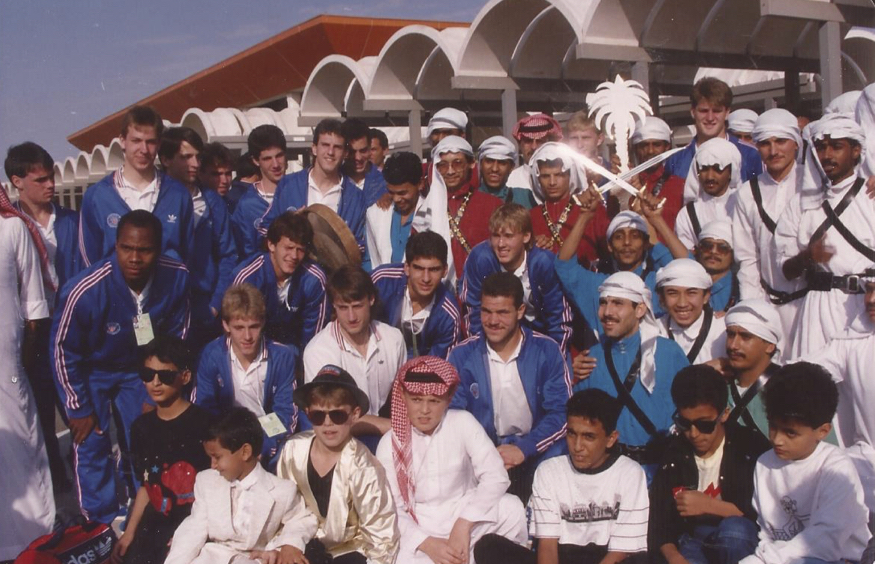
There’s another one where you all have an Arab headdress on. What was the reason for the photo there?

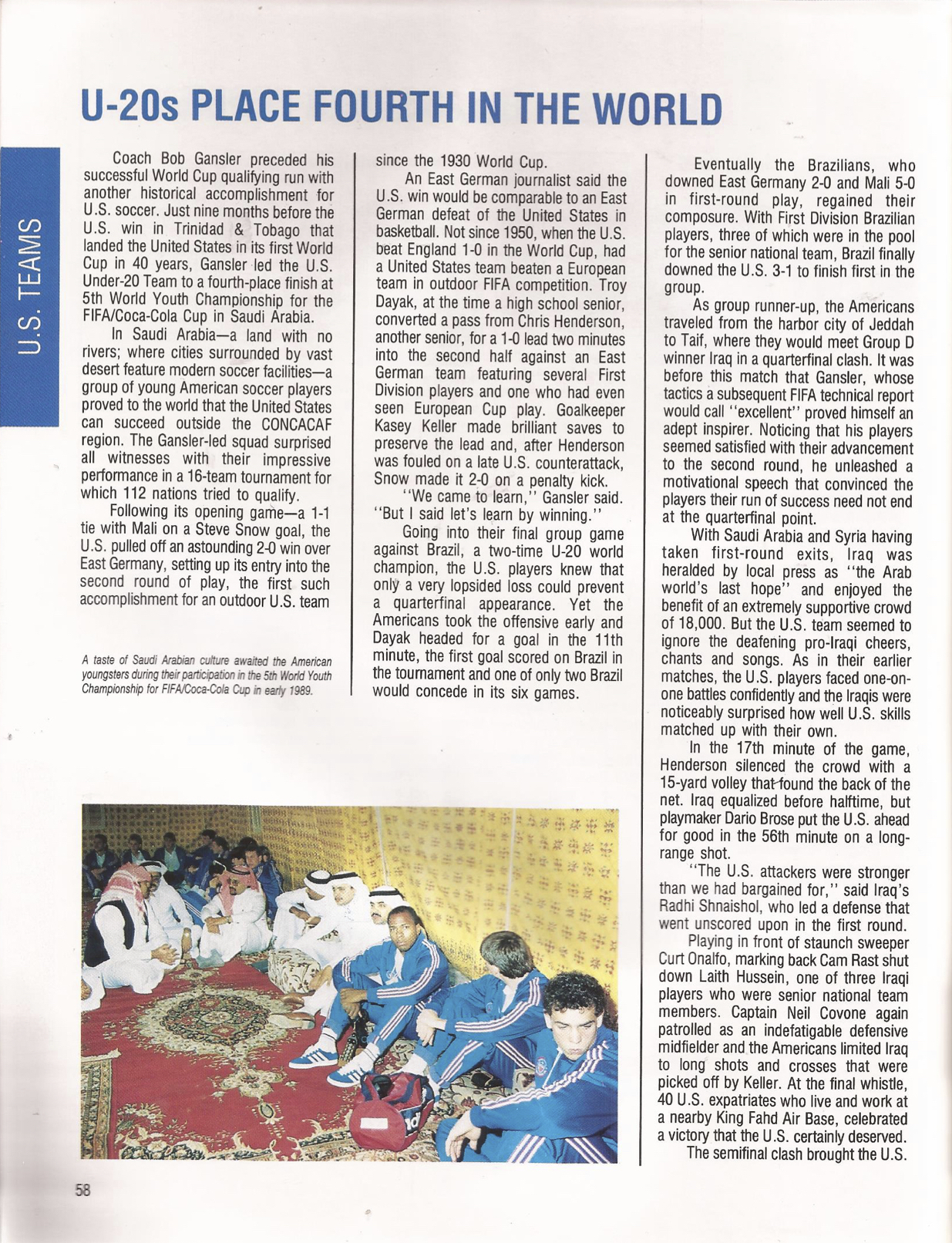
So that was at the hotel. We played in two or three different cities and every city we got a little gift bag or something from that area. And that’s one of those headdresses. From what I remember, they were worn for a couple reasons. I think there were religious reasons but also the headdress just basically kept their bodies cool. But I thought it was pretty hot to wear. I think it was made from cotton or something. But yeah we wore that kind of stuff in the hotel and the guys in the photo thought that was pretty funny.


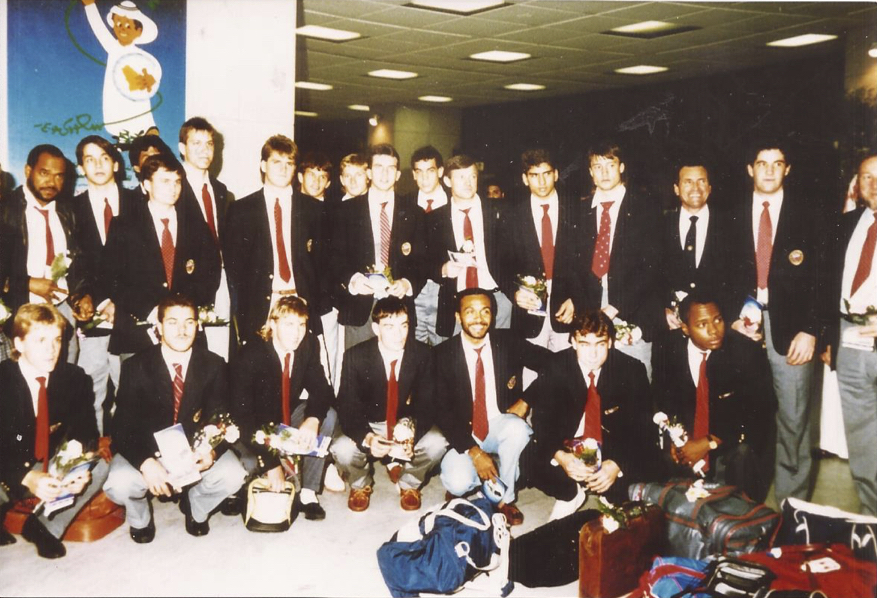
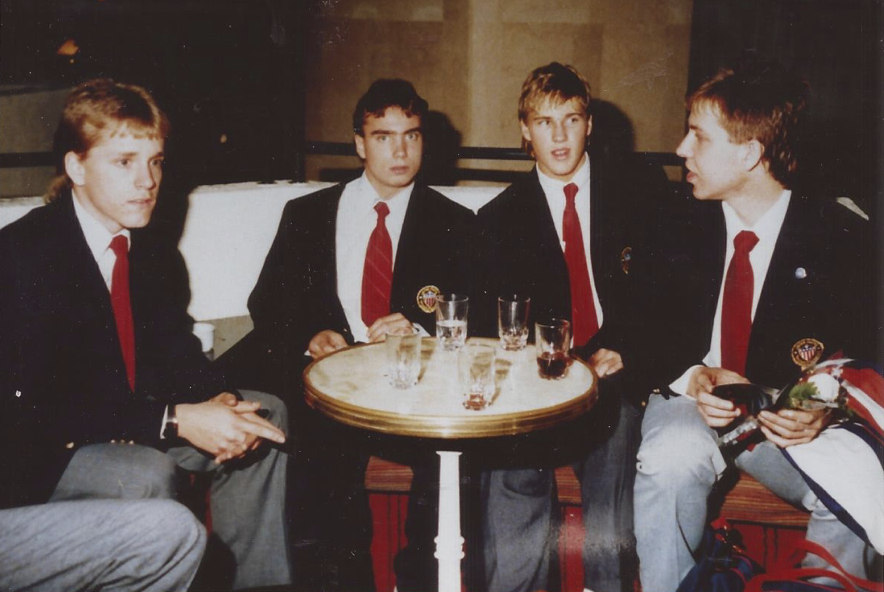
The pictures below are scans of memorabilia and photos taken by the U20 backup goalkeeper Markus Roy. 

For questions, you can email me at everybodysoccer@yahoo.com or tweet at @letsallsoccer.

Everybody Soccer's 2015 NCAA Save of the Year

cover photo belongs to Jesus Hidalgo

Congrats to EJ Proctor for winning the save of the year contest with an overwhelming 44%! Scroll down to see the clutch save!

Everybody Soccer is proud to announce the first ever NCAA Save of the Year award. We have fifteen saves but only one is worthy of earning the title "NCAA Save of the Year". Watch each save and then scroll to the bottom to vote. You can vote for just one or as many as you like, if you can't narrow done to one.

1. Erika Yohn (Purdue vs. Missouri)

Yohn dives over and around her fallen defender to clip the shot towards the post, then jumps on the rebound. 


2. Julie Eckel (Tennessee vs. Virginia Tech)

Got to love the hands here. Somebody email Eckel to find out what glove brand she uses.


3. Caroline Casey (William & Mary vs. Georgetown)

The way Casey wouldn't have reached the shot is if it went five feet over the crossbar.

4. Micah Bledsoe (Lipscomb vs. Louisville)

Bledsoe tracks the ball well and goes against his momentum to make the save on the quick shot. It might not look tough but this is a play that most goalkeepers will whiff on.

5. Todd Morton (Delaware vs. Elon)

Two for the price of one. Morton goes high to stop the first shot then makes a Gordon Banks-esque save off the line to prevent the second.

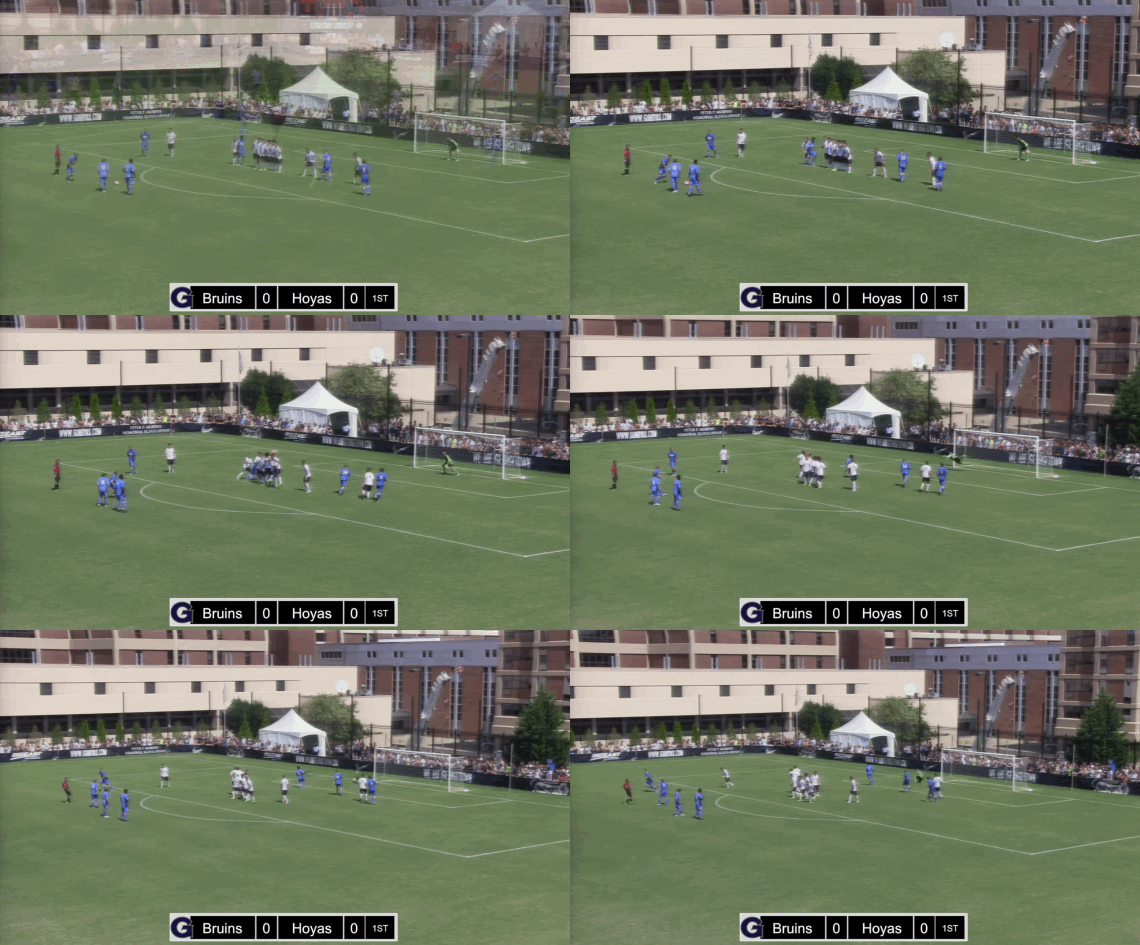
6. JT Marcinkowski (Georgetown vs. UCLA)

Can't have a save of the year list without a free kick stop. The freshman goalkeeper does a good job to hold onto the ball as well.

7. Michael Breslin (UC Irvine vs. Creighton)

Breslin has a great stare down to make this truly in-your-face save. Breslin gets sets like a cowboy in the west and executes perfectly on the play.

8. Matt Bersano (Penn State vs. Indiana)

Most penalty saves are the same but Bersano guessing the right way isn't enough here. He completely stretches out and goes high with his hands to stop the assumed scoring chance.

9. Jeff Caldwell (Virginia vs. Notre Dame)

Caldwell's reflexes are just enough on this bullet of a shot before sending it into the stratosphere. (Click here for the video, if the gif is too grainy.)

10. Kendall McIntosh (Santa Clara vs UC Riverside)

McIntosh saves Santa Clara with a scramble on the goal line with not one but two saves.

11. Colin Webb (Indiana vs. Maryland)

One second left? No problem. Webb makes a late save to push for overtime.

12. Brenden Alfery (Robert Morris vs. Eastern Illinois)

Alfery retreats back to the goal to turn a bizarre goal into a bizarre save. It's a little awkward, but Alfery displays a stunning awareness and determination to stop the deflected goal. (Video automatically starts at 0:46 for the save.)

13. EJ Proctor (Duke vs. Florida State)

The Seminoles come close here but the deflection doesn't trick Proctor. Oh, and yeah, this was in the NCAA semifinal against number one ranked Florida State. (Click here for another angle to see how fast the play unfolds.)

14 and 15: Andrew Tarbell and Fernando Pina (Clemson vs. Coastal Carolina)

Two great saves in one game. First, Andrew Tarbell steps back to his line to get set for an extension in the first half. (Save at 0:07 in video.)

In overtime, Pina gets low on a 1v1 by kicking his legs out and shooting out his right hand to tip away the potential golden goal. (Pina's save is at 0:55.)


Struggling to vote for just one? Feel free to vote for as many as you deem worthy for Save of the Year. One, two, or fifteen! You can vote up to once a day. Voting ends Sunday night.

What was the best save from the 2015 NCAA season?
1. Erika Yohn (Purdue vs. Missouri)
2. Julie Eckel (Tennesse vs. Virginia Tech
3. Caroline Casey (William and Mary vs. Georgetown)
4. Micah Bledsoe (Lipscomb vs. Louisville)
5. Todd Morton (Delaware vs. Elon)
6. JT Marcinkowski (Georgetown vs. UCLA)
7. Michael Breslin (UC Irvine vs. Creighton)
8. Matt Bersano (Penn State vs. Indiana)
9. Jeff Caldwell (Virginia vs. Notre Dame)
10. Kendall McIntosh (Santa Clara vs. UC Riverside)
11. Colin Webb (Indiana vs. Maryland)
12. Brenden Alfery (Robert Morris vs. Eastern Illinois)
13. EJ Proctor (Duke vs. Florida State)
14. Andrew Tarbell (Clemson vs. Coastal Carolina)
15. Fernando Pina (Coastal Carolina vs. Clemson)
Free Poll creator

Global Soccer Network on American Goalkeepers

Global Soccer Network is a stat-driven scouting program that surveys over 340,000 soccer players in the world. They use a variety of tools to analyze players and provide an overall rating for a player, called the GSN Index. The GSN Index is centered on four different stats. Pulled from their site, they are:

1. SRC - Soccer Related Characteristics. The basis for the GSN Index is the evaluation and rating of different characteristics (over 70) which are essential for players. Every player will be evaluated by several scouts independently, in order to achieve the most possible objectivity. The assessment includes technical, tactical, mental and physical characteristics.

2. +/- statistic - Based on their performance data players receive plus scores for positive actions during the game (goals, assists, penalties saves, complete passes etc.) For negative actions players receive minus scores (own goals, red cards, incomplete passes etc.) The 100 value represents a balanced +/- statistic. If the value is higher than 100 then the player has had more positive actions than negative actions. If, however, the value is smaller than 100, then the player has had more negative than positive actions.

3. Potential - Various factors are taken into consideration which influence the development of the player, such as the quality of coaches and football education, learning ability and age, just to name a few. Starting value is 0.00 (no further development in the future). The scale is open at the top. The higher the value the higher the potential.

4. Level of Play - With our system it is possible to rate and analyze every match a player has played in his entire career. Every match gets rated on a scale between 1 and 20. 20 for example is a world cup final or UEFA Champions League final while values under 1 are mostly youth leagues or non-professional leagues. The system also differentiates other factors like the age of a player or the minutes on the pitch. (for example, a player which is 18 years old and plays 90 minutes in a German Bundesliga match, gets a higher rating than a 30 year old player with the same minutes on the pitch in German Bundesliga) The higher the level of play is, the more positive is it for the GSN Index.

Current Future SRC +/- Potential LOP Current+
Brad Guzan 424 488 79.2 128.04 2.68 11 115.73
Tim Howard 415 448 73.5 136.36 0 12.04 125.37
Sean Johnson 327 406 71.3 127.08 9.78 6.91 123.26
Bill Hamid 312 409 68.1 128.82 9.75 6.8 130
Steve Clark 309 364 67.9 126.64 5.15 7.53 121.14
Ethan Horvath 286 384 65.8 133.82 14.95 4.9 120.25
Luis Robles 283 358 68.4 129.04 0 6.6 132.43
William Yarbrough 276 418 70.4 127.67 2.13 5.5 126.58
Clint Irwin 276 368 66.2 129.17 7.92 5.5 127.49
Zac MacMath 270 356 66.5 126.61 9.59 5 121.27
Tally Hall 263 364 69.1 129.58 1.59 5 125.28
David Bingham 263 351 65.8 133.2 5.36 5.01 136.59
Bobby Shuttleworth 255 298 65.7 128.21 4.38 5 128.52
Tyler Deric 251 354 68.0 127.02 2.94 4.5 123.3
Dan Kennedy 250 348 67.5 124.68 0.89 5 132.4
--- --- --- --- --- --- --- ---
Quentin Westberg 299 373 64.0 140.65 5.54 7 157.56
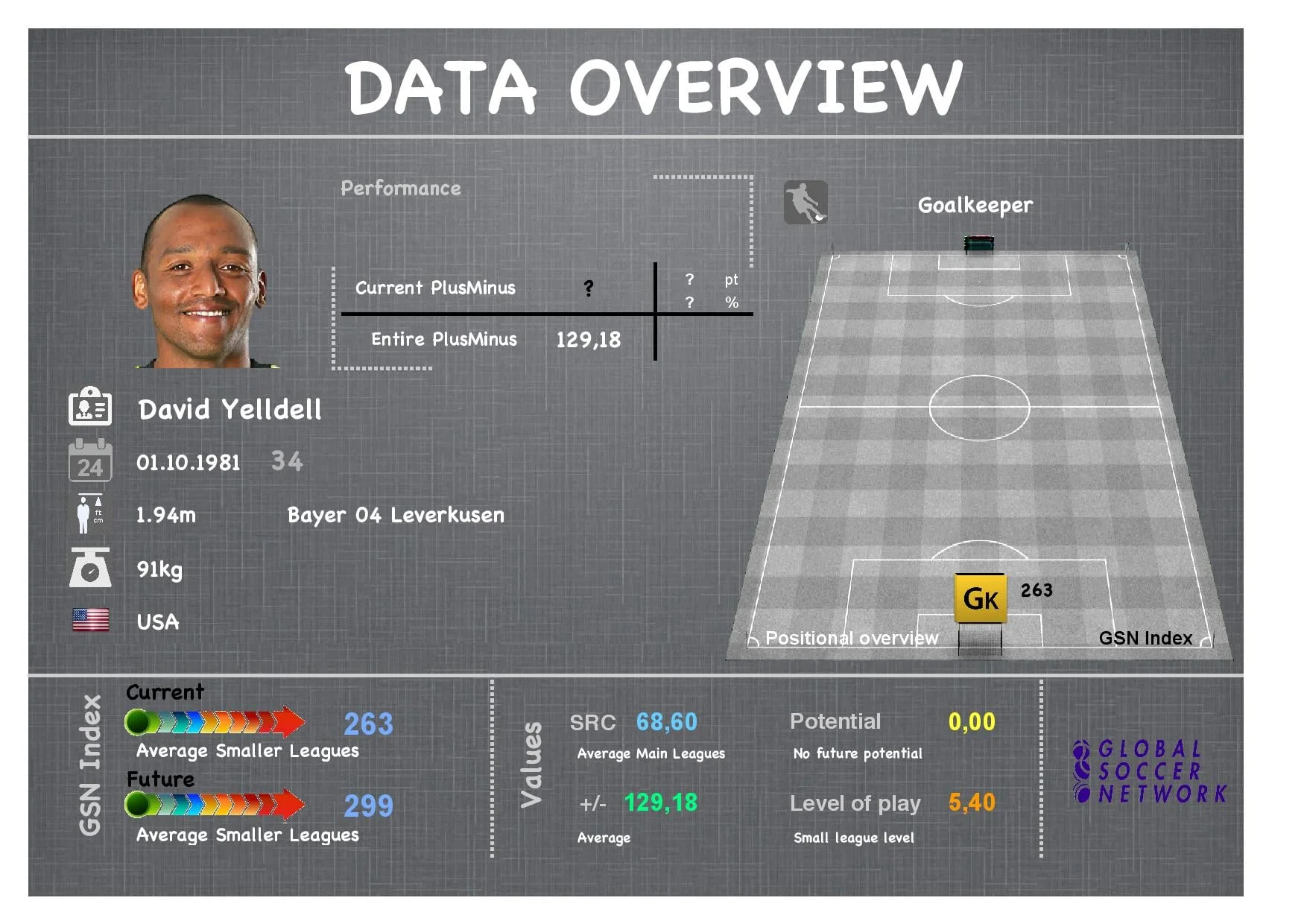
David Yelldell 263 299 68.6 129.18 0 5.4 129.18
Jon Kempin 258 340 62.7 116.37 19.35 4.61 109.71
Jeff Attinella 254 341 66.1 130.16 5.79 4.51 144.6
Kevin Piedrahita 251 323 59.8 133.56 17.95 4.01 152.63
Santiago Castano 247 328 61.6 123.22 18.49 3.9 120.86
Cody Cropper 243 321 60.5 123.82 17.79 4 108
Brad Stuver 235 304 64.1 115.05 10.84 4.1 111

Current - Current GSN Index
Future - Future GSN Index,
as extracted from the current score
SRC - see above
(+/-) - see above
Potential - see above
Current+ - The current +/- stat, used to see how in form a player is

The table is sorted by the Future score and all the numbers can be found on the players' respective card. I separated the table in between Shuttleworth and Kennedy as there is a lack of enough minutes for the lower section to really be involved. (GSN doesn't track USL.)

There are some interesting patterns between the twenty-three goalkeepers.

1. SRC has a stronger correlation with the future GSN Index, not potential.

I thought this was odd as William Yarbrough's future score was higher than Hamid's despite having much less potential and a lower current GSN Index. I messaged Dustin at GSN to ask him about the correlation between potential and future GSN.

The potential is only related to the SRC score. We are rating over 70 attributes which are essential for soccer players and how these 70 attributes of a player will develop in the future.

The Future GSN Index takes many different factors into consideration. The potential is only a small part of it. There are other various factors. Is a player playing for a national team? How was his footballing education? His age? How capable is a player competing on a higher level and many? It also checks other players with similar values and how they have developed over the years.

So you are right. There is not much correlation between the potential score and the Future GSN Index because the potential score only depends on the SRC and the Future GSN Index depends on a lot of different factors.

So GSN is predicting that WPY has a much larger upside than the rest of the bunch, despite playing worse than many of them until now.

2. GSN really likes Sean Johnson and Quentin Westberg and isn't so high on Ethan Horvath.

Horvath may be getting hurt from his relatively low level of play. Even though he has played in Europa League matches, it appears the Norwegian league isn't rated any higher than MLS. Johnson has a much larger future rating than expected and Westberg's level of play is somewhere in between EPL and MLS level, although his sample size isn't quite fleshed out.

3. GSN says Brad Guzan is not playing well at the moment while Luis Robles is.

His career +/- is 128, a middling score when compared to the rest, but his current score is dead last in the top section. Surely part of this has to do with Aston Villa's train wreck of a season but apparently GSN thinks he is partly to blame. Luis Robles, on the other hand, is leading all American goalkeepers with a current +/- of 132.


For more information on GSN, contact them on Twitter at info_gsn.