Player Journal: Bobby Edwards Looks Back on His Collegiate Experience

After a long journey, Bobby wraps up the college chapters in his player journal. You can read all five of his here, dating back to the summer of 2016.

The last time we talked you were at Monmouth. Catch us up from what happened over the past year that led you to Mount St. Mary's.

 When I graduated from Monmouth in the Spring of 2018, I had a remaining year of NCAA eligibility because of my redshirt junior season due to injury. I recognized that I needed to take a long term view regarding my career goals. Although my short term goal is to play professionally, in the best case scenario, two thirds of my work life will take place after I hang up the boots. I can’t imagine myself spending 30 years of my life sitting all day in an office somewhere. My passion has always been soccer, so I felt the need to begin preparing myself now for a transition somewhere down the road to a position in the business of soccer, preferably in high level coaching. I loved my time at Monmouth, both on and off the field, but I didn’t want to spend my final year of eligibility pursuing a master’s degree that wouldn’t fit with my long term dreams.
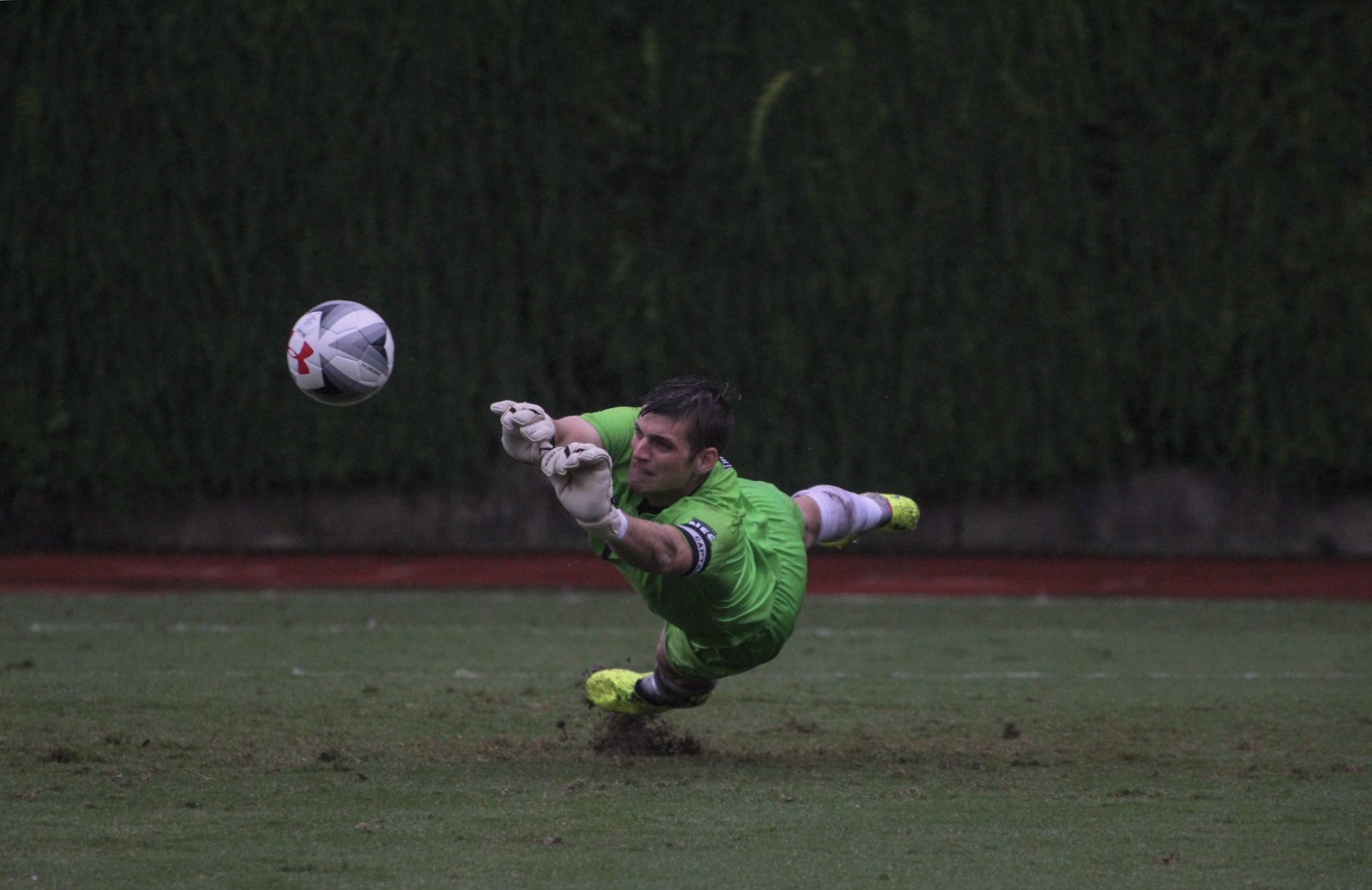
Bobby started all sixteen games for the Mount this past fall.

Bobby started all sixteen games for the Mount this past fall.

Therefore, I began looking at schools that offered a master’s in Sports Management, the degree that I felt best suited my long-term goals. This led me to Mount Saint Mary’s University, where Coach Bryan Cunningham sold me on the opportunity I would have to be a part of building a DI soccer program from the ground up. It’s important to note that MSMU discontinued their men’s soccer team in 2012, but thanks to an amazing amount of support from alumni, staff and school administration, the University opted to bring back the program for the 2018 season. This season was an incredible learning experience, with our team being primarily comprised of freshmen and sophomores. In fact, I was the only player on the team that had any prior DI soccer experience. Getting the opportunity to play the “veteran leader” role was unlike any other experience I have had in my career thus far. It helped me mature both on and off the field and better prepared me for the next step in my journey.


At the end of your college career, you suited up for three different schools. Is there anything you'd change if you could go back and do it all again?

On the “micro” level, there are of course particular decisions I made in certain games that I would absolutely do differently if I had the chance – staying on my line instead of coming out, a catch rather than a punch, etc. But that’s the nature of goalkeeping and it is through our mistakes that we learn. So when looking at the bigger picture, I really like where I find myself now as a player and a person. I recognize that the journey I made, with its various twists and turns and highs and lows, is responsible for having brought me to this place. There were times when I felt a bit lost and questioned my path, but I was able to persevere – and learning how to persevere is at the essence of what is required to being a goalkeeper. I’ve learned that there is so much that is out of my control in regard to how a game or a season will evolve. So it is best to focus on what is under my control and to a large extent that is the attitude I bring to training and games. I constantly remind myself that the short term setbacks are not what will determine if I can accomplish my long-term goals.

MSMU 1.JPG


As someone who's seen a variety of different programs, when considering helping players get to the next level, what's the strongest resource the NCAA has to offer?

In my opinion, there is no resource more valuable than that of a good head coach. When we speak about college soccer, we are often keen to focus on just the “on-the-field” stuff - wins, losses, goals, etc. In reality, that only makes up a fraction of what a college head coaches’ job truly is. College coaching is unique - coaches are responsible for taking 18 year old teenagers and developing them into adults, which goes far beyond the field. Less than 2% of college soccer players continue on to the professional ranks, so if players leave a university with nothing more to show for it than a better understanding of the sport, you’ve let the majority of your players down in their life’s development.

Bobby Edwards with former head Coach Jim Deegan (center) and Bryan Cunningham (right, current head coach).

Bobby Edwards with former head Coach Jim Deegan (center) and Bryan Cunningham (right, current head coach).

For the 1.4% of players who do continue on to the pros, a good college coach is invaluable to their professional ambitions. How many different connections does he/she have? Are they well established with professional teams? Are they experienced in sending guys to the pro leagues often? It might not be fair, but the reality of the situation is that sometimes it isn’t a matter of how talented you are, but rather if you have the right connections to the next level. Don’t get me wrong, you won’t sign a professional contract because of a connection, but a good coach with the right contacts can get your foot in the door.  Personally, I have been unbelievably lucky to play for Coach Cunningham at MSMU - his reputation speaks for itself and whenever I’m in his office, I admire all the professional jerseys that decorate his walls. Coach Cunningham and Assistant Coach Trevor Singer have been two of the best (if not the best) coaches I have had the privilege to play for. They are second to none and I have learned an incredible amount in just one year under their leadership. In regard to my professional ambitions, I sleep very well at night knowing that Coach Cunningham and Coach Singer are on my side.


What's the future look like moving forward? Would there be any disappointment if you never suited up in a professional match?

The dream is the same as it has always been - professional soccer. At the moment, I am keeping fit and staying sharp while I finish up my master’s degree. Come May, I’ll be heading back to South Carolina for the summer to play PDL (USL League 2 it’s called now, I guess) with SC United Bantams, the same club I was with last summer. I had an incredible experience last summer, SC United Bantams is a top-class organization made up of some of the best people I have met -  I cannot wait to be back.  After another summer in South Carolina, I’ll head off to trial both here and abroad and attempt to make playing soccer my job. It’s pretty crazy to say that! I’m confident in my future and excited in what is to come.

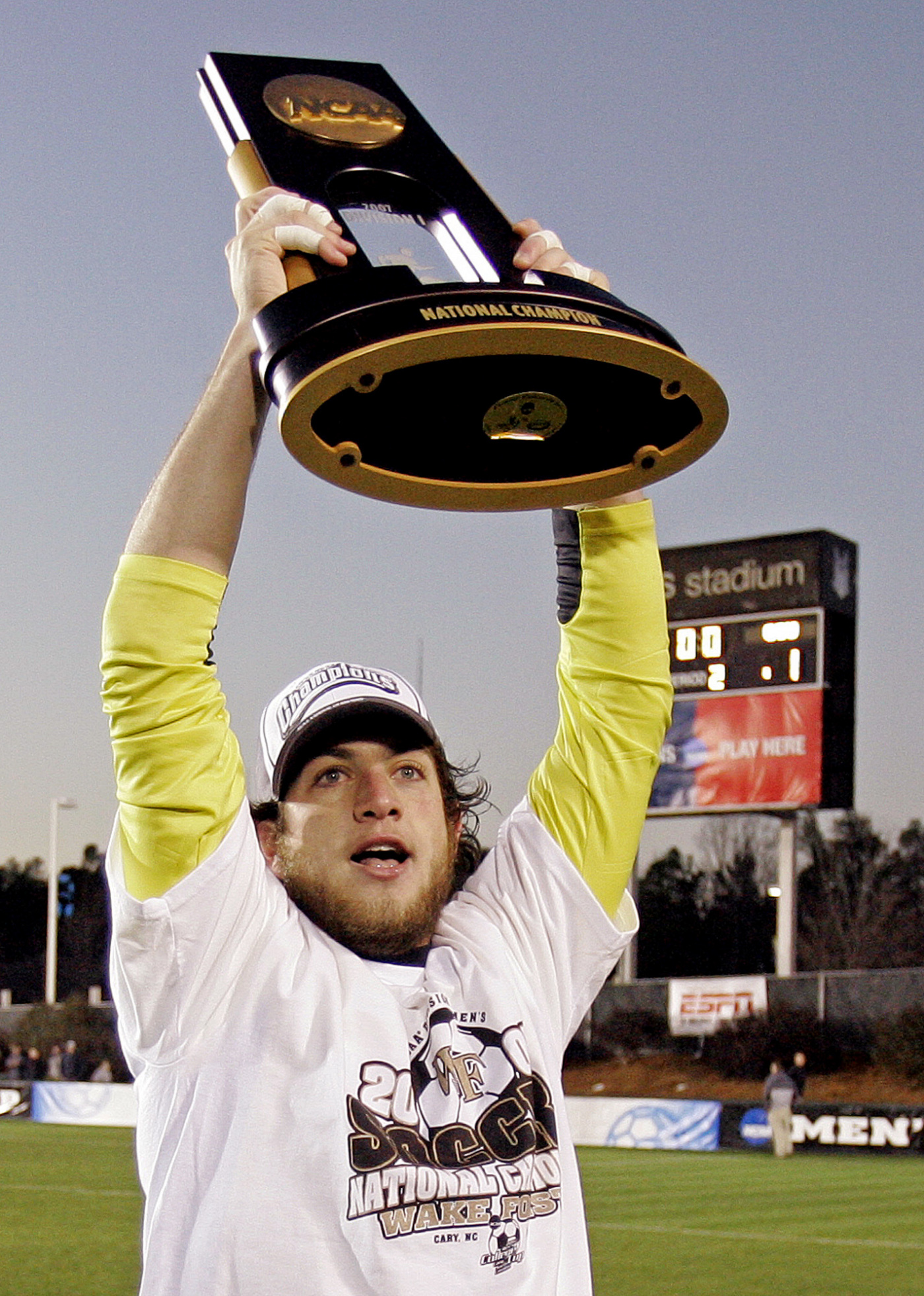
To say that there would be disappointment if I never suited up in a professional match is an understatement. The one and only thing I have ever dreamed of since I was a kid was becoming a professional soccer player. My cousin, Brian Edwards, has been my lifelong soccer idol. In fact, I still have an autographed photo of him in my room. Brian played at Wake Forest, winning the NCAA national championship in ‘07 before being drafted to the MLS. I used to watch all his games, even following him regularly when he went abroad to Sweden, always dreaming to one day follow suite. If I never ended up going pro, I wouldn’t just feel like I’ve let myself down, I feel like I would let down the family name.

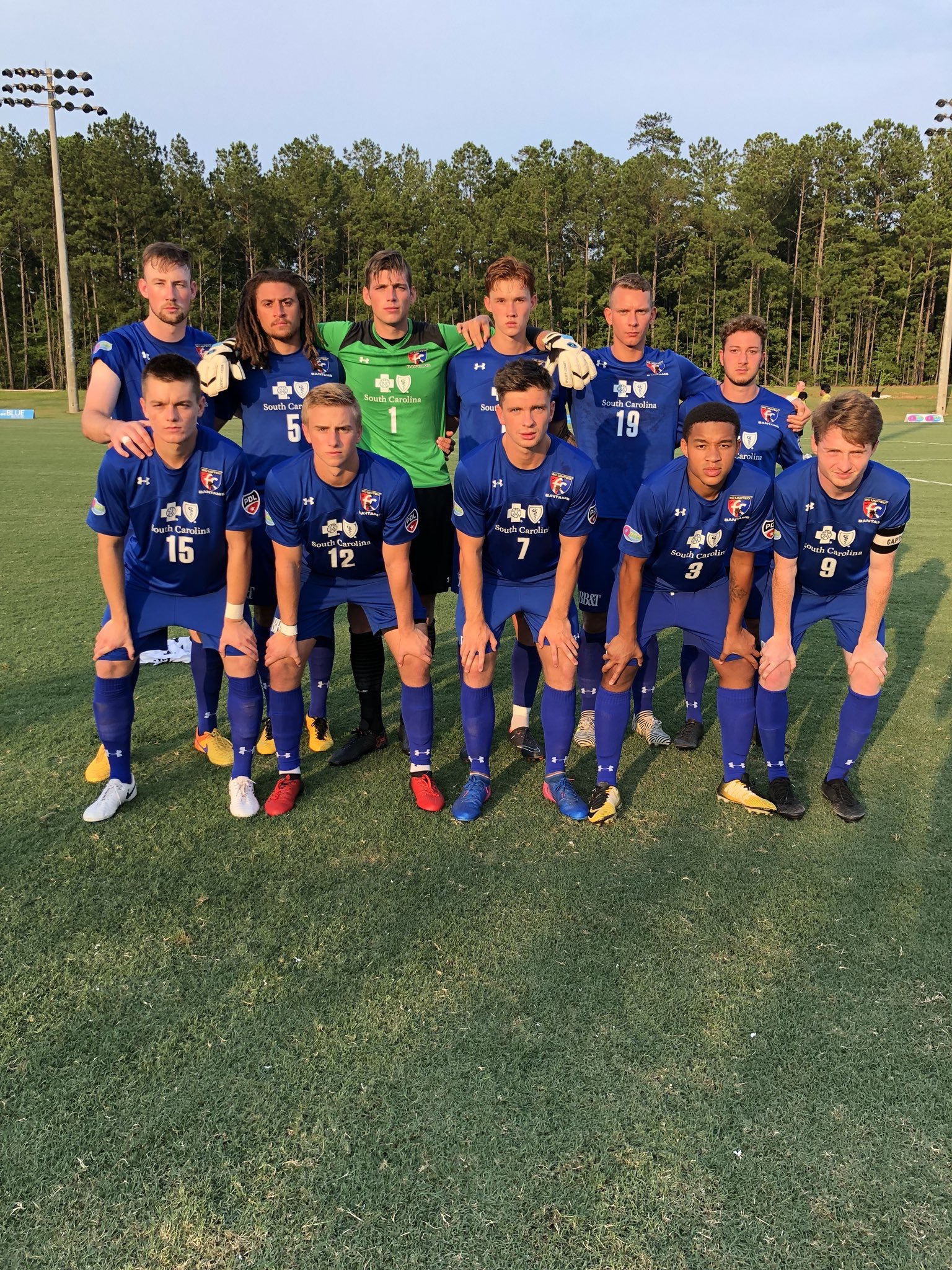
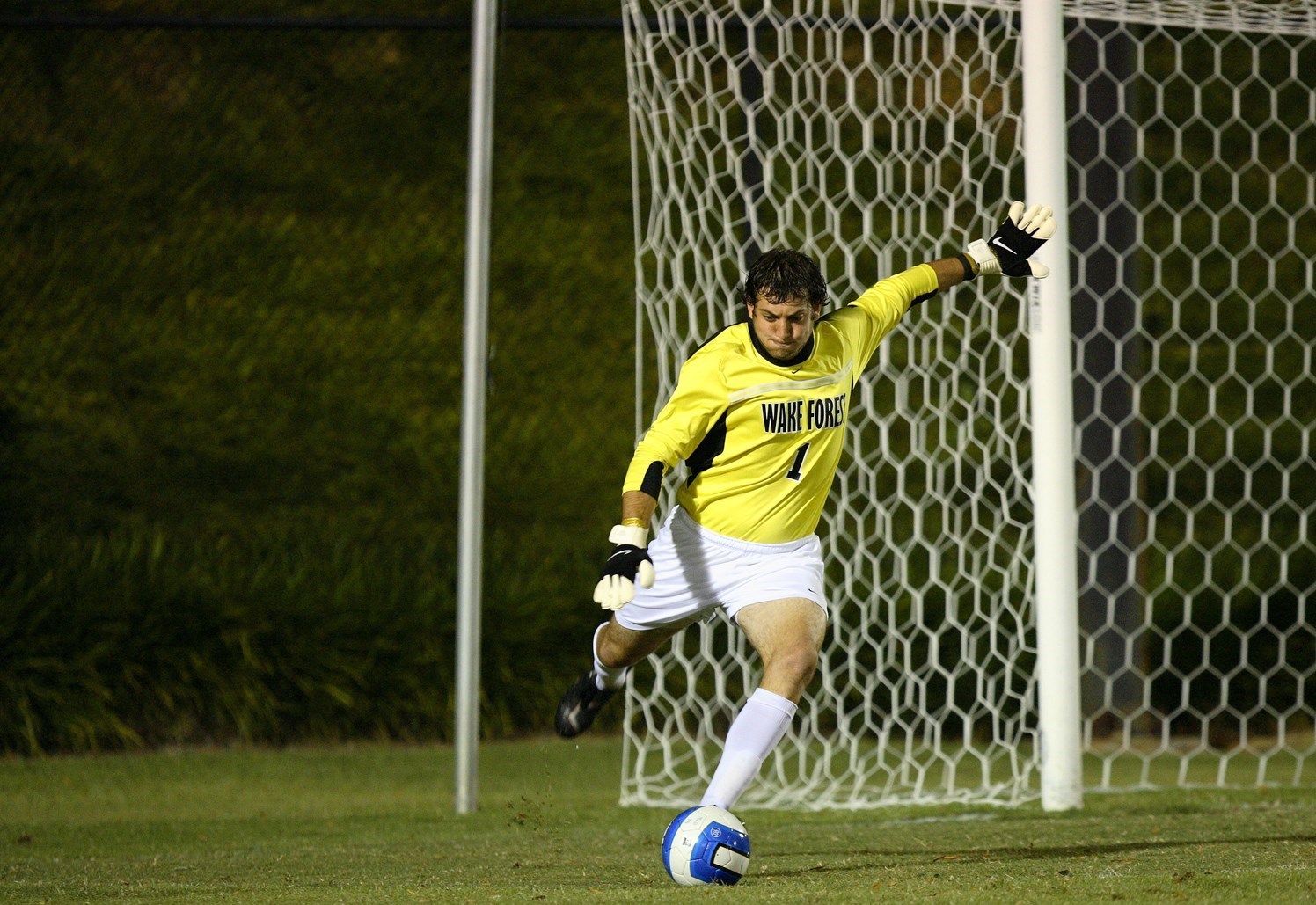
Pictures of Edwards with SC United Bantams as well as Bobby’s cousin, Brian.

Lastly, and ending on a positive note here, what's your best save in your college career and what makes it a highlight of your career?

That’s a tough one! I’d have to answer this one with two different saves for different reasons. Both saves came this year – the first one was against FDU and the second was against LIU Brooklyn. When you analyze a save, there are many different factors that need to be considered. Of course, the overall talent and skill it takes to make the save is of major importance – everybody loves a save that looks great for the cameras. But even more important is a save that comes at a crucial point in a game – one that keeps your team in the game even if it isn’t as picture perfect. Sometimes you get lucky and pull off both at once!

My save against FDU was a highlight because it kept our team in the game against a very talented FDU side - we ended up walking away with a 0-0 draw. The save itself is perhaps not the best of technique, I get caught cheating to one side right before the striker hit the shot. The way it played out in real time, I was almost certain he was going to hit it hard and low to my left side. I still remember my heart dropping as I saw the ball come off his foot headed back the other way. Somehow, I managed to get my foot on the ball and pop it up and over the bar. I’ll never forget getting back into the locker room for our halftime meeting and having a laugh to myself about that save.

The second save is the one I would probably consider my “best” save when talking in terms of technique. It was during the first OT period of our game against eventual NEC Conference champions, LIU Brooklyn. The striker got a bit of space outside the top of the box and bent one to the top left corner. It was just one of those shots that goalkeepers dream of, one that you can get some nice airtime and pose for the camera. By this time, we only had a few games remaining in the season and personally that meant I only had a couple games left in my college career, so it was nice to wrap up my collegiate career with a cool memory like that.  

Goals Saved Above Replacement: 2018 MLS Goalkeeping Stats

cover photo belongs to Gary A. Vasquez, USA TODAY Sports

Recently American Soccer Analysis published an article, Going to WAR for Points Above Replacement. It’s a fantastic read and an idea that I’m sure will stem new ideas for how statistics are utilized in soccer. Unfortunately they’ve beat me to the punch a little as I’ve been working on a new goalkeeping stat for the past few years, trying to find something more intuitive than the dreadful save percentage or goals against average. There are a number of issues with traditional goalkeeping statistics, the most notable being that they are only a sliver of a goalkeeper’s impact on the game. Goals Saved Above Replacement (GSAR) quantifies all areas of a goalkeeper’s actions, from shot stopping to cross handling to pass accuracy.

Identifying a baseline or replacement-level for MLS goalkeepers is tricky with salaries and talent levels constantly swelling over the past twenty years. Matching a “0 GSAR” goalkeeper with the median salary of MLS goalkeepers in 2018 ($132,625.00) proved to be the easiest route. Using this standard, we’ll take a look at seven different categories to obtain an overall GSAR rating, as well as put a dollar amount on each MLS goalkeeper’s performance from 2018.

Goals Saved Above Replacement

Each MLS goalkeeper has had their season broken down into seven categories.

shots <10 - The first two columns are shots from inside and outside ten yards. The distance measured is from the shooter to the goalkeeper, not the shooter to the goal.

While traditional expected goal models focus on a shooter’s location on the field, GSAR focuses on different criteria: where the shot passes the goalkeeper and how long the goalkeeper had to react.

A shot’s difficulty is not deemed by where it enters the goalmouth but how far the ball was from the goalkeeper when it intersected the goalkeeper’s dive line. This angle is affected by a goalkeeper’s starting position as well as where the shooter is located on the field. If a shot is taken near the end line, the ball will pass the goalkeeper within a few feet even if it is hit the upper corner. Similarly, if a goalkeeper is closer to the shooter, they “cut down the angle” and cover more of the goalmouth, putting the ball’s path closer to their body.

shots >10 - While the first category is largely impacted by a goalkeeper’s reaction abilities, the second has more emphasis on a goalkeeper’s ability to move his feet and general angle play.

pks - Penalties aren’t a large part of the MLS season, but they do occur once every six or seven games. On average a penalty has a success rate of around 80%.

crossing - This category takes into account if a goalkeeper punched, claimed, or (for a negative value) let a cross drop in a position they should have challenged for. The position has recently seen a swing towards favoring passive goalkeeping when it comes to crosses, which explains the relatively low ratings.

error - Covering a number of different areas, only negative numbers will be found here. This can include gifting a poor rebound to the opposition, giving away a penalty, or a number of other actions that result in creating another chance on goal.

misc - The miscellaneous tallies cover any non-tradition goalkeeping action. Slotted balls back to the center of the box are the most common, as well as any actions that don’t fit a proper formula, which are entered in by hand. Unique shot deflections and 1v1 situations (amongst other actions) can be found here. Hand-adjusted values make up less than .1% of all goalkeeping actions.

passing - Passing stats consider how often and where a goalkeeper completes a pass versus where a turnovers occur. A turnover at the other side of the field is negligible, while a turnover in front of one’s own goal returns a larger negative value.

Minutes and average GSAR/90 minutes are tacked on at the end.

Projected Salaries Based Off of GSAR

Picture1.png

Placing a value on a goalkeeper’s season is challenging as one team’s willingness to spend high on goalkeeping doesn’t necessarily mean the rest of the league will. To find a fair expected payment, the salaries and GSARs were listed in descending order to find a trend between the two. This brings up certain issues but overall it puts every goalkeeper on an even playing field when it comes to receiving payment for their services.

As some goalkeepers didn’t play the whole season - whether due to injury or a coach’s decision - finding a projected dollar amount would either have to extrapolate a goalkeeper’s stats for a full 38 game season or shrink down the corresponding payment. For example, Attinella only played two-thirds of the season but compiled a 4.74 GSAR. Should his projected GSAR-based salary be off what he could have done over 38 games or should it account for only the games he played? With a goalkeeper’s true impact being dependent on what they can bring to the field every game, I opted to extrapolate the dollar amount out to 38 games.

Categories are explained in more detail below. Goalkeepers are sorted by the difference ($$.diff) in their projected payment minus their actual. “$$.diff” is not what goalkeepers deserved to be paid, simply just the difference between actual and deserved.

m.GSAR/gm - Simply dividing a goalkeeper’s GSAR over the minutes they played, unless the goalkeeper played less than 900 minutes in the season. If this was the case, a goalkeeper was given either a positive or negative .03, depending on their GSAR. It’s not a great siphoning method, but +/- .03 keeps backup goalkeepers’ GSARs from getting out of hand with such a small sample size.

adj.GSAR - What a goalkeeper’s GSAR would have been had they played all 38 games (3060 minutes, excluding stoppage time).

gsar.$$ - How much a goalkeeper deserves to be paid, converted from a goalkeepers’ adj.GSAR. The conversation formula is based off the previous orange and white graph.

$$.diff - Goalkeepers are sorted by this column, which simply subtracts real.$$ from gsar.$$. Tyler Miller was underpaid by $333,503 while Andre Blake was overpaid by $410,805.

Have any questions? Head over to the contact page for any specific inquiries.

Top USYNT Goalkeepers by Birth Year

Early in the week we dove into the top 100 American goalkeepers on the men’s side so to give some face time for the young guns coming up, here are the top eight goalkeepers from each birth year. Goalkeepers are ranked more on ceiling and potential and less about current form. Not every goalkeeper’s birth year is public so some of the goalkeepers may be placed up or down a year.

# - recently graduated

1995

1. Jane Campbell (Houston Dash)
2. Courtney Brosnan (Le Havre)
3. Lauren Clem (Uppsala)
4. Cassie Miller (PSV Eindhoven)
5. Mallory Geurts (Västerås BK30)
6. Danielle Rice (Assi)
7. Alison Jahansouz (Stanford) #
8. Hannah Seabert (Fortuna Hjorring)

1. Ethan Horvath (Club Brugge)
2. Zack Steffen (Columbus Crew)
3. Jesse Gonzalez (FC Dallas)
4. Todd Morton (Delaware) #
5. Bobby Edwards (Mount St. Mary's) #
6. Michael Nelson (Houston Dynamo)
7. Ben Lundgaard (Columbus Crew)
8. Rashid Nuhu (Fordham) #

1996

1. Casey Murphy (Montpellier)
2. Emily Boyd (Chicago Red Stars)
3. Lainey Burdett (Arizona) #
4. Ella Dederick (Washington State) #
5. Rachel Egyed (Maryland) #
6. Caroline Brockmeier (LSU) #
7. Kelsey Daugherty (UAB) #
8. Rachel Lusby (Portland) #

1. Jeff Caldwell (New York City FC)
2. Benjamin Machini (Burgos CF)
3. Evan Louro (New York Red Bulls)
4. Paul Christensen (Atlanta United 2)
5. Luis Barraza (Marquette) #
6. Mike Novotny (Hartford Athletic)
7. Ben Willis (Gonzaga) #
8 Ryan Cretens (UNC Wilmington) #

1997

1. Jalen Tompkins (Colorado)
2. Kaelyn Johns (Dayton)
3. Cosette Morche (Texas A&M)
4. Paige Simoneau (San Jose State) #
5. Devon Kerr (Ohio State) #
6. Lauren Rood (Stanford)
7. Hannah Luedtke (Butler)
8. Reilley Ott (Michigan State)

1. JT Marcinkowski (San Jose Earthquakes)
2. Jonathan Klinsmann (Hertha BSC)
3. Justin vom Steeg (Los Angeles Galaxy)
4. Jimmy Slayton (Hartford)
5. Briley Guarneri (Colorado Mesa) #
6. Parker Siegfried (Ohio State)
7. Jacob Harris (Colgate)
8. Chase Gentry (Tulsa Roughnecks)

1998

1. Mikayla Krzeczowski (South Carolina)
2. Kaylie Collins (USC)
3. Jaelyn Cunningham (Illinois)
4. Brooke Heinsohn (Duke)
5. Mandy McGlynn (Virginia Tech)
6. Amanda Fitzgerald (Fairleigh Dickinson)
7. Abby Stapleton (Charlotte)
8. Amanda Dennis (Penn State)

1. Abraham Romero (Pachuca)
2. Kevin Silva (Hearts of Midlothian)
3. Chase Vosvick (Loyola Maryland)
4. Ben Hale (Furman)
5. Will Pulisic (Duke)
6. Matt Freese (Philadelphia Union)
7. Colin Shutler (Virginia)
8. Drew Romig (North Carolina)

1999 and Younger

1. Claudia Dickey (North Carolina)
2. Hillary Beall (Michigan)
3. Laurel Ivory (Virginia)
4. Brooke Bollinger (Florida State)
5. Lauren Brzykcy (UCLA)
6. Mackenzie Wood (Northwestern)
7. Hensley Hancuff (Villanova)
8. Angelina Anderson (California)

1. Carlos dos Santos (Benfica)
2. Eric Lopez (Los Angeles Galaxy II)
3. Nicolas Defreitas-Hansen (Everton)
4. Brady Scott (FC Köln)
5. Damian Las (Chicago Fire)
6. Luca Lewis (Torino)
7. Ethan Wady (Chelsea)
8. Sam Fowler (Washington)

cover photo from the Trentonian

2019 MLS Mock Draft - Goalkeeper Edition

cover photo from the University of Maryland

Predictions for the 2018 draft were about as good as one can hope for: one of the eight perfectly predicted with bits and pieces of the rest being half-true. Some of the players were correctly predicted for certain rounds while some goalkeepers went completely undrafted, despite the whirlwind of goalkeepers flying off the shelf at one point. While this year’s talent doesn’t quite match last year’s lineup, here are six goalkeepers who may end up with an MLS team by the end of the week.

Dayne St. Clair - Orlando City, 1st Round, 3rd Overall Pick

Not many people have St. Clair this high on their draft lists but seeing as Orlando need another three goalkeepers with their USL team restarting this spring, seeing St. Clair in purple for 2019 makes sense. St. Clair supposedly won’t count as an international slot due to his Generation Adidas status, which is another plus for Orlando. Goalkeepers seem to be the safest position to select in Superdrafts and routinely go fairly early, especially when there’s a lot of praise on the player heading into the draft. Eric Dick went 13th overall in 2018. Tarbell 8th in 2016, Bono 5th in 2015, and Blake number one in 2014. Coming off a national championship, St. Clair could easily follow suit.

Rashid Nuhu - Minnesota United, 2nd Round, 32nd Overall Pick

There isn’t a general consensus on the second best goalkeeper in the draft so don’t be surprised if teams wait until the third round to follow up St. Clair’s draft pick. Minnesota cleared house and have two open spots at the moment, on top of a loose affiliation with Forward Madison who has zero goalkeepers on the books. Whether Nuhu ends up being a third or even fourth string goalkeeper, they should be able to find him some games with Madison in 2019.

Luis Barraza - Seattle Sounders, 3rd Round 68th Overall Pick

Barraza seems on track to forego a homegrown contract with Real Salt Lake to try his odds in the draft. Even if Seattle brings in Trey Muse, apparently a likely move for the Hoosier, the Sounders still have another two goalkeepers to go with Calle Brown set not to return at the moment. Barraza will likely be picked up by an MLS team at some point and Seattle are equally likely to select one this Friday.

Jimmy Hague - New York Red Bulls, 4th Round, 78th Overall Pick

Hague has received some polarizing press but he’s at the combine this week and the Red Bulls still need another two goalkeepers. While New York have done well to be churn out homegrown goalkeepers in the past, Hague fits the bill as far as classically tall, commanding keepers go. The Red Bulls may opt to go elsewhere to fill their USL side but by the time the fourth round comes around, there will surely still be a number of goalkeepers on the board that will be worth rolling the dice on.

Todd Morton - FC Dallas, 4th Round, 87th Overall Pick

It’s quite possible that FC Dallas will continue to fill their North Texas SC with academy players but they’d only be bolstered by having at least one goalkeeper on the squad over the age of 20. Morton has flown under the radar for most teams as he didn’t receive a combine invite, but for a USL side that seems intent on fast-tracking players to FC Dallas, Morton would be a good fit.

James Pyle - Sporting Kansas City, 4th Round, 93rd Overall Pick

Pyle is surely looking to add another chapter to his soccer career as the last goal he conceded was about as bad as it gets. SKC need another two goalkeepers for Swope Park and while they may turn to their academy to fill the slots, Pyle (who attended this year’s combine) will likely still be available in the fourth round.