Top 12 Goalkeepers in Football History

Goalkeepers are the backbone of any football team, blending incredible physical abilities with mental fortitude. Below is a detailed look at the top 12 goalkeepers in history, including their origins, achievements, and legacies.

1. Lev Yashin

●      Born: October 22, 1929, Moscow, Soviet Union

●      Clubs: Dynamo Moscow (1949–1971)

●      Major Achievements: Ballon d’Or winner (1963), Olympic Gold (1956), European Championship (1960)

●      Nickname: The Black Spider

Lev Yashin remains the only goalkeeper to have ever won the Ballon d’Or, highlighting his unmatched dominance. Known for his acrobatic saves and exceptional reflexes, Yashin revolutionized goalkeeping by actively commanding his defense. Over his career, he recorded 270+ clean sheets and saved over 150 penalties—an unparalleled feat.

His fearless style and uncanny ability to read the game made him a trailblazer. Whether it was diving full-stretch to parry a shot or intercepting crosses with ease, Yashin's legacy as the greatest goalkeeper of all time endures.

2. Gianluigi Buffon

●      Born: January 28, 1978, Carrara, Italy

●      Clubs: Parma, Juventus, PSG, (and Parma again)

●      Major Achievements: FIFA World Cup (2006), 10 Serie A titles, UEFA Cup (1999)

●      Nickname: Superman

Gianluigi Buffon’s career is a testament to longevity and excellence. Bursting onto the scene at Parma, Buffon earned a then-record transfer to Juventus in 2001, where he became a club legend. His shot-stopping ability, composure under pressure, and leadership were crucial to Italy’s 2006 World Cup victory. Buffon’s defining qualities were his consistency and ability to perform in high-stakes moments. Even in his 40s, he demonstrated the same sharpness and determination that made him an all-time great.

Similarly, for those who enjoy the thrill of strategy and precision, online gaming can offer a similar adrenaline rush. Richard Casino stands out as a top choice, boasting a vast selection of online slots, table games, and live dealer experiences. If you’re looking for excitement and rewards, Richard Casino review is worth exploring!

3. Manuel Neuer

●      Born: March 27, 1986, Gelsenkirchen, Germany

●      Clubs: Schalke 04, Bayern Munich

●      Major Achievements: FIFA World Cup (2014), 11 Bundesliga titles, 2 UEFA Champions League titles

●      Nickname: The Sweeper Keeper

Manuel Neuer is widely regarded as the goalkeeper who revolutionized the role. His ability to play as an additional defender—venturing far outside his penalty area to clear danger—earned him the nickname "Sweeper Keeper."

At the 2014 World Cup, Neuer’s innovative style and world-class shot-stopping helped Germany lift the trophy. His unmatched distribution, aerial dominance, and confidence in one-on-one situations have set a new standard for modern goalkeepers.

4. Iker Casillas

●      Born: May 20, 1981, Móstoles, Spain

●      Clubs: Real Madrid, Porto

●      Major Achievements: FIFA World Cup (2010), UEFA European Championship (2008, 2012), 3 Champions League titles

●      Nickname: San Iker

Iker Casillas, known as "San Iker," is one of the most decorated goalkeepers in football history. A Real Madrid youth product, Casillas made his mark early, becoming the youngest goalkeeper to play in a Champions League final at 19.

Casillas captained Spain during their golden era, leading them to two consecutive European Championships and their first World Cup in 2010. His stunning save against Arjen Robben in the final remains iconic. Renowned for his reflexes and clutch performances, Casillas was a true leader both on and off the pitch.

5. Peter Schmeichel

●      Born: November 18, 1963, Gladsaxe, Denmark

●      Clubs: Brøndby, Manchester United, Sporting CP, Aston Villa

●      Major Achievements: UEFA European Championship (1992), Champions League (1999), 5 Premier League titles

●      Nickname: The Great Dane

Peter Schmeichel was a larger-than-life presence in goal, both literally and figuratively. Standing at 6’4”, Schmeichel was known for his commanding presence and incredible reflexes. His leadership was pivotal in Manchester United’s historic treble-winning season in 1999.

Schmeichel’s defining moment came in Denmark’s unexpected Euro 1992 triumph, where his heroic saves carried the underdogs to glory. His ability to make crucial stops and inspire those around him cemented his place as one of the all-time greats.

6. Dino Zoff

●      Born: February 28, 1942, Mariano del Friuli, Italy

●      Clubs: Napoli, Juventus

●      Major Achievements: FIFA World Cup (1982), UEFA European Championship (1968), 6 Serie A titles

●      Nickname: The Timeless Captain

Dino Zoff is a legend of Italian football, known for his calm demeanor and impeccable positioning. Remarkably, Zoff led Italy to World Cup glory in 1982 at the age of 40, becoming the oldest player to lift the trophy.

Zoff was the ultimate professional, recording a record 1,142 minutes without conceding a goal in international football. His longevity and reliability made him an icon in the history of the sport.

7. Sepp Maier

●      Born: February 28, 1944, Metten, Germany

●      Clubs: Bayern Munich

●      Major Achievements: FIFA World Cup (1974), 3 European Cups, 4 Bundesliga titles

●      Nickname: The Cat from Anzing

Sepp Maier was one of the most consistent goalkeepers of his era, spending his entire career at Bayern Munich. Known for his agility and quick reflexes, Maier earned the nickname "The Cat from Anzing."

He played a vital role in Germany’s 1974 World Cup victory and Bayern Munich’s dominance in Europe during the 1970s. His eccentric personality and innovative training techniques added to his legend.

8. Edwin van der Sar

●      Born: October 29, 1970, Voorhout, Netherlands

●      Clubs: Ajax, Juventus, Fulham, Manchester United

●      Major Achievements: 2 Champions League titles, 4 Premier League titles

●      Nickname: The Flying Dutchman

Edwin van der Sar was a model of consistency, excelling well into his late 30s. After starting his career at Ajax, where he won the Champions League in 1995, Van der Sar enjoyed a late-career renaissance at Manchester United.

His calmness under pressure and ability to organize his defense made him a key part of United’s success. His decisive penalty save in the 2008 Champions League final is one of the defining moments of his career.

9. Oliver Kahn

●      Born: June 15, 1969, Karlsruhe, Germany

●      Clubs: Karlsruher SC, Bayern Munich

●      Major Achievements: FIFA World Cup Golden Ball (2002), 8 Bundesliga titles, 1 Champions League title

●      Nickname: The Titan

Oliver Kahn was a fiery and passionate leader on the field, renowned for his unmatched intensity and ability to inspire his teammates. His commanding presence and world-class shot-stopping made him one of the most feared goalkeepers in the world.

Kahn’s most memorable moment came during the 2002 FIFA World Cup, where he almost single-handedly led Germany to the final, winning the Golden Ball as the tournament's best player—a rare feat for a goalkeeper. His legacy is defined by his resilience, leadership, and ability to deliver in high-pressure situations.

10. Gordon Banks

●      Born: December 30, 1937, Sheffield, England

●      Clubs: Chesterfield, Leicester City, Stoke City

●      Major Achievements: FIFA World Cup (1966), 2 English League Cups

●      Nickname: None officially, but often referred to as one of the greatest shot-stoppers in history.

Gordon Banks will forever be remembered for "The Save of the Century" during the 1970 World Cup, where he miraculously stopped a powerful header from Pelé. A key figure in England’s 1966 World Cup-winning squad, Banks was known for his agility, composure, and consistency.

Despite losing sight in one eye later in his career, Banks remains a symbol of perseverance and excellence in goalkeeping.

11. Claudio Taffarel

●      Born: May 8, 1966, Santa Rosa, Brazil

●      Clubs: Internacional, Parma, Galatasaray

●      Major Achievements: FIFA World Cup (1994), Copa América (1989, 1997), UEFA Cup (2000)

●      Nickname: None commonly known, but a pioneer for Brazilian goalkeepers.

Claudio Taffarel is one of Brazil’s most successful goalkeepers, helping his team win the 1994 FIFA World Cup and reach the final again in 1998. Taffarel was known for his composure and reliability, traits that were rare for Brazilian goalkeepers of his era.

A key part of Galatasaray's UEFA Cup triumph in 2000, Taffarel inspired a new generation of Brazilian goalkeepers to pursue excellence.

12. Alisson Becker

●      Born: October 2, 1992, Novo Hamburgo, Brazil

●      Clubs: Internacional, Roma, Liverpool

●      Major Achievements: Copa América (2019), UEFA Champions League (2019), Premier League (2020)

●      Nickname: The Holy Goalie

Alisson Becker has become one of the defining goalkeepers of the modern era. With his composure, incredible reflexes, and pinpoint distribution, he has been a vital part of Liverpool's resurgence under Jürgen Klopp.

In 2019, Alisson played a key role in Liverpool’s Champions League-winning campaign, delivering crucial saves in high-pressure moments. His calm demeanor and ability to lead from the back have earned him global recognition as one of the best in the world today.

Conclusion

Goalkeeping is a position that demands a unique combination of physical prowess, mental toughness, and tactical awareness. The players on this list have not only excelled in these areas but have also left a lasting impact on the sport, redefining what it means to be a goalkeeper.

From Lev Yashin's pioneering style to Manuel Neuer's revolutionary approach as a "sweeper-keeper," these athletes have elevated goalkeeping to an art form. Legends like Gianluigi Buffon, Iker Casillas, and Peter Schmeichel showcased leadership and resilience, while modern icons like Alisson Becker and Manuel Neuer continue to inspire the next generation.

The contributions of these 12 legends go beyond their saves and trophies—they represent the heart and soul of their teams, standing as the last line of defense and the first spark of attack. Their legacies remind us that while the spotlight often shines on goal scorers, the foundation of every great team starts in the goal.

These goalkeepers are not just players; they are symbols of perseverance, innovation, and excellence in football history. Whether through record-breaking performances, iconic moments, or sheer inspiration, they have secured their place in the pantheon of football legends.
Sportsbook Software Provider: The Secret to Goalkeeping Success in iGaming

A sportsbook software provider is like a goalkeeper on the field — silent yet pivotal, ready to defend, adapt, and lead operations with precision. While bettors cheer for goals and big wins, operators rely on these digital maestros to keep everything in check. Whether you're running baseball betting software, working with esports betting, or exploring cryptocurrency casino software, picking the right sportsbook software provider is your golden glove for success.

From advanced online betting software to casino affiliate software, this industry is where innovation meets creativity, offering operators tools to attract players and keep them coming back. Let’s take a closer look at the notion of goalkeeping — both on the pitch and in iGaming.

Sportsbook Solution: Guarding the Net in Sports Betting

A great goalkeeper anticipates moves and prepares to block the opponent’s best shot. Similarly, a sportsbook solution anticipates the needs of operators and players. Here's how it acts as the goalie of your operation:


  1. Versatility in Betting Markets. Whether you’re running baseball betting software or venturing into esports betting, a quality sportsbook solution allows operators to cover diverse sports. It adapts to global markets, offering flexibility in everything from football to niche betting markets.

  2. Staying Agile with Technology. Sports betting platforms today embrace the future, experimenting with bitcoin gambling online and even making the most of cryptocurrency casino software. These advancements give players secure, fast options — and you the competitive edge.

  3. Player-Centric Innovation. The best betting platforms take inspiration from their goalkeeping counterparts. Just as a great keeper observes and adjusts, sportsbook software monitors player habits and adapts offerings. Special features, like dynamic odds for live matches, keep bettors engaged while boosting operator success.

  4. Keeping Payouts Reliable. Imagine a goalkeeper fumbling an easy save — trust is broken. In iGaming, players value reliable payouts above all. Advanced online betting software guarantees quick, transparent transactions, building confidence with every win.

Online Casino Affiliate: Passing the Ball to Score Big

Both operators and affiliates work like a team in the online casino sector. Affiliates bring the crowd, while operators convert the momentum into wins. A good casino affiliate software acts as a playmaker, making connections that count. Affiliates are the stars behind the scenes, guiding players to platforms through creative campaigns and promotions. Operators using casino affiliate software can:

  • Track performance with real-time data.

  • Create marketing incentives that resonate with audiences.

  • Build long-term partnerships that drive steady traffic.

Just as a striker depends on their teammates for assists, affiliates need tools to succeed. The best casino affiliate software focuses on transparency and performance. Features like detailed reporting and customizable campaigns allow affiliates to excel while helping operators boost revenue.

Affiliates thrive when they feel rewarded. Offer competitive revenue-sharing models and timely payments. A win-win system keeps affiliates loyal and makes sure operators score big with sustained traffic and high conversion rates.

Traits of a "Goalkeeper" Sportsbook Provider

When it comes to choosing a sportsbook software provider, think like a coach picking their goalkeeper. You want agility, dependability, and the ability to adapt under pressure. Here are the standout traits of an ideal provider:

  1. Flexibility. Whether offering baseball betting software or branching into esports betting, a good provider gives operators the tools to target diverse player interests.

  2. Stable Security. Players trust platforms that prioritize safety. Look for providers who integrate secure payment systems, like Bitcoin gambling online, to protect user data and transactions.

  3. Customization Options. Some players want the basics, while others crave niche features. With dynamic offerings, like customizable odds or cryptocurrency casino software, operators can cater to different preferences.

  4. Mobile Optimization. In the age of mobile gaming, a user-friendly mobile interface is a must. Players want convenience, and a provider that delivers optimized platforms scores big.

Last but not least, global reach is also vital. That’s because a diverse range of options keeps players engaged. The right provider connects you to audiences far and wide, turning casual players into loyal enthusiasts.

Tips for Building Long-Term Success in Sports Betting

Great goalkeeping isn’t just about one great save; it’s about consistency and learning from every match. Operators building success in iGaming can apply the same philosophy. Here are a few “goalkeeping tips” for long-term wins:

  1. Keep an Eye on Trends. Stay ahead by offering trending markets like esports betting. Younger audiences are drawn to these dynamic options. Incorporating innovative markets boosts engagement and expands your audience base.

  2. Reward Player Loyalty. Loyalty programs keep players invested in your platform. Whether it’s bonuses tied to cryptocurrency casino software or exclusive offers for frequent bettors, rewards matter.

  3. Invest in Innovation. Technology evolves, and so should your platform. Explore areas like Bitcoin gambling online or virtual betting options to stay competitive and relevant.

Last but not least here: prioritize support. A responsive support system reassures players and builds trust. It’s the human touch in a digital industry — a winning combination.

Conclusion

As they say in football, "A great goalkeeper can win you the match." In iGaming, a sportsbook software provider plays a similar role. From offering versatile software for sports betting to integrating advanced features like Bitcoin gambling online, the right partner helps operators build platforms that shine.

By combining dynamic sportsbook solutions with casino affiliate software, operators can attract players, grow profits, and lead the league in innovation. Just like in football, success comes down to teamwork — and your best Bitcoin gambling site software provider is the ultimate teammate.

Women's Goalkeeper Hall of Fame Bios (2020)

gettyimages-1026237198-1024x1024.jpg

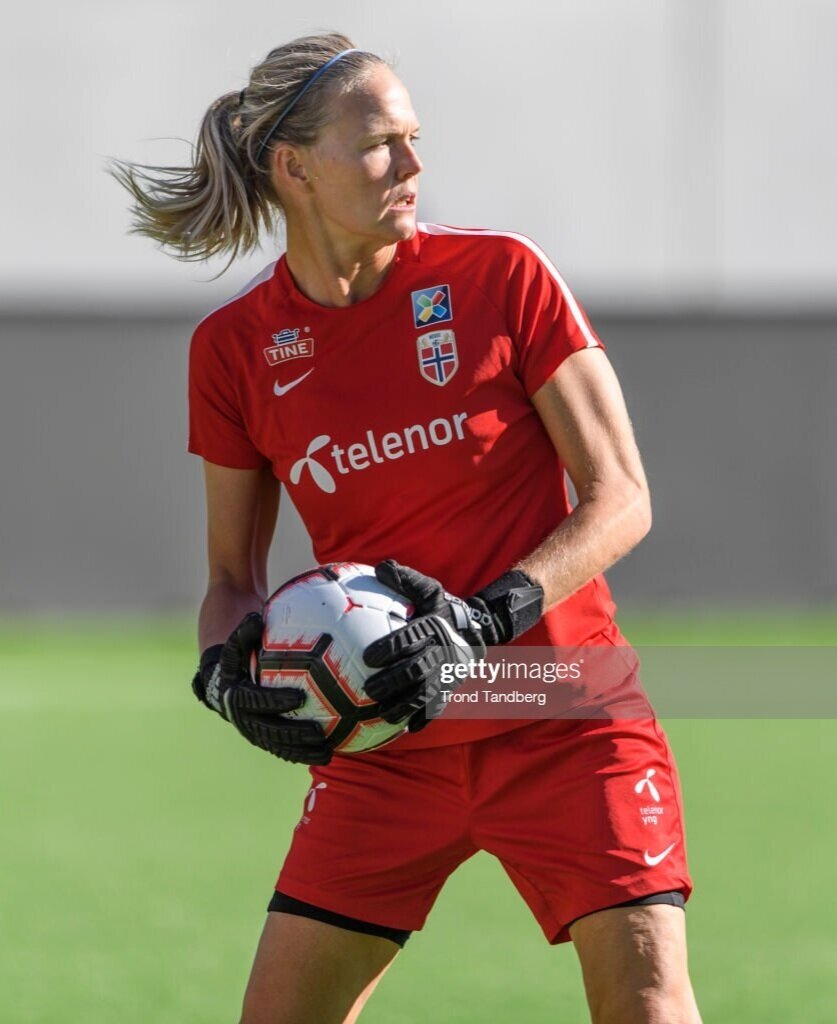
2020 - Ingrid Hjelmseth (Norway, 138 caps / 125 WCT) - Hjelmseth’s route to becoming the national team starter was a long and tumultuous one. After Bente Nordby retired from the Norwegian national team in 2007, Hjelmseth overcame a string of injuries and a competitive goalkeeping core to eventually took over the starting role in 2009. At age 28, and only 16 caps to her name, Hjelmseth broke onto the scene in a surprise run during the 2009 Euro, in which an underdog Norway topped a heavily favored Swedish side 3-1 in route to a top-four finish. Although the 2011 World Cup would prove to be disappointing - the first and only time Norway didn’t advance out of the group stage to date - Hjelmseth and Noway would rebound in 2013. Three shutouts in the Four Nations Tournament, a third-place finish in the Algarve Cup, and a runner-up in the 2013 Euro re-established Norway on the international stage. Hjelmseth concluded her time with the national team in 2019, finishing with 138 caps to her name and an eighth-place finish at the 2019 World Cup.

Hjelmseth’s club career spanned twenty years with three Norwegian clubs. Throughout her time with Trondheims-Ørn (1999-06), Asker (2007-08), and Stabæk (2009-19), she won the Toppserien five times, the Norwegian Cup six times, and reached the Champions League quarterfinals three times. Hjelmseth played with a stunning combination of patience and bravery, consistently reading each attack in a precise manner and rarely relying on rash decision-making. Whether facing penalties, shots right under the crossbar or a chaotic play in the box, Hjelmseth’s competitive drive made it was clear why so many looked up to her as a leader within the team and an elite goalkeeper in the twenty-first century. Hjelmseth is the second Norwegian goalkeeper named to the Hall of Fame.

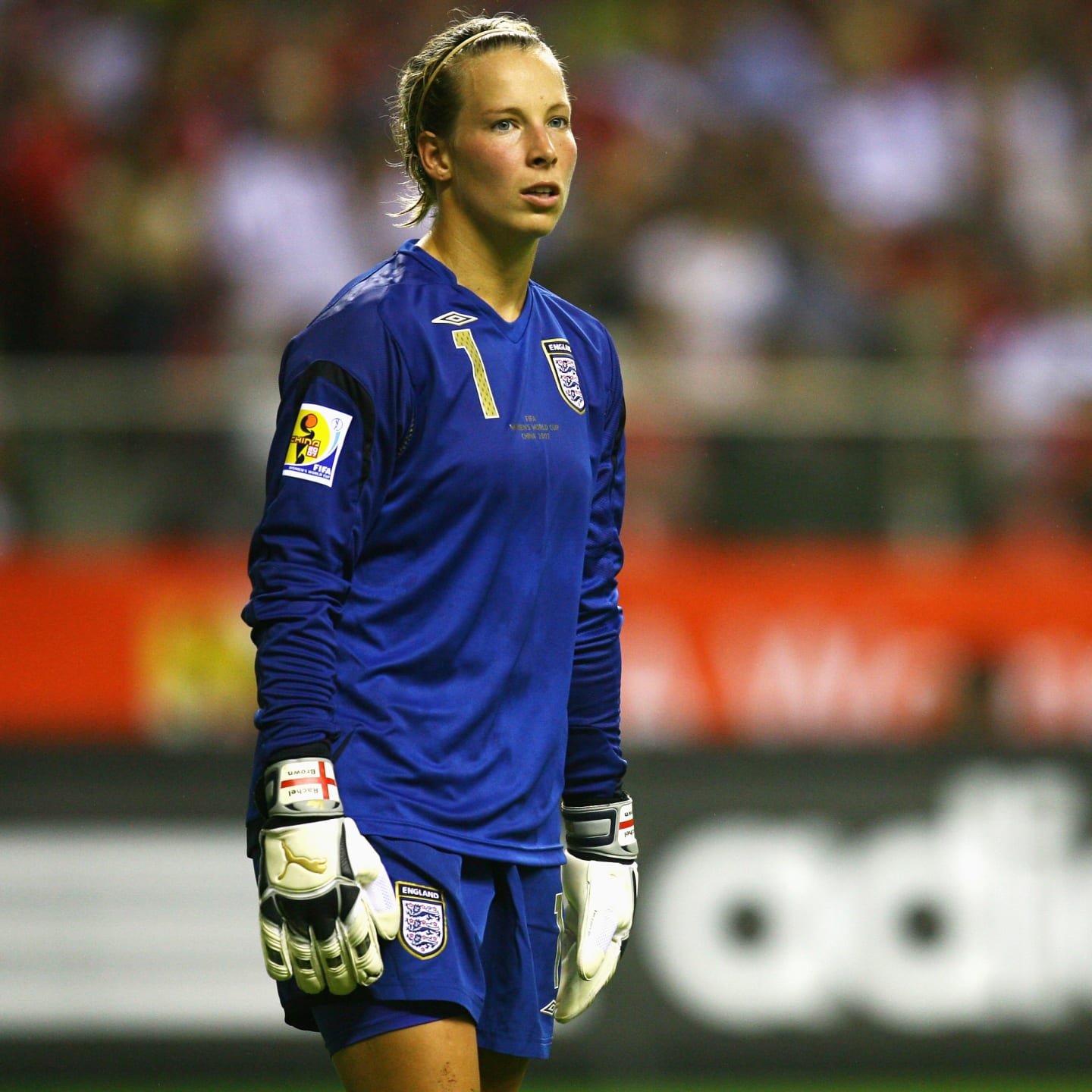
2021 - Rachel Brown-Finnis (England, 82 caps / 98 WCT) - One cannot talk about Brown’s journey to becoming England’s number without mentioning the number of times Brown overcame setbacks. At age seven, Brown wanted to play for her school but with no girls’ team available she was told, in Brown’s words, “OK, if you must play you'd better go in goal.” Brown’s path to the pro game was on the heels of being the only female player at an otherwise all-boys camp, being rewarded by David Seaman as the best player at the camp. Soon after signing with Liverpool, the young goalkeeper started in the 1996 FA Cup Final, as well as leading the club to a fourth-place finish in the Premier League in 1997 before heading off to the US for collegiate play.

Brown started at the University of Alabama before transferring to Pittsburgh, where she was named the 2000 Big East Goalkeeper of the Year. Upon returning to England in 2003, and being sidelined for a year and a half with a knee injury until the summer of 2005, Brown would switch Merseyside allegiances and join Everton, a club she would play for until 2014. With Brown at the helm, Everton finished in the top three in the league for eight straight seasons, regularly having one of - if not the - best defenses in the league. Everton made three trips to the UEFA Champions League and in 2010 Brown led the Blues over Arsenal 3-2 in the FA Cup Final.

Internationally, Brown bridged the gap between Pauline Cope and Karen Bardsley. Brown earned 11 caps before turning 21 years old, filling in when Cope was unavailable during Euro and World Cup qualifying campaigns from 1997-2001. Although the aforementioned knee injury in 2003 delayed her arrival, she earned her starting spot back for the last game in the group stage at the 2005 Euro. Brown would go on to start every match at the 2007 World Cup and 2009 Euro, finishing seventh and second, respectively. In the twilight of her career, Brown and Bardsley were named to the Great Britain roster for the 2012 Olympics, marking one of her proudest accomplishments in her professional career.

For a goalkeeper who emerged during a time when investment in goalkeeping was at a minimum, Brown continued to elevate the position through her fierce determination and self-belief for both club and country.


2022 - Sari van Veenendaal (Netherlands, 91 caps / 94 WCT) - In the summer of 2022, Sari van Veenendaal hung up her gloves, ending her career as one of the top goalkeepers in the history of the women’s game. While still young for the position at 32 years of age, she felt the “right moment” had come, presenting the opportunity to “explore new things.” The former Dutch international left behind a legacy adorned with the expected team trophies and personal accolades, having reached soaring heights at the club and international levels.

Born in the city of Nieuwegein, van Veenendaal played youth soccer with local side VSV Vreeswijk before signing a professional deal with FC Utrecht. After a few years as a back-up, she moved to FC Twente and received specialized training for the first time, enjoying the most active stretch of her club career with 112 appearances. Her tenure with The Tukkers includes winning the 2011 Eredivisie title, the KNVB Women’s Cup, and two consecutive BeNe League championships.

Strong performances led to increased interest, and van Veenendaal joined Arsenal, taking the starting job from Emma Byrne. Her English sojourn was successful, claiming the FA Women’s Super League, the FA Women’s Cup, and two FA WSL Cups. While with the Gunners, the goalkeeper took up the unique hobby of juggling before matches to relieve tension.

Out of contract in 2019, she then moved to Atlético Madrid as a free agent, believing the reigning Spanish champions “suited [her] best” and “offered all the conditions to further develop.” However, her time in the Primera División lasted a single season, desiring to return home. The following summer, van Veenendaal signed with PSV Eindhoven, citing the pull of being around family. Over two seasons, the goalkeeper made 39 appearances and played a key role in winning the KNVB Cup, the club’s first silverware, by stopping a penalty in the final.  

As an international, van Veenendaal made her senior Netherlands debut in 2011, earning 91 caps before her recent retirement. She held the number one role for numerous tournaments, including the triumphant run at the UEFA Women’s Euro 2017, surrendering a mere three goals and registering shutouts against England, Norway, and Sweden. For her performance, the goalkeeper was named to the Best XI.

The Oranje (Orange) had another successful run at the succeeding 2019 Women’s World Cup, falling in the final to the United States Women’s National Team by a 2-0 margin. Van Veenendaal was once again called in to play the hero several times. That year, she was cascaded by a bevy of honors, including Golden Gloves, Best FIFA Goalkeeper, International Federation of Football History & Statistics (IFFHS) Best Women’s Goalkeeper, and IFFHS Women’s World Team. 

Unfortunately, van Veenendaal suffered a shoulder injury at the 2022 UEFA European Women’s Football Championship, leaving the opener against France in the 22nd minute. Following the Netherlands’ quarterfinal exit, she announced her retirement, having made her decision prior to the competition, taking several one-year contracts to facilitate a quick exit. A muted ending to her career belies the impact that was left on the field.

Van Veenendaal was an elite shot-stopper with the size and reflexes to cover the span of the goalmouth, possessing the composure to stare down all manner of point-blank opportunities. A reliable and no-nonsense competitor with excellent hands, she focused on limiting mistakes and the self-evident task of keeping the ball out of the goal. Dominating the six-yard box can be a bit of a throwback for the position, but mastery of the basics stands out among the flash of the modern game.

Her most famous performance came in the first half of that World Cup final against the United States Women’s National Team, pulling out four saves to keep proceedings level. Twice in quick succession she stopped Alex Morgan from close range, displaying the trademark composure and quick reflexes to deny the opponent. Stars build their legacies by producing on the biggest of stages, and van Veenendaal etched her name into the history books.

The Netherlands struggled prior to qualifying for the UEFA Women’s Championship in 2009, growing over the past decade into one of the world’s top programs. Van Veenendaal both benefited from and was partially responsible for the growth, rising to the thankless challenge of rectifying teammates’ errors. A crucial save in the 21st minute of a group stage fixture at EURO 2017 demonstrates her ability to quickly lock onto opponents at unexpected moments.

While her time atop the mountain was short, van Veenendaal made a profound impact and briefly reigned as the best in the goalkeeping kingdom. Performances on the international stage cemented her as one of football’s all-time greats, with peerless exhibitions of defense that pushed the Dutchwoman into the pantheon of stars. She retires from the sport and heads directly into the Hall of Fame.


2023 - Karen Bardsley (England, 81 caps / 92 WCT) - Some players are cursed with persistent injuries throughout their careers, often preventing the fulfillment of potential or driving them from the sport entirely. A rare few are able to overcome these issues and produce at a high level, indicating an inherent purity of talent and an unbreakable drive to climb the mountain. In addition to the traditional challenges and dearth of opportunities that once defined the women’s game, Karen Bardsley broke through the mire at every stage of her journey yet reached the pinnacle for both club and country.

Born in Santa Monica, California to English parents and raised in Chino Hills, Bardsley competed with AYSO, Chino Hills Nitemares, Upland Celtic, and So Cal Blues. Despite suffering a devastating injury during her junior year of high school, she rebounded with a strong senior season and was recruited by Cal State Fullerton. Her college career included a host of individual honors, including Big West Conference Freshman of the Year as well as multiple All-Big West First Team selections and Big West Goalkeeper of the Year awards.

After some time on the books at Ajax America Women and Pali Blues, Bardsley caught the attention of goalkeeping coach Paul Blodgett and was drafted by Sky Blue FC ahead of the inaugural Women’s Professional Soccer season. She spent three years in New Jersey but was challenged by a broken collar bone. Her journey then led to Linköpings FC in Sweden, making a mere three league appearances over two seasons.

Ahead of the 2013 season, Bardsley relocated to her ancestral home and joined the now-defunct Lincoln Ladies in the FA Women’s Super League. She featured in all 14 matches, helping the club reach the Leagues Cup final (then known as the Continental Cup) and avoid relegation. As would become a constant refrain throughout her career, her two saves in the semifinal round shootout secured victory over favored and eventual league champions Liverpool.

Her success in England led to a move to recently professionalized Manchester City, initially on a two-year deal, a tenure that began with a stress factor in her foot. In her first full season, Bardsley led the club to the 2014 Leagues Cup, crafting a shutout in the 1-0 final victory over Everton. During her eight years with the Blues, she collected a slew of trophies, including three additional Leagues Cups (her two penalty saves helped secure the 2019 Continental League Cup in a 4-2 shootout victory over Arsenal), three FA Cups, and the 2016 Women’s Super League title. The 20-year playing career ended at the age of 37, with the now-retired British-American assuming the role of girls’ academy manager at the Etihad.

At the international level, Bardsley is a dual-national eligible for the United States through birth and England due to her parents’ heritage, opting to represent the latter nation beginning with the youth squads and making her senior debut in March of 2005 at the Algarve Cup. She saw the field with England at three FIFA Women’s World Cups (2011, 2015, and 2019) and two UEFA Women’s Euro tournaments (2013 and 2017), while serving as backup at EURO 2009 and suiting up for Great Britain at the 2012 Summer Olympics.

The bronze finish at the 2015 World Cup served as the high-water mark for her career with two sterling performances, the first in a 2-1 win against Colombia in the final Group F match. Bardsley sacrificed her body to make a crucial stop on a Carolina Arias breakaway. After the match, she claimed to have anticipated the attempted lob and “made [herself] as big” as possible, using her “beak” to produce the save.

Her performance in the third-place game, a 1-0 result over a potent Germany side, helped secure what was at the time the program’s best finish at the World Cup and first-ever victory over the European rival in 31 years of competition. Her seven varied saves maintained the clean sheet, but the standout was a 53rd-minute reflex stop on a close-range volley from Sara Däbritz. In a tightly contested match that required mettle and near perfection, she rose to the challenge with poise, technique, athleticism, and big-game execution that defined her career.

Bardsley collected 86 caps for England and Great Britain while also registering 103 appearances with Manchester City. In addition to claiming eight trophies with the Blues, she produced shutouts in three out of four major club finals. FIFA named her to the World Cup All-Star squad due to her stellar performance at the 2015 tournament.

Described as an “absolute top-class goalkeeper” who was a “commanding shot-stopper” and a real leader at the back,” her perfectionist nature enabled her to handle the sport’s expected challenges and overcome the unfortunate predisposition of medical issues. Bardsley modeled her game off of former Manchester United goalkeeper Peter Schmeichel, utilizing her unique combination of size and coordination. Despite making the move later in her career, she cites the move to Manchester City and the club’s goalkeeper coach as helping her game “evolve from the old-school style to a modern style of goalkeeping,” with improvement in the progressive-possession style that has taken over the sport.

Bardsley may lack the trophy haul of some of her contemporaries, but she made a defined impact on the game. She was a key player for England as The Lionesses transitioned over a decade from a developing program into an international powerhouse. While many careers end in the unanswerable “What if?”, the Englishwoman from California lived up to her potential and exhibited moments of sublime talent on the field.


2024 - Stephanie Labbé (Canada, 86 caps / 78 WCT) - With a decorated career lasting over a decade, Stephanie Labbé experienced soaring heights with Canada and also fought to disrupt the established orthodoxy. The recently retired goalkeeper was a model for consistency in nature and deed, with a lengthy résumé as proof.

Born in Edmonton, Alberta and raised in the small town of Stony Plain, Labbé competed with Spruce Grove Composite High School, Spruce Grove Saints, Millwoods Warriors, and Edmonton Aviators, not fully committing to the goalkeeper position until the age of 17; the teenager also featured for Canada at the youth level, winning the 2004 U-19 CONCACAF Women’s Championship. After delaying enrollment, she matriculated to the University of Connecticut and spent the majority of her collegiate career as the starter after grabbing the spot during her freshman year – her summers were spent with amateur side New England Mutiny, then in the Women’s Premier Soccer League. Her lengthy list of accolades includes being named NSCAA All-Northeast Region, NEWISA All-New England First Team, and Big East Goalkeeper of the Year as a senior. 

Labbé began her professional career in Sweden with Piteå IF, enduring the valleys and peaks of European football in three seasons with relegation out of the Damallsvenskan, promotion from the second division, and returning to the top tier for another run. She then jumped to KIF Örebro DFF, maintaining her role as the number one for three years. In her final campaign, the club secured a second-place finish in the domestic league and qualified for the Champions League, while her performances garnered Best XI honors.

After six years in Europe, Labbé returned to North America and signed with the Washington Spirit in the National Women’s Soccer League. In her first season, she made eight appearances and registered five shutouts. The following campaign involved 17 matches, with her performances twice earning Team of the Month honors – however, a leave of absence saw her temporarily step away from the game, with the club eventually surrendering her contract rights. 

Labbé then linked up with Calgary Foothills F.C. and made the bold move of attempting to play with the men’s team in the amateur USL Premier Development League (now known as League Two), believing that the competition would better prepare her for future Canada challenges. With the manager praising her as “world class,” she earned a spot on the team but was denied entry due to “gender-based eligibility requirements.” The brief experience training with the club saw her becoming a stronger player with “quicker hands” and “smarter passes,” demonstrating the artificially self-imposed nature of some of the limitations on her game and perhaps the women’s sporting world at large.

A few months later, Labbé returned to Sweden, signing with Linköpings FC. Her brief tenure included 12 combined league and cup appearances. Continuing her peripatetic journey, Labbé signed with North Carolina Courage of the NWSL, making 17 appearances in her first season and helping lead the club to the NWSL Shield and playoff titles.

In the twilight of her career, Labbé had another run in Sweden, showcasing in 17 fixtures for FC Rosengård. The goalkeeper then spent her final year as a back-up for Paris Saint-Germain in what was then known as the Division 1 Féminine. She featured six times before retiring from the professional game.

After debuting for Canada at the senior level in July of 2008, Labbé enjoyed a decorated run that included two Olympic medals and inclusion on three World Cup squads. Her breakout performance came during the 2016 Games in Rio de Janeiro, having been considered the third-string option a year prior to the competition. Labbé started in five of six matches and surrendered a mere four goals, including a stirring performance in the 2-0 opening victory against Australia. She then captured the bronze with a 2-1 victory over hosts Brazil, making a crucial save at the end of the first half.

Her performance was topped at the next Olympic Games, leading Canada to the first gold medal in program history. After suffering an injury in the opener to the hosts and sitting out a group stage fixture, Labbé registered clean sheets against Brazil and the United States in the quarterfinal and semifinal rounds, respectively. With the final against Sweden deadlocked in a 1-1 draw at the end of regulation after a few key saves, she pulled off two huge stops during the ensuing penalty shootout, including an acrobatic low dive on the penultimate attempt following some entertaining gamesmanship.

On the field, Labbé was an energetic goalkeeper who could shift into a save position with a high level of agility, able to adjust at a moment’s notice to the harshest of redirections. Getting to low shots was a particular area of strength, with excellent footwork on long-range shot attempts and quick reactions on penalties. She was noted as an excellent passer who led the build-up and made intelligent decisions in possession with a high level of composure. Her work on crosses was strong and resolute, with an ability to take heavy contact from the opponent and maintain her grasp on the ball.

From a conventional perspective, the high watermark of Labbé’s career was capturing the gold medal at the 2020 Olympic Games. Her standout performance carried Canada to glory, despite dealing with injuries that would have derailed many players suffering from similar issues. However, her career is also a testament to consistency, grit, and a willingness to push the boundaries, whether fighting her way through Europe or attempting to play at higher and higher levels. She enters the Hall of Fame having made an indelible impact on the game: achieving greatness and always pushing in order to reach new heights.


2025 - Hedvig Lindahl (Sweden, 189 caps / 169 WCT)

The average player has to endure a fair share of troubles on the way to the top and must harbor a resilient mindset in addition to on-field prowess. Hedvig Lindahl fought her way up through the sport’s Dark Ages, crowded depth charts, and medical issues, all while continually bouncing back from defeat. The decorated goalkeeper and Sweden international had a long and storied career that cemented her among the position’s greats. 

Experiencing a late start to goalkeeper training, Lindahl competed at the youth level with Gropptorps and Baggetorps. She began her professional career with DFK Värmbol and Tunafors SK (now Eskilstuna United) before moving to Malmö FF. Struggles for playing time led to her spending the final year of her contract on loan at IF Trion.

Lindahl then joined Linköpings FC and spent five seasons with the Östergötland club, claiming two Svenska Cupen titles. Her next career stop came at Kopparbergs/Göteborg FC (now BK Häcken FF) for two years, which provided the opportunity to develop her passing game. Eschewing an opportunity in the now-defunct Women’s Professional Soccer, she also enjoyed four campaigns with Kristianstads DFF, part of which was disrupted by an anterior cruciate ligament injury.

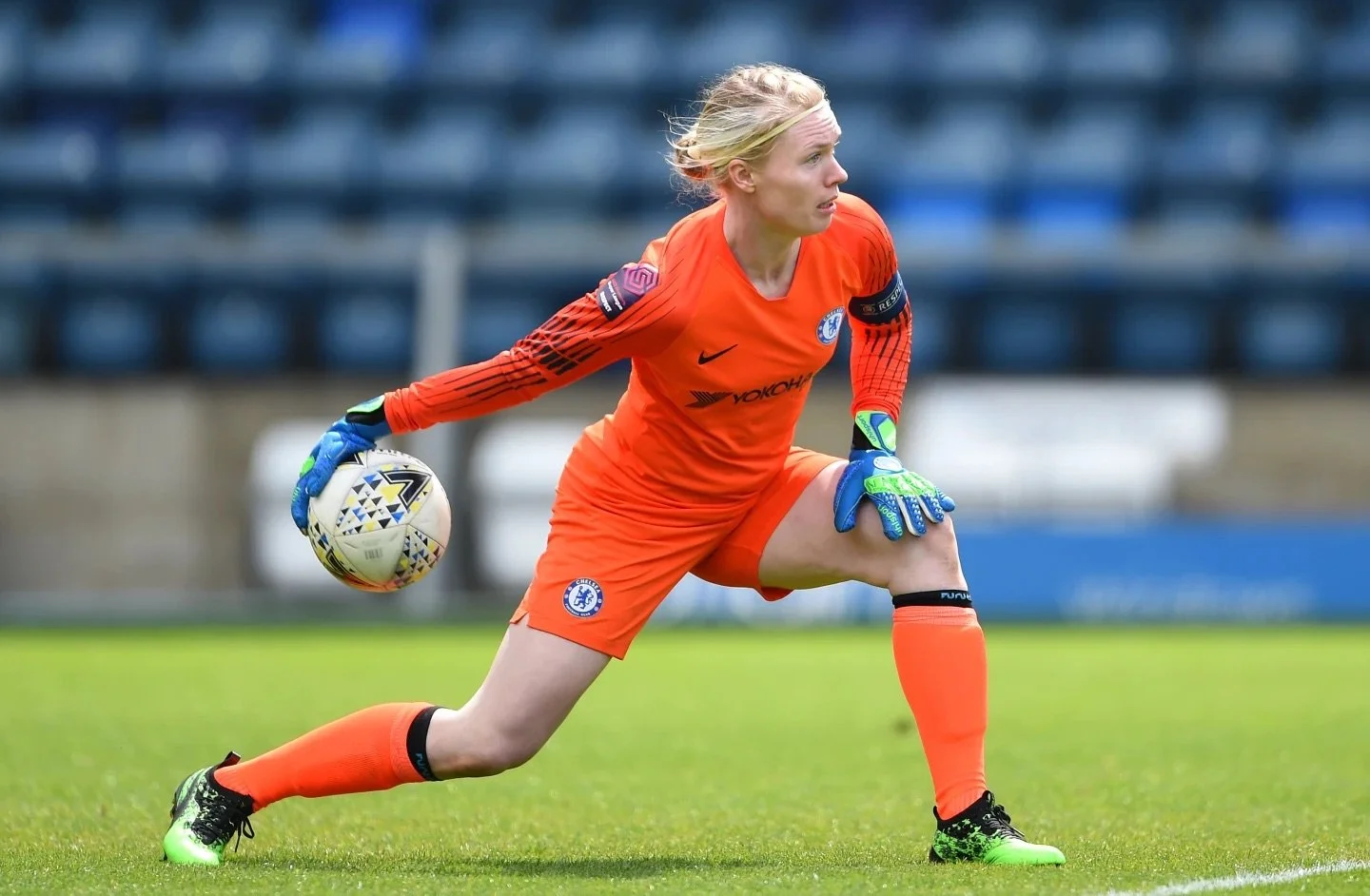
Her big break came in December of 2014, as a then-31-year-old Lindahl joined Chelsea. She opened her account with four shutouts in five matches and earned the club’s first major trophy with a 1-0 victory over Notts County in the FA Cup final. Shortly after, her performance in a 4-0 win against Sunderland secured the WSL title and the domestic double. Transforming into “the best goalkeeper in the world on current form,” her four-and-a-half season tenure included securing both trophies again in 2018 and being named to the WSL Team of the Year in 2016 and the 2017 FIFPro World XI.

 In July of 2019, Lindahl signed with VfL Wolfsburg on a one-year deal, serving as the number one and leading the club to a league and domestic cup double. She then jumped to Atlético Madrid, making 28 total appearances across two seasons. Returning to the domestic league, her career ended with stints at Djurgården and Eskilstuna United before retiring in May of 2024.

At the international level, Lindahl competed in Sweden’s youth section and made her senior international debut in January of 2002. She was a member of the squad that finished second at the 2003 World Cup.  With competition for playing time fierce, her time as the number one began at the Euro 2005, featuring at several successive tournaments, which included defeating the USWNT in the group stage and claiming third place at the 2011 World Cup. 

Injuries caused temporary hiccups in her reign, including the aforementioned ACL issue and a double hip surgery to fix an impingement. After her return, Lindahl featured as the starter at the 2015 World Cup and was awarded the Diamantbollen in 2015 and 2016, given to Sweden’s player of the year. She was also a member of the squads that claimed third at the 2019 World Cup and the silver medals at the 2016 and 2020 Olympic Games, ending her international career in 2022 with 189 caps.

In addition to the normal growing pains, on-field errors, and injury challenges faced by goalkeepers, Lindahl suffers from vitiligo and would apply a medical-grade sunscreen before, during, and after training and matches. At some tournaments, she was forced to play with extra protective clothing. Her perseverance and documentation of the disease helped other young athletes who found inspiration in her success.

As a goalkeeper, Lindahl was considered a “hard worker” and “extremely perfectionist,” with “a great deal of dominance of her box and outstanding shot-stopping ability.” She modeled her game after Iker Casillas, notably the “usage of his whole body, his explosiveness, and his agility.” Her self-described best qualities are propulsion on a “muscly, quick, strong, and powerful” frame as well as a challenging stubbornness that enabled her to overcome obstacles.

In many ways, Lindahl’s career was defined by her continual growth and capitalization on the specialized training that she missed in her youth; despite leaving Sweden at a later age, her adaptability enabled her to be “influenced by new thoughts and other cultures.” Chelsea forced her to become physical and “go through people to get the ball,” Wolfsburg taught “specific goalkeeping techniques such as blocking and spreading,” and Atlético Madrid inculcated technique and playing the ball short during the build-up. Coaches praised her methodical research and studying for penalties, having become a better goalkeeper by “knowing how to prepare for fixed situations” and developing a reputation as a specialist at denying opponents from the spot, which provided her biggest career moments.

At the 2014 Algarve Cup, Lindahl led Sweden to a 1-0 group-stage victory over the USWNT, ending the opponent’s 43-match unbeaten streak. She blocked an early penalty kick from Abby Wambach, reading the shot and diving low and to her left. Her number was called again late into proceedings, denying Kristie Mewis with a kick save in the 82nd minute and then coming out to stuff Sarah Hagen’s would-be equalizer.

(Watch the highlights from the USA-Sweden game here)

Her best overall tournament perhaps came at the 2016 Olympics, reeling off three sterling performances in the knockout stage as Sweden relied on a bunkering strategy in order to claim the silver medal. In the quarterfinal shootout victory over the USWNT, Lindahl blocked Alex Morgan’s opening penalty “after spending 120 minutes helping repel wave after wave of American attacks.” The semifinal also required a tiebreaker from the spot, with the goalkeeper denying Andressinha in the last round on a stretching dive to the right that required all of her “explosiveness.” Her heroic showing in the final kept her side in the match, but Germany proved too strong for the underdogs.

Her best singular save has been ascribed to a 69th-minute penalty stop on Janine Beckie in the Round of 16 at the 2019 World Cup. Following a handball, her opponent “struck her [attempt] well but not well enough to beat the quick dive of Lindahl,” who once again displayed her trademark explosiveness in order to reach the ball; despite believing the attempt to be out of reach, she used “every inch of [her] body” to make the stop. Sweden wrapped up a 1-0 victory over Canada and ended up claiming third place at the competition.

Lindahl may not have generated the flashy headlines or soaring career accolades as other members of her cohort during her long career (the lack of international trophies being a clear frustration), but she was an impressive and reliable player who continually bounced back from adversity. On her best days, her performances were world class and helped Sweden maintain a spot at the top of the sport’s hierarchy. Introduced as a member of the Class of 2025, the stalwart is a welcomed and deserving addition to the Women’s Goalkeeper Hall of Fame.


Click here to return to the main page for the complete list of goalkeepers