A goalkeeper’s work often begins before the ball reaches the penalty area. While the final save may happen in a fraction of a second, experienced goalkeepers spend the preceding moments reading the attack, tracking player movement, and anticipating where the next threat could develop. Much like observing patterns in a Pusoy game online, where players consider the available cards and possible combinations before making a move, goalkeepers also assess the information in front of them before deciding how to respond.
This ability to read attacking patterns can help goalkeepers make better decisions before a shot is taken. Rather than simply reacting to the ball, they assess the positions, movement, and options available to the attacking team.
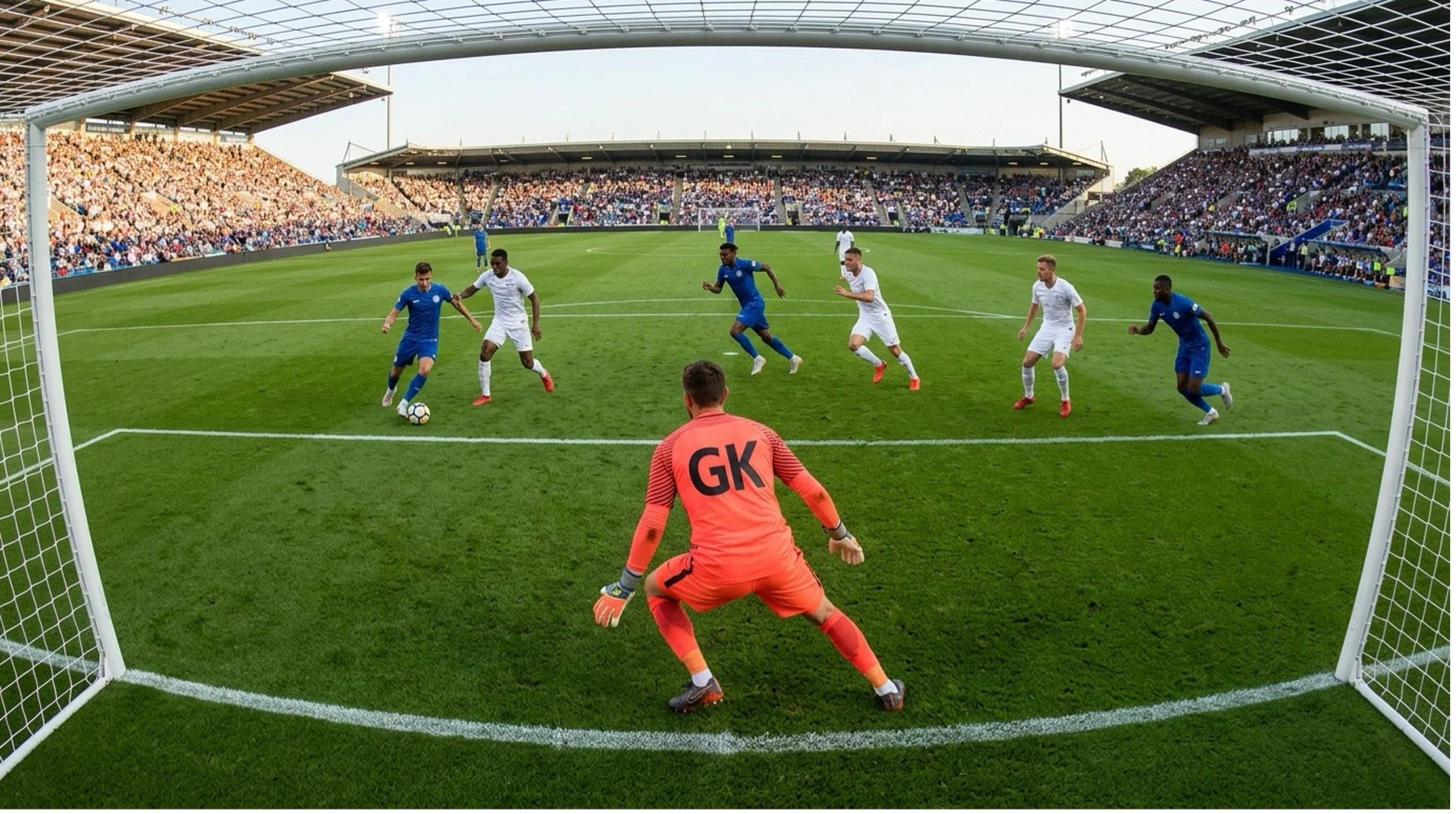
How Does a Goalkeeper Read an Attack?
An essential first step to reading an attack is knowledge of the aspects away from the ball. The goalkeeper can see the whole field and track the positioning of the defenders and attackers.
The movement of the player into open space, receiving of the ball by the player on the wing, or pass searching of the midfielder can give indications of the following actions.
The goalkeeper may use these indicators for predicting what is going to happen. The development of the attack can result in a cross, through pass, cutback, and a direct shot. Early recognition of the possibilities gives the goalkeeper more preparation time.
Why Does Attacker Positioning Matter?
Knowing where individuals attack may be important in predicting where the next threat will come from.
For instance, when an offensive player comes to the border of the penalty area, the goalkeeper needs to think about whether the striker will kick or pass the ball to teammates. This also could lead to another possibility if there is another attacker approaching the far post at the same time.
Thus, goalkeepers should not only concentrate on the person who has the ball in their possession. They need to follow other players going into dangerous areas and consider what passes can become the biggest threat.
Such tracking helps goalkeepers be ready for everything without making commitments too early to any one scenario.
How Can Goalkeepers Recognize Passing Patterns?
Frequently, teams have specific attacking tendencies/schemes. Some will base their strategy on the role of wide players and crosses; others have to find chances using central play or quick passes behind the defensive line.
Goalkeepers will have the possibility to recognize this off the pitch by means of learning through playing and [some] watching matches.
Thus, let’s suppose that the same team often uses a wide player to attract the defender before playing the ball to the attacker. When this certain tactic becomes obvious enough, the goalkeeper can expect the next pass to be delivered to the penalty area.
This does not mean that one has to guess; it implies focusing on possibilities of the development of events while being prepared for an unexpected course of the game.
What Should Goalkeepers Watch Before the Shot?
A goalkeeper may look for clues to determine the direction a play develops.
First there’s body position; how an attacking player moves his hips and body in relation to the ball indicates whether he is likely to pass, cross, or shoot.
Second is off-the-ball movement; if a forward makes his run in between two defenders, he may set up an opportunity for the through ball; if he moves toward the far post, it signals that a cross may take place.
Finally, defensive positioning can indicate possibilities. If defenders are clustered on one side of the field, it opens the door for the attacking team to strike behind them; however, this requires the goalkeeper to see the opening and assess how fast the attacking team will take advantage of it.
How Does This Affect Goalkeeper Positioning?
The study of an attack can help in determining the position of a goalkeeper.
A goalkeeper must be ready to act if he/she notices that a through ball is developing. If the attack shifts towards the wing, the goalkeeper must change his position accordingly to ensure coverage for a potential cross or angle.
The most important thing is to keep one's positioning flexible. Doing too much too early based on wrongful assumptions may offer attacks more opportunities.
Thus good anticipation is characterized by the combination of being prepared and patient.
How Can Goalkeepers Improve This Skill?
An important method is to analyze the entire series of attacks, not just the final saves. By using video footage, keepers can pause just before the final pass or shot. They can ask themselves where the forwards are, what passes they can make, where the open space is, and where their opponents want to play.
They can then see if their predictions match reality. Another training method includes replications of these scenarios. Training can involve crossing, cutting back, using through balls, and passing combinations near the penalty box. The goal of the keeper is not merely to make a save but also to read the situation as it develops.
Reading the Game Before Reacting
Goalkeeping has been seen as a job that is founded on quick responses. However, it can also rely on anticipation. A keeper who knows how their opponent's attack is coming together can set himself up in a more advantageous position.
In this way, "reading the attack" involves recognizing certain cues. By observing the attackers' movements, the possible ways that the ball may be passed, the position of the body, and patterns of play, goalkeepers can be better prepared when the shot is taken.
The best anticipation does not get rid of uncertainty but makes sure that a goalkeeper has the capability to handle it.