Five Plays From Last Week You Probably Missed

cover photo from Greg Bartram-USA TODAY Sports

The League's Bread and Butter
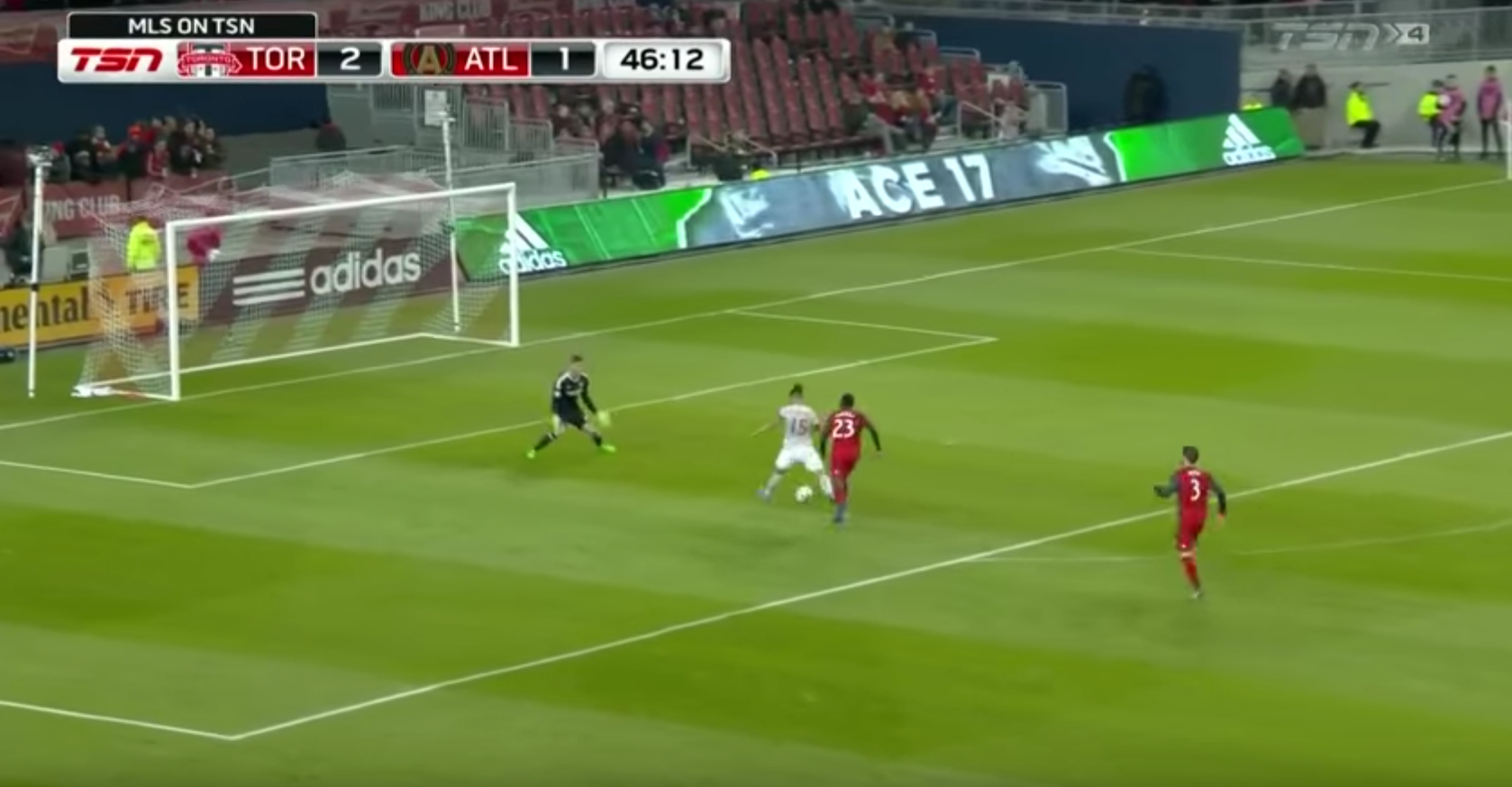
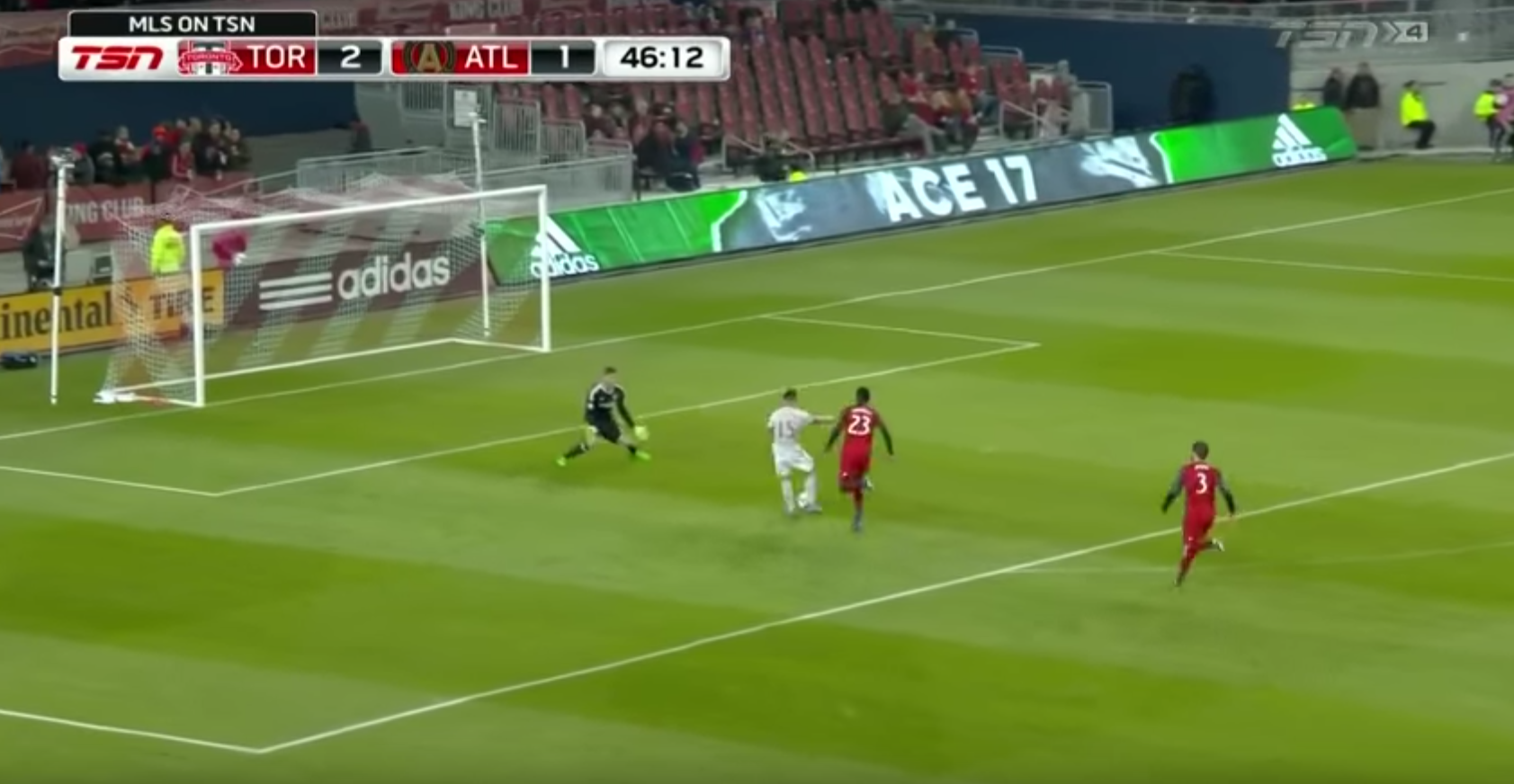
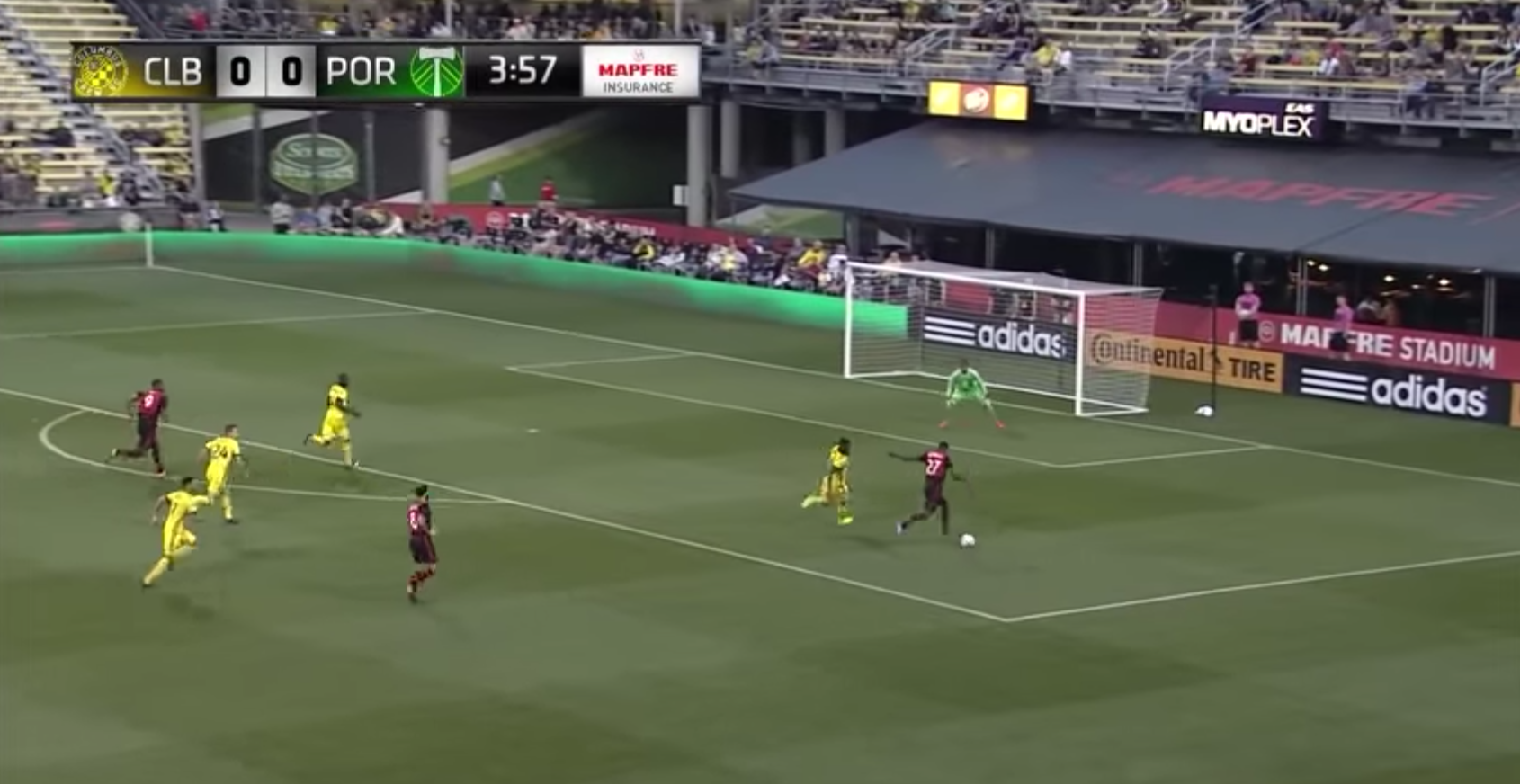
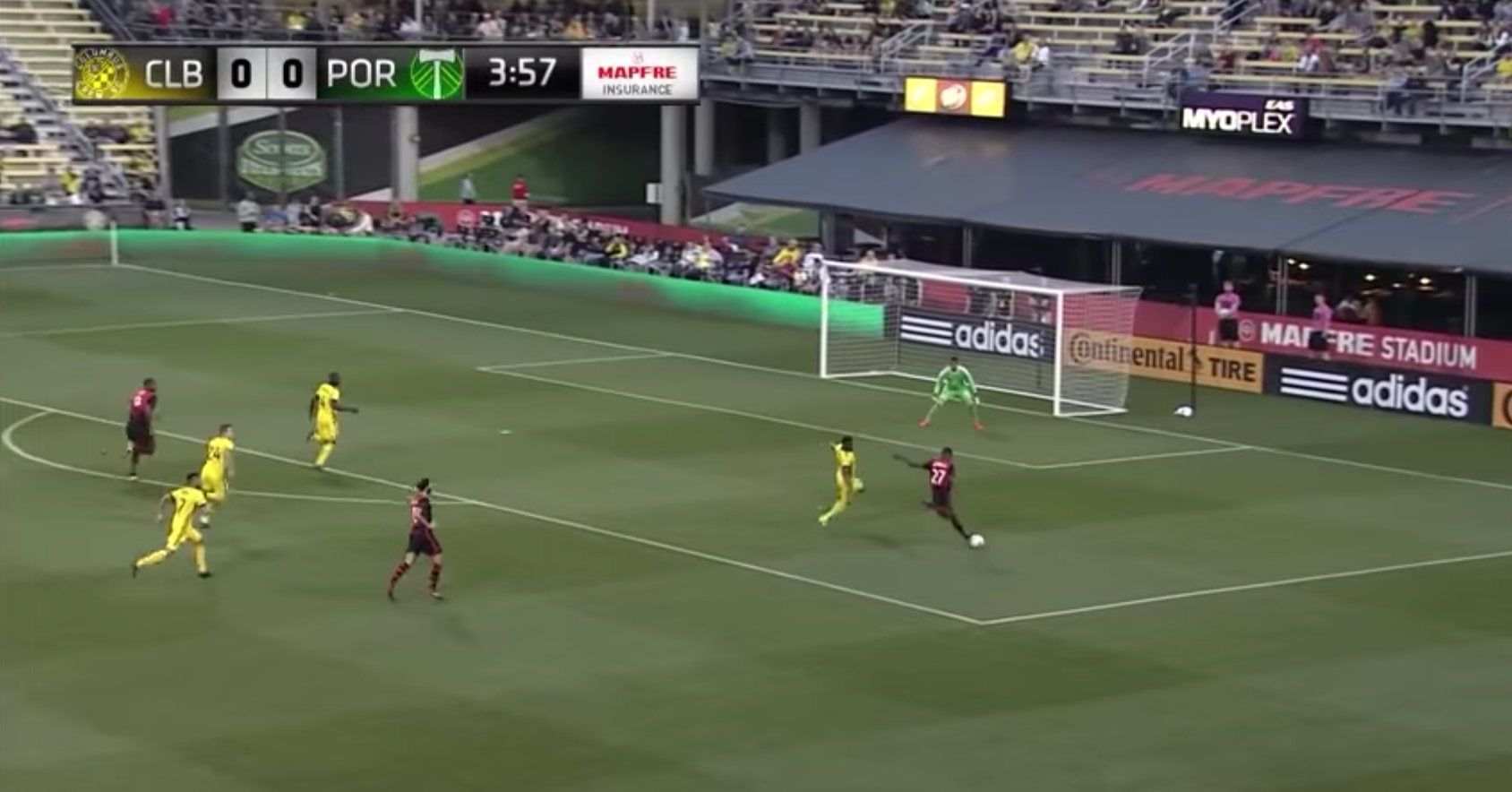
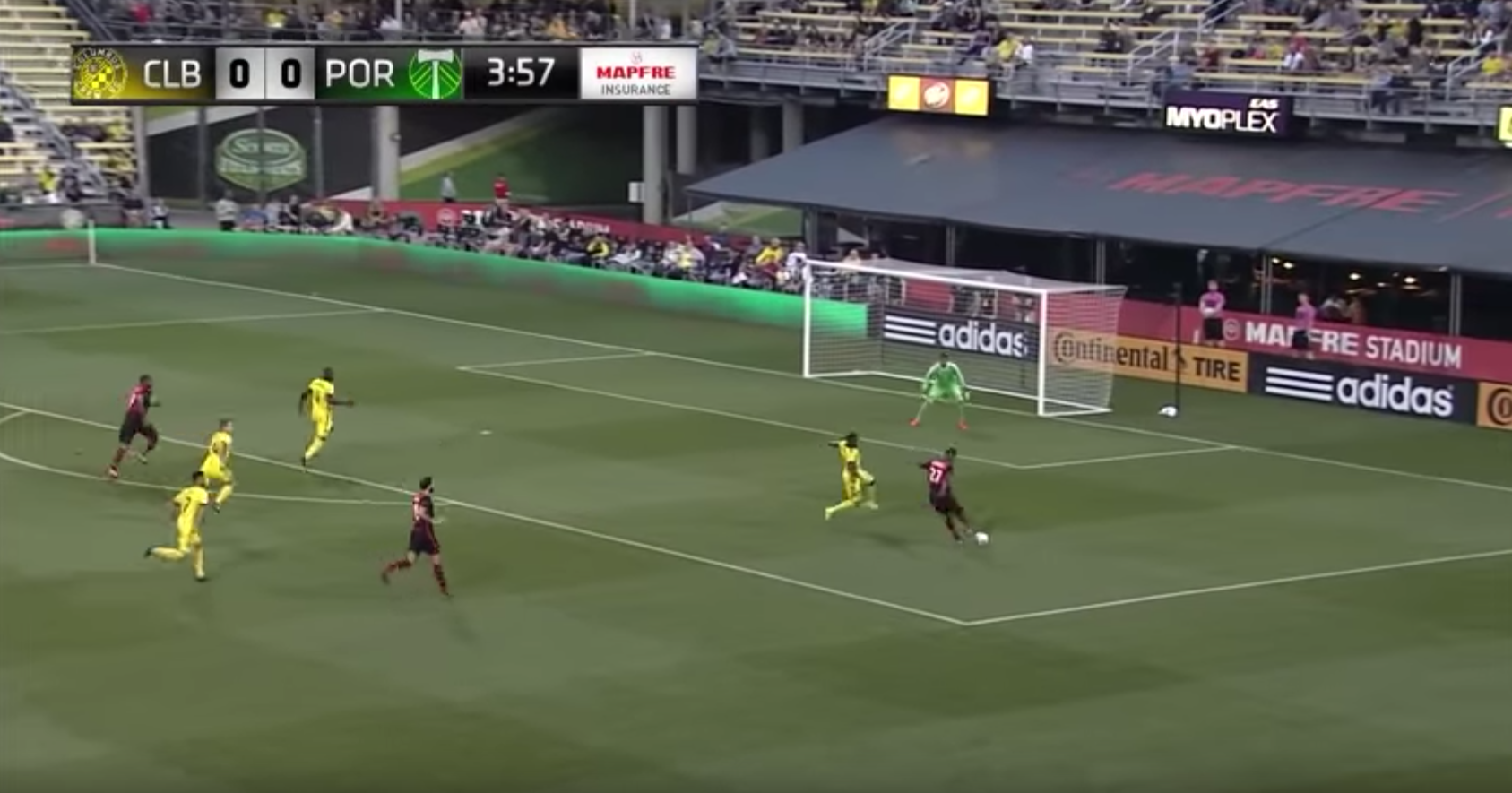
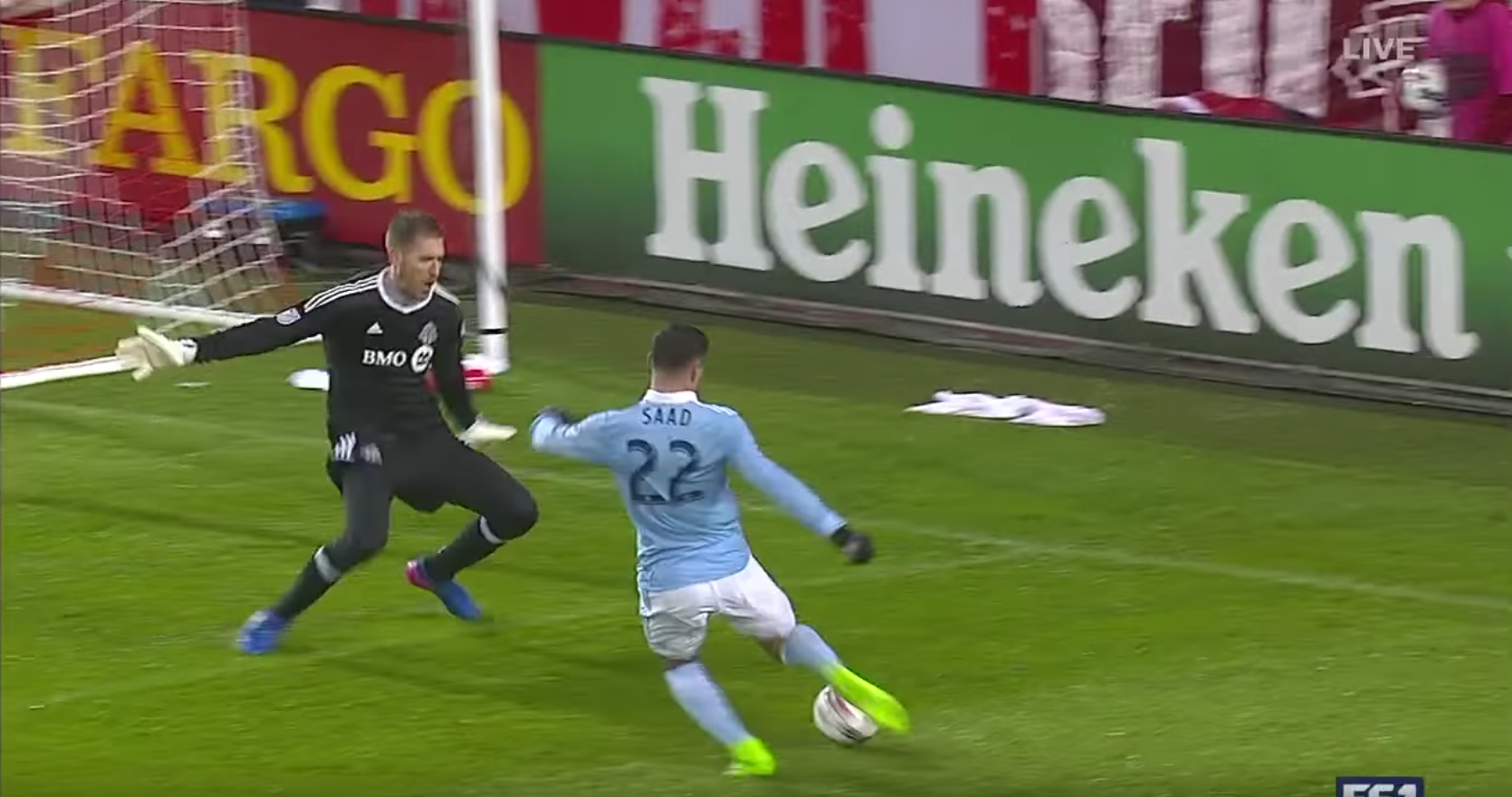
When a team has a potent offense, you can't give them any freebies. Bono concedes the last goal of the game in the 47th minute off a 1v1 situation. (Video here.) Notice Bono's stance heading into the breakaway. His feet are extremely far apart yet his weight is collapsing his knees forward. The shot is struck almost directly at his left foot but his stance makes it impossible to readjust to make the skate save. He essentially dodges the shot because his footing is so poor.

It's an unfavorable situation for Bono but 1v1s are the bread and butter for MLS strikers and for a young goalkeeper looking to make it in the league, Bono has to compose his body better here.

Play starts at 2:47

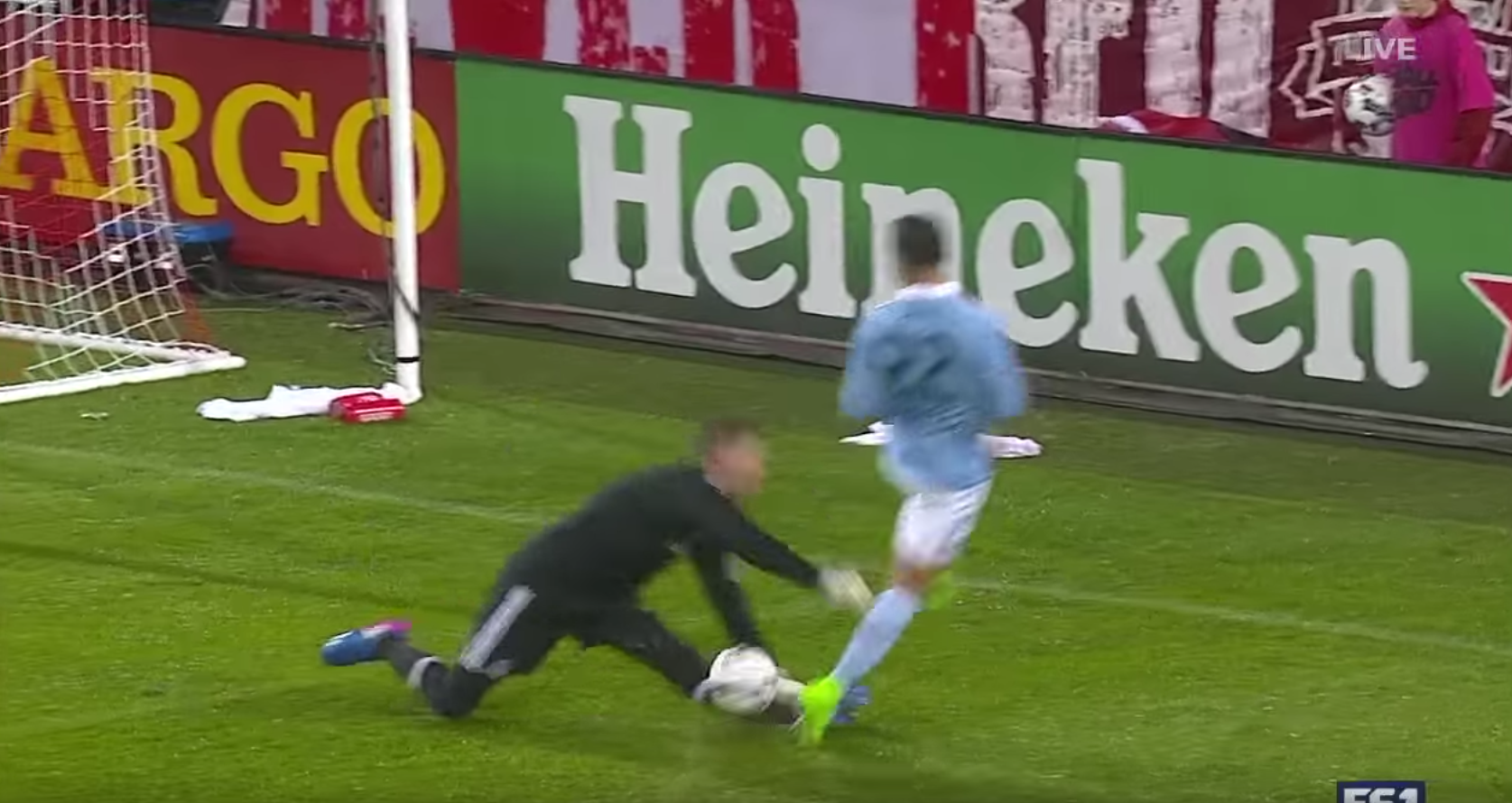
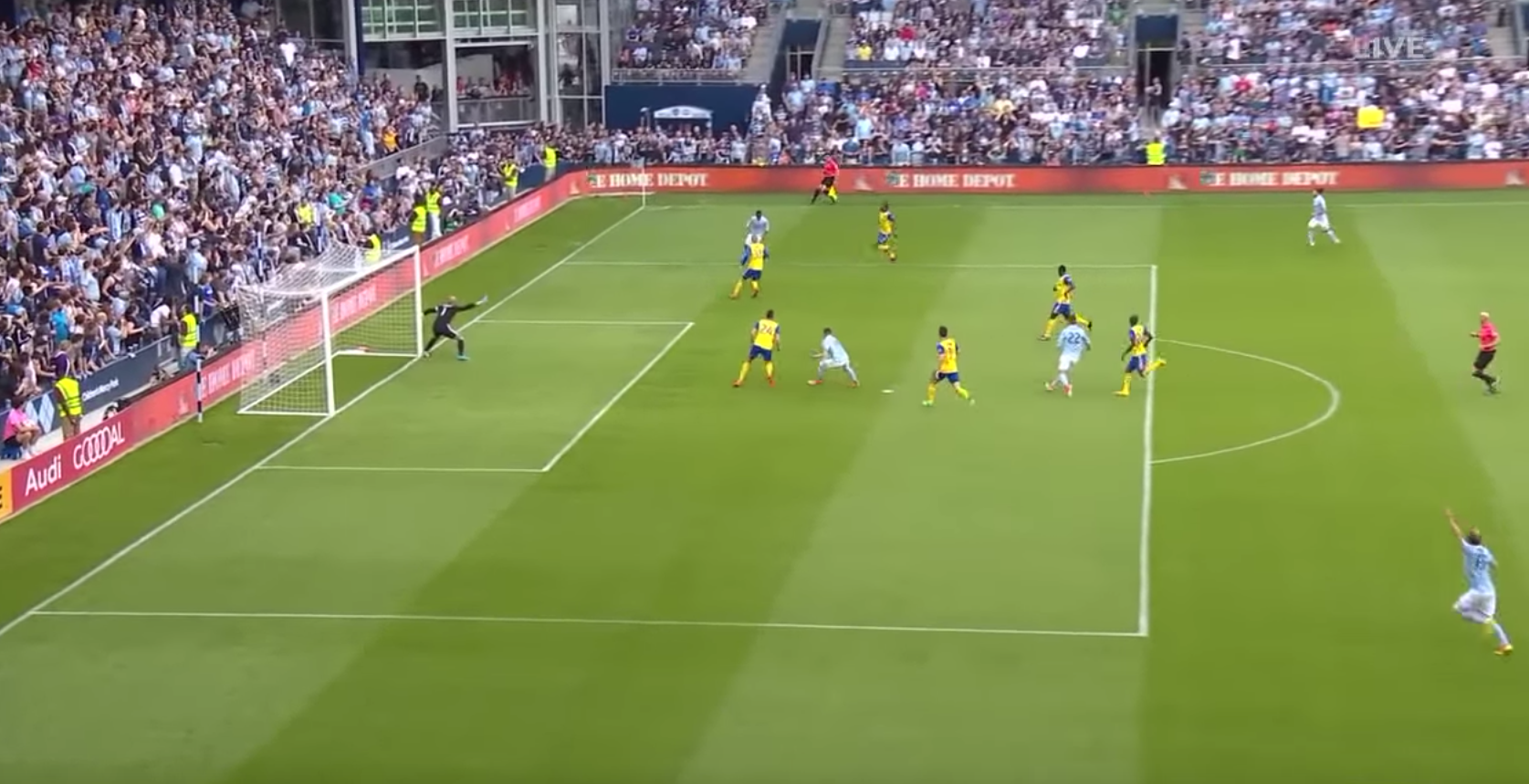
Another great example of when a team needs their goalkeeper to make a smart play. Blake steps up too high in the box and Mattocks attempts to round him. There are multiple reasons as to why a goalkeeper should not attack that high. The most obvious reason is that Blake runs out of real estate to use his hands. He actually trips up Mattocks with his hands outside of the box (and likely should have resulted in a red card, instead of a yellow) after failing to tackle with his feet.

Another reason to sit back a few extra yards is that playing that high of a line invites the striker to round the goalkeeper. Staying closer to the penalty spot gives the striker less room to do so, and makes the situation more straight forward for the keeper. Lastly, oncoming defenders always have a chance to help out if goalkeepers can stall long enough. Perhaps the strikers takes a bad dribble, or they shoot too early, or they shoot too late. There are more favorable options to arise if a goalkeeper can be patient.

1v1s happen about four out of five games for MLS goalkeepers. To be successful in the situation, goalkeepers have to be more thoughtful than just hoping it works out by throwing their body out there. If Bono keeps his feet light and Blake is a little more patient, then they both likely make the save.


Playing Within Yourself

Joe Bendik continued his strong start to the season with a 1-0 shut out against the Red Bulls on Sunday. In the second half we saw a brash but effective 1v1 challenge that left the rebound outside the box. Bendik had a couple of options and while I don't absolutely love his decision to boot it down field (even though it did lead to a chance on goal) I do appreciate Bendik's quickness to play the ball. Every goalkeeper has their own play style and they need to be aware of their strengths and weaknesses. It's better that Bendik makes a quick, definitive decision, than to take four or five touches on the ball and risk a turnover. Ideally I think we'd like to see him build out of the back but Bendik, more importantly, plays true to himself.


Anchors Away
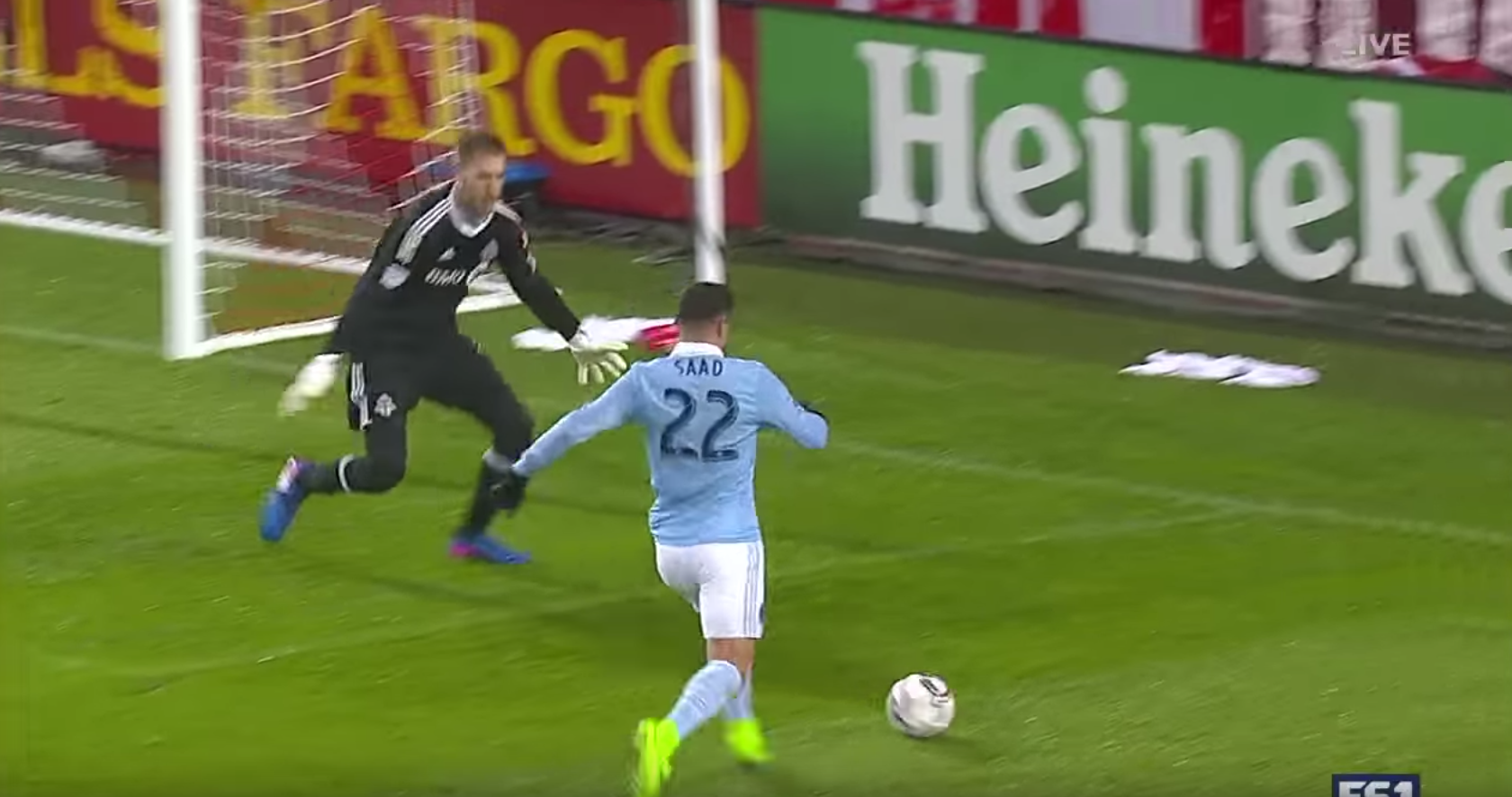
It's only six minutes into the match and Howard gets stuck to his post on a cross he should be able to easily get to. (Video here.) The cross is driven in about shoulder-height and only four yards from goal. Howard is simply too close to the post here. If he starts a yard or two to his right, he can snag this cross with ease, or at least parry it away more successfully. There's a danger of being too far to the right, and opening up an easy shot on his near post, but Howard doesn't need to over protect his goal like this.

On a smaller note, I personally don't love it when goalkeepers place their hands on the framework. Typically, this has a grounding effect for goalkeepers and slows down their footwork. Goalkeepers who put their hand on the post are doing so for either a frame of reference to the goal or to push off for an added speed boost. However, it's more often a distraction that makes the goalkeepers unbalanced (by leaning into the post) or too anchored to the post. Efficient lateral movement comes from quick footwork, not a shove off a post with one arm.


Taking Ownership

Play starts at 1:36

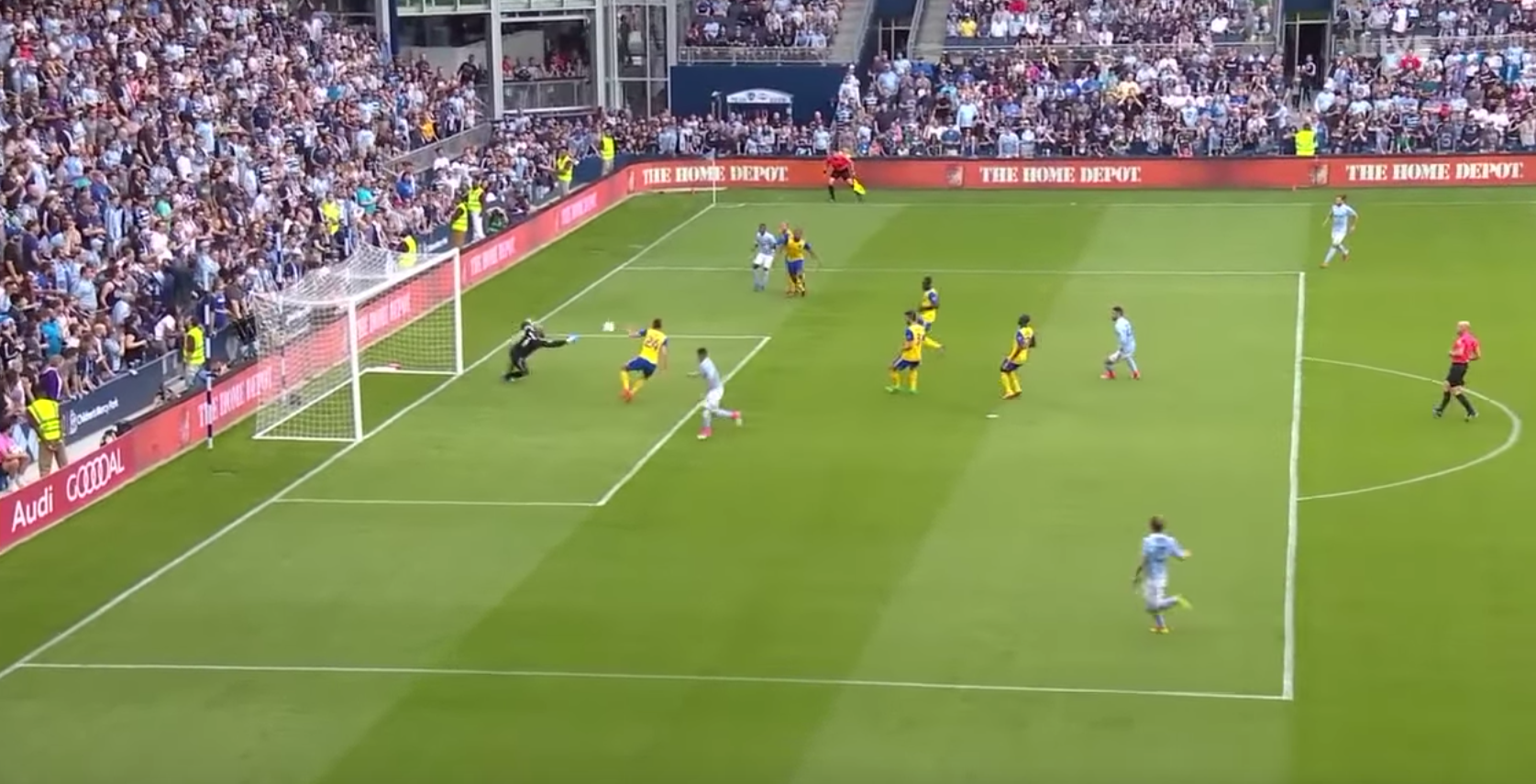
It was mostly a calm night for Melia and Sporting Kansas City in their 3-1 win over the Rapids. One of the few plays in SKC's defensive third came in the 43rd minute with Melia coming up big on a header right in front of goal. It's a great save but what you don't see from the highlights is the play originates from a throw-in, which came from a misplayed ball out to the left. Melia was trying to switch the attack to the left side, but hit the ball so poorly it wasn't even close to hitting his target. As his defense was regrouping, the throw-in quickly led to a cross and a shot on goal. Originally a small mistake, the miscue created a big consequence.

It's a great save - and even better rebound smother -  but the most impressive thing is that Melia was completely unflappable after an error. We've seen multiple goalkeepers this year snowball their mistakes into bigger ones and this is a textbook example of goalkeepers being mentally strong. Melia gives the obligatory "my bad" chest pat at the end (unfortunately not shown in highlights) and while that's a polite gesture to his teammates, they care much more about ability to recover from mistakes than owning up to them.


Playing Smarter Not Harder

We've seen this a million times in MLS. At first glance, it's a really fun save sequence by Hamid but upon closer inspection, the second shot is a gift from Hamid. Hamid can either pin the shot on the ground or parry the ball so that it leaves the penalty area. Instead, Hamid serves up a rebound on a golden platter. If the second shooter places it anywhere but straight at Hamid, it's a different ballgame.
Five Plays From Last Week You Probably Missed

cover photo from Huffington Post

Goalkeeper Protection

Much to everyone's knowledge, Clint Irwin suffered an injury that somehow only resulted in a hamstring strain that will sideline him for four-to-five weeks. While the turf monster is somewhat to blame here, Irwin's risky approach is part of the reason why he gets injured on the play. To utilize the K barrier, a goalkeeper must get his hips low to the ground very quickly. Imagine an airplane coming in for a landing. A goalkeeper should mimic the descent towards the ground in order for him to slide through it smoothly. If he stays too high, he risks bouncing or getting stuck, which we see with his right knee.

Additionally, Irwin's left foot is too far forward. If he turns his hips a little to the left, he'll probably still get his right knee stuck but he will be able to tumble forward instead of getting his left heel stuck in the ground.

The K save isn't easy to do just for these exact reasons. It's an unfortunate play that any fan hates to see. Hopefully Irwin recovers quickly and returns to the field soon.


Not a Complete Guessing Game

It was a rough night for Andre Blake. On the first goal, a perfectly deflected shot puts DC up 1-0, only to get a penalty call against them later in the half. Blake does a fantastic job of diving the right way, only to have his efforts put to waste by not finishing the save. The shot is skipped in, bouncing four yards from goal, and hops over Blake's hand. This brings up two great teaching points: simply guessing the right way is not enough some times. Perhaps the shooter delays his run, chips it, or even scuffs his cleat on the ground. There are a number of scenarios that can alter a shot and if a goalkeeper is trying to make the most of every save, he has to pay attention to each detail.

The other point is that hands are like best friends and they want to go everywhere together. Blake sends his right hand too low but if he brings his left hand along, the miscalculation isn't a problem. Blake puts himself in a great position but unfortunately doesn't finish the play. Philadelphia would later go on to score, which would have leveled the scoreline, but instead lost 2-1.


Scheduled Fall

The most notable play from Rimando was the poor step over move that led to an open goal for Minnesota. However, less notable was the fact that Rimando faced three 1v1s in the second half. On each of the three saves (1:50, 2:45, and 3:10 in video) he commits to attacking the play. On the last play, the ball is lobbed over him (and the goal, thankfully) on what seemed like a scripted play. Minnesota strikers having been paying attention to Rimando's tendencies, much like a penalty situation, and in the 77th minute, Rimando is lucky to not give up a fifth goal. Breakaways come in a different shapes and sizes, so a goalkeeper can't be so predictable that the striker knows what they're going to do before they do it.


Bush League Movement

Play stars at 3:21

In the 93rd minute, Montreal led Chicago 2-1 are were looking to spoil Bastian Schweinsteiger's first game with the Fire. A cross is whipped into the top of the box in Chicago's defensive third. Normally this situation isn't too troubling, expect Bush decides he's in poor position to make the play. Similar to one of the plays from last week, most of the time a goalkeeper should improve his position, unless it's going to cost him time on getting set. Bush retreats about four or five yards and too far to his left, putting him in an even worse position and doesn't start his dive until the ball has passed the penalty spot. If Bush stays where he is, he makes the save with ease and keeps three points for Montreal. Instead he turns a shot from twenty yards out to a shot where he can't react until the ball is within twelve yards of the goal.


Two Risky Passes

Bingham tries to rebound from a previously miserable week but unfortunately finds himself making another costly error, this one leading to the winning goal. After being pressured to pick up the ball, he quickly rolls out to his right. While there is definitely an open teammate there, it's not a great option because the second pass isn't obvious. Building out of the back isn't just about the first pass, it's about the next three after that. The right back has ran up the field, along with the other nine teammates, and now the center back is put under needless pressure. NYC scores ten seconds after Bingham rolls the ball out. It's not exactly Bingham's fault for the goal, but it definitely was avoidable.


Bush makes a similar risky play and I'm still undecided if it was worth it. It's a pass through traffic to a player that has three defenders step on him somewhat quickly. However, not only do I love the rarely scene overhead pass but the midfielder is screaming for the ball and has an outlet pass to his right. Perhaps at the youth level, you want to advise against against advanced passes but ultimately you have to trust your midfield with the ball at this level. Still, the goalkeeper sees more of the field than a teammate with his back to it.

The two passes fall in a gray area and there's a lot of personnel knowledge that comes with rolling the ball out. Bingham passes to a defender, Bush's pass goes to a midfielder. Both plays could have turned out positive or negative but the main takeaway is that a goalkeeper is responsible for the pass. Even if a player is open or yelling for the ball, the goalkeeper has to be smart enough to decide if it's a good option.

Five Plays From Last Week You Probably Missed

cover photo belongs to Steve Hamlin/TICC

Only three MLS games this weekend and while I may start using other American leagues in the future, NASL and USL highlight packages were somewhat lacking this previous weekend. Until then, a couple goalkeepers get the microscope placed on them this week and end up on here twice, while others I compare to Manchester City's starter and Treebeard.


Bark, No Bite

In the 49th minute Cropper employs the Lord of the Rings' Ent-strategy of raising his hands as tall as he can. I've never been a fan of this as I think it ends up distracting the goalkeeper more than helping him but the idea behind it is - similar to penalty kicks - if you make yourself big the shooter place the ball farther from you. However this play is a good example of why you can't just look the part, you have to play it too. Swinging crosses are tricky to read but this cross is floated to the top of the six. It's about the same distance to the ball as Cropper ends up covering when he goes back to goal. It's a poor clear by Cropper's defender but the whole crisis could be averted if he just collects it early, instead of just waving "hi" to the opposition.


Moving On Out

Play starts at 0:16

On the first of a five goal weekend, Shuttleworth commits two common errors on the cross leading up to the shot. First, he tracks the ball for too long. If the cross is too far for the goalkeeper to punch or catch, he can help himself by skipping his eyes ahead to the target. In doing so, the goalkeeper can see how the shooter is going to take the cross. Is he leaning back or forward? Will it be a volley or header? Is he going to trap it? The more information a goalkeeper can gather on a play, the better off he is.

Shuttleworth eventually does skip his eyes ahead, but the hesitation freezes him for a moment, and leads into his second error. As the ball is headed, Shuttleworth is still moving to his left. It's a fine header, and probably one that deserves a goal, but Shuttleworth completely removes himself from being able to make an attempt on it because his momentum carries him away from the ball. If Shuttleworth skips ahead earlier, he could see Agudelo is lining up for the back post and adjust accordingly.

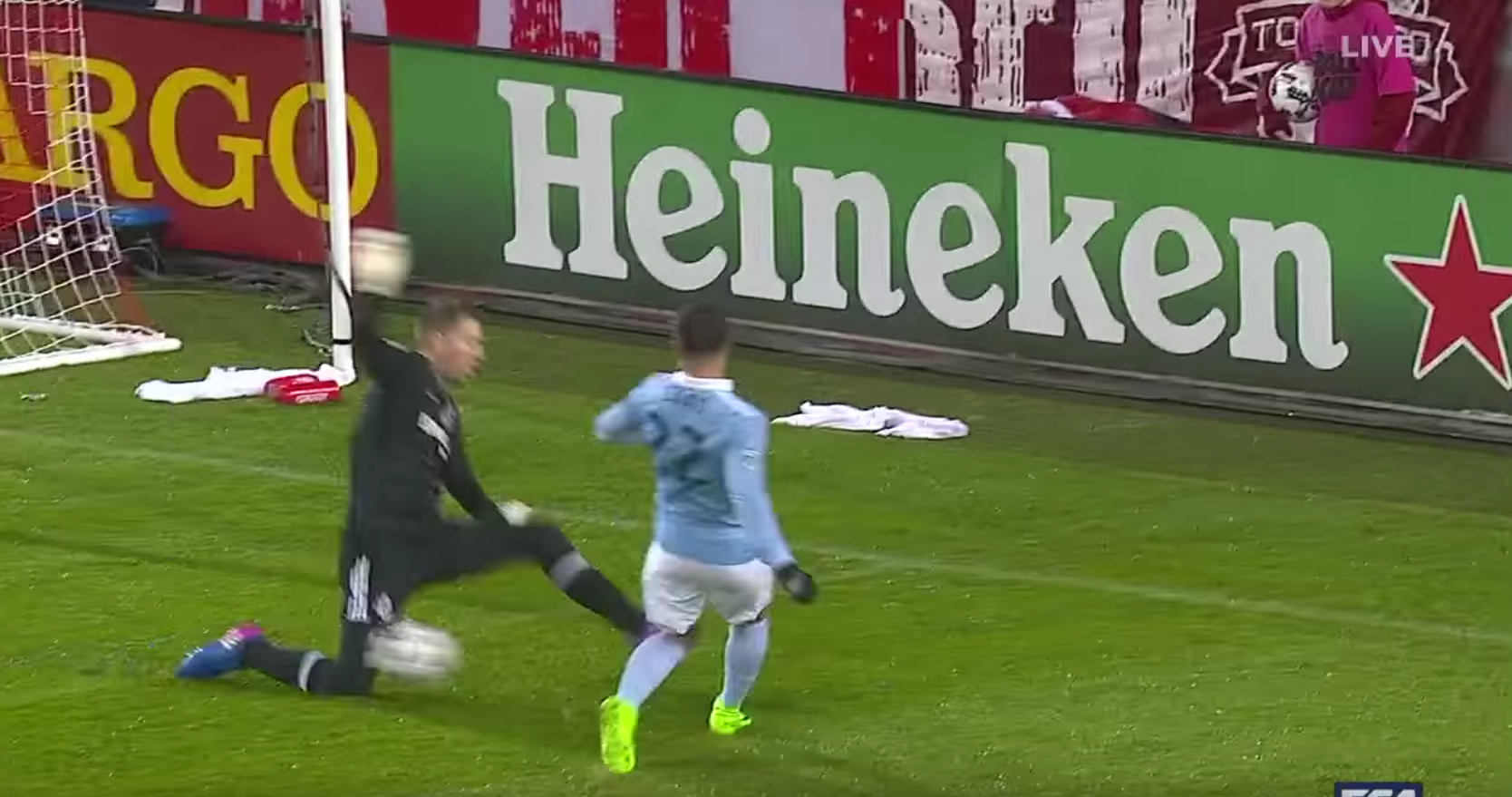
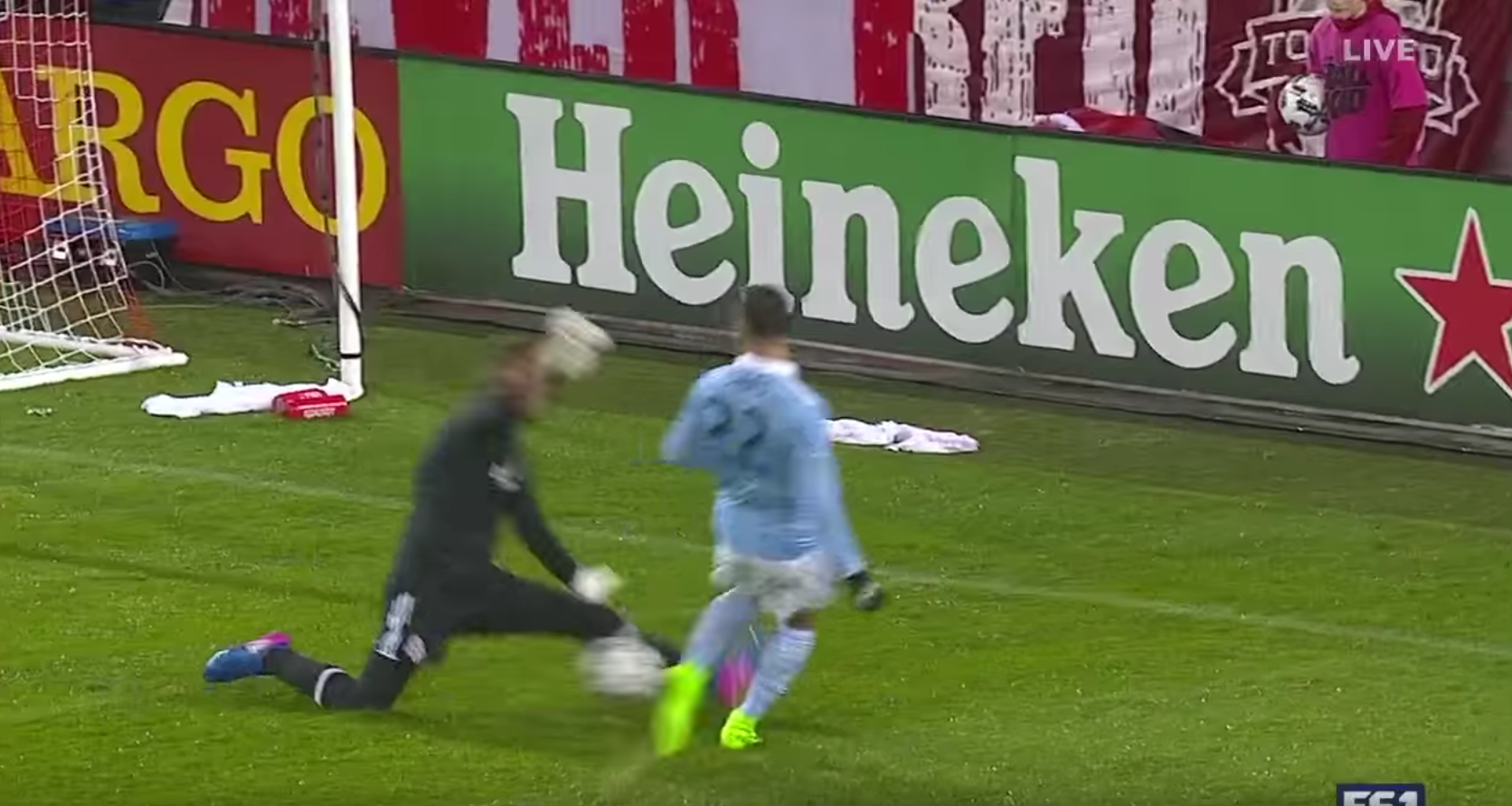
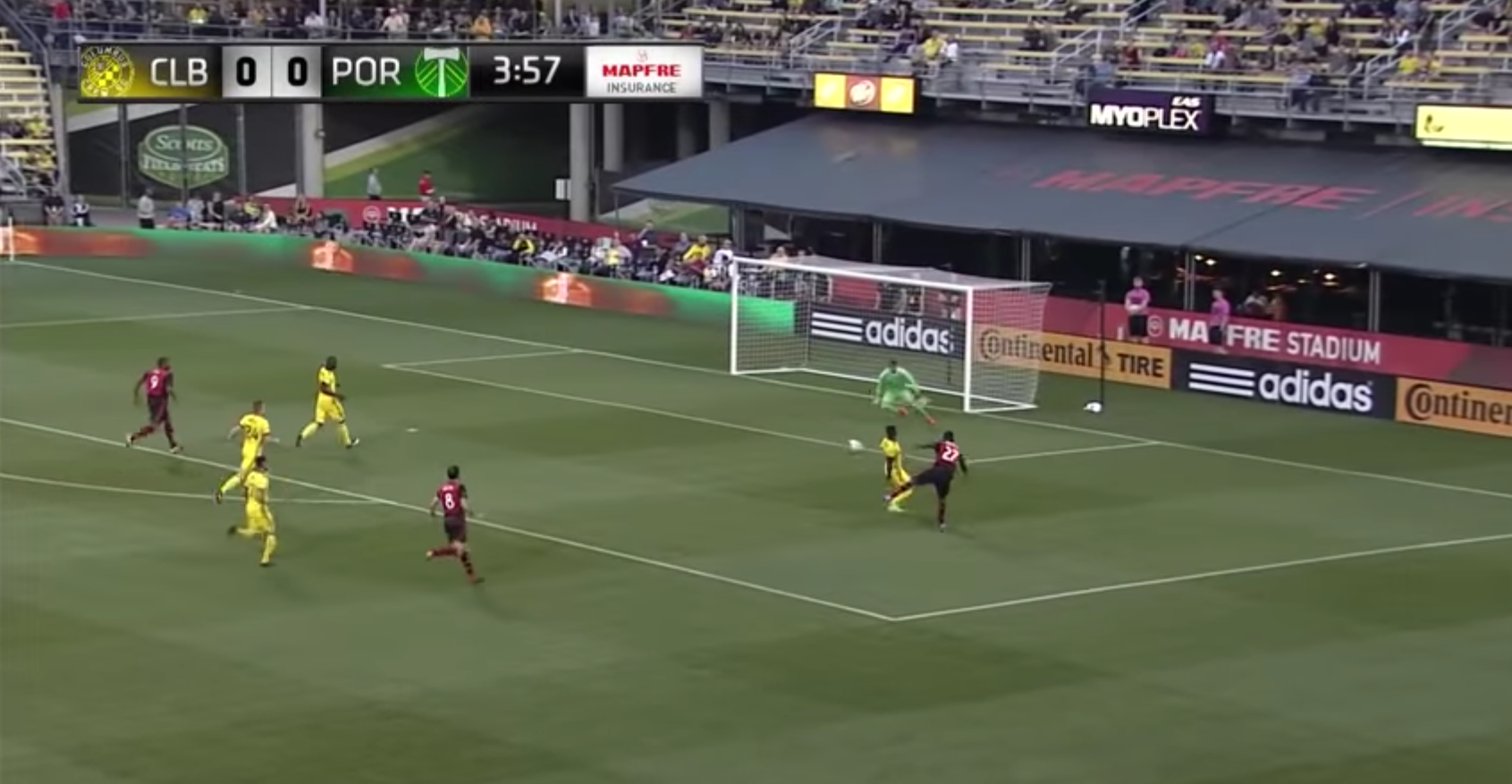
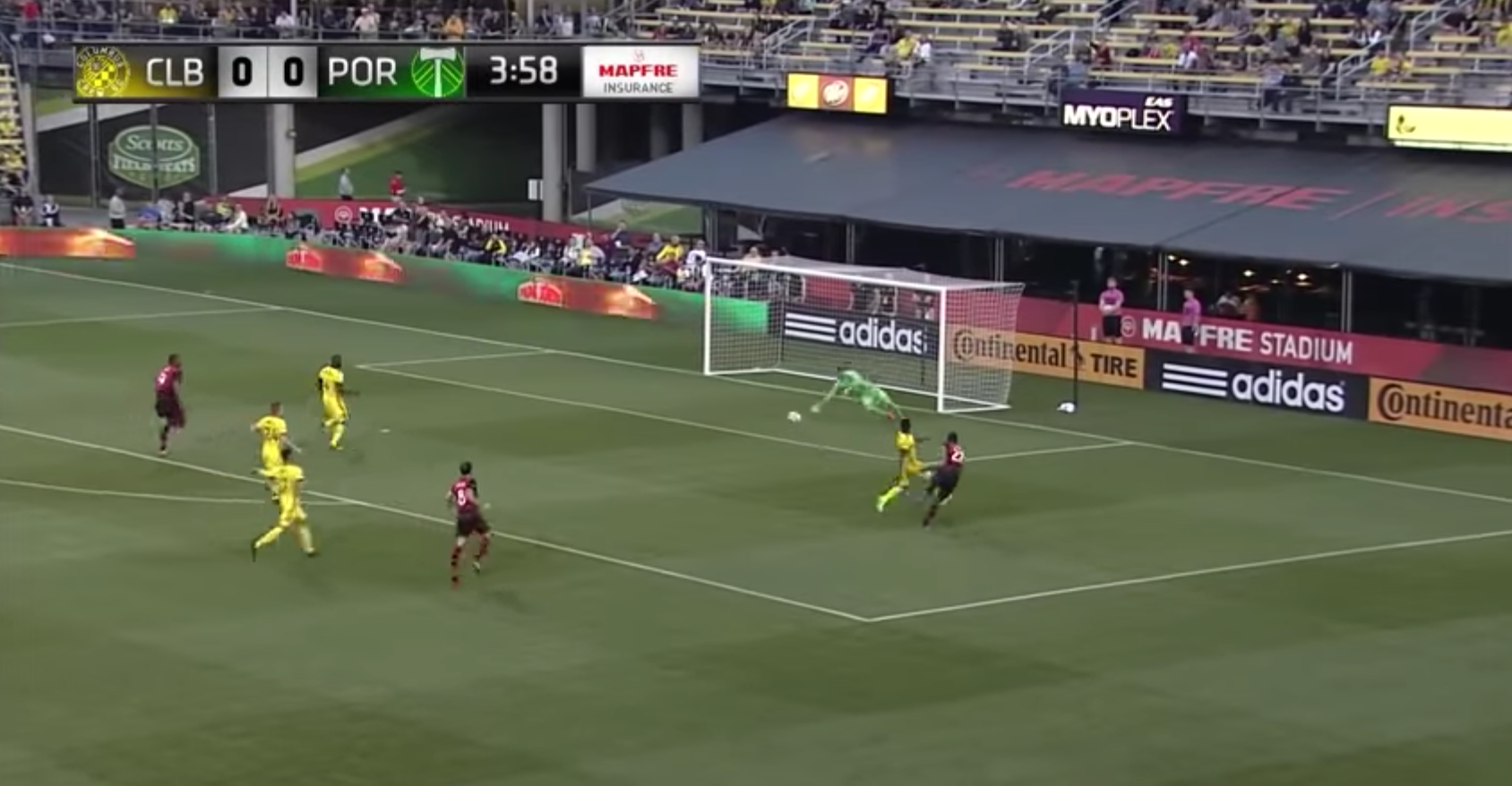
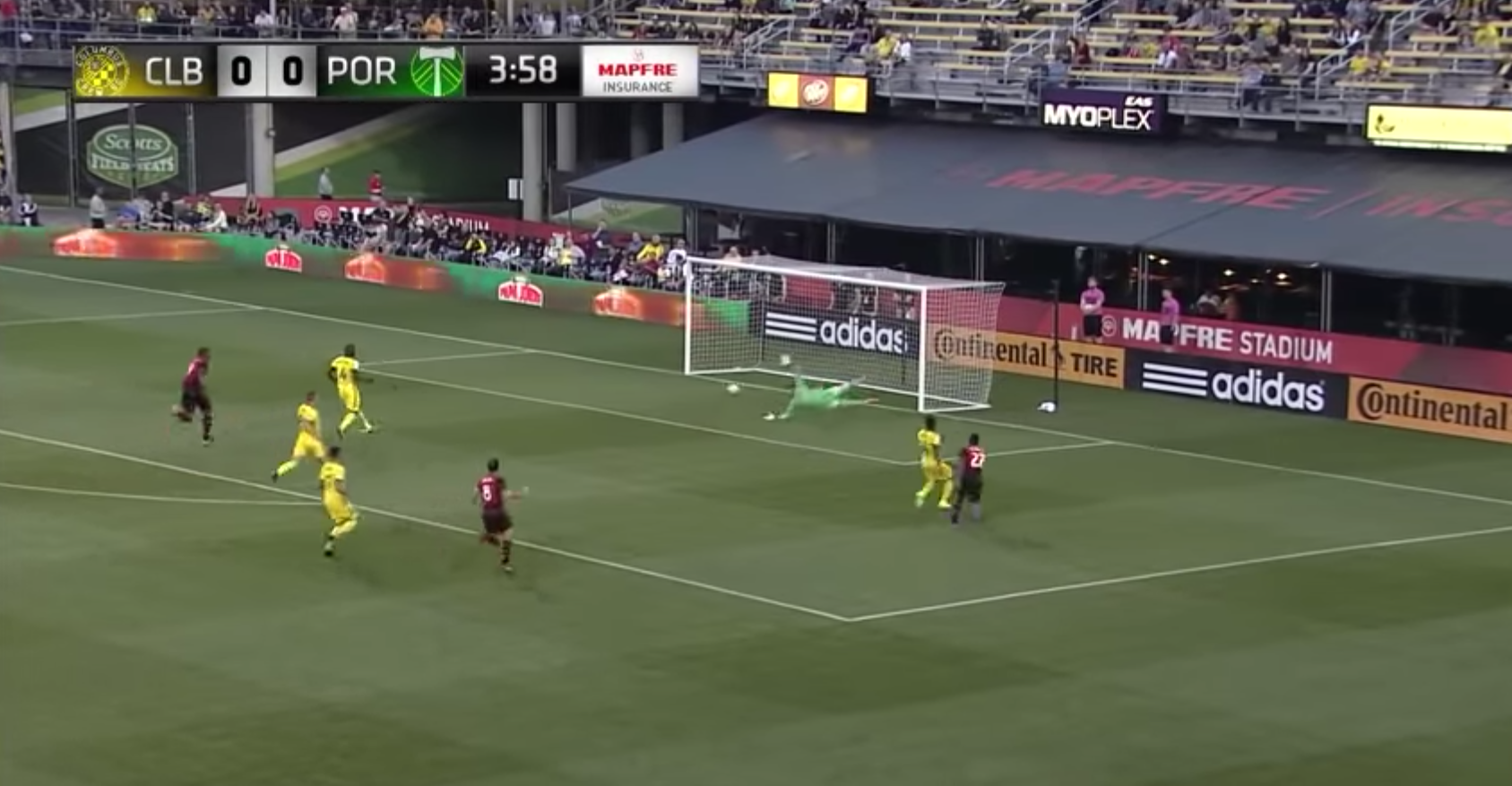
There's a lot of talk about "angle play" and a goalkeeper's arc within goalkeeping circles. 90% of the time, if you can improve your angle to adequately cover both posts, do it. However timing can be more important than angles in certain situations, and Steffen shows us why in the 5th minute. (I took screen shots here so you can notice the footwork a little better.) 

As the shot is taken, Steffen is actually improving his angle by continuing to shuffle on his goalkeeper arc. The problem is that the ball is being struck as Steffen is moving, stopping him from getting set in time. The shot is originally one from fifteen or so yards out, but because Steffen is still moving, the shot becomes one from about six yards out. Steffen's timing is so out of sorts that he ends up diving with his left foot on a shot to his right.

In similar fashion to Shuttleworth's situation, Steffen's movement ends up taking him away from the shot. If both goalkeeper can control his momentum and get set earlier, they can make a better play on the shot.


One Man's Land

Play starts at 3:20

Last October, there was a split in the soccer community on Claudio Bravo's poor pass against Barcelona that led to a red card. While people were quick to defend or criticize Bravo's ambitious pass, the problem with the play was idiotic handball. First off, we don't know Suarez's shot is going in. So to risk a red card for a probable, but not definitive, outcome is not playing the odds. Secondly, there's still a lot of time in the game but Manchester City ends up playing down a man for the next forty minutes. It's an unfortunate pass, but the bigger error is the red card. Don't make a bad situation worse.

In the 81st minute, Van Oekel wisely heeds to this line of reasoning and lets Bradley Wright-Phillips stroll pass him to the open net without fouling him. Now, we can all agree that it's a bad play by Van Oekel to run out of the box like that, but at the very least he doesn't make it worse. His defender somehow saves the day but credit to Van Oekel for not doubling down on his mistake and trusting his defender.


Playing Out of the Back With One Foot

Play starts at 1:00

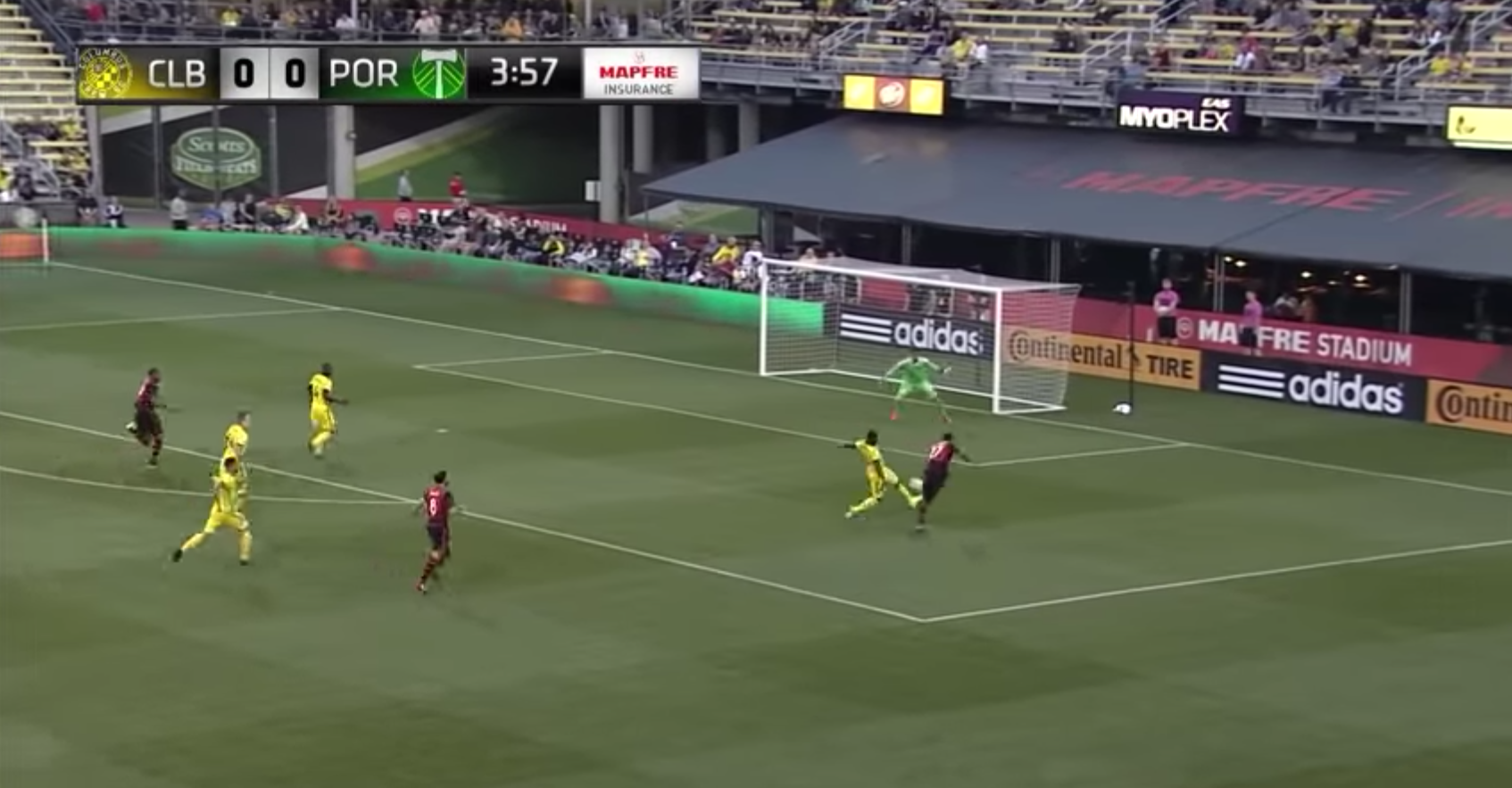
In the first minute Steffen receives a bouncing back pass with an onrushing attacker. Steffen can either play out to his left or simply clear the ball up field. The play to his left would require two touches but he has the time to do so. He could either trap left footed and play with his left, or trap with his right across his body. Both plays require a confident left foot, which ultimately Steffen doesn't have. He takes the safe option and boots it up field.

This specific play is fairly inconsequential but there may be farther reaching implications that we don't see. Defenders might stop opening up, assuming Steffen won't be able to play a certain ball. Midfielders might stop dropping to Steffen and just smash the ball down the line, assuming he will do the same. Opposing strikers might start pushing Steffen to his left foot, causing more errors out of the back. Every team needs a specific goalkeeper, and if Columbus doesn't have one with two feet, it'll be impossible to consistently play out of the back.


Let's Talk It Out

I can't count the amount of times I've heard a young goalkeeper say "I told them but they didn't listen to me!" Despite popular belief, defenders are not robots and can use the information a goalkeeper can offer. In the 10th minute, New England misses one of their twenty opportunities on goal. Shuttleworth is unhappy about the lack of defending so he lets his team know about it. Unfortunately no one is paying attention to him as they all walk away without a glance. For a team that is averaging 4.5 goals conceded per game, it's probably time to look at what is or isn't working.

Even when Alvbage was in goal, you can tell there was a disconnect with him and the defense, which isn't limited to the back line. On crosses, Shuttleworth or Alvbage rarely offer specific mark-ups and both their body languages are completely defeated after every single goal this year. A goalkeeper's non-verbal skills aren't the main reason for an abysmal defense, but they do affect the team. For whoever Minnesota's goalkeeper is going forward, it may come down to grabbing a defender by the collar and giving specific instructions to shore up the defense. Or they can continue yelling vague "come on!"s and see how that works out.

Kris Schultz Interview: American Goalkeeper Playing Overseas Down Under

cover photo belongs to Wayne Tilcock/Enterprise photo

Kris Schultz graduated from UC Davis in 2015 and has since spent time playing professionally on the southern hemisphere. Coming straight out of college, Schultz played for New Zealand's Canterbury United last year. Now in Australia, Schultz opens up about dealing with multiple injuries at UC Davis, the hurdles to becoming a pro, and what life is like in Australia.


You attended UC Davis from 2011-2015. Obviously you spent a lot of time on campus. What stands out about your time away from the field?

Off the field, I loved the college town atmosphere, the large student body, and the beautiful campus. I love being around so many people and meeting new people every day. I couldn’t imagine having attended a smaller school. I had a lot of fun and the weather is beautiful in Davis. There is no place like Northern California and growing up in Sacramento I was close to my mom and dad. And they could come watch most of my games. They are my biggest fans and supporters and I could not be where I am without them.

Academically it was very challenging. Currently I believe Davis ranks as the #6 public school in the country. Many people imagine college athletes as receiving “special treatment” in the classroom. We at Davis had it much harder than the average student body. Training, meetings, weights, travel, and stress of being a D1 athlete can sometimes be overlooked. Missing class due to travel was far worse than anything else. I would have to get the notes from a classmate, meet with the professor in office hours, and play catch-up most of the time to stay on top of my academics. Professors don’t care if you had 7am training and haven’t left campus since when you’re nodding off in an 8pm lecture.

I had an amazing roommate throughout college, Ramon Martin Del Campo, who is currently the starting center back at Ottawa FC in the USL. Ramon pushed me and supported me in my recoveries from injury. Time management plays a big role and allowed me to succeed on the field, academically, and have an amazing college experience and social life.


You redshirted your first year at UC Davis and you suffered a pretty severe setback with an ACL injury. How do you look back at your time with the team at UC Davis? 

On the field, I had my biggest triumphs and setbacks. I believed I was the number one goalkeeper from the minute I stepped on the field at Davis. I ended up redshirting my first year. It was frustrating but allowed me to develop as a player. I had my mind set to become the starter in my second year as a redshirt freshman and trained very hard. I put everything I had into perfecting m craft and pushed my body. I ended up behind a talented older goalkeeper. I got some playing time but I wasn’t satisfied. I felt politics and other things were keeping me from playing, not my performance, but such is life and the nature of the game.

Going into the winter and spring of my second year, I believe I had started to separate myself when I started having horrible hip pain. I was diagnosed with FAI (Femoral Acetabular Impingement) a diagnosis where my hip bones were too thick for my hip socket and I had completely shredded my labrum in both hips. Because I was battling for the starting spot I didn’t want to give anyone an excuse for me not to play so I continued to push. It led to me needing two extensive hip surgeries where each hip was surgically dislocated and the bones shaved down and labrum stitched up before being put back into place. This began a 10 month recovery process, which was the hardest experience of my life. It challenged me emotionally, mentally, as well as physically.

I missed my entire third year of eligibility due to recovering from my hip surgeries, I supported my teammates while undertaking what I called “the comeback”. I was Awarded Big West Sportsmanship of the year Award for my support of my team. (I flew to Portland and drove myself to away games to watch my team.) During “the comeback” I would say almost no one believed I would come back from my hip surgeries to play at a high level. Outside of my parents, my athletic trainer, and a couple of my roommates essentially everyone had written me off. I put my head down, prayed and dedicated every minute of every day to comeback.

I came back for the next season, and despite everything I won the starting spot undisputed . Despite what seemed like more politics and people being unsure of me, I didn’t care and was never outplayed in a single training session. In the first weekend of my redshirt junior season I was named Big West Player of the week after a 0-0 shutout and a 2-1 win. I played the remainder of the season holding the lowest GAA in the Big West and leading my team unbeaten until a conference game down at Cal State Northridge. In a 0-0 game, which I was playing extremely well, I came out to clear a through ball, followed through and landed awkwardly on my kicking leg, and heard a pop. I fell and with 30 seconds left in overtime my athletic trainer informed me that she was certain I had torn my ACL. On crutches, I made it back to the hotel in LA, and without any sleep, I cried to myself all night.

I gave everything I had into another comeback, this time from ACL reconstruction surgery, which I had two weeks after the initial tear. I spent the next ten months recovering and rehabbing. Once again, I came back, and was cleared two weeks before preseason started. On report date, I hadn’t played since I tore my ACL the year before. I played very well during my fifth year, despite not having a complete off season to train. In the end of the season I played three of the best games I had in my career and helped our team reach the Big West Tournament semifinal.

I enjoyed playing at UC Davis. I persevered through adversity to succeed on the field despite many things working against me. It was challenging academically but I came out with a degree and a minor. I met so many people including my best friend Ramon and played in a top conference. I persevered through three serious surgeries that for many would be career ending. I thank God, My parents, my teammates, and my amazing athletic trainer who helped me get through the ups and downs on the field.


When you were originally trying to make the jump from the college game to professional, what worked and what didn't? Is there anything you'd do differently, looking back?

There are many challenging things when trying to make this jump. First off, I do not believe the college game truly prepares you for the next level. For example, a college season only goes for about two months, give or take a few weeks. (22 games with two games a week). So over a career of four years, you’re in season for eight, maybe nine, months, when one pro season will last about that long. When you finish your college career you’re about 22 years old, when throughout the world, you become a pro at 17-18. So you’re behind the curve already.

What works, I believe is a combination of two things. The first is having the right connections to get an opportunity to play or trial somewhere, and the second is being completely ready when an opportunity comes to take advantage of it.

Personally, I tried everything from emailing coaches, going on trials, calling people, I thought about getting an agent. Things didn’t work out at first but you must be diligent and not give up. But you must be ready when that opportunity comes and I wanted to be ready. So I trained every single day after I left college multiple times a day. I worked with different goalkeeper coaches, on my own, and with a training performance specialist who works with NFL players in Sacramento named Mike Johnson who owns the athletic enhancement center Playmakers Elite. He helped my physically get ready. I grew as a player and a person during this period while I was training, essentially working and waiting for my opportunities.

Photo belongs to Andrew Seng

Photo belongs to Andrew Seng

After college you need to train like a pro, do everything from monitoring your diet, sleep schedule, training programs, and even mental training to be able to perform at the highest level possible. You must contact coaches and create a network to look for somewhere to trial. You can’t give up, you never know when you’ll get an email saying a team is looking for your position and what if you’ve been sitting on the couch for a month and aren’t ready? It can be discouraging after being told no repeatedly or having trials not end in a contract. What I did was give myself a time line. I said "I’m going to give everything have to train into this for a certain period no matter what, after that I'll reassess where I’m at."


Originally you landed in New Zealand. How did that unfold? And what stood out about the culture surrounding the game?

I ended up in New Zealand through word of mouth to a team who was looking for a top keeper. After being in contact with them it was a win-win for both parties and I headed across the world.

New Zealand, and the rest of the world, is different to America as how we deal with college. Top high school athletes go play at top universities, where around the world top high school athletes go pro. So many players are younger or about my age but have been playing at that level for much longer than I have.

I can say I had a generally positive experience in New Zealand and was lucky to play for a very professional club. The players were great and there was great banter in the locker room. It can be hard to adjust to meeting new people but I didn’t have problems at all in New Zealand. The hardest thing was driving on the opposite side of the road.


Tell us a little about the move to Australia. What team are you with now? And how would you describe the city to someone who has never visited?

My move to Australia was very pleasant. I am playing for the South Adelaide Panthers. The club here is also very professional and I enjoy it thus far. I am living in Adelaide which is in South Australia and all I can say is that it’s beautiful. I can go to beach before training, snorkel on off days, and go fishing in the ocean. It’s pretty much paradise. I can describe it as being like southern California, but without pollution or over population. It’s really clean here and everyone is very pleasant.


Is there a common question you're asked as an American overseas?

Every single person, whether in New Zealand or Australia, asks me about President Trump and what my thoughts are about him. It’s interesting though because people around the world have distinct views which are based off what the media in their country show. Everyone also asks me after they learn I’m from California if I know any movie stars.


What's the long term goal? Returning to the US the goal at some point or do you want to continue playing overseas?

Long term I would love to make enough money playing football to live well enough to be able to support a family. I want to eventually live in America when it’s time to settle down but I’m not sure at this point where my career will take me or how long It will last. After this season, I may try to return to the US and play there but there are so many unknowns until then. Currently Australia is amazing and I’m not in a hurry to leave, but I do miss home.