These goalkeepers are part of a bigger project, which you can find here. Pictures of the goalkeepers were posted when available. Newspaper clippings’ date and newspaper are found in the file name. Click on the photo galleries to enlarge the picture to read more about the goalkeeper.
91. Ray Voltz
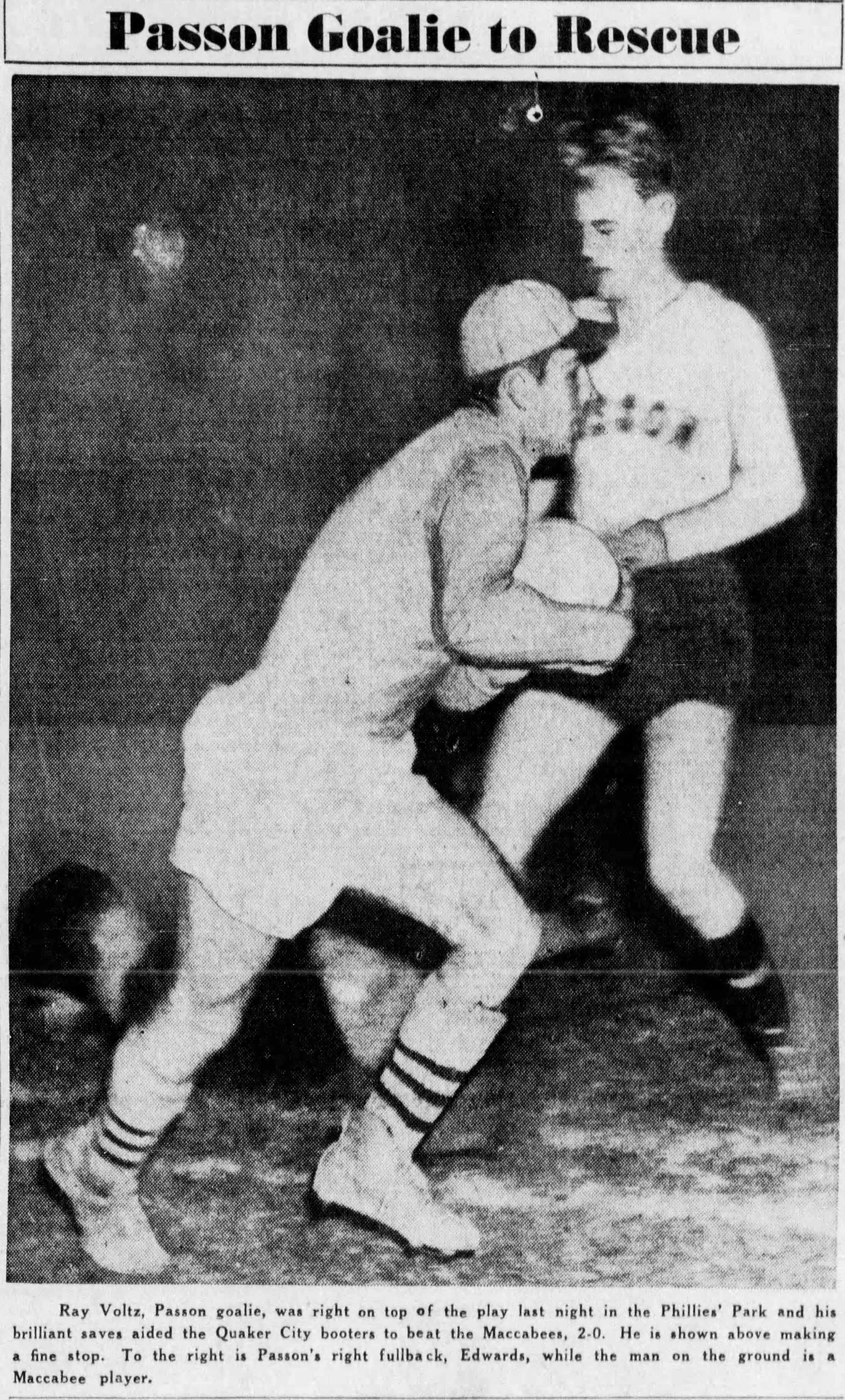


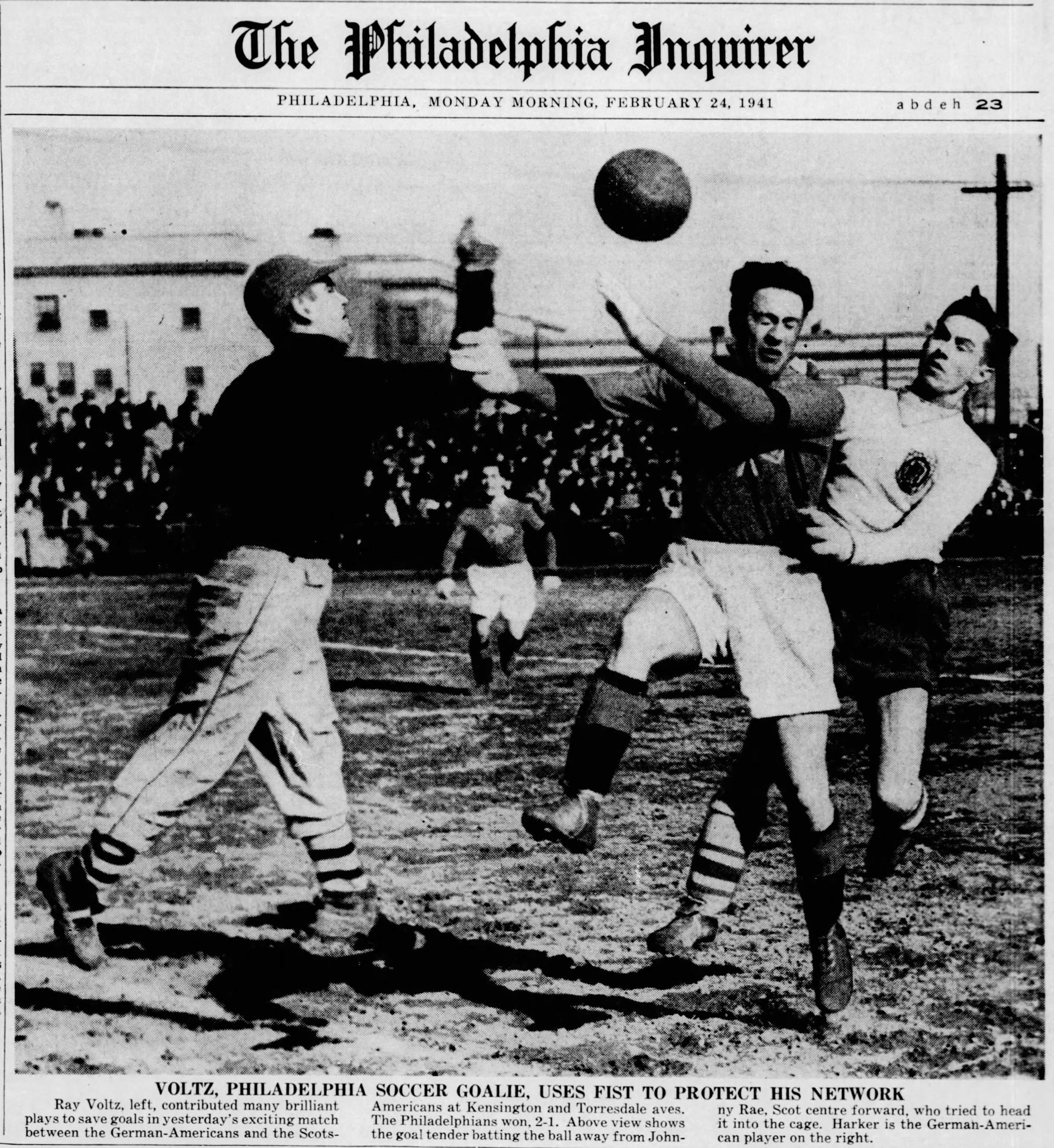
It’s not often a 20 year old goalkeeper suits up for the US, but Ray Voltz wasn’t your average goalkeeper. After being in the professional league for just a year, Voltz quickly established himself as one of the top goalkeepers not only in the American Soccer League, but the US as a whole. In 1937, the US called on 43 potential players to later trim down to a small squad for a three-game series against Mexico. Voltz was selected, being picked over other notable goalkeepers like Stanley Chesney and Frank Bartkus, but the trip ended up in disaster, with three blowout losses for the US as the Americans were clearly a level (or two) below the Mexican team at the time.
Unbeknownst to Voltz at the time, these would be the last matches for the US for ten years, not playing again until 1947. Despite the federation’s disappearance, Voltz returned to Philadelphia to keep playing with Philadelphia Passon, shining brightly before joining the Philadelphia German-Americans in 1939. Before stepping away at the age of just 26 years old to join the war, Voltz had racked up two Lewis Cups and an ASL championship, as well as deep National Challenge Cup runs in ‘42 and ‘43.
Although Voltz never got a chance to redeem his time with the national team and his club career was cut short due to the war, Voltz was a top goalkeeper in the country and a significant “what if” story for an emerging goalkeeper in the league.
93. Gino Gardassanich
Thinking of today’s youth goalkeepers’ pathway to reaching the USMNT, the discussion often does not include being born in Flume (a former independent state that is now a part of Croatia), saving people from the SS when Nazi Germany occupied their hometown, and playing for a decade before ever setting foot in the US. But Gino Gardassanich’s pathway was not like most others.
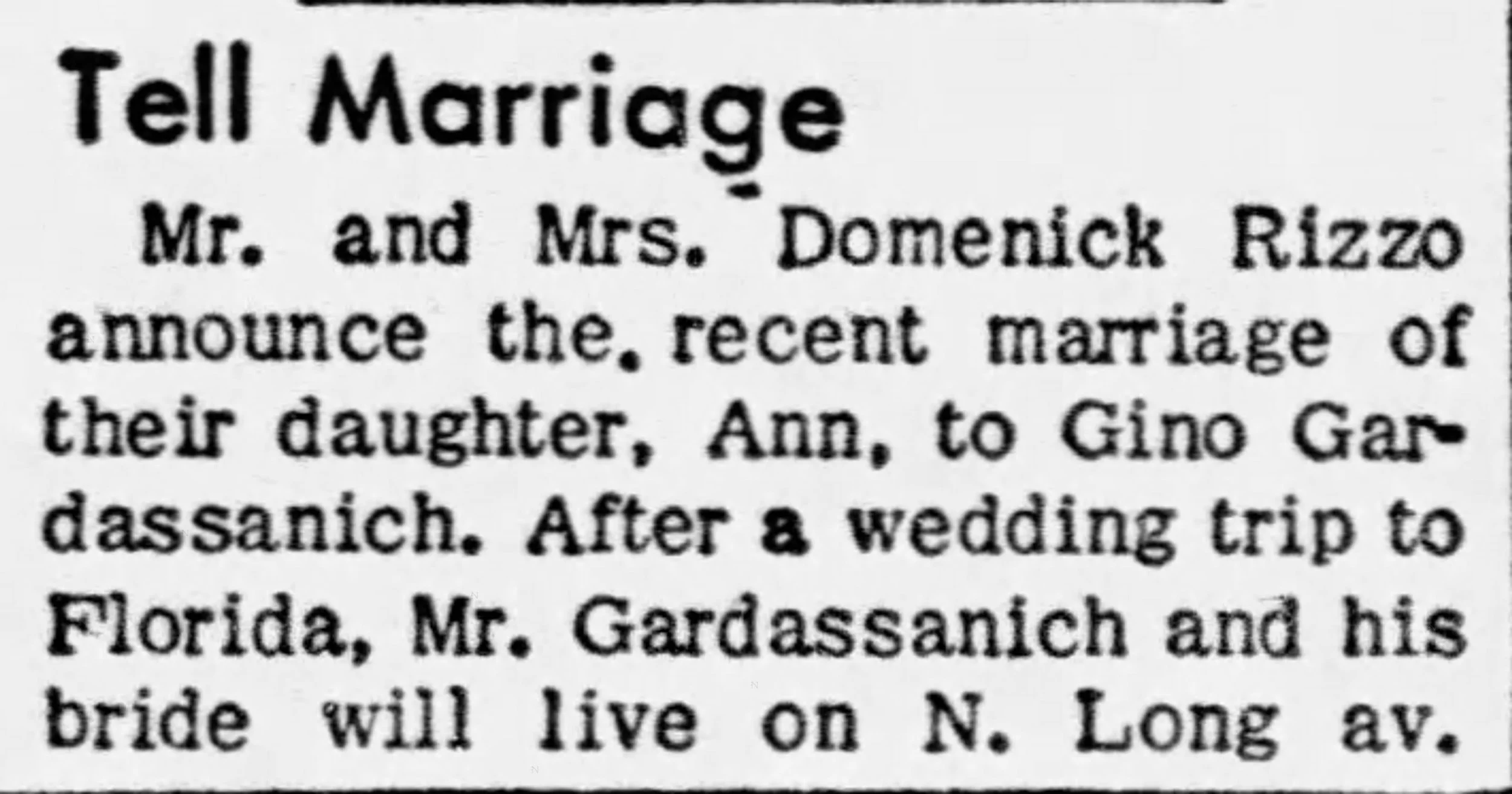
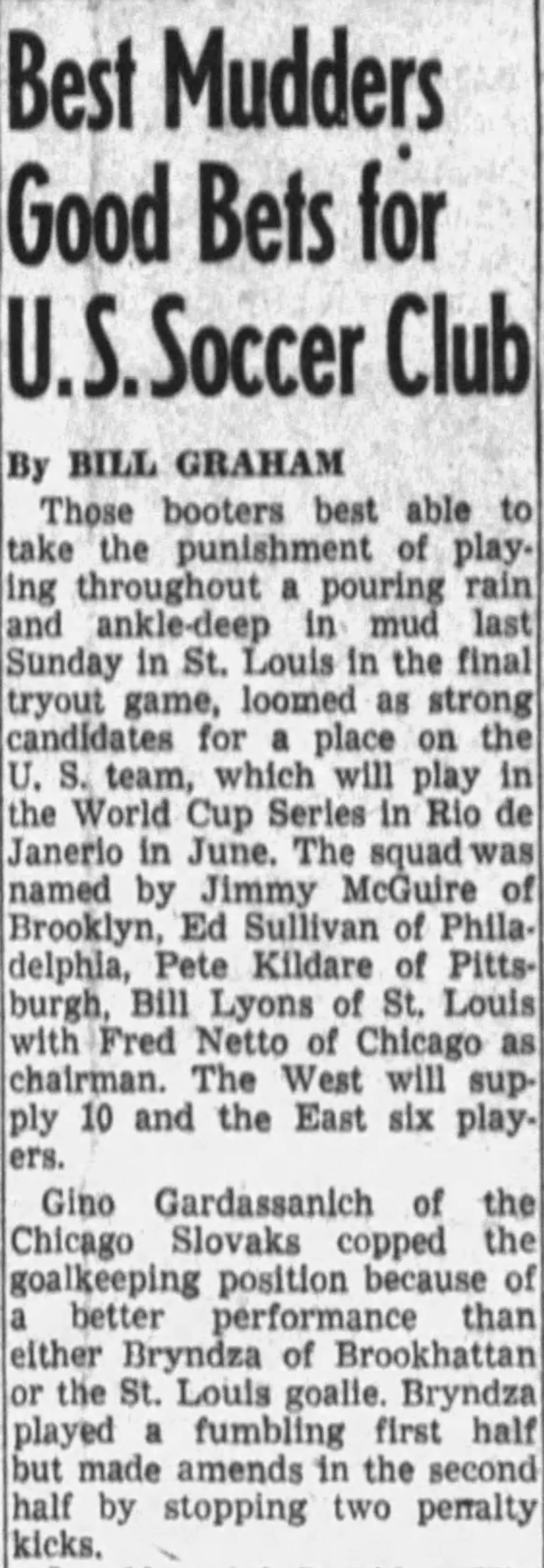

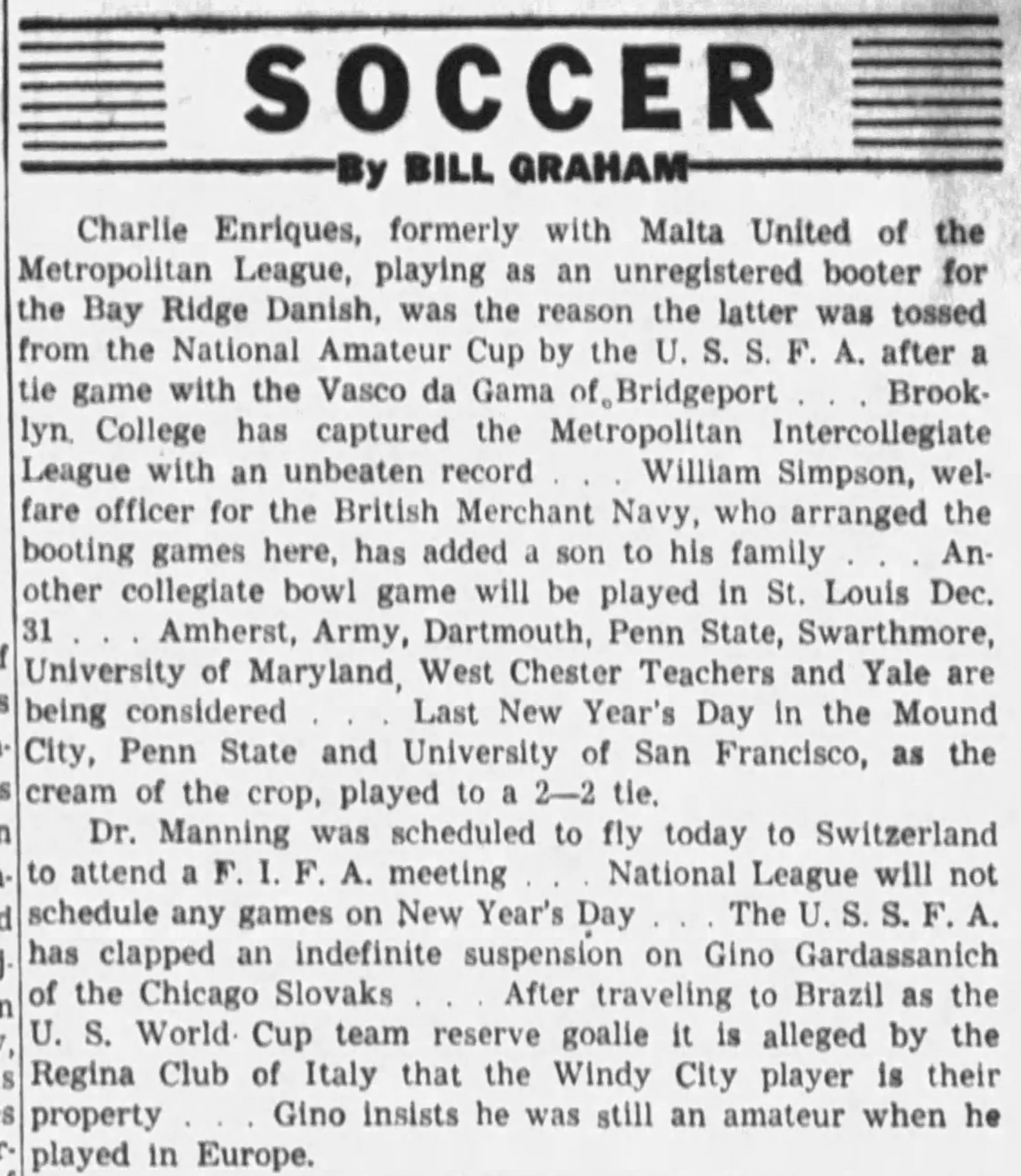
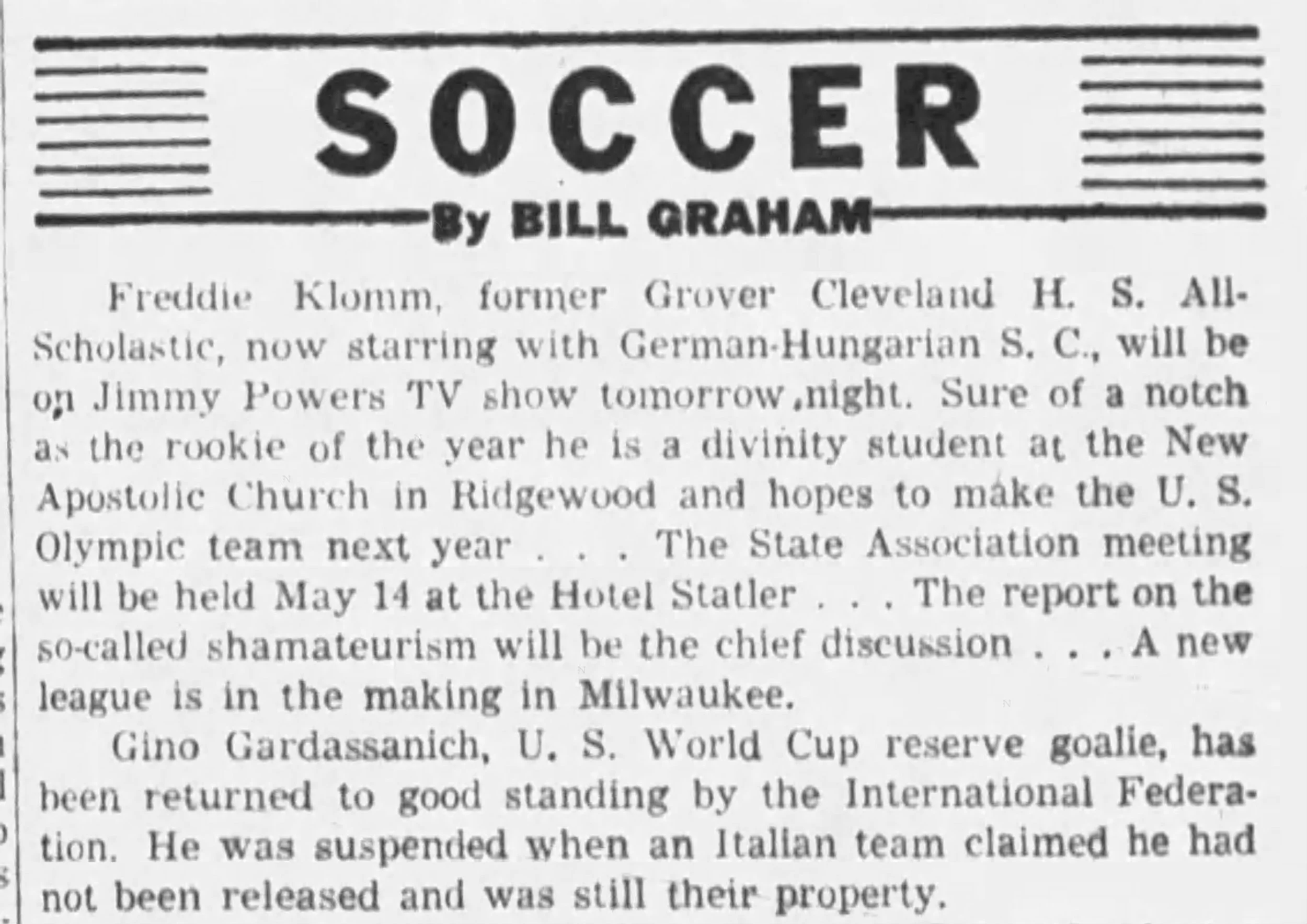
After playing several years across Europe, an eventual marriage led to his move across the Atlantic and, reportedly, earned his eligibility to play for the USMNT without Gardassanich even knowing he had obtained it. Gardassanich joined the Chicago Slovaks in 1949 and was promptly named to the 1950 World Cup roster as a replacement when fellow Chicago goalkeeper Joe Silovsky stepped down. Although Gardassanich never played for the USMNT, he was one of the very few Americans who witnessed first hand the men’s national team’s great win in program history.
Gardassanich would go on to have a successful ten-year run with the Slovaks in the hotbed of Chicago, winning the National Soccer League’s top goalkeeper award in 1950, three league titles (1951, 52, and 54), the 1951 Peel Cup, and was a finalist in the 1953 National Amateur Cup. Gardassanich’s time with the national team was brief, but his winding road is a testament to the goalkeeper’s great composure and positioning, not letting his hardships prevent him from being at the right place at the right time.
93. Victor Gerley
Hartford Courant (1965 07 25)
In 2015, I interviewed Gerley when I realized there was nearly zero information on the goalkeeper available online. The interview was originally published on Soccer Over There (RIP) but like most things in American soccer, it too has gone the way of the dodo. But Gerley embodies a lot about the time he grew up. Gerley played on local semi-professional clubs but never got a shot in the NASL, all the while the federation was largely spinning its wheels in mud. Despite the lack of professional opportunities or decent backing from the federation, Gerley and the US almost slipped past Mexico in the 1966 World Cup qualifying but a controversial penalty was called in the US’s home game against the heated rival, leading to a tie and still being a thorn in Gerley’s side later in life. “So I just brushed him, barely touched him. And he fell to the ground, faking it. Faking it! And the referee gave a penalty kick, which I didn’t save. I should have saved but I didn’t. It would have been wonderful to make it to England.”
Like most goalkeepers in the era, Gerley wouldn’t get another shot at playing in such a high-profile game for the USMNT, despite continuing to play for many years after. Unsurprisingly, Gerley was a talented multi-sport athlete as his skillset translated well to handball, leading him to represent the US one more time, in the 1970 World Championship in France. Although Gerley’s career is filled with “what ifs,” Gerley shone bright in the limited opportunities the late 60’s and early 70’s.
On March 8th, 2026, Victor Gerley passed away at the age of 82 years old.
94. William Yarbrough
The pathway to the national team has never been a straight shot. For some, they attend a prestigious university or a heralded European club overseas, while Yarbrough is one of the few American goalkeepers to first find success in Mexico, before playing professionally in the US. Yarbrough played almost a decade for Leon, capturing several titles from 2011-2014 for the club, earning the nickname “White Puma”, as well as a call-up by Jurgen Klinsmann in 2015. Yarbrough’s swapping from Mexico, where he played with their youth national teams, marked the start of a bigger wave of Mexican-Americans who would be highly sought after by both nations. Yarbrough earned three caps with the national team and eventually joined the Colorado Rapids for a four-year stint, with the high point being runner-up in the league table in 2021. Looking back to goalkeepers from a hundred years ago, when the sport was still in its infancy in the US, Yarbrough’s career is a strong reminder that American goalkeeping can include those who weren’t born in the US but were still willing to dive into the fray for their team and country.
95. Jack “Chick” Albion
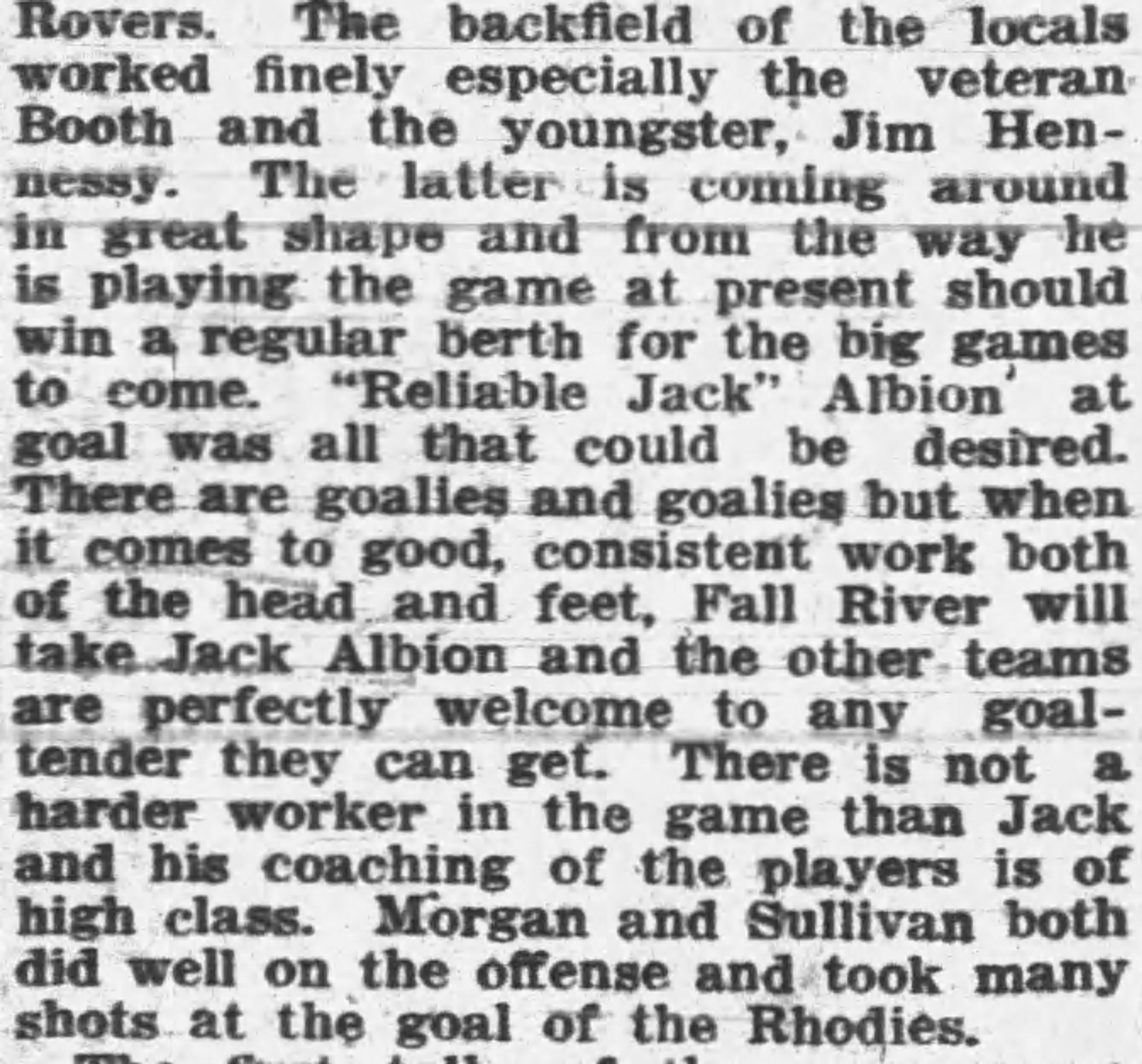
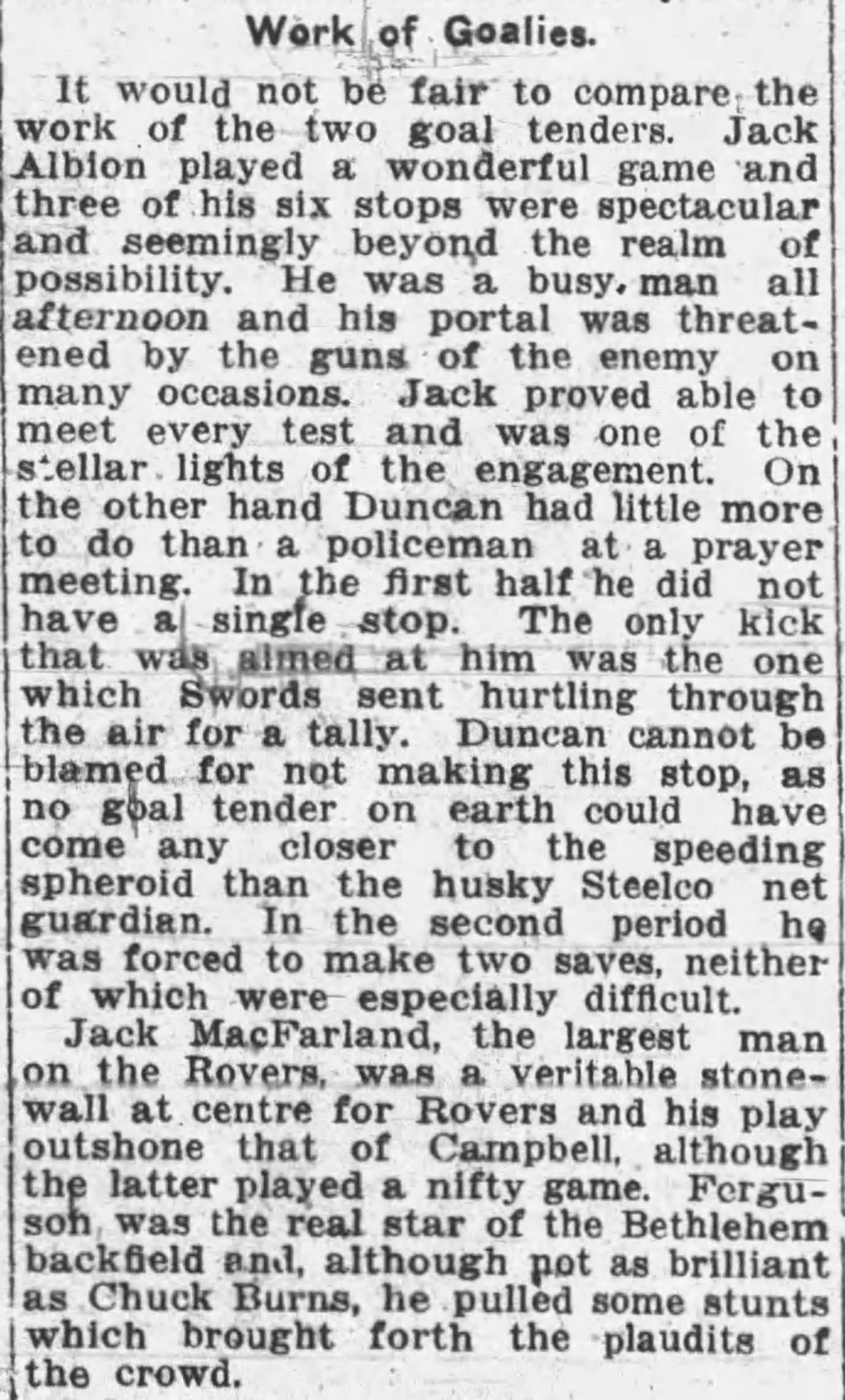
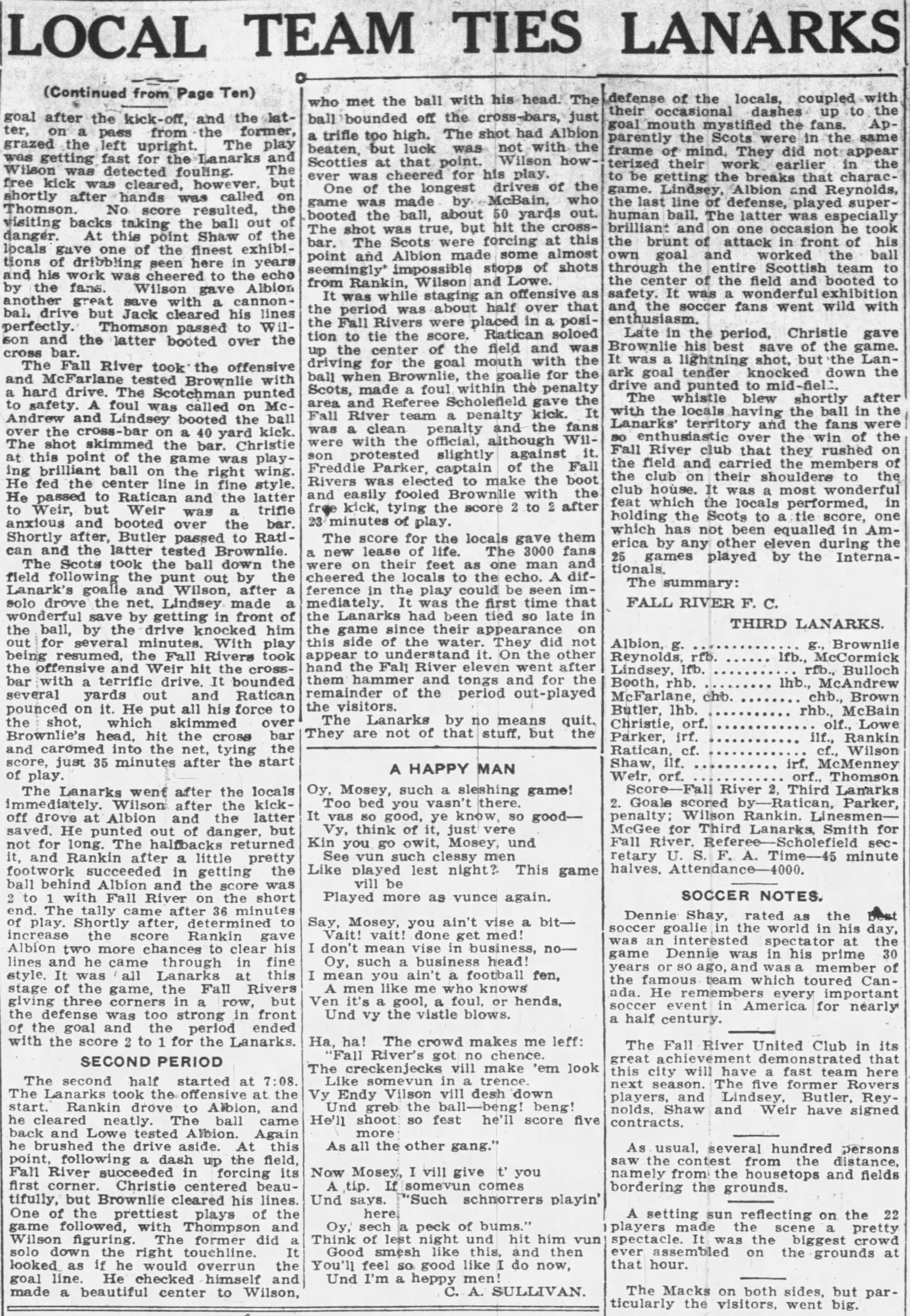
Like most top goalkeepers in the early 20th century, Albion’s fame was heavily tied to his performances in the National Challenge Cup. A three-time finalist (1916-1918), Albion won the cup twice with Fall River Rovers (1917, 1918). After winning his first final in 1917, The Evening Herald praised Albion’s performance after playing “a wonderful game and three of his six stops were spectacular and seemingly beyond the realm of possibility”. Although Albion reached the American Cup semifinals twice (1916, 1921) and showed well in his lone season with Morse Dry Dock, notching another semifinal appearance in the National Challenge Cup (1919), his “sensational goaltending” (The Standard Times, July 22, 1921) against the talented Scottish side, Third Lanarks, earned him the right to being a part of “the best team in the States today”. Albion’s ability to hold the Third Lanarks to a 2-2 tie broke a 24-game win streak during their summer tour.
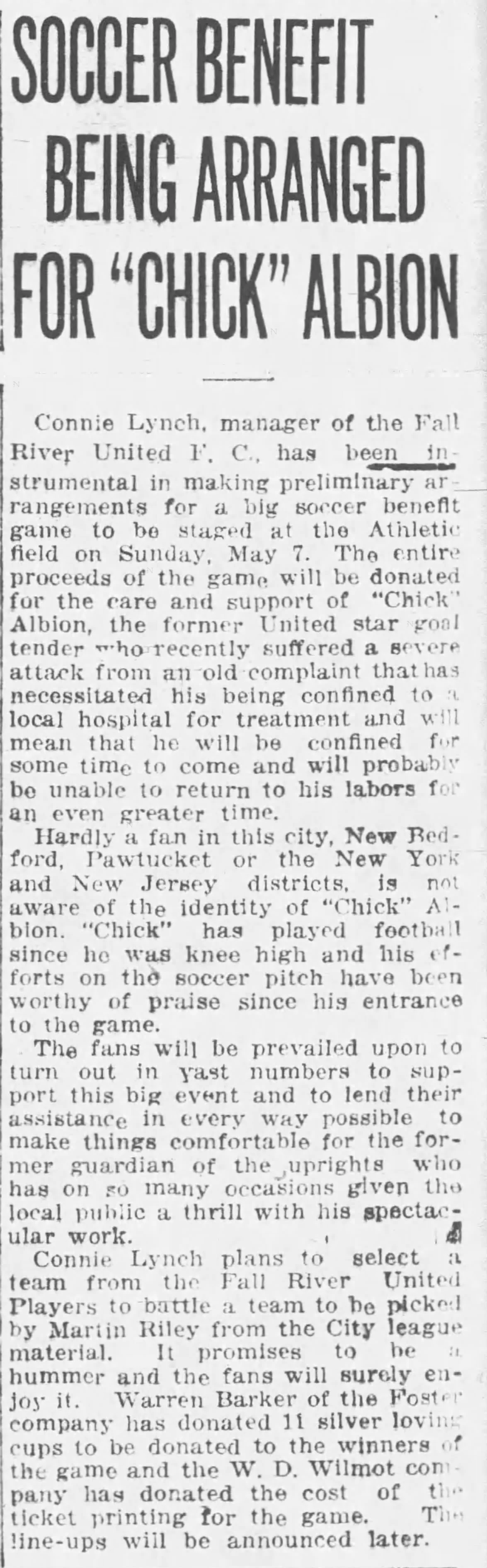
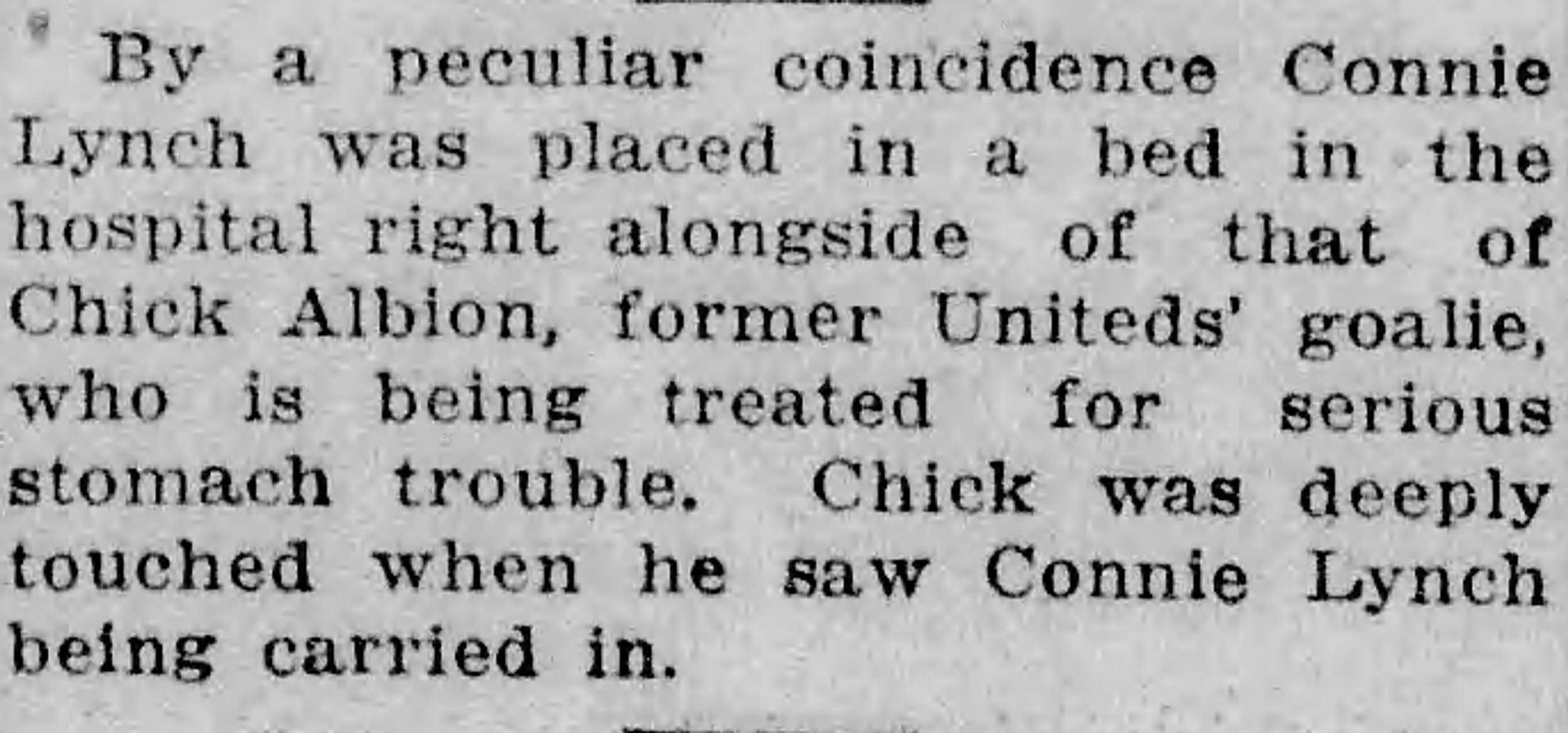
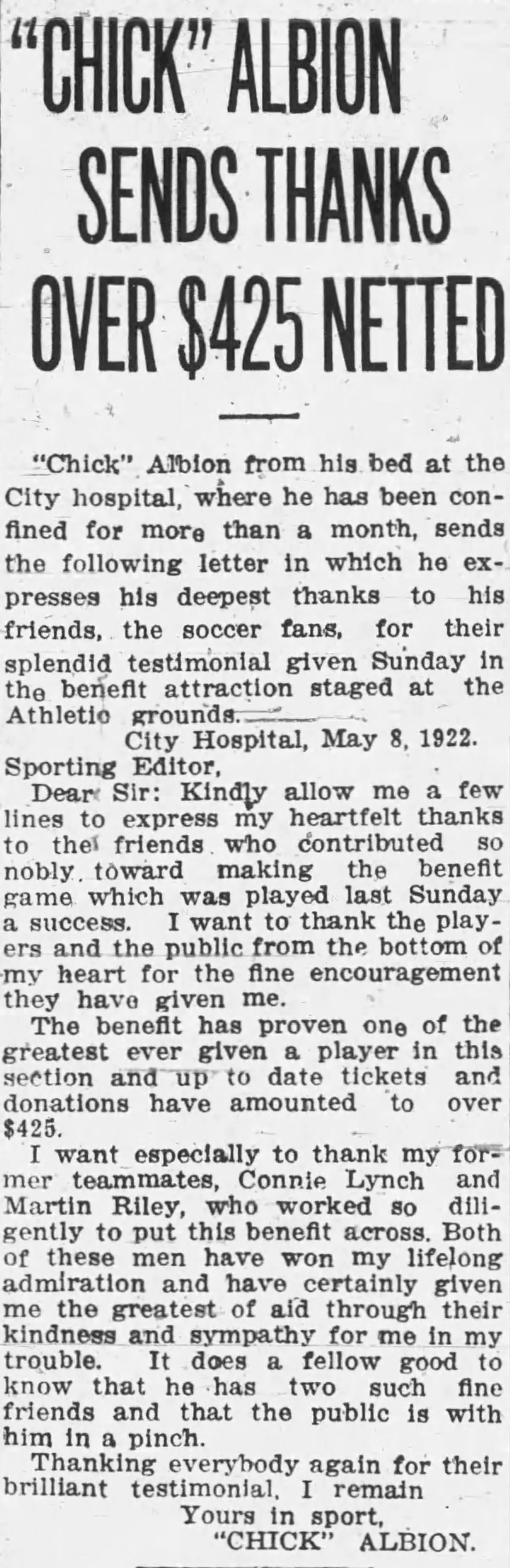
In the spring of 1922, Albion became severely ill with stomach trouble. A match was organized by Albion’s former teammates, raising $425 ($8168 in 2025) for Albion. The star goalkeeper had his gratitude published in the Evening Herald. Albion wrote, “I want especially to thank my former teammates, Connie Lynch and Martin Riley, who worked so diligently to put this benefit across. Both of these men have won my lifelong admiration and have certainly given me the greatest of aid through their kindness and sympathy for me in my trouble… Thanking everybody again for their brilliant testimonial. I remain yours in sport, ‘Chick’ Albion”.
Although Albion would not suit back up to play in goal, except for the occasional Old Timers game, Albion’s strong connection with his teammates resonates with every goalkeeper who has had a defender clear a shot off the line, make a perfectly timed tackle, or help them get out of the mud after an opposing shot found the back of the net.
96. Marianne Rogers
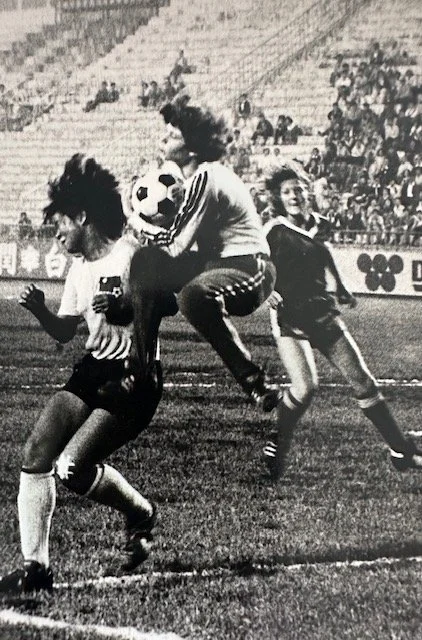
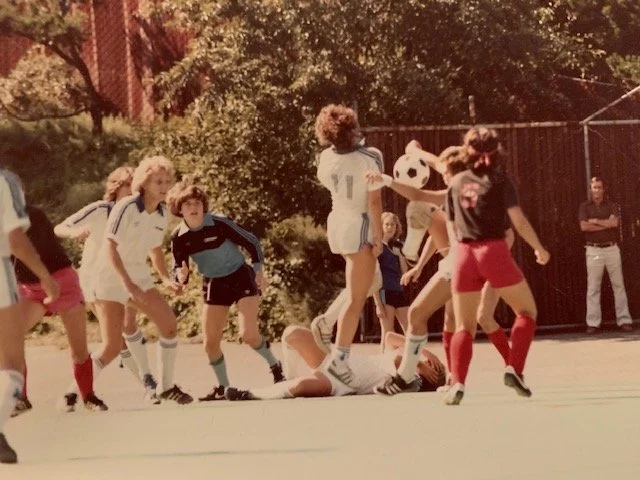
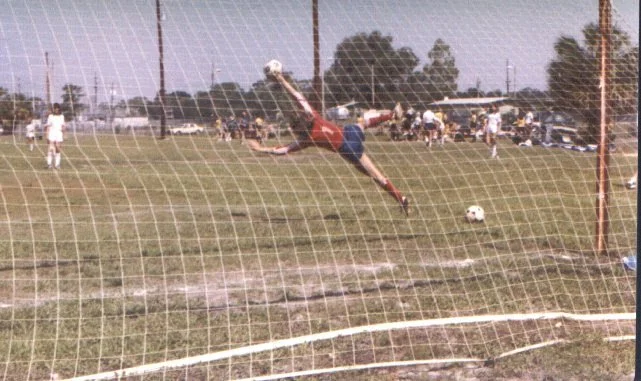
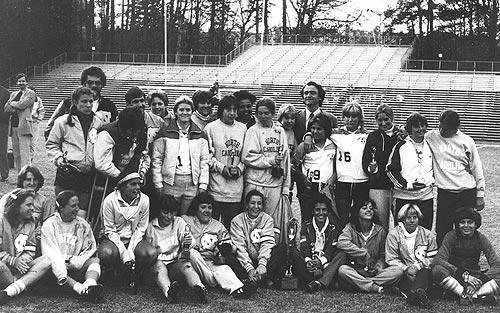
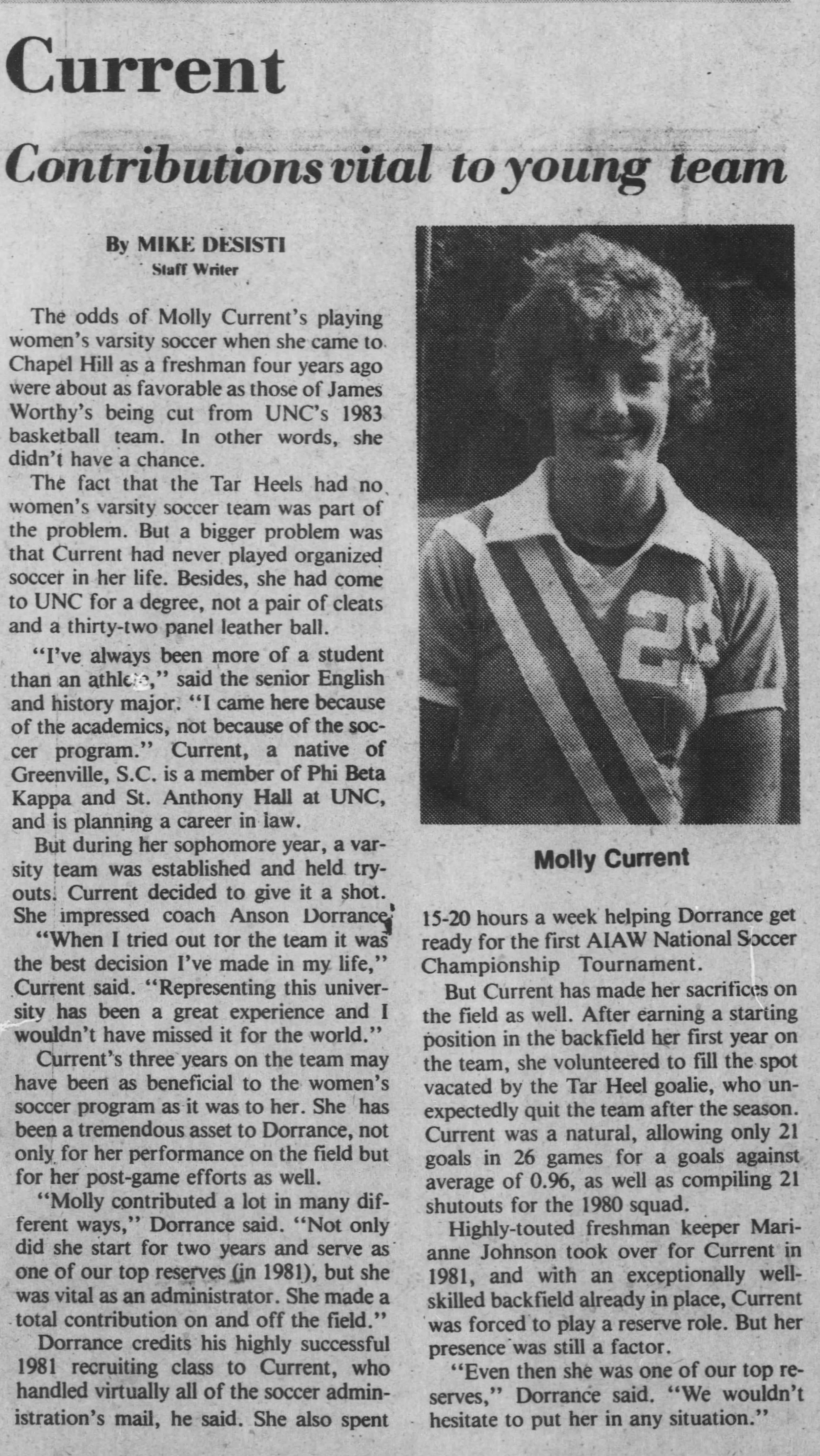
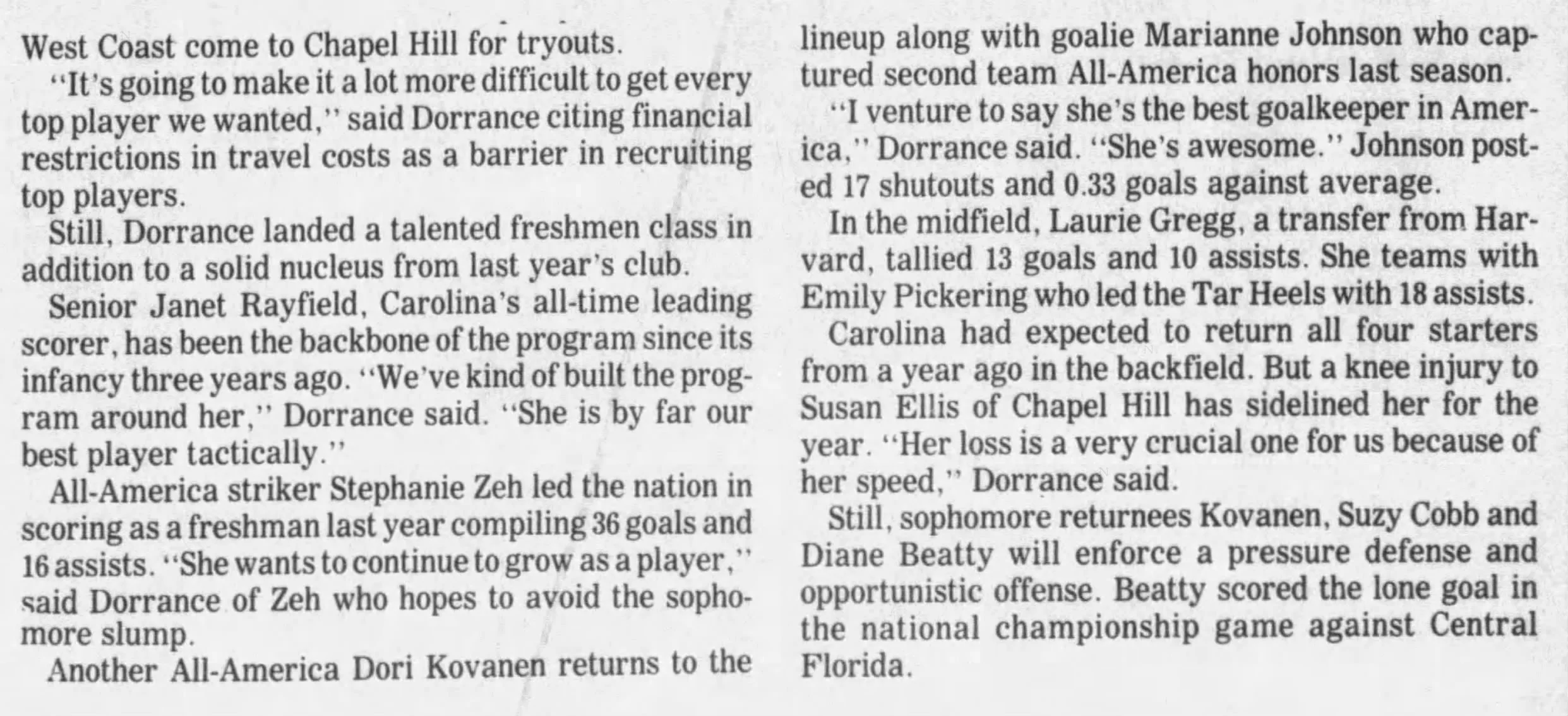
Although Title IX was signed into effect in 1972, it would be almost a decade before NCAA women’s soccer would see a fraction of today’s level of investment. Marianne Rogers (née Johnson) would join goalkeepers such as Lori Kats and Joan Schockow as early pioneers to navigating the position without much of a blueprint to look to. No YouTube, no professional league, and no female goalkeeper coaches led Rogers to excel almost exclusively off her natural skill
Hailing from Richardson, Texas, Rogers joined Texas Sting and toured the globe as the first American club to play overseas, smashing teams wherever they went. Starting in 1977, Sting played in Mexico City (facing off against Mexico’s national team) while the following years featured a return trips to Mexico City, as well as tours to Sweden’s Gothia Cup and Taiwan’s World Women’s Football Tournament. Rogers and Sting attended the Pikes Peak Invitational in Colorado and Toronto’s Robbie Cup but it was in San Jose that Sting lifted their first domestic national trophy. In 1980, Sting traveled west for the first-ever USYSA Women's U19 National Championship, where Sting won 5-0 over runner-up St. Louis. In 1981, Sting would follow up with a third-place finish in the US’s open division, finishing the tournament in Seattle, WA.
Over these tournaments, Rogers played so well that even after a two-year stint of playing volleyball at Richland Junior College, Anson Dorrance called Rogers directly to offer her a spot with the Tar Heels, who were receiving a massive influx of scholarships following a disappointing semifinal run the year prior. Rogers went from one dominant side to another, helping UNC win its first two national championships (1981, 1982) before returning to Texas. Rogers won second-team All-American honors in those two years and earned praise from Dorrance himself saying, “She’s awesome” and “I venture to say she’s the best goalkeeper in America.”
Although there was no professional scene, nor a national team around in 1982, Rogers continued to play in open leagues well into her 40s, long after she had graduated from UNC. In 1994, 12 years after graduation, Rogers and Sting yet again captured another trophy at the Over 30 National Championship in Philadelphia. Throughout her entire career, Rogers notched successful campaigns one after another as an early pioneer in women’s soccer who truly embraced the DIY aspects of goalkeeping to its fullest.
97. Johnny Reder
Reder (right) with Boston Red Sox teamtes Earl Webb (left) and Marty McManus (central).
As the debate on specialization vs. multi-sport rages on in 2026, it’s nothing new, as Johnny Reder faced this problem 100 years ago. Like many American goalkeepers, Reder was praised in a losing effort during the 1929 National Challenge Cup before joining Fall River FC later in the year, starting a three-year stretch where the defensive standout won six trophies. With no goalkeeper coming near his exploits at the time, Reder put his boots in the backseat at just 23 years old, favoring his glove and bat.
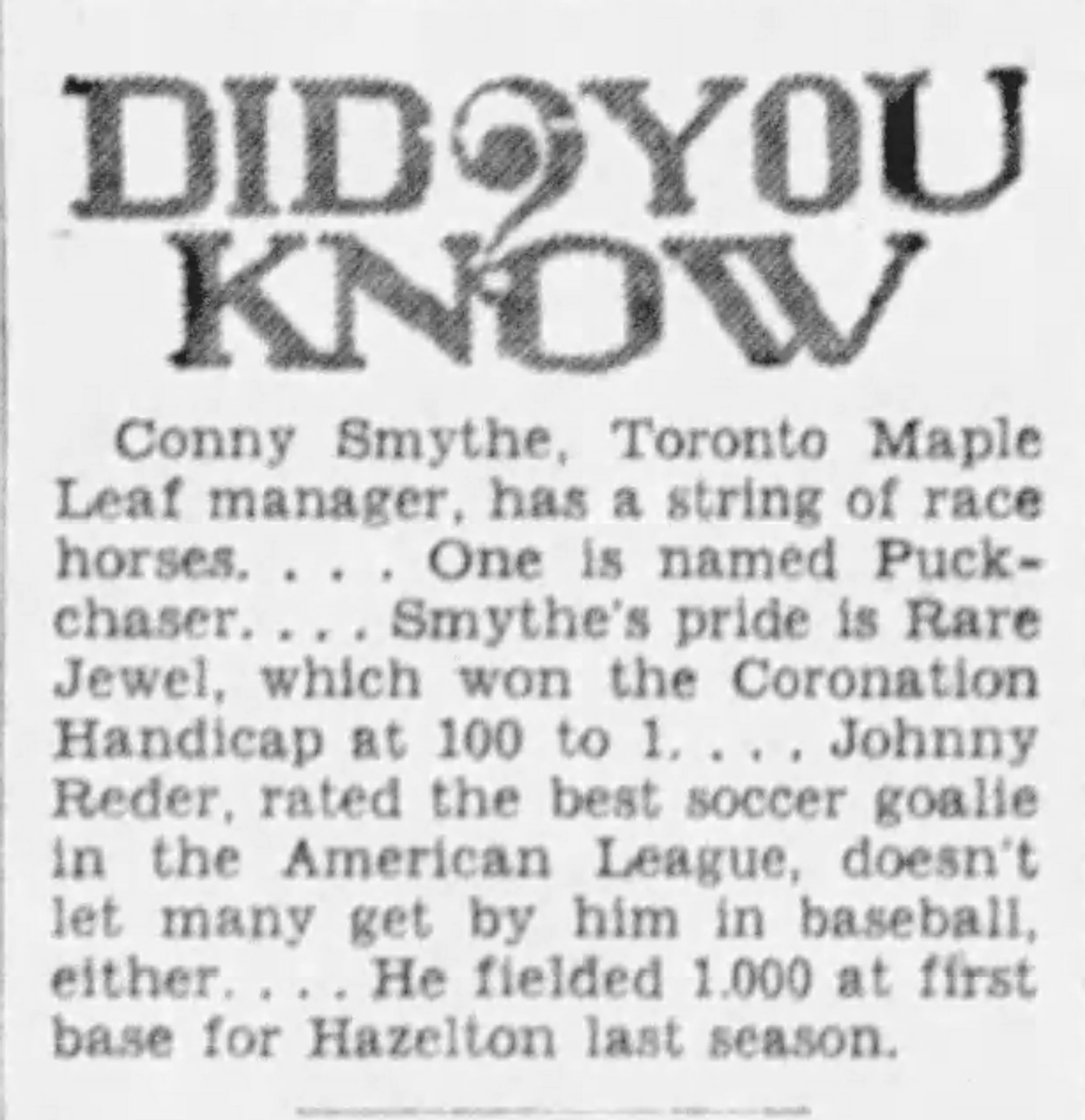
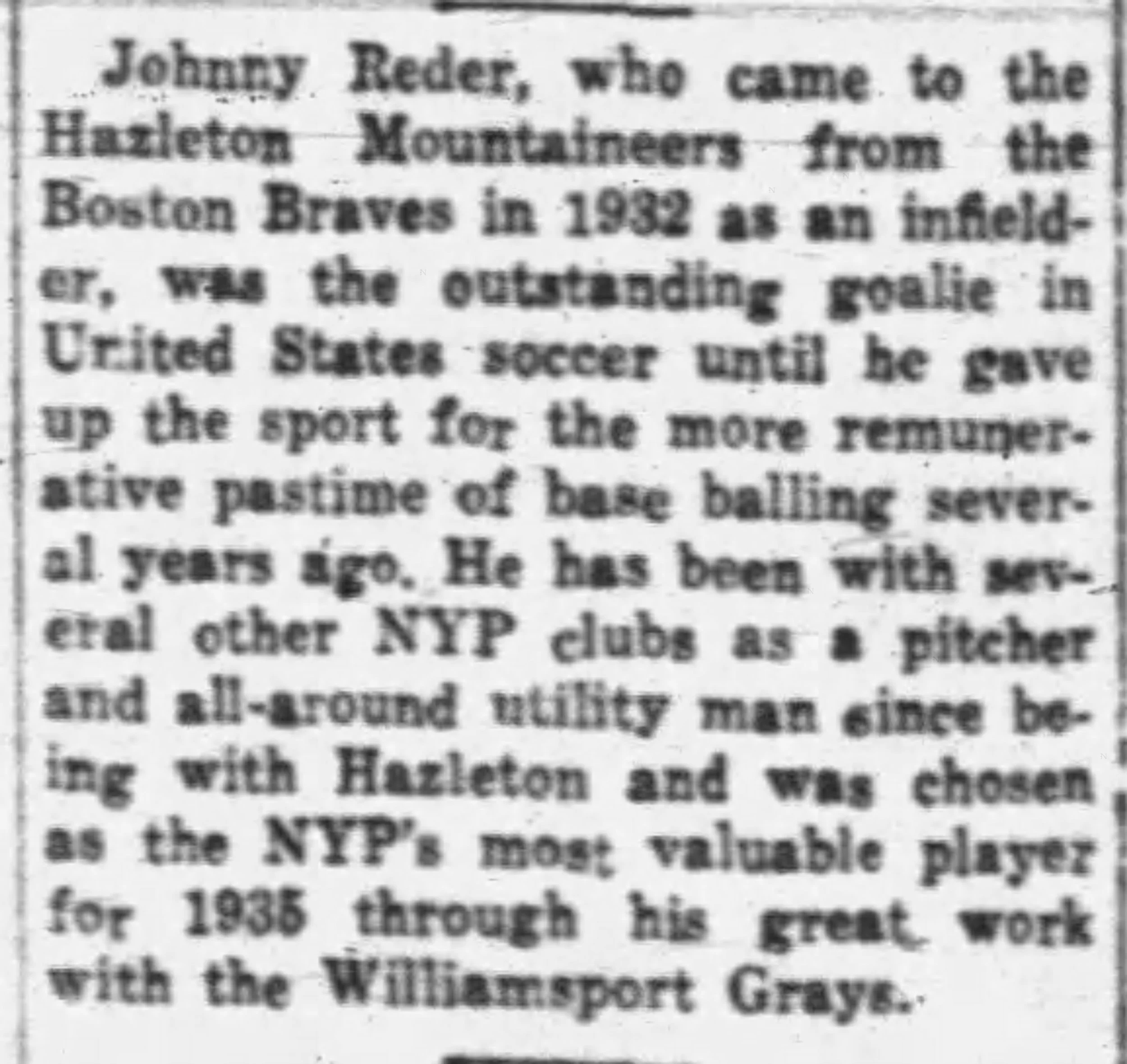
Reder joined the Boston Red Sox in 1932 as the American Soccer League started waning in money and investment. Reder’s abilities carried over well and helped him become a defensive standout, although his offensive contributions at the plate limited his ability to find success at the top level. Still, the multi-sport standout continued earning praise for his work with his new leather glove. Although many can weigh in on the debate for specialization, Reder is a good reminder that everyone’s pathway is a little different, and that ultimately only the individual can make the hard decisions of where and when they should dive into the dirt.
98. Mark Dougherty
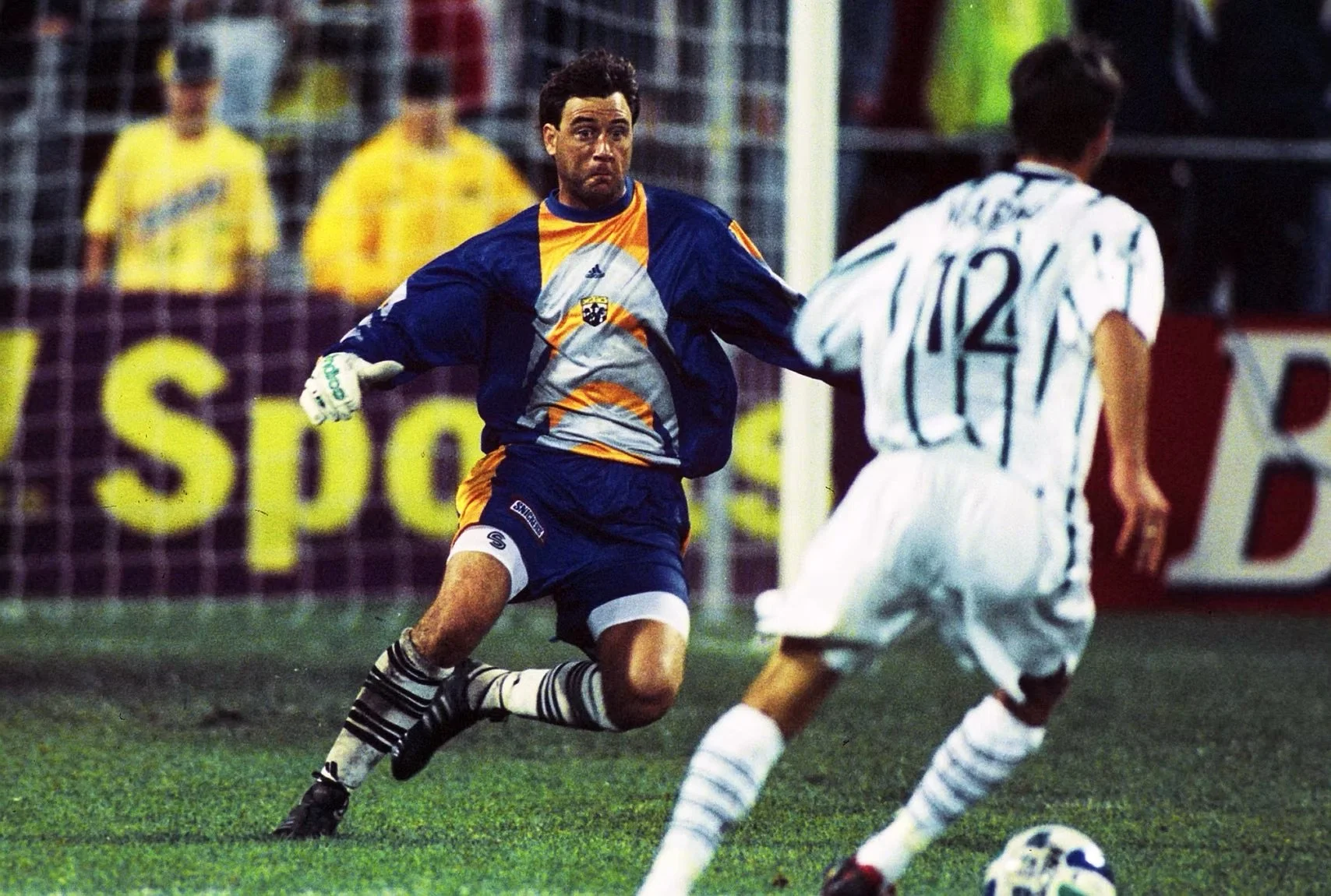
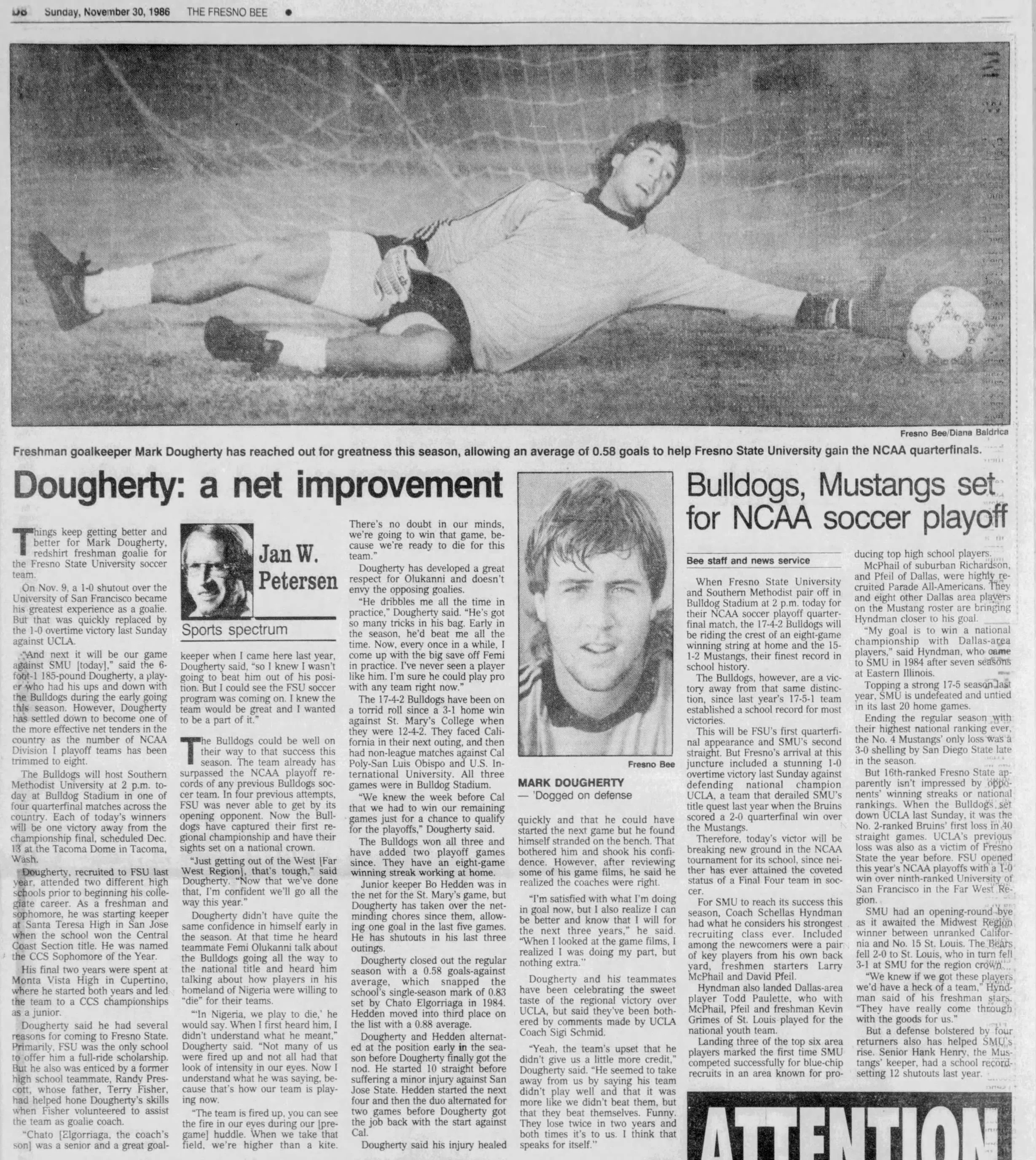
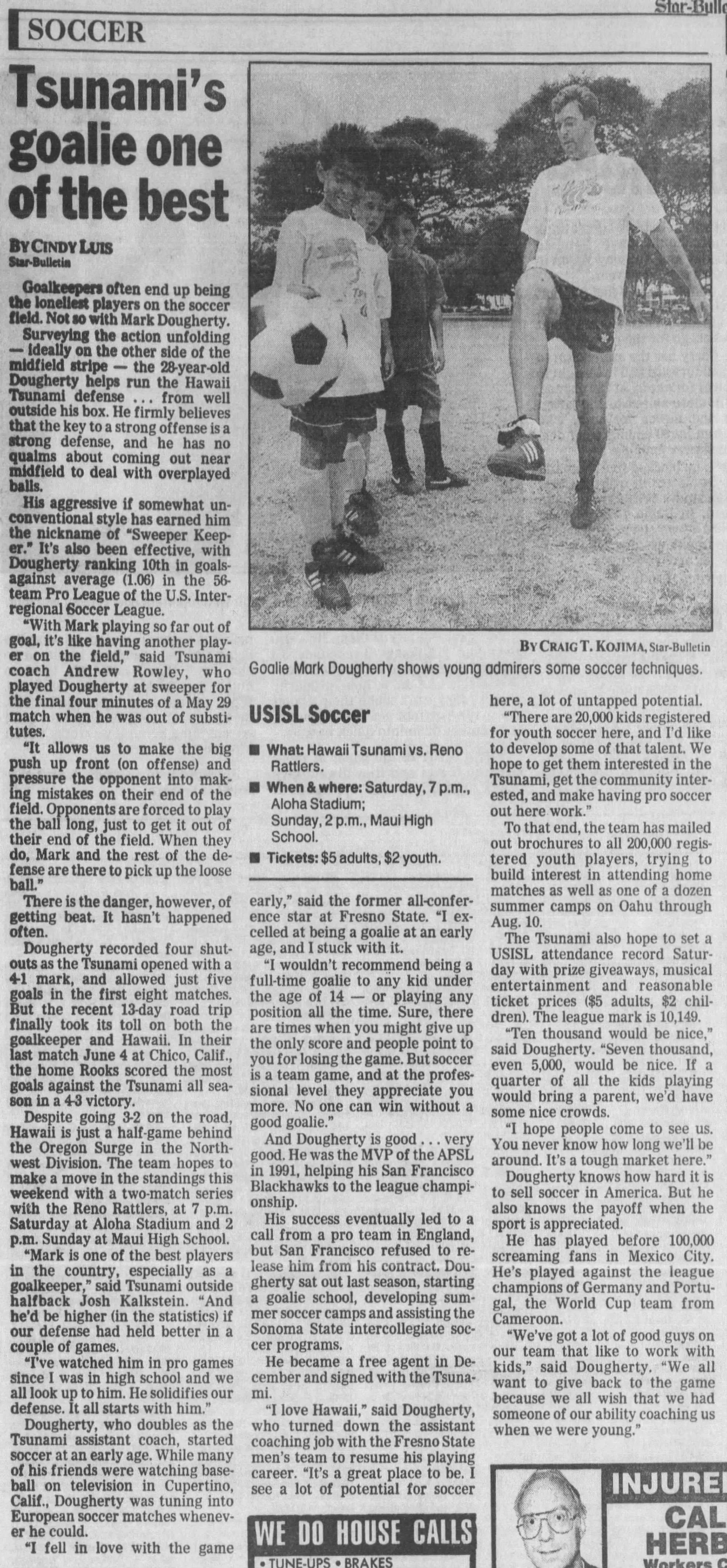
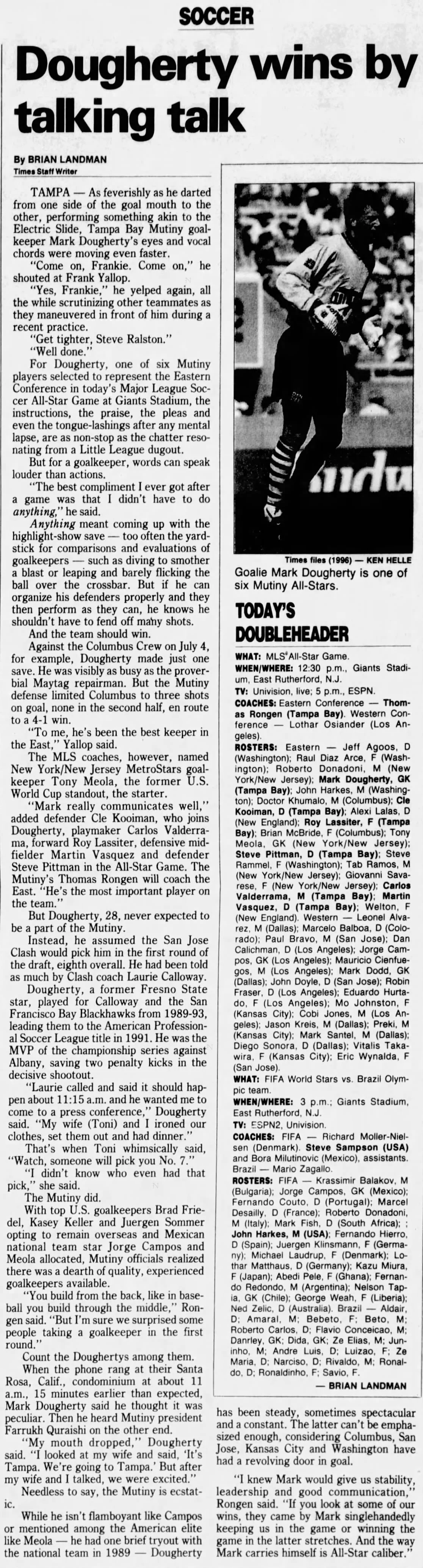
For a generation that grew up on the glitz and glamor of the NASL, it feels criminal that those players had to navigate an era without a fully professional league to aspire to, not to mention their alma mater shutting down their soccer team not long after their college graduation. Mark Dougherty was a standout player at Fresno State (a top four school from 1986-1987) and successfully navigated the wild wild west of post-NASL but pre-MLS years. After appearing in the WSL/APSL final three years in a row with the San Francisco Bay Blackhawks (1989-1991), Dougherty was rewarded as a first-round pick in the 1996 MLS inaugural draft. (The second goalkeeper selected in the draft? Fellow Fresno State alum, David Kramer.) The Mutiny were rewarded with Dougherty’s addition as he would be named to the first MLS all-star team in 1996.
In spite of Dougherty’s first MLS team eventually closing its doors, Dougherty’s pathway is a great testament to individual determination and a reminder that just because a team doesn’t suit up anymore, it doesn’t mean their players weren’t willing to test their mettle as far as it could go.
99. Bob Yingling
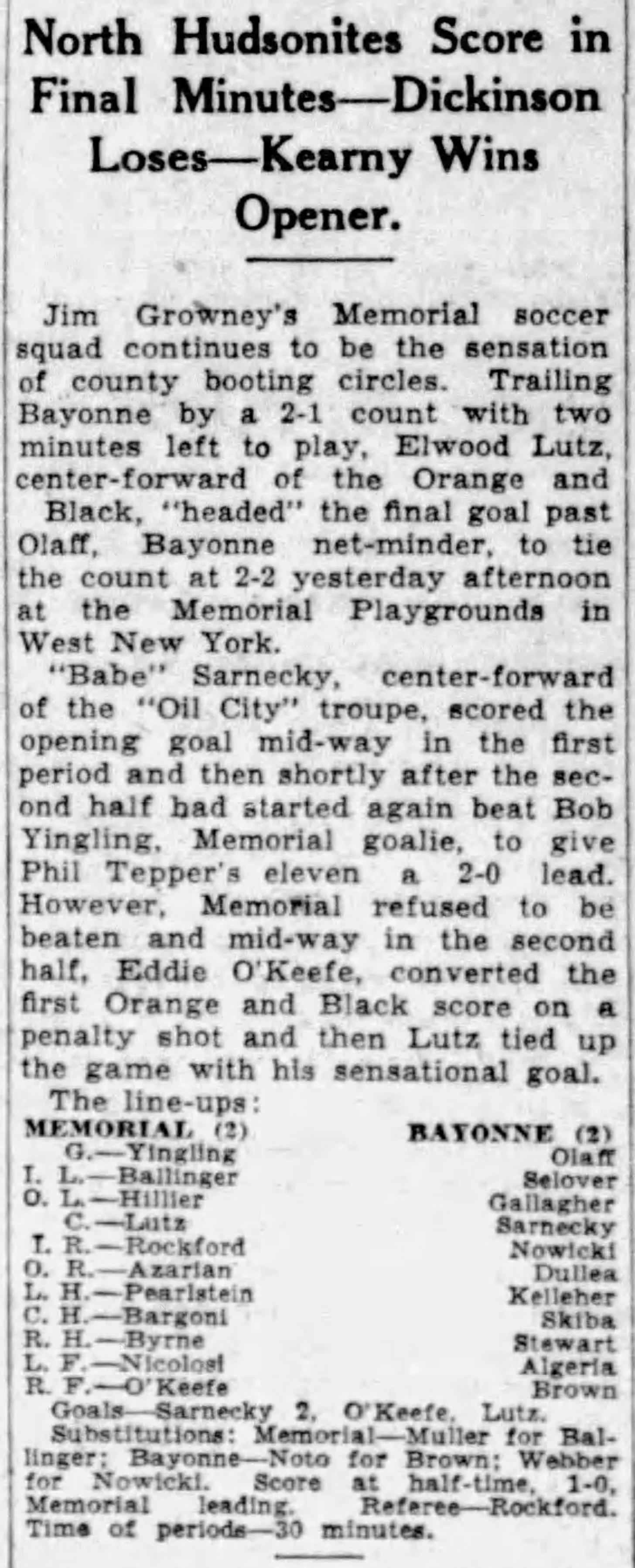
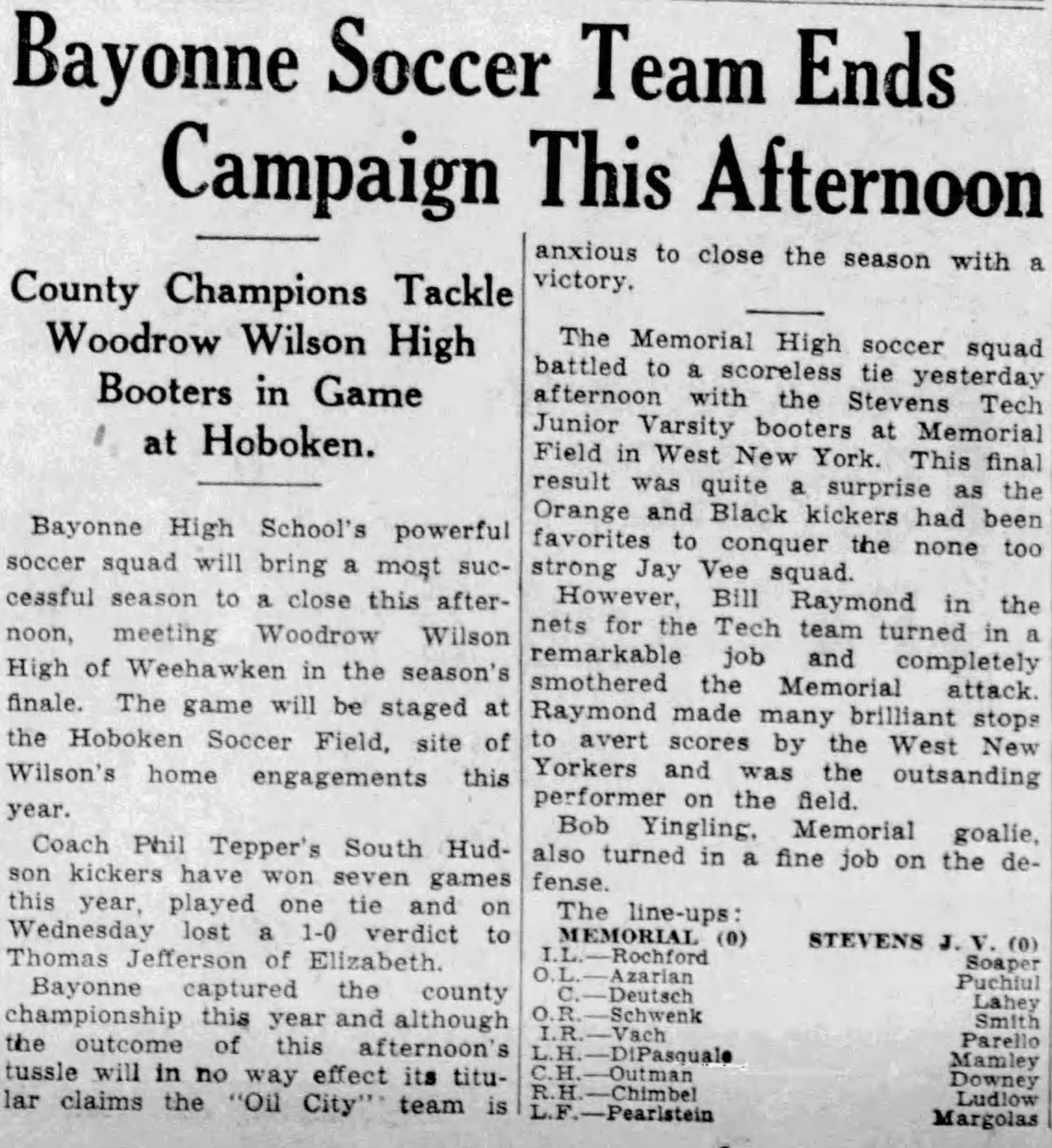
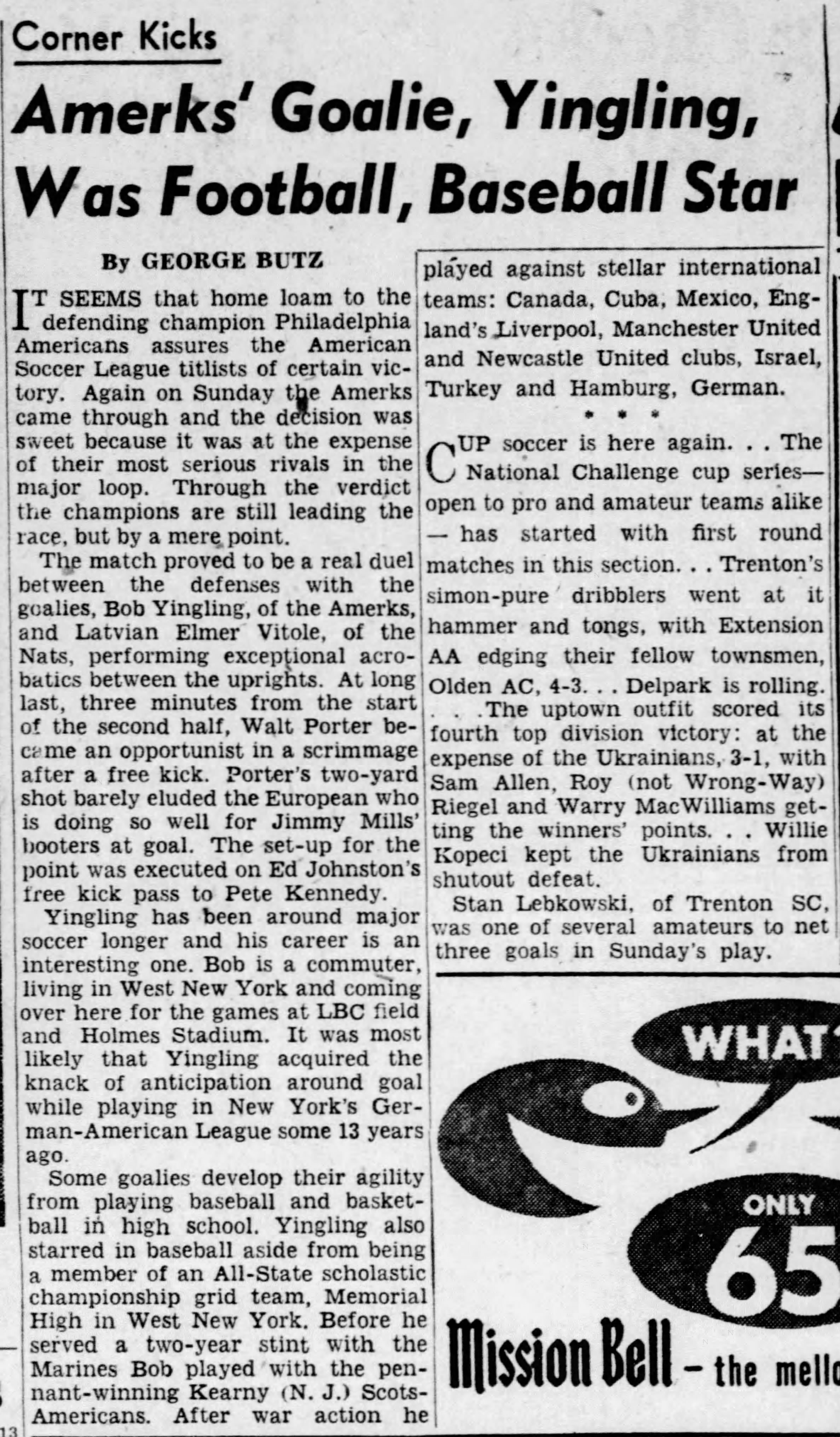
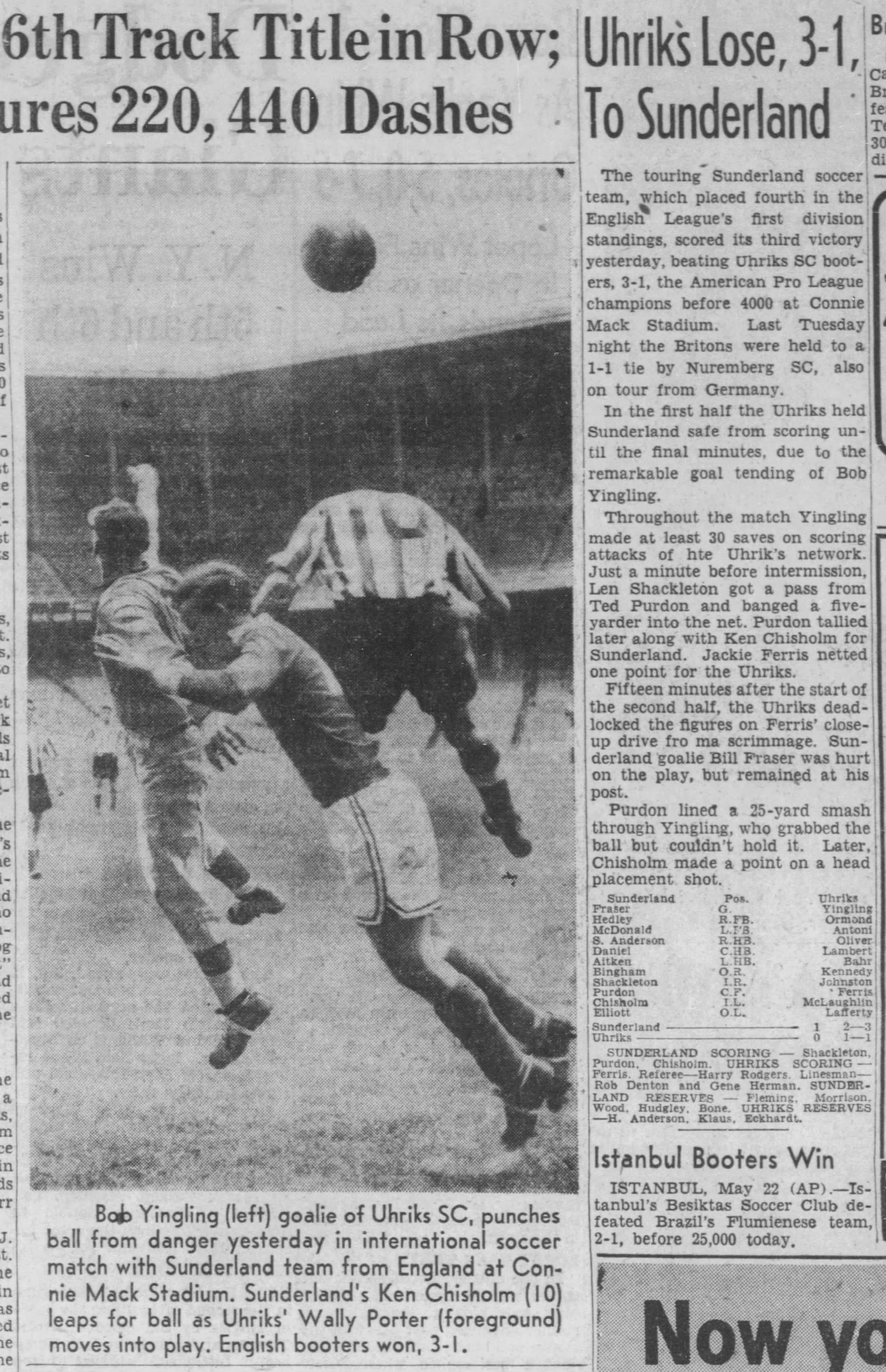
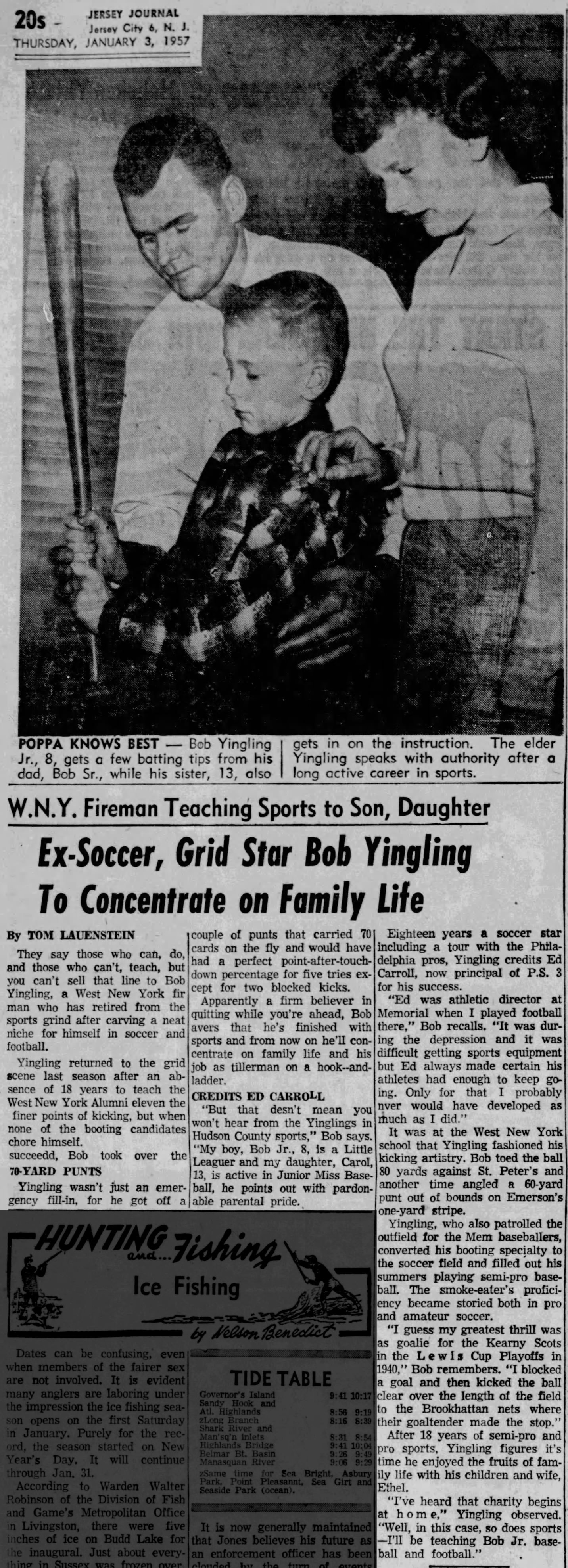
Yingling was an accomplished multi-sport athlete at Memorial High School, playing soccer, baseball, and football, but his kicking prowess was of note throughout his long career. Known for his incredibly long punts, Yingling enjoyed an illustrious 18-year career in the American Soccer League, playing for clubs like Kearny Scots (‘41 ASL Champions), Brookhattan (‘43 ASL runner-up), New York Americans (‘47 USOC quarterfinalist), Philadelphia Americans (‘52 ASL Champions), and Uhrik Truckers (‘55 ASL and Lewis Cup champions). The extended tenure for the goalkeeping mercenary culminated in a near triple crown with the Truckers, losing in the semifinal of the National Challenge Cup to the eventual winners, SC Eintracht.
The truest and best definition of a professional journeyman, Yingling credited an early supporter for a significant impact on his career, “Ed [Carroll] was athletic director at Memorial [High School] when I played football there. It was during the depression and it was difficult getting sports equipment but Ed always made certain his athletes had enough to keep going. Only for that I probably never would have developed as much as I did.”
100. Johnny Hamm
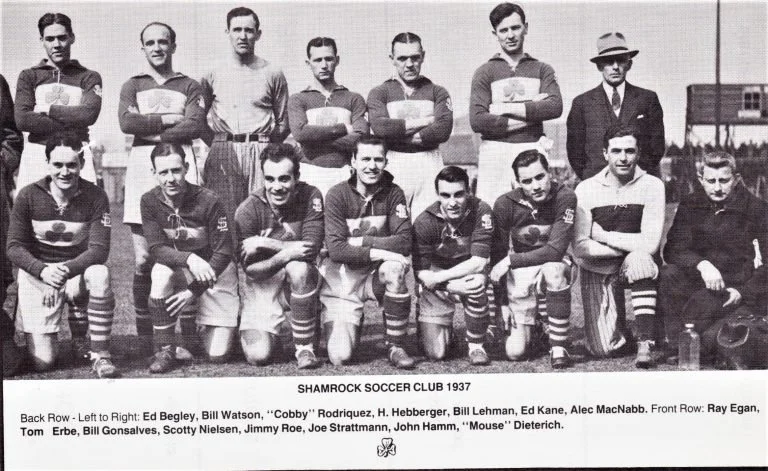
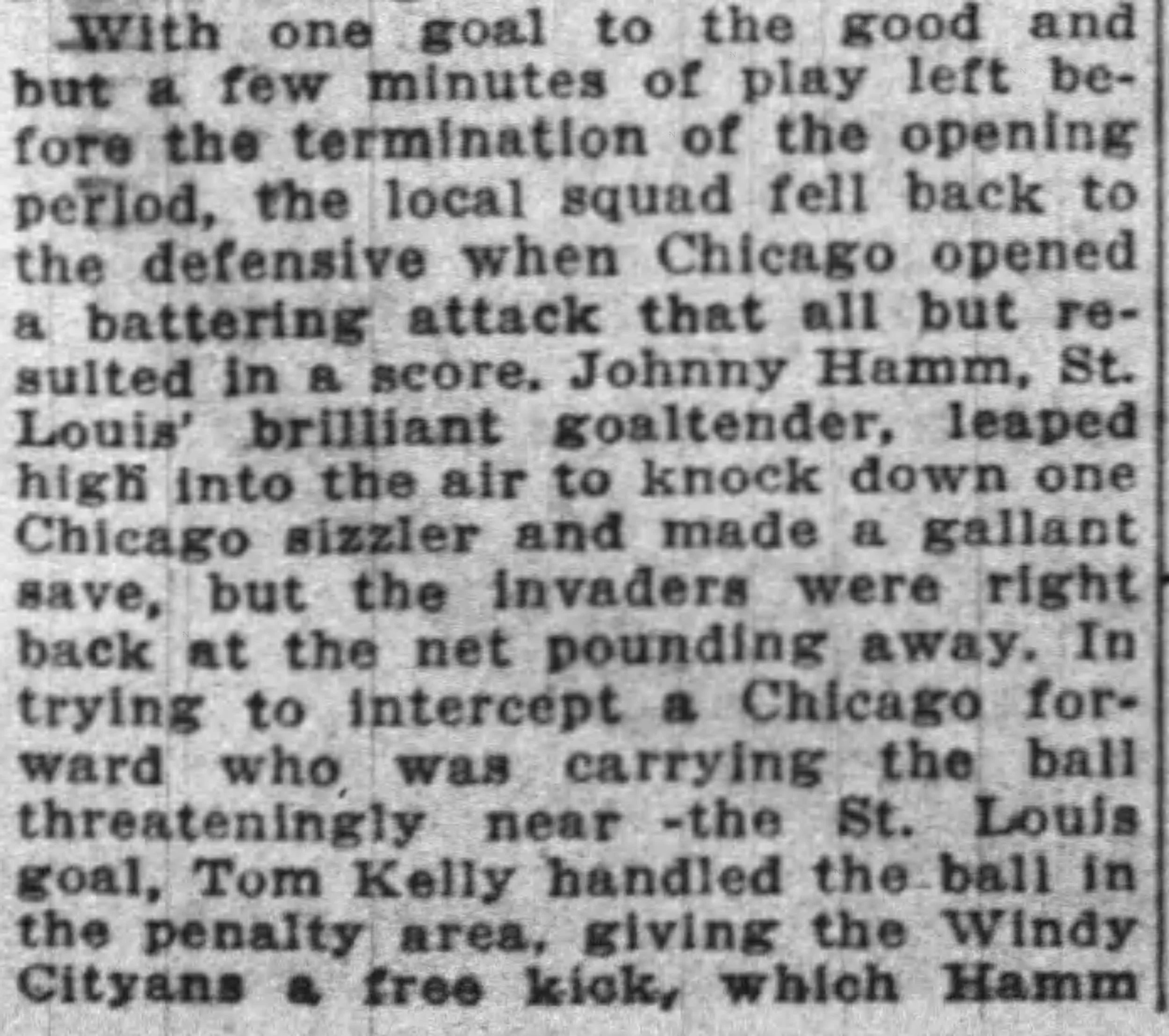
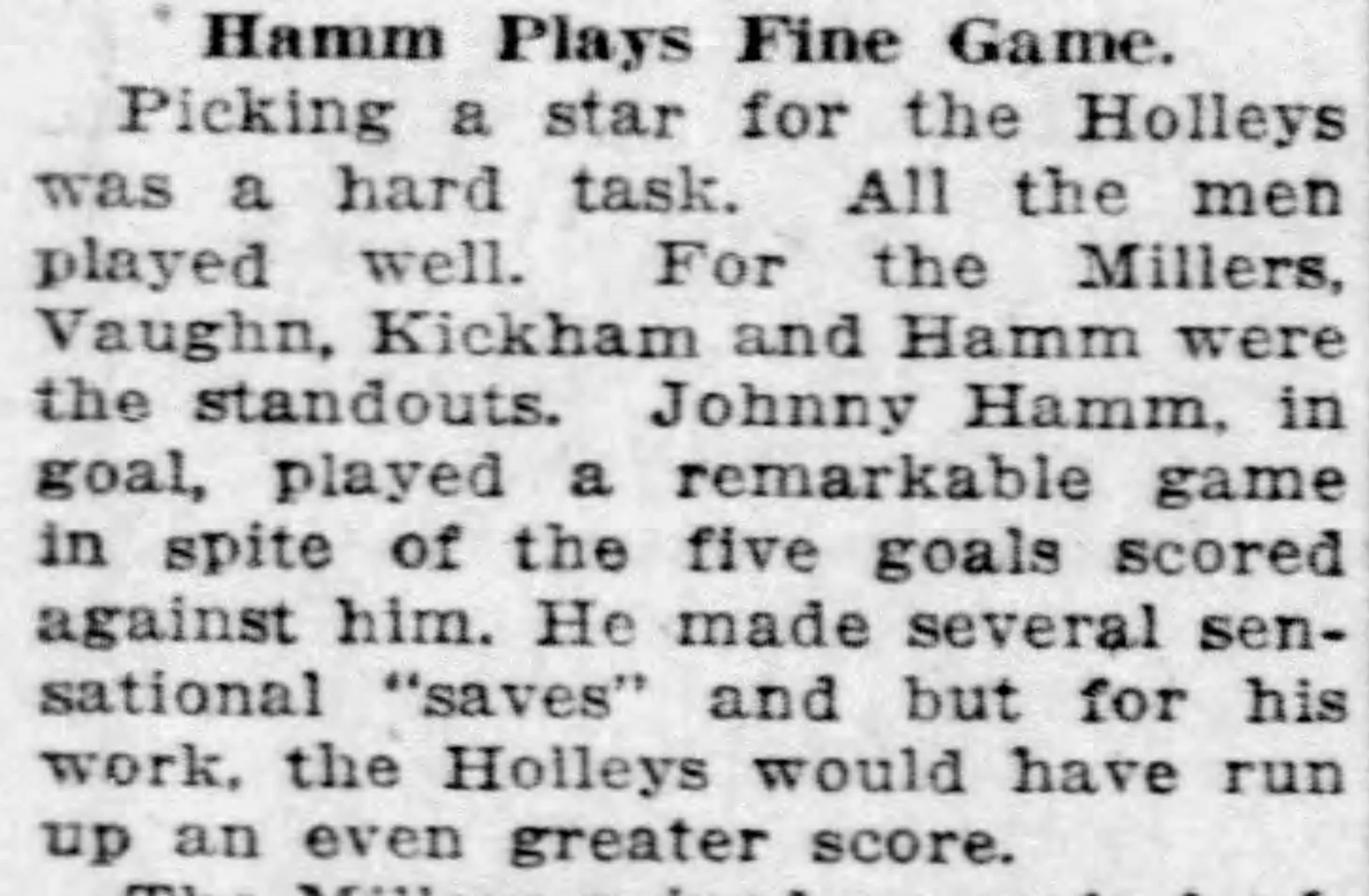
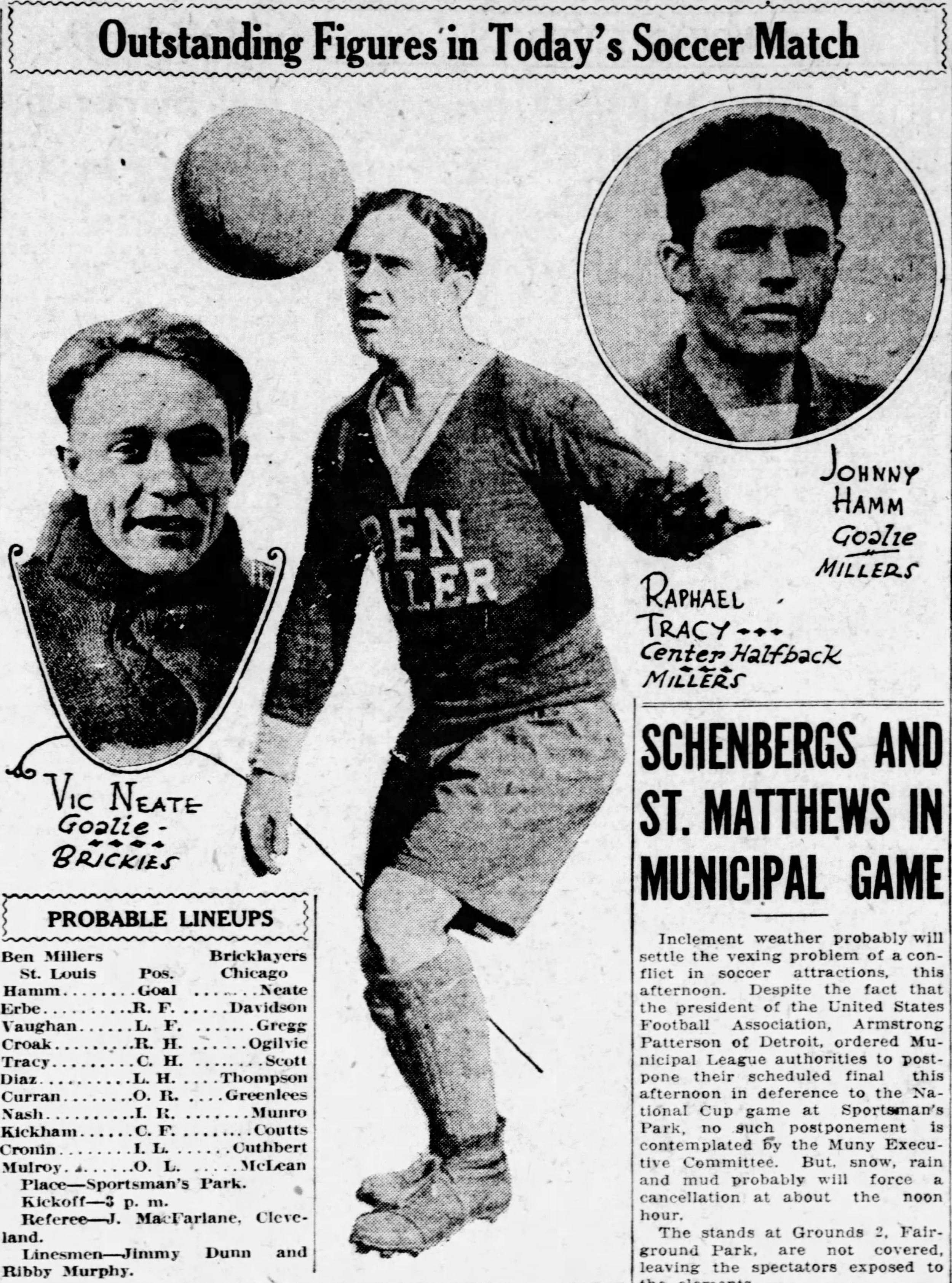
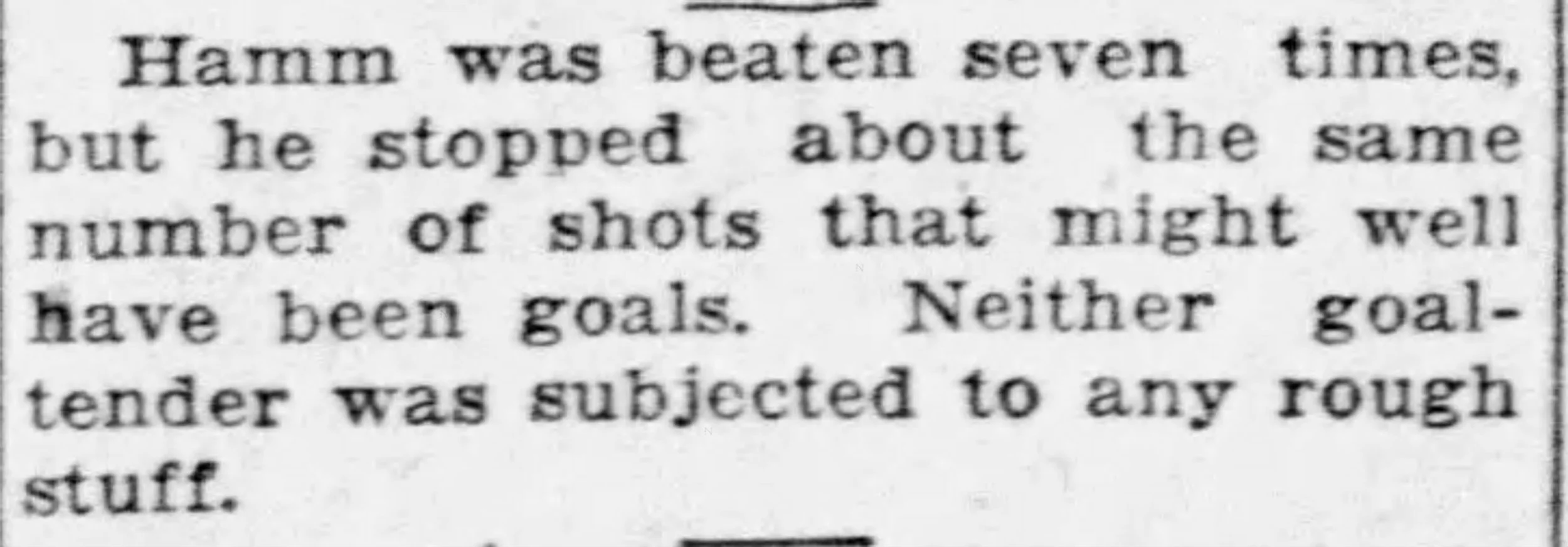

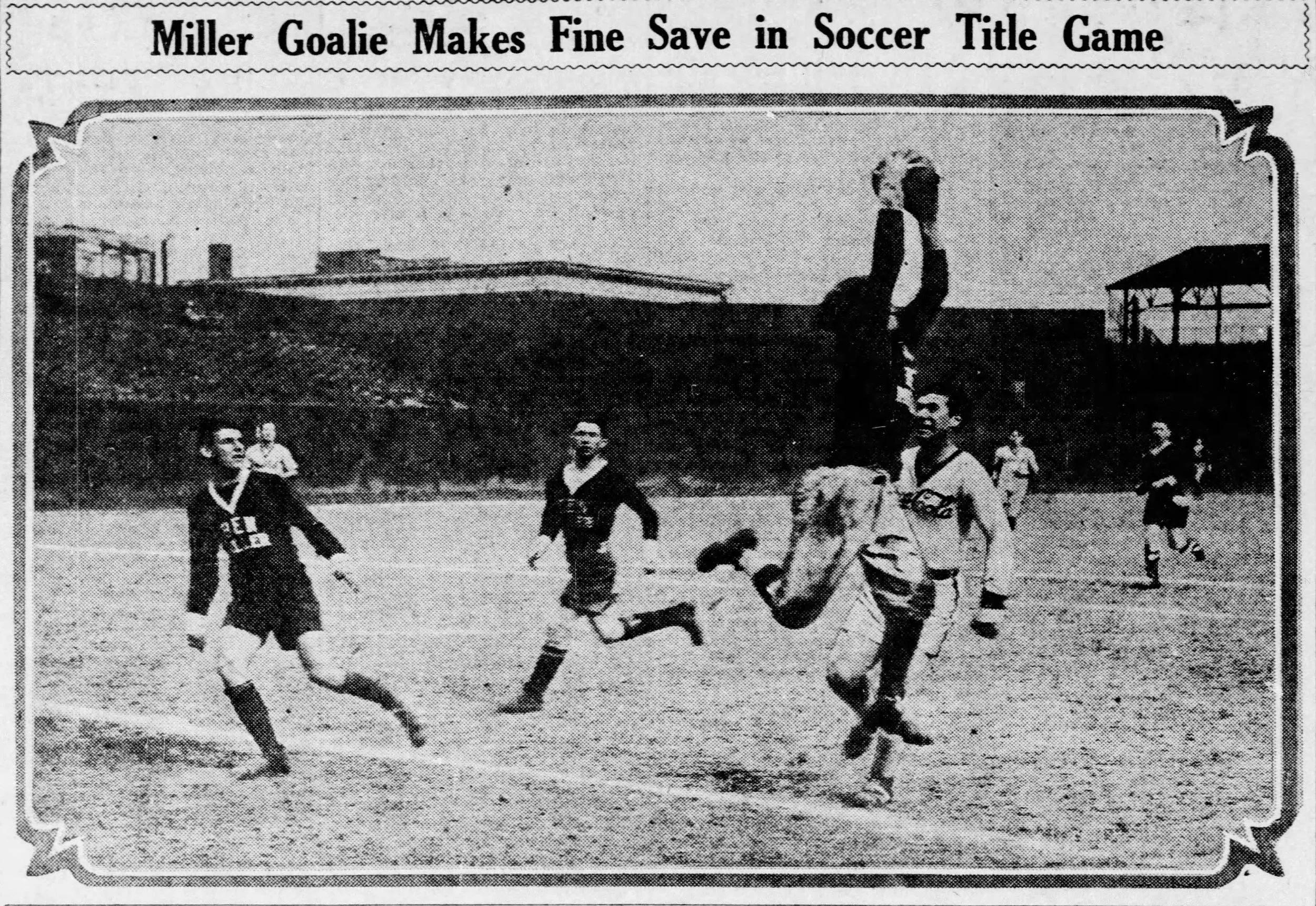
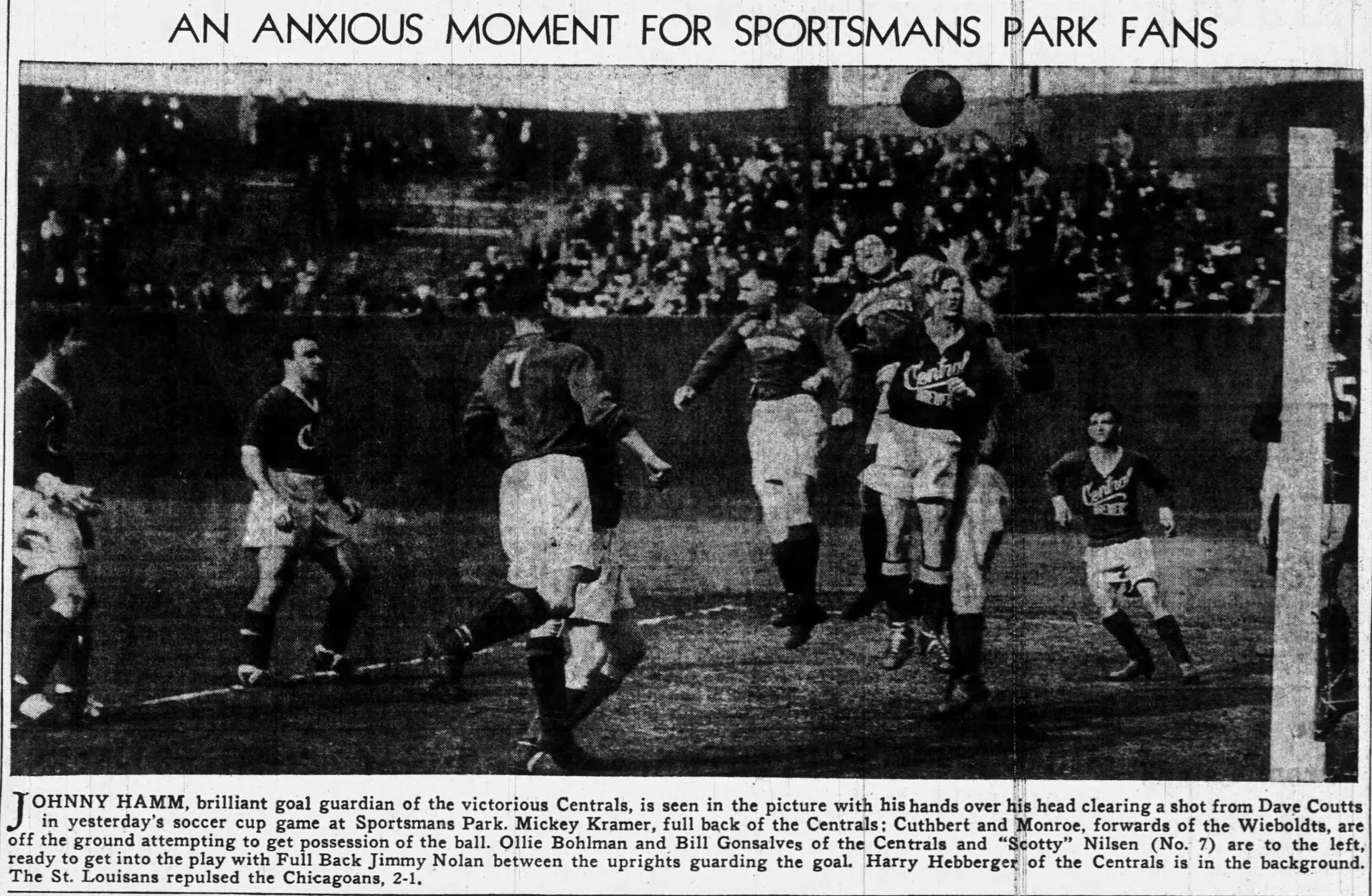
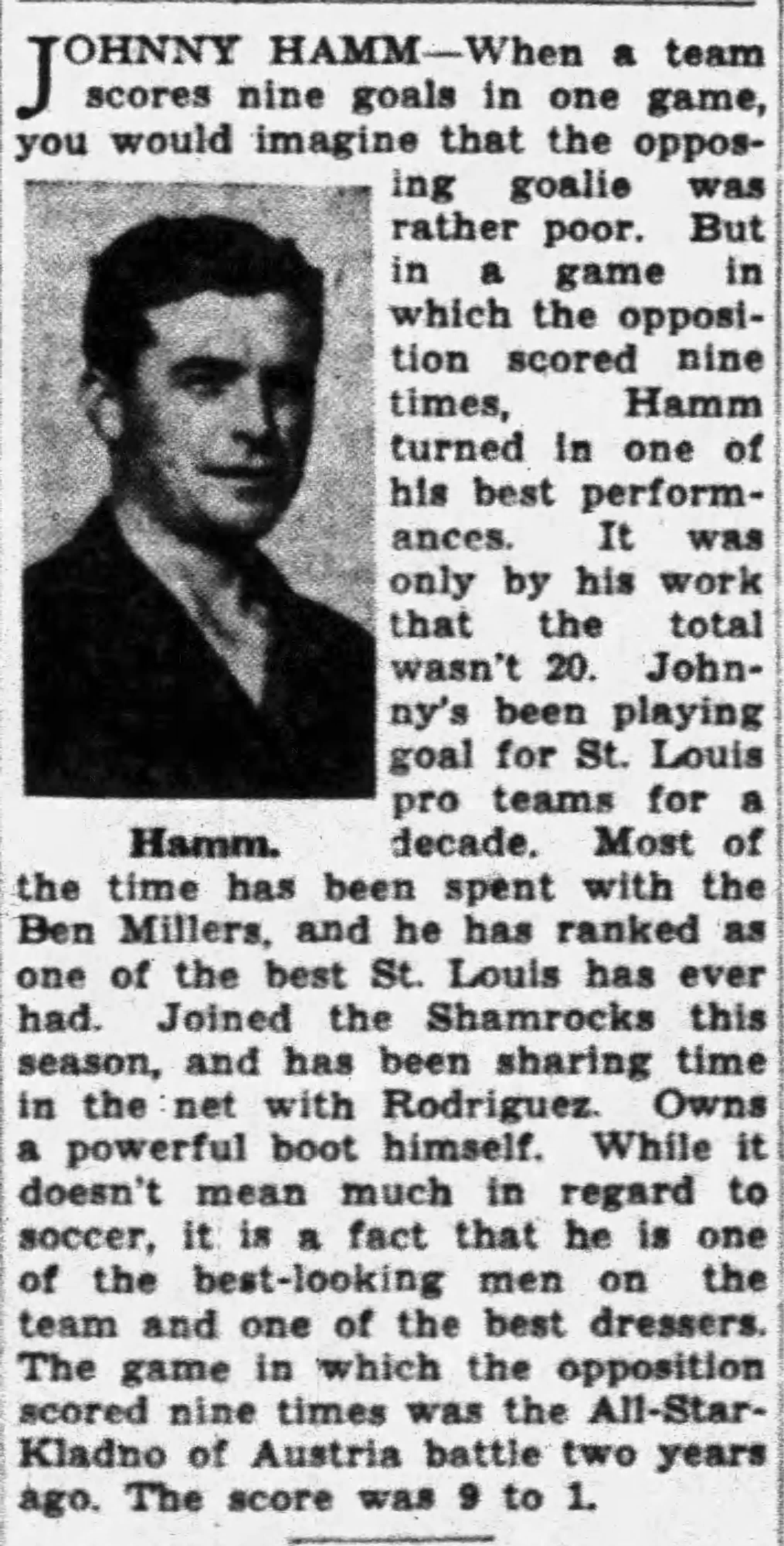
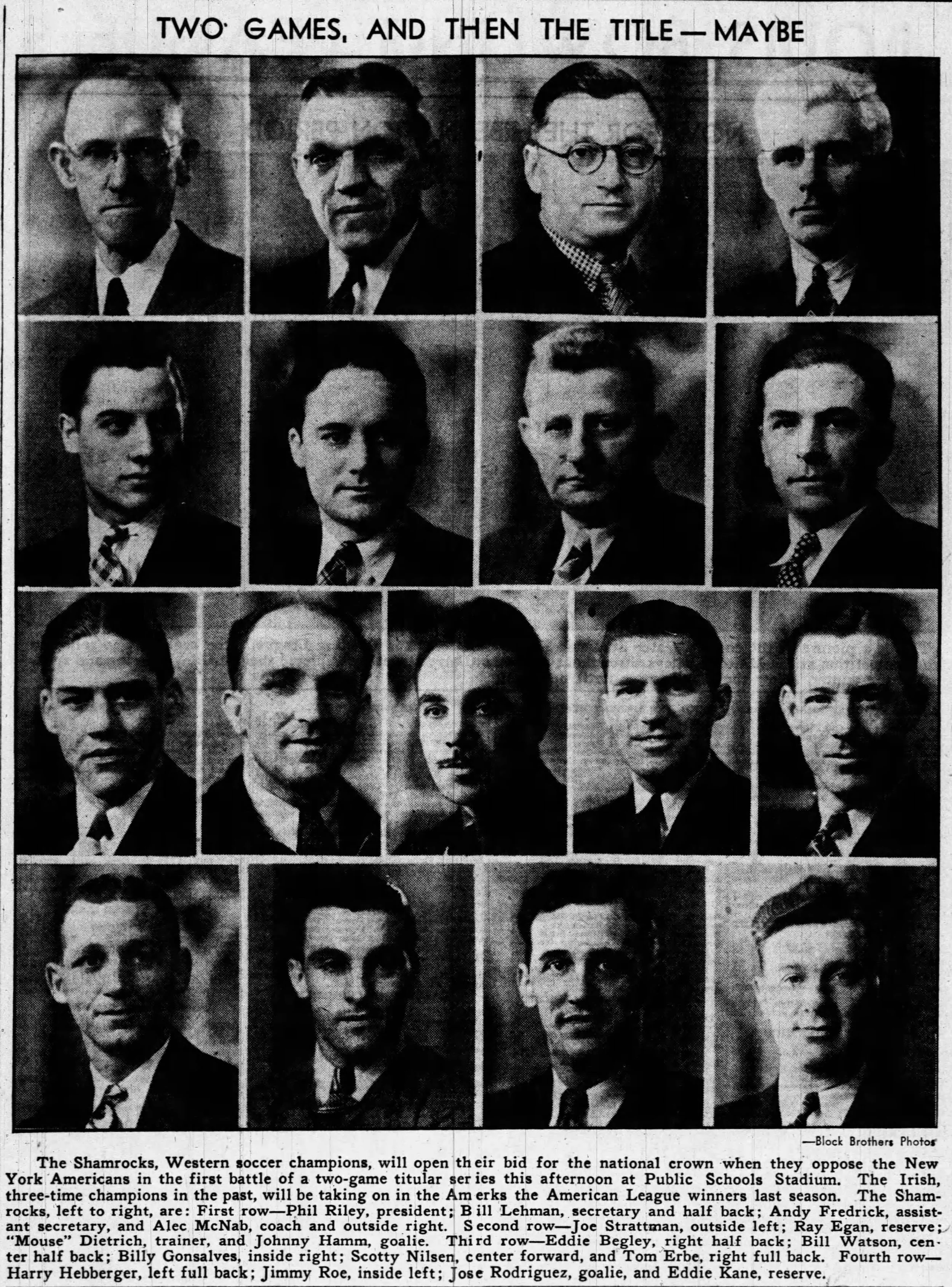
If there’s one attribute that has been consistent in American goalkeeping, it’s being a notable shot-stopper, and Johnny Hamm was no exception. The St. Louisan spent time with Ben Millers, reaching the National Challenge Cup semifinal in 1931, and established himself as a strong point in the team. Throughout his career, Hamm was frequently cited as being a part of “an airtight defense” (St. Louis Globe-Democrat, March 8, 1931) and being the team’s “brilliant goaltender” (St. Louis Globe-Democrat, March 26, 1928). Multiple times, Hamm and his team would be subject to a pummeling, but writers would defend his play as a reason why the scoreline wasn’t worse, crediting his outstanding play.
From 1932 to 1937, St. Louis established itself as a top soccer city in the nation as one of its clubs were featured in the final of the National Challenge Cup each year, with Hamm reaching the final three years straight (1935-37). Hamm would later be enshrined in the St. Louis Soccer Hall of Fame in 1973 as one of the first goalkeepers inducted, two years before Frank Borghi’s induction, establishing Hamm’s early important on the St. Louis scene. Hamm is remembered for his strong defensive play in goal, being the “best-looking man on the team”, and an early pioneer in a long line of strong goalkeepers coming out of St. Louis.
Main Page
Goalkeepers 1-10
Goalkeepers 11-20
Goalkeepers 21-30
Goalkeepers 31-40
Goalkeepers 41-50
Goalkeepers 51-60
Goalkeepers 61-70
Goalkeepers 71-80
Goalkeepers 81-90
Goalkeepers 91-100
Honorable Mentions