These goalkeepers are part of a bigger project, which you can find here. Pictures of the goalkeepers were posted when available. Newspaper clippings’ date and newspaper are found in the file name. Click on the photo galleries to enlarge the picture to read more about the goalkeeper.
81. Tom Presthus
The drive from Minnesota to Texas isn’t a short one but it was one Tom Presthus made to kickstart his collegiate career at Southern Methodist University. Hailing from Edina, Minnesota, Presthus quickly established himself as a standout goalkeeper with the Mustangs. In Presthus’ junior year, SMU received a two-seed entering the national tournament before losing out to eventual winners, Wisconsin, in the Elite Eight. But heading into the 1997 MLS draft, Presthus had put himself on national radars and was selected by DC United with the 20th pick.
The Minnesotan quickly gathered his footing in DC, starting seven games his rookie season and becoming the hero of the penalty shootout against New England in the quarterfinal playoff matchup. The following season, head coach Bruce Arena made a late-season switch to put Tom Presthus in goal over Scott Garlick, and the call paid off with the young goalkeeper leading the team to the final. Although the final was a 2-0 loss to the Chicago Fire, refs would later admit they missed a crucial offside call on one of the goals, casting a large “what if” over the final score.
Looking to avenge a sour final, Presthus and DC United came back strong in 1999. Riding high, Presthus notched his lone cap with the national team in February before starting a dominant run in MLS play that year, winning the Supporters’ Shield and capturing a 2-0 win over the Galaxy in the MLS Cup final.
Unfortunately, the good times did not last long in DC as the team failed to make the playoffs the following year and the franchise immediately entered a rebuild mode. Presthus was traded to Columbus before the 2001 season, where Presthus would face a young upstart goalkeeper named Jon Busch. In 2002, Presthus lost the starting spot to Busch and “rather than sulking, Presthus supported and mentored Busch, who backstopped Columbus to the 2002 Lamar Hunt U.S. Open Cup championship that year.” After the 2003 season, Presthus would retire due to a lingering elbow injury.
From 1998 to 2001, Presthus played in two MLS Cup finals, was capped by the national team, won two MLS Supporters’ Shields, was named an MLS All-Star, and was a finalist for MLS’s Goalkeeper of the Year award twice. Unfortunately, stacking injuries and limited professional opportunities forced the 28-year-old’s hand to call it quits heading into the 2004 season. For newer MLS fans, Tom Presthus’ career is often overlooked but the SMU alum is a great example of a goalkeeper who was a top goalkeeping prospect before injuries derailed his momentum, denying fans a chance to see Presthus’ true ceiling.
82. Ian Feuer
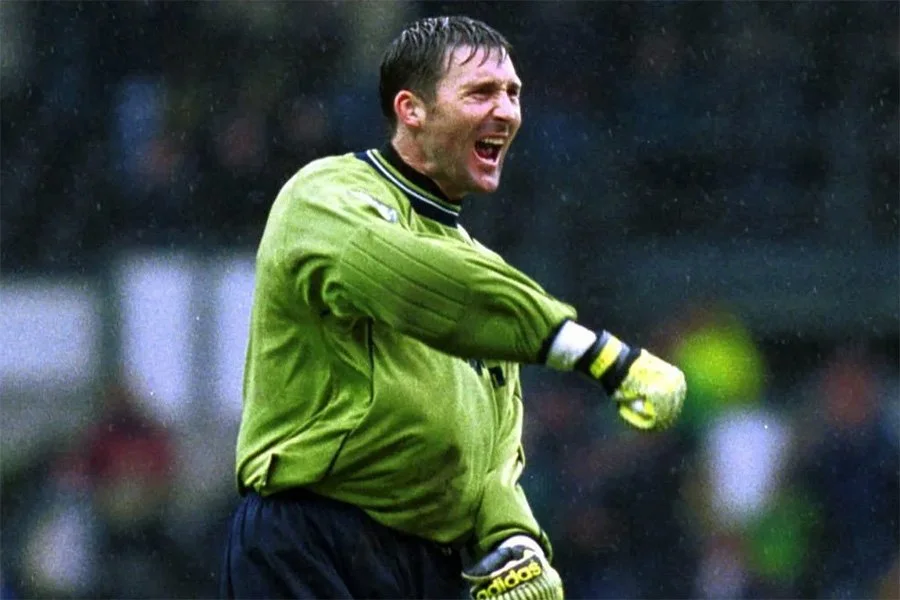
Before skipping college to go play in Europe wasn’t much of a conversation in 1988 but Feuer did just that. Standing at an imposing 6'7", Feuer left the States at 16 to join Club Brugge. While Feuer was a reserve in the Belgian league, the Las Vegas native was called up to the 1992 Olympic team as a backup to Brad Friedel and earned a cap with the senior national team in the same year. As limited opportunities stunted his time overseas, Feuer returned to the US in 1993 to earn Rookie of the Year honors for the Los Angeles Salsa in MLS precursor, the APSL.
Feuer used this success to bounce back across the pond, this time with West Ham United and then a loan-turned-permanent move to Luton Town, following Juergen Sommer’s time with the club. After years of finally grinding in the trenches, Feuer was given the reins at Luton Town in 1995, a second-tier English club, only to have a front row seat to the Hatters relegation in 1996. In spite of Luton Town’s offensive woes (scoring less than one goal a game on average), Feuer was hailed as the player of the season and retained his starting spot for the 1996-97 season, where the team would narrowly miss promotion, finishing third in the table.
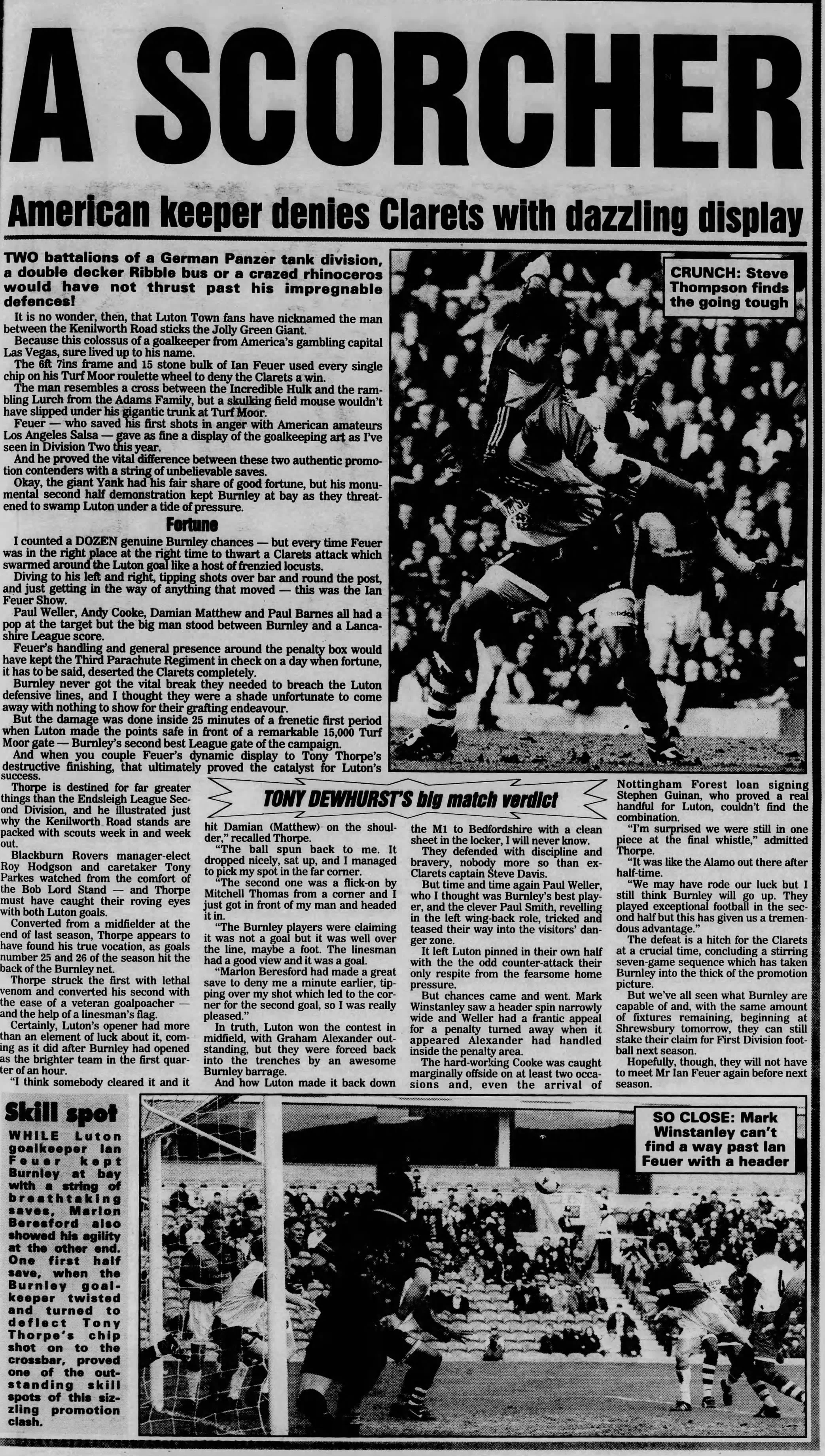
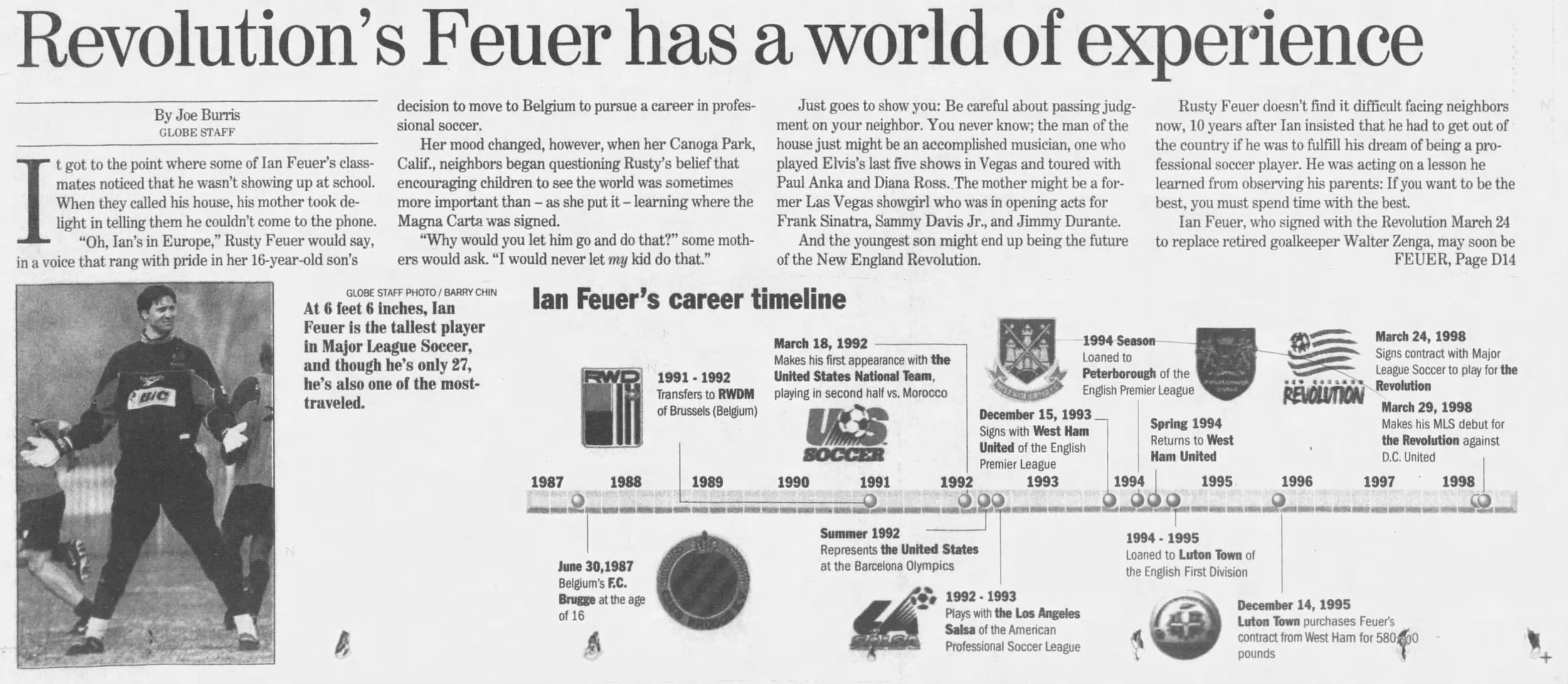
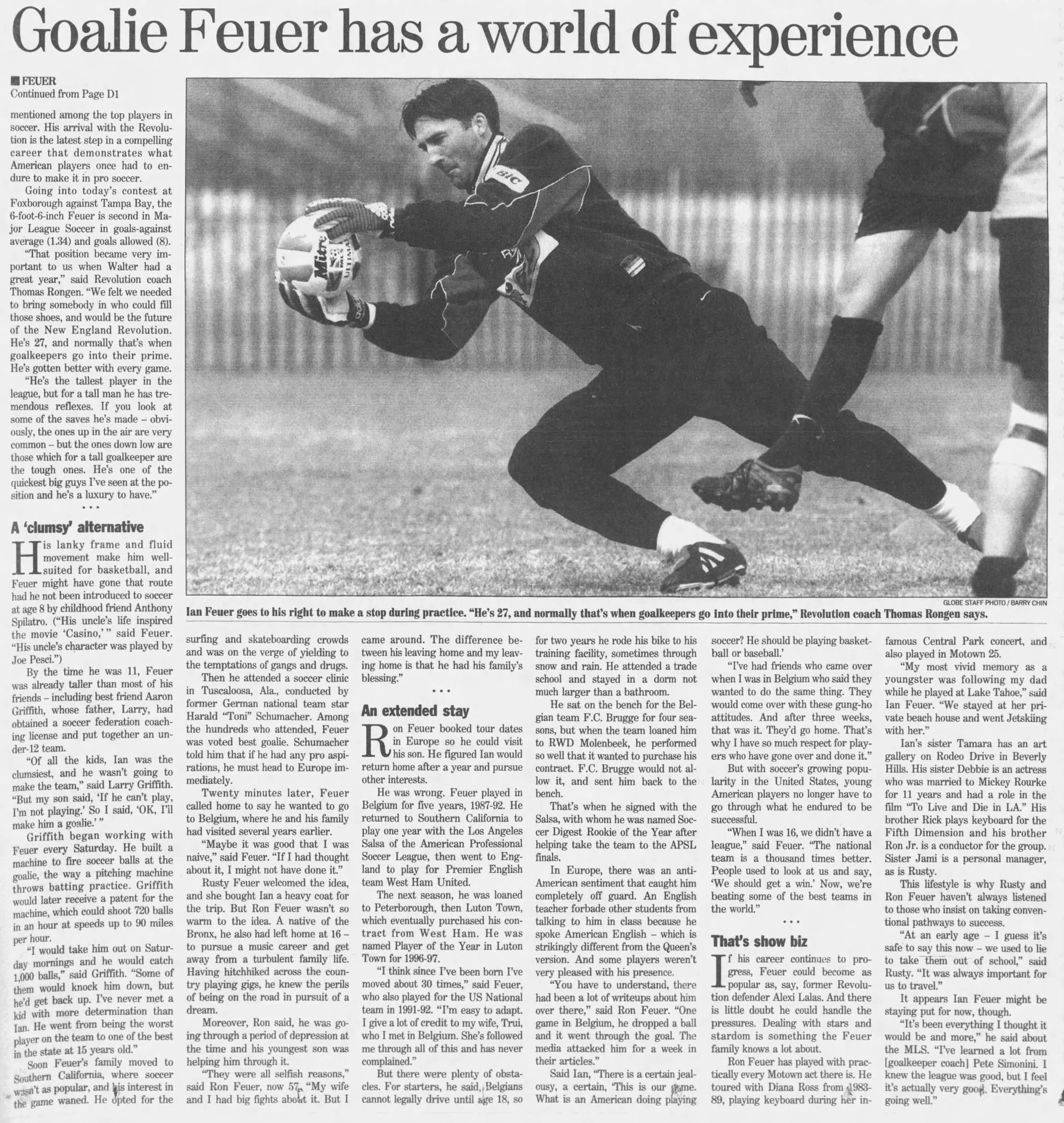
Feuer’s 90-game starting streak with Luton Town was broken in the 1997-98 season when inconsistent play and a muscle tear in his shoulder ultimately led to his return to the US. However, Feuer’s persistent efforts to make it in England would be rewarded with his first start in the English Premier League coming with West Ham in April of 2000, before retiring in 2002.
Feuer isn’t just remembered for his imposing height, which granted the ability to display jaw-dropping saves, but his continued efforts helped garner confidence in English managers and owners to bring in more American goalkeepers after Feuer proved Americans could handle England’s physical and unforgiving game.
83. Don Malinowski
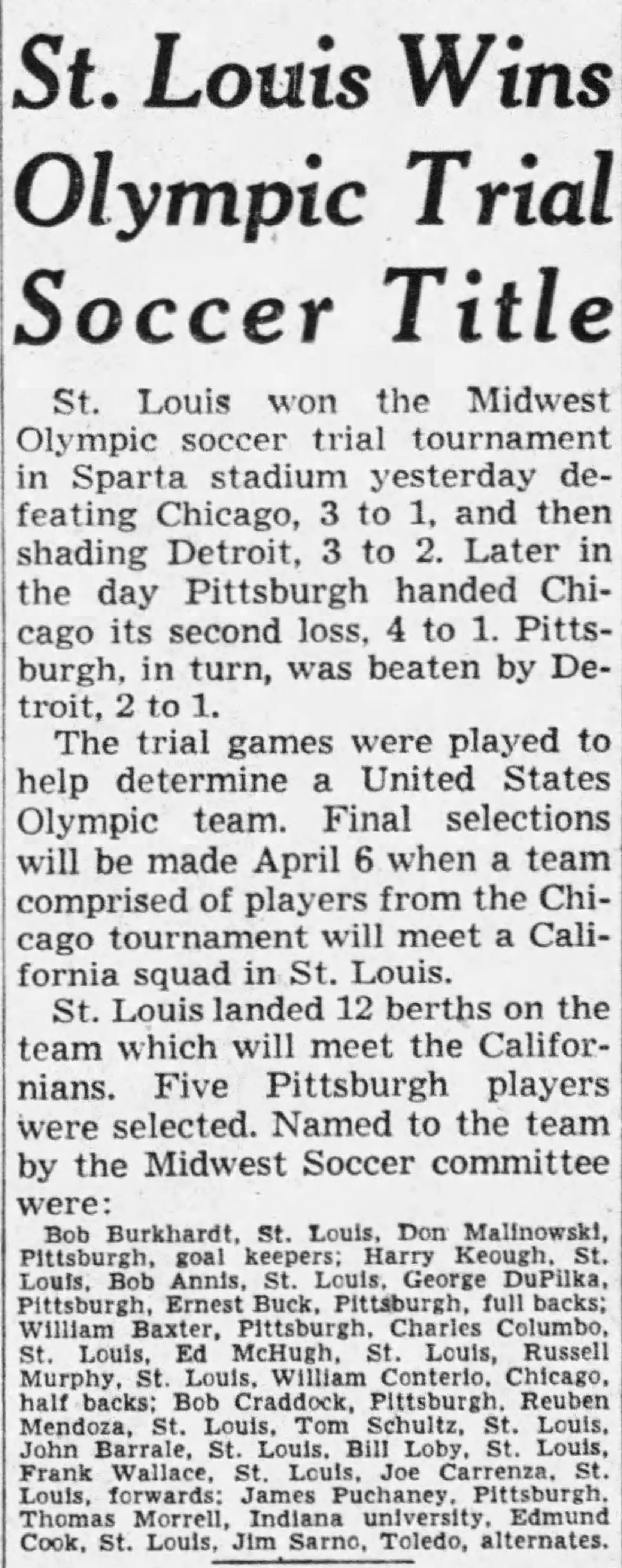
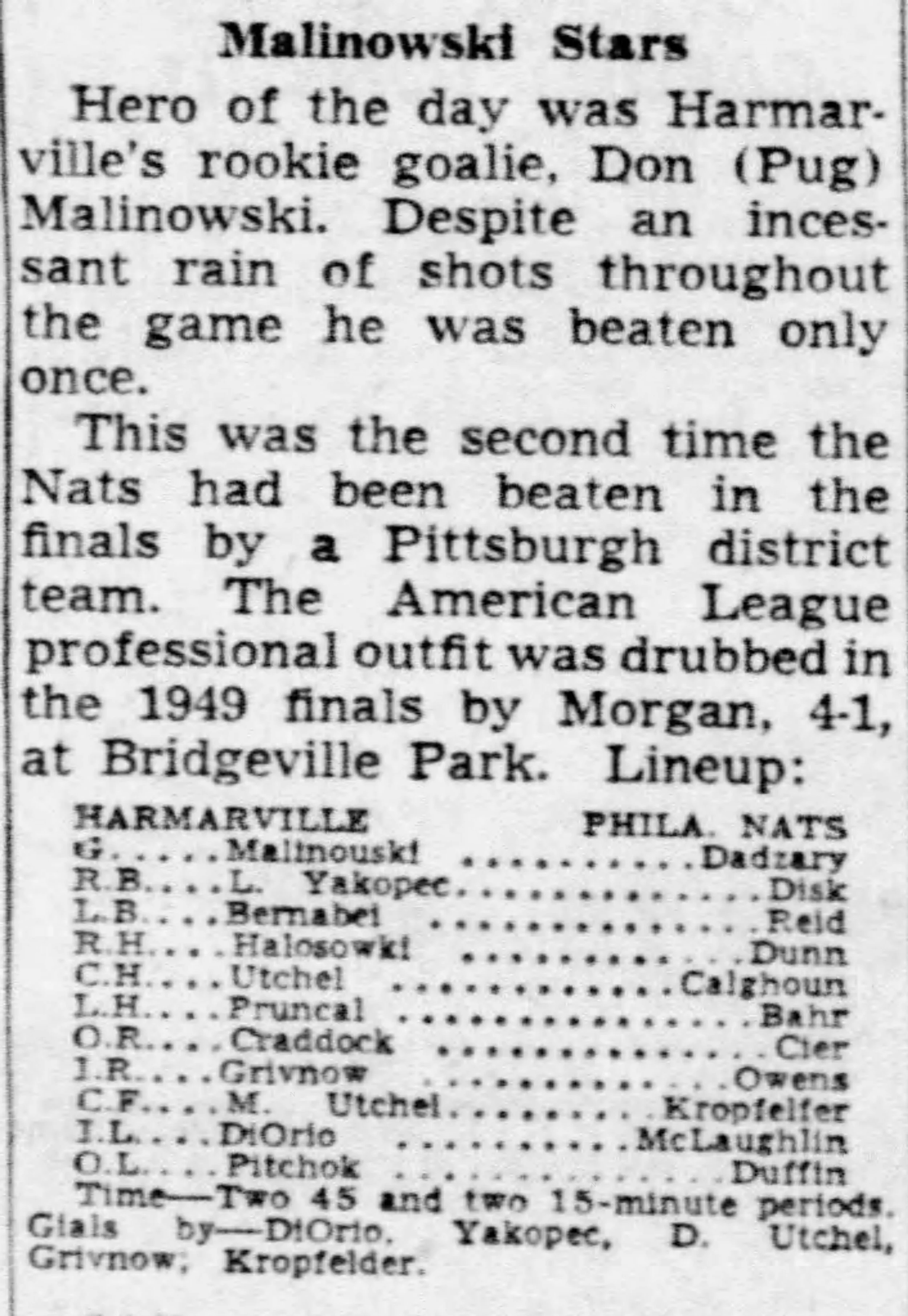
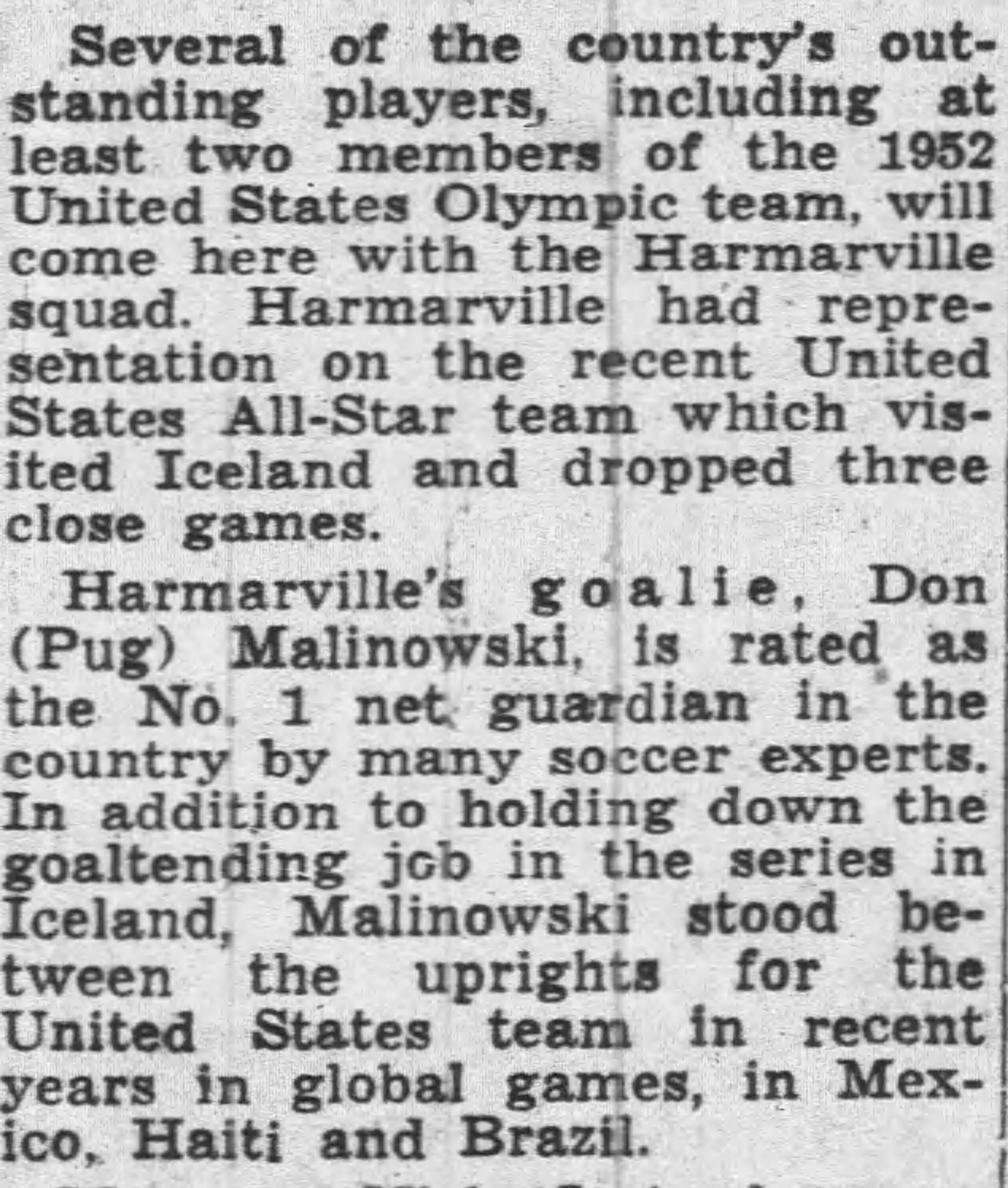
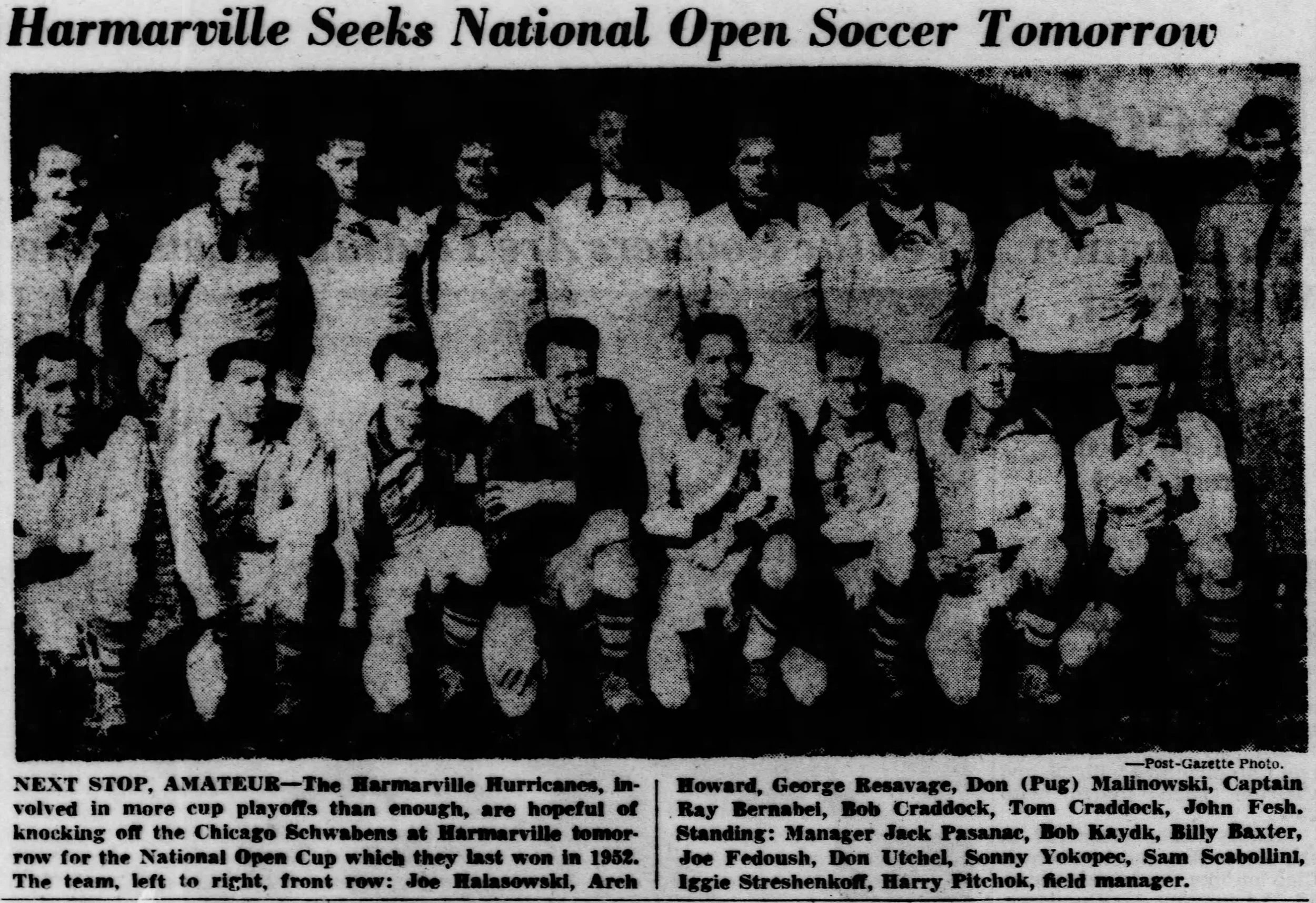
Off the heels of a strong showing at the 1950 World Cup, the federation did very little to capitalize on the national team's success. Just two years later, the US would suffer an embarrassing 8-0 loss at the 1952 Olympics against Italy, which would be a sign of more to come. The national team wouldn’t crack the world’s top fifty until the mid 1980’s, leaving goalkeepers like Don “Pug” Malinowski left with little to build off of. Although Don “Pug” Malinowski was named a backup to the 1952 Olympic squad, it was stateside where he shined brightest. Malinowski and the Harmville Hurricanes won the National Challenge Cup in 1952 and 1956, as Malinowski would also take the Hurricanes to the semifinals in ‘53 and ‘57, with a brief effort with Castle Shannon reaching the 1954 semifinal as well. With his team’s success giving him a foundation to showcase his own skills, Malinowski was routinely referred to as one of, if not the best, goalkeeper in the country throughout the 50’s.
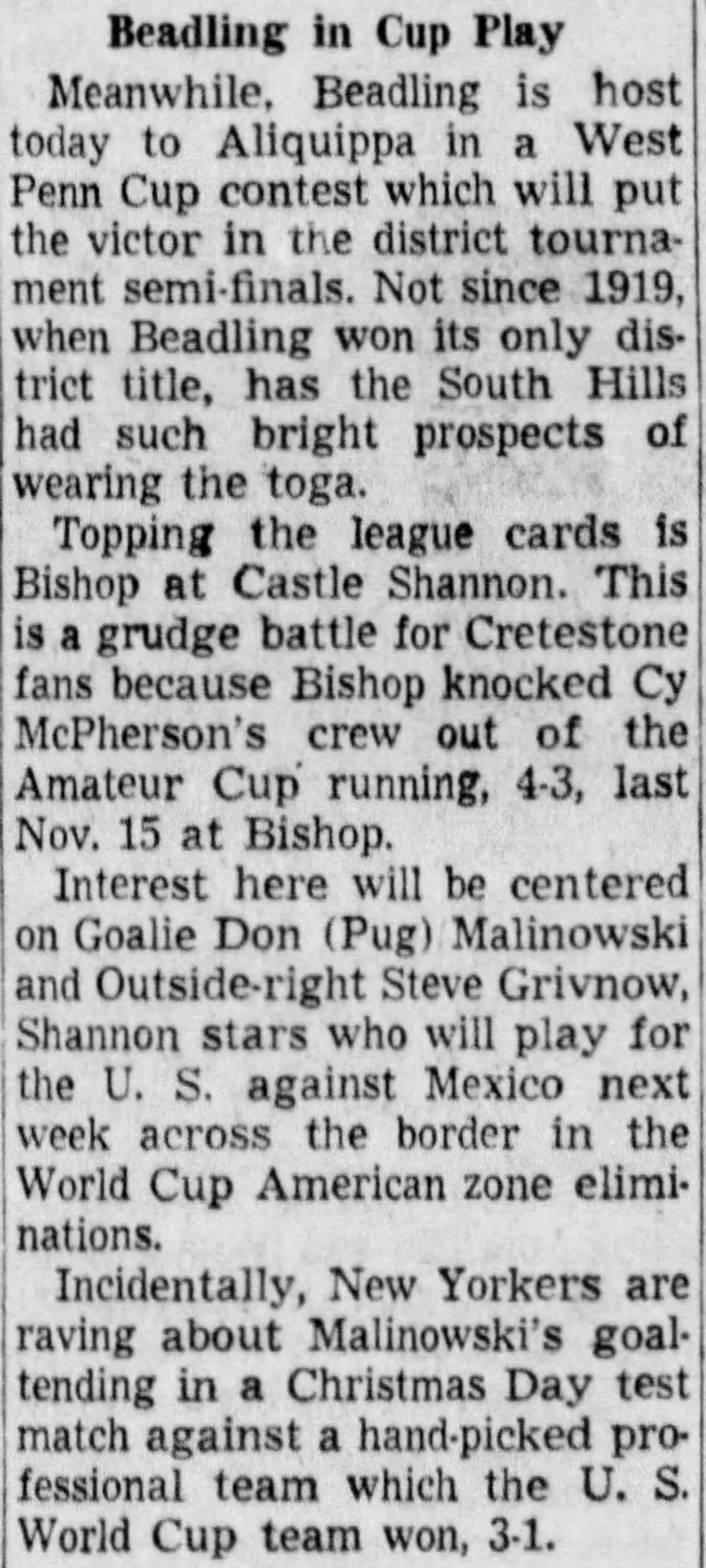

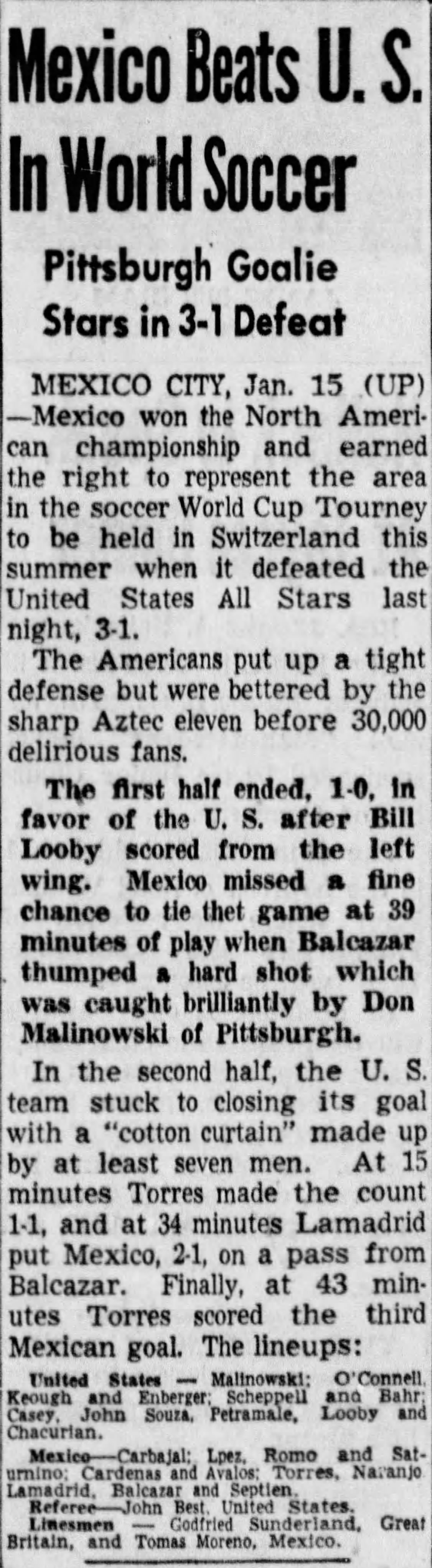
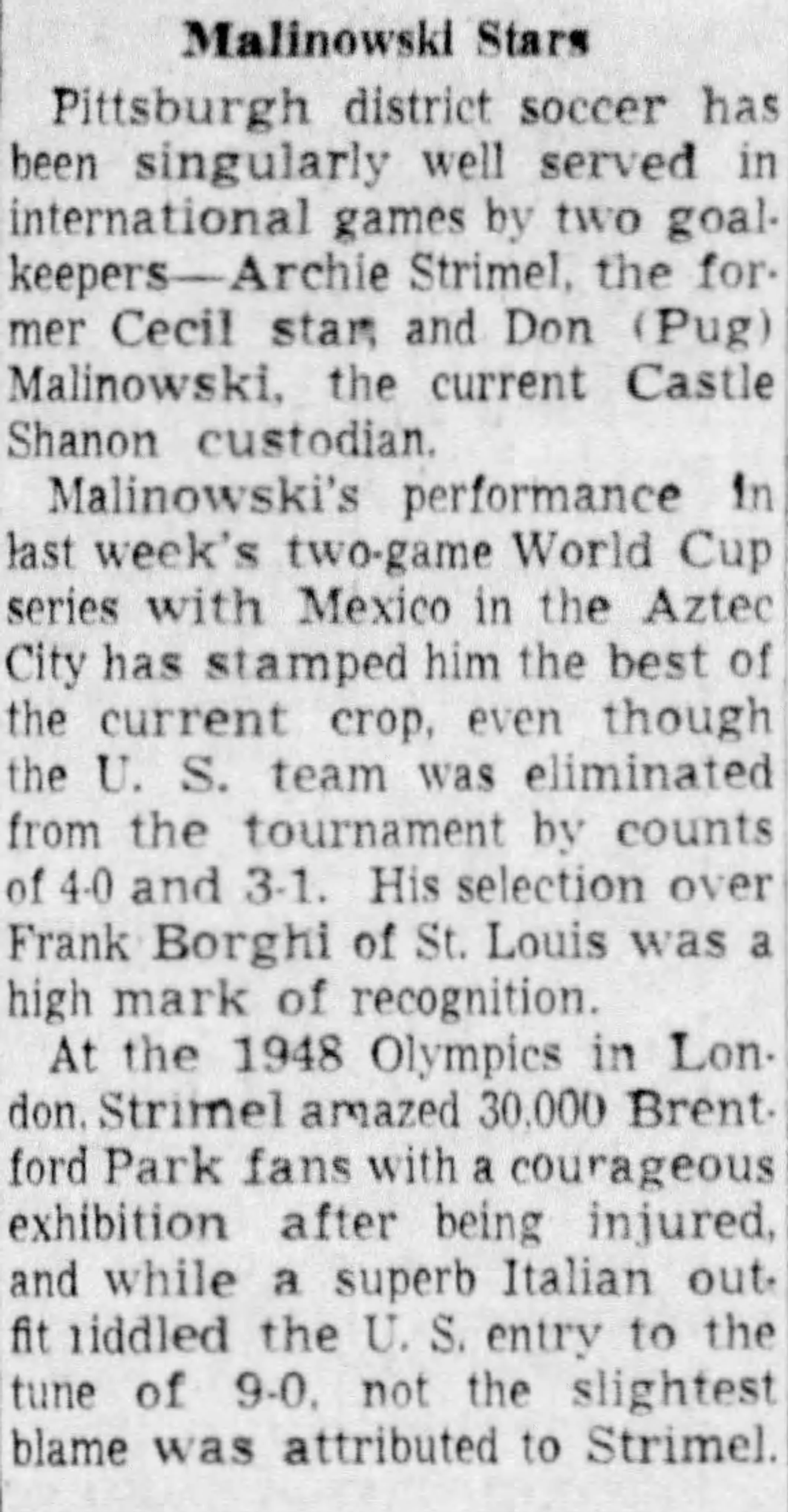
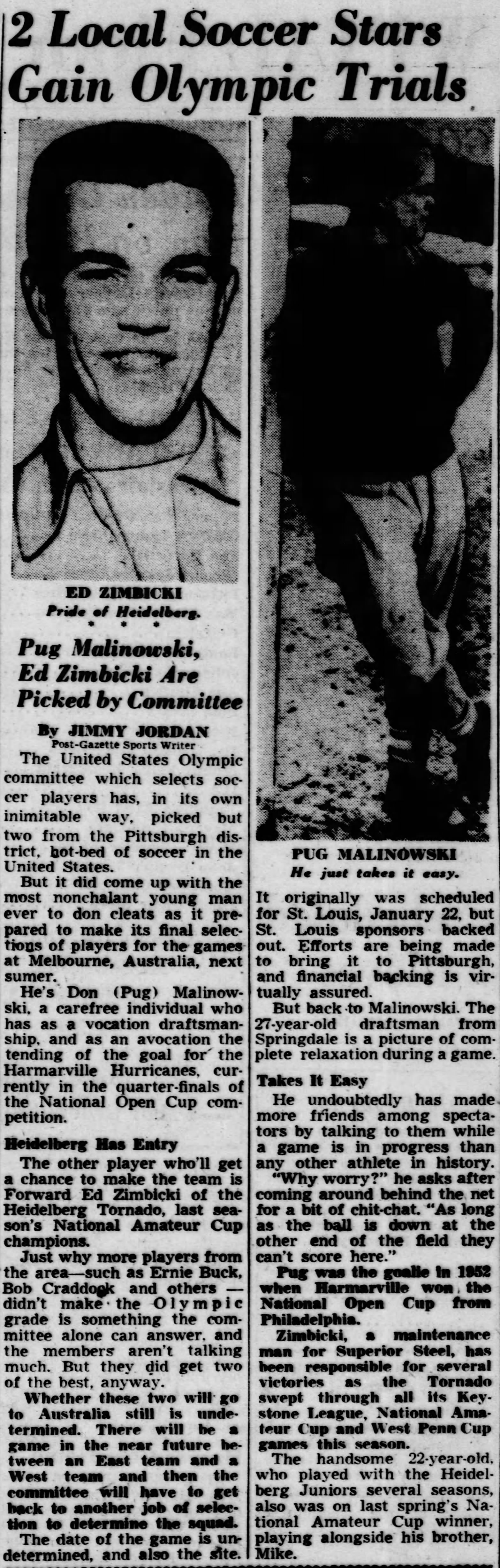
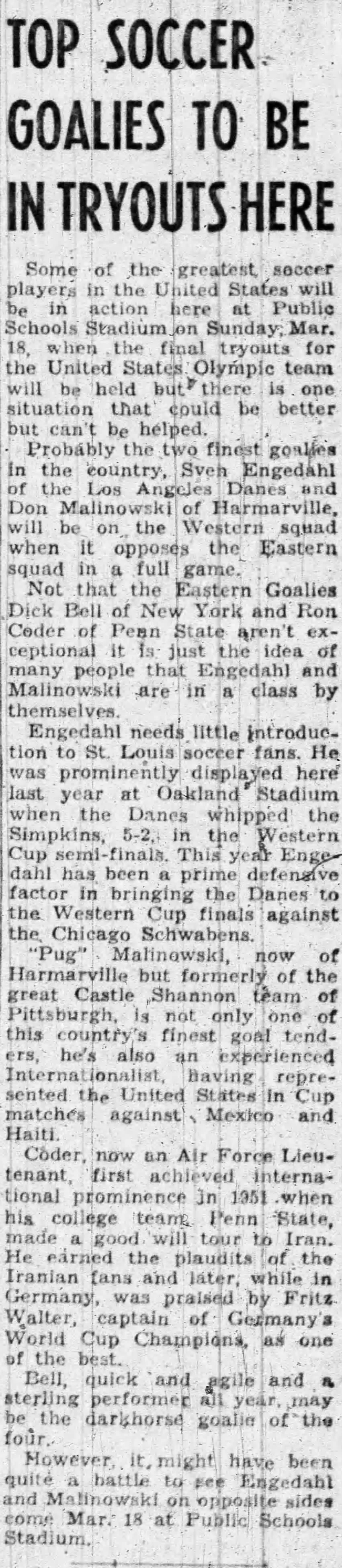
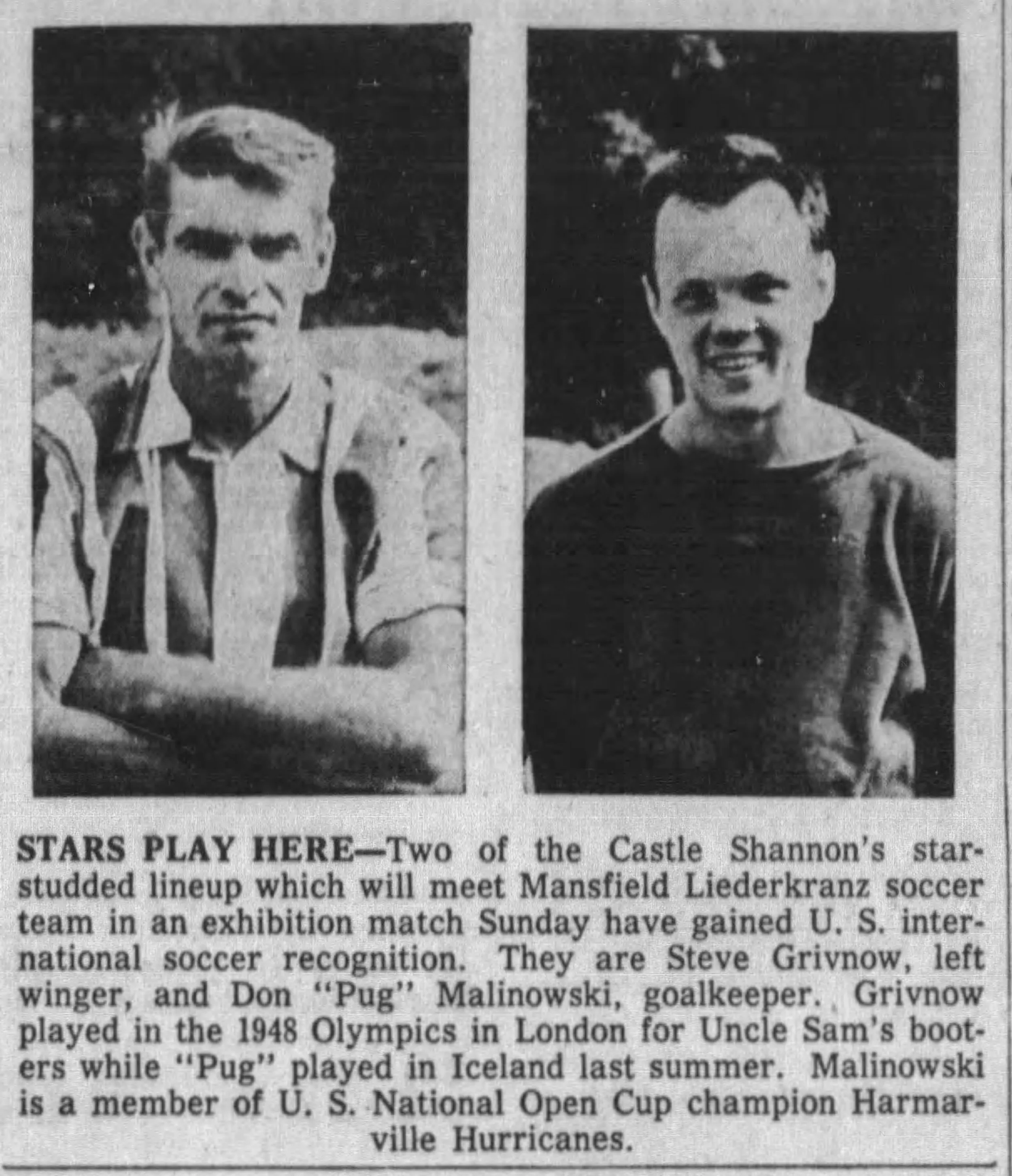
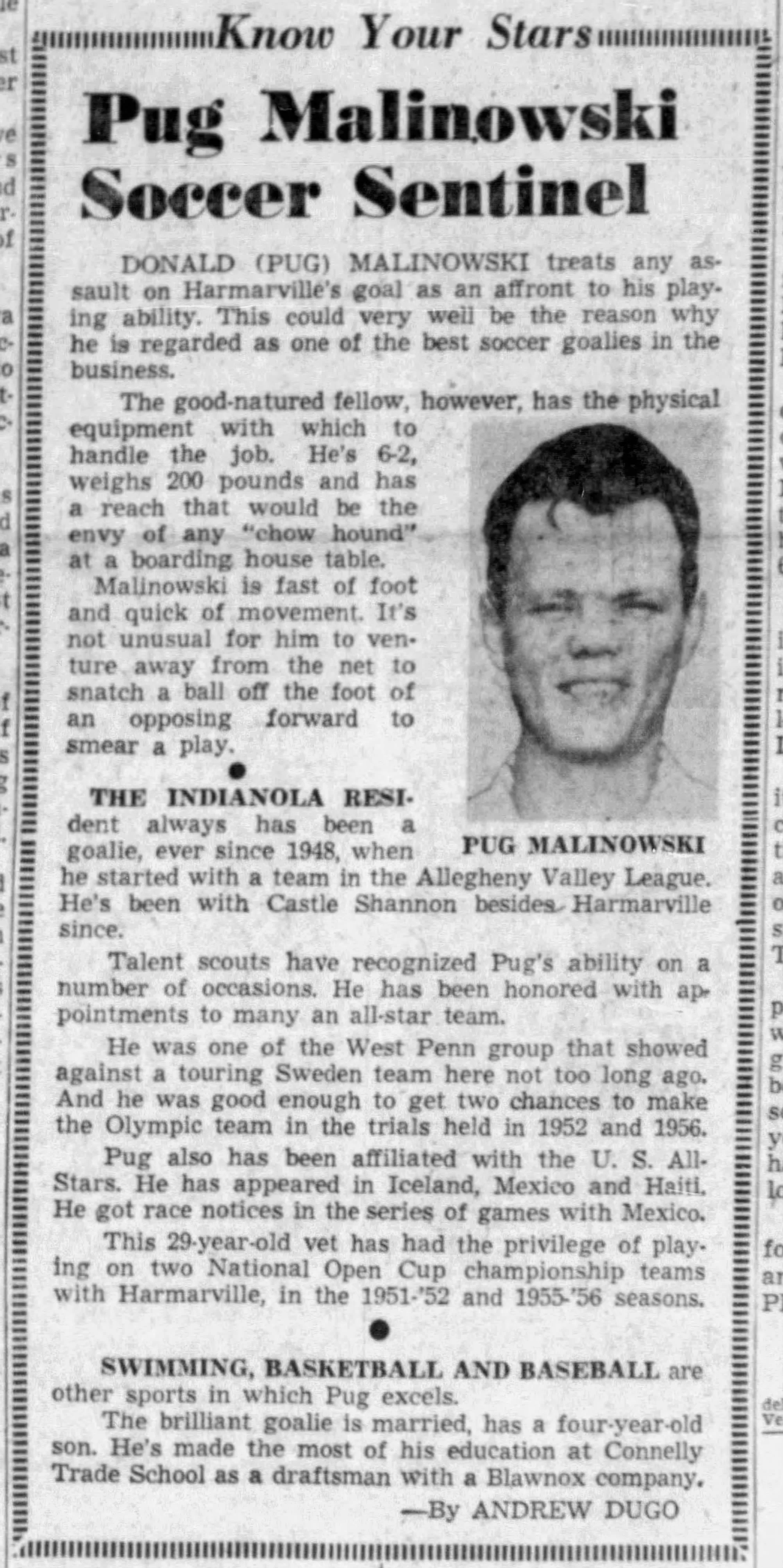
In January of 1954, Malinowski joined the national team for their World Cup qualifying, while the US federation had seemingly self-sabotaged their World Cup chances. The federation agreed to play the home-and-home matches exclusively in Mexico, complained about FIFA’s new rules for only allowing fully fledged citizens on the field, scheduled the senior team to arrive just one day before their first match against Mexico, and only organized two international matches in the 3.5 years since the 1950 win over England.
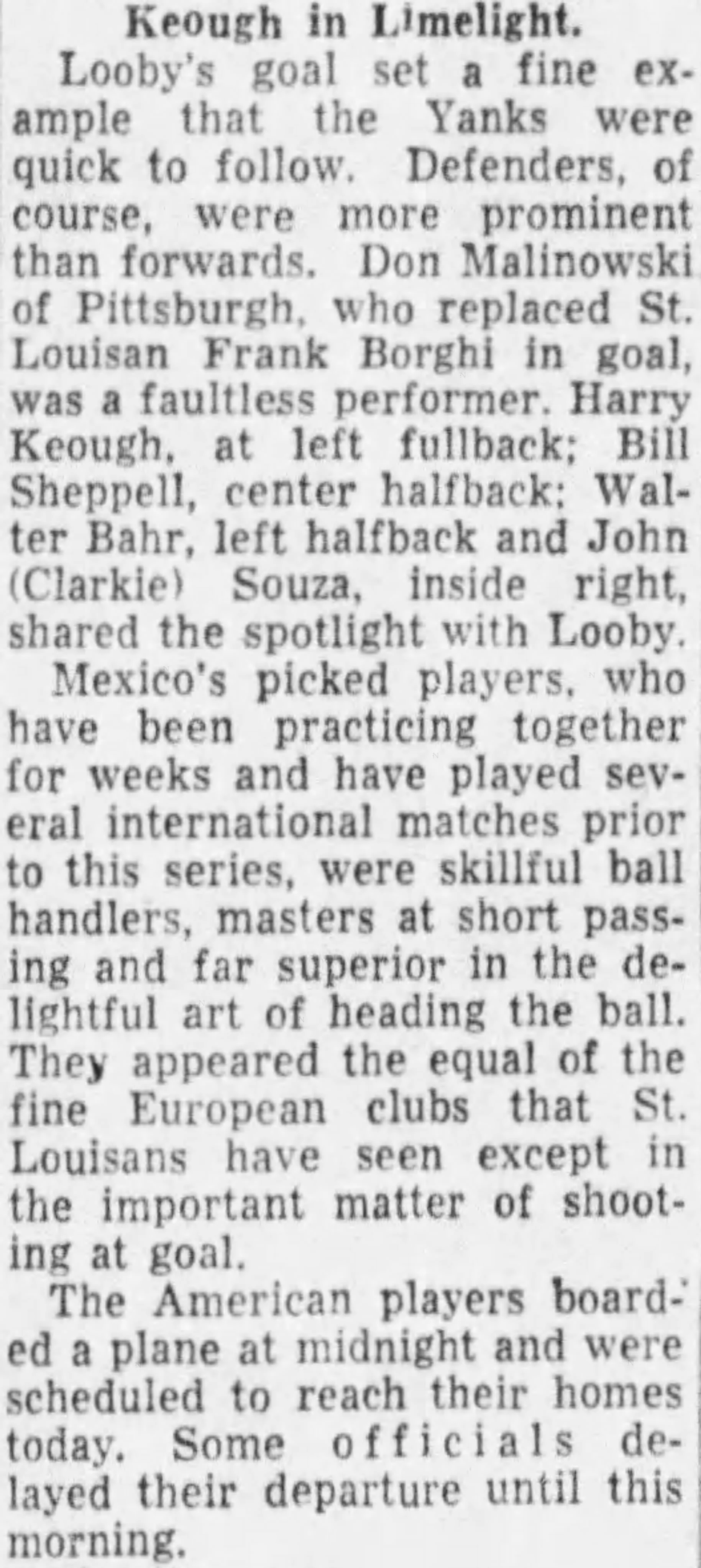
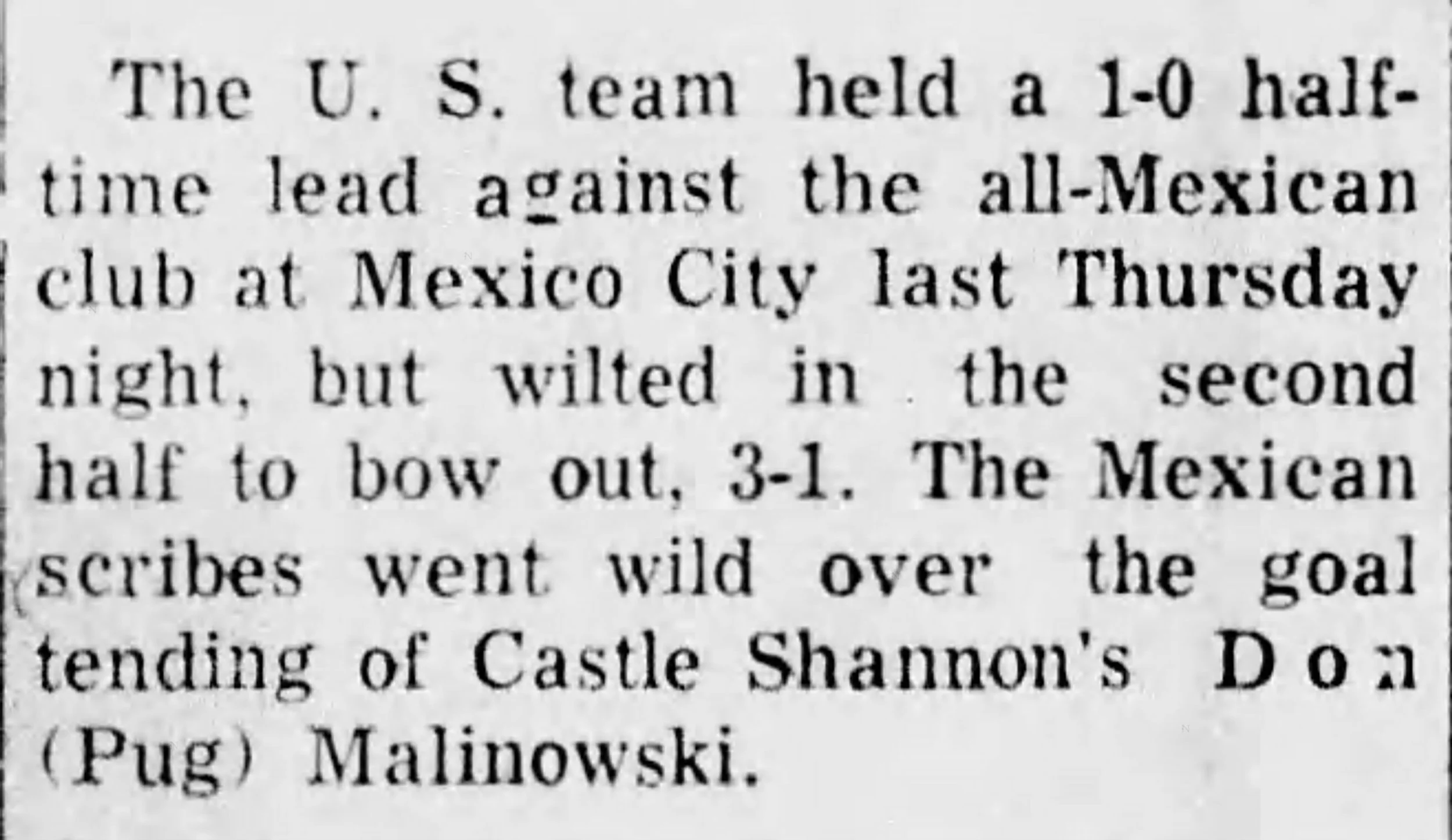
With the USSFA’s secretary JJ Barriskill openly announcing "We seem to have little chance [against Mexico]", the US unsurprisingly dropped the first match against Mexico, 4-0 and effectively were knocked from World Cup contention in just the one game. For the second game, Malinowski started over Frank Borghi and earned much praise for his efforts in the 3-1 loss as the US held a lead going into halftime.
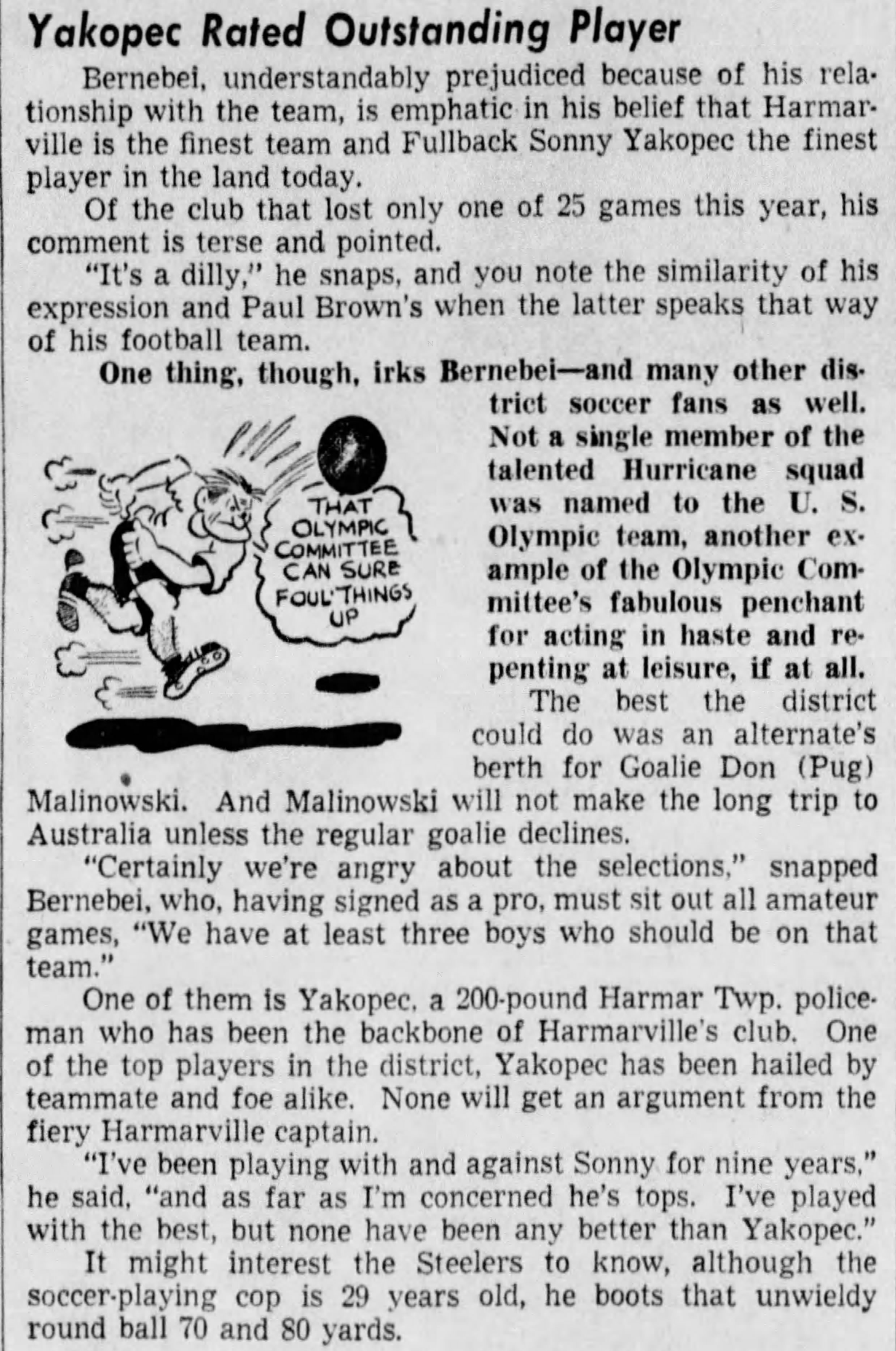
After a 1955 friendly against Iceland, Malinowski was relegated to the alternate goalkeeper for the 1956 Olympic team, which was met with outrage in various outlets, and his time with the national team ended there. Malinowski kept his amateur status his entire career, trying out for the Olympic team one more time in 1960, and was a real hometown hero. Reportedly known for making friends with fans during the game, he was characterized as a good-natured, fun-loving goalkeeper who would do whatever it took to keep the ball out of the net.
84. Walter Romanowicz
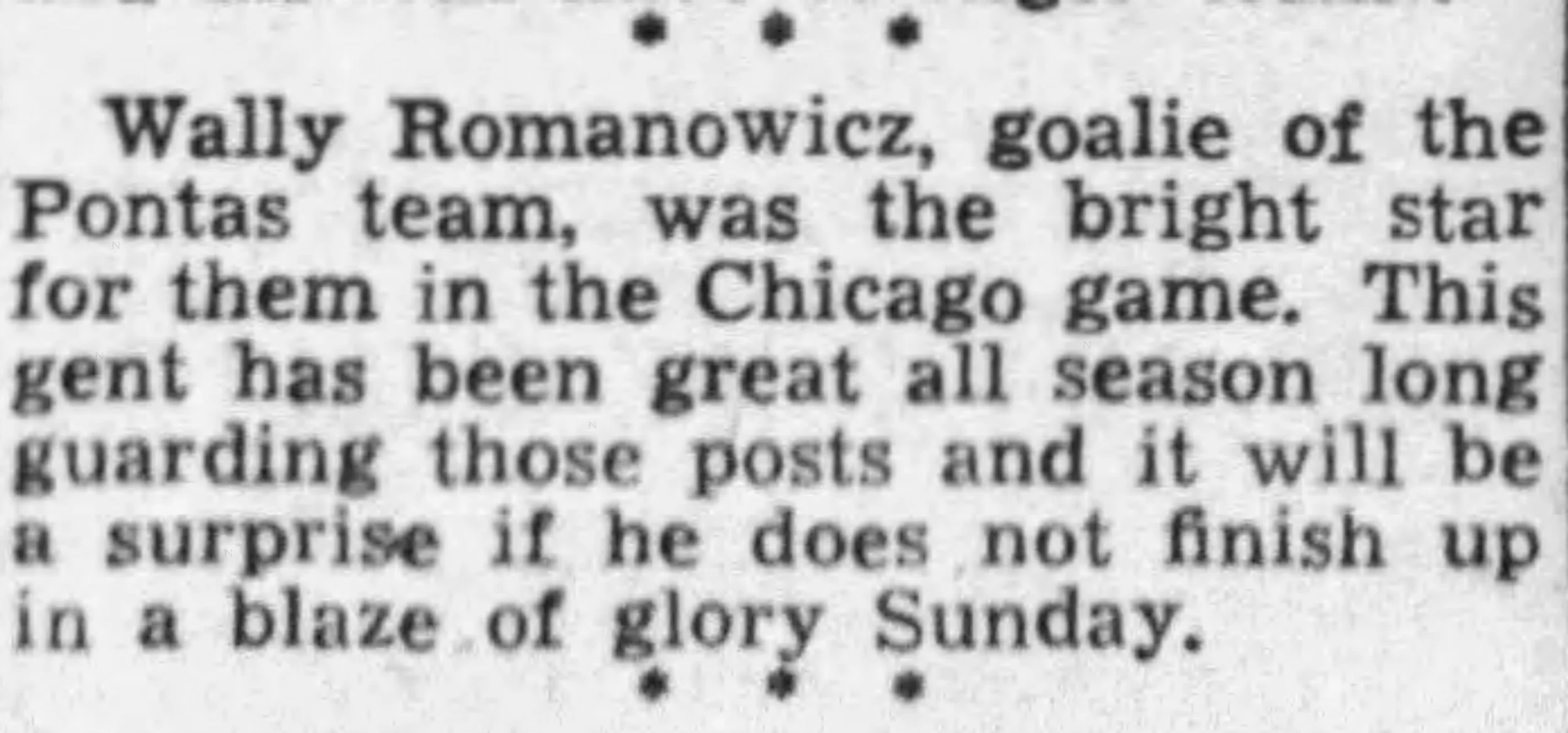
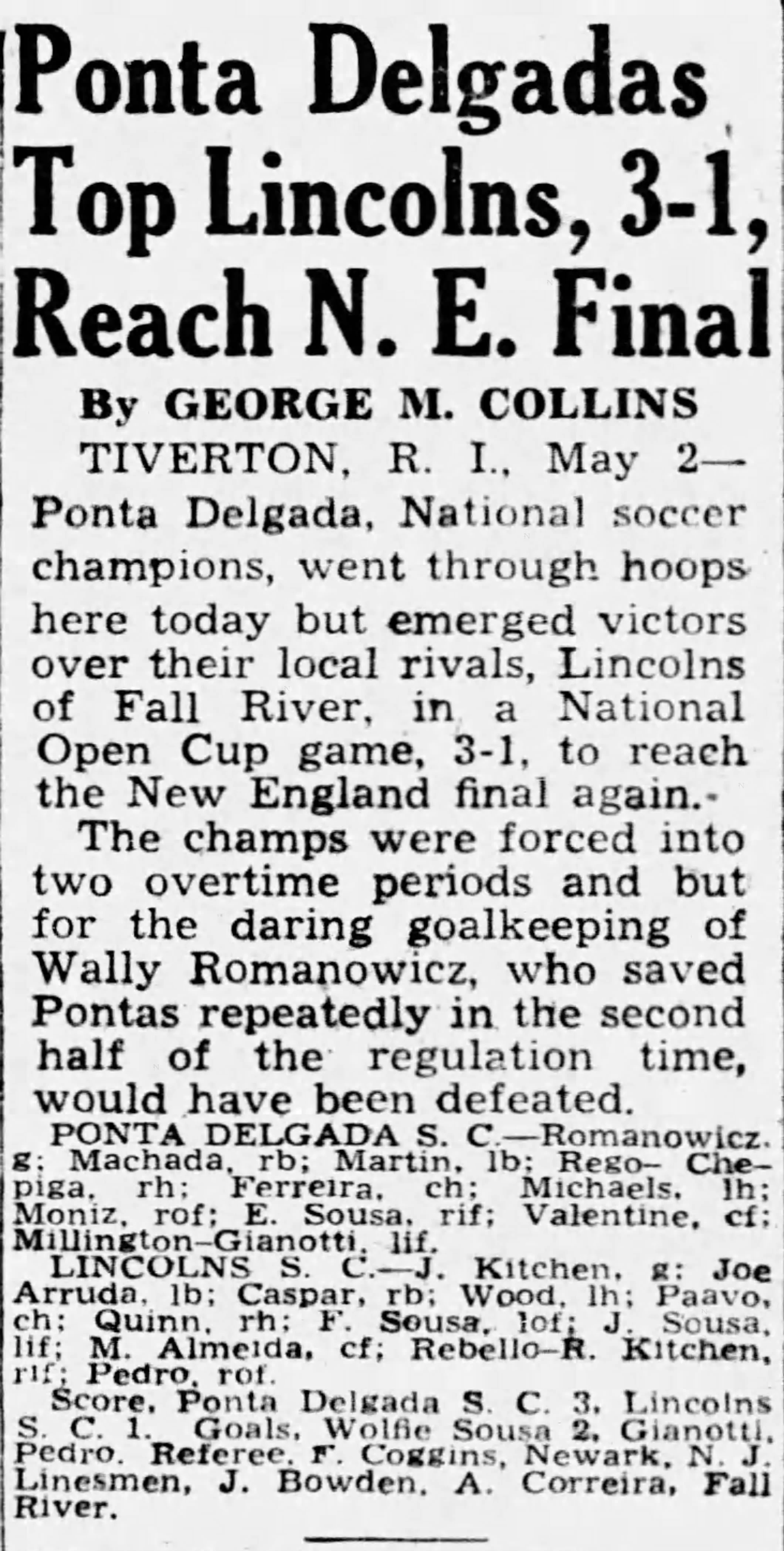
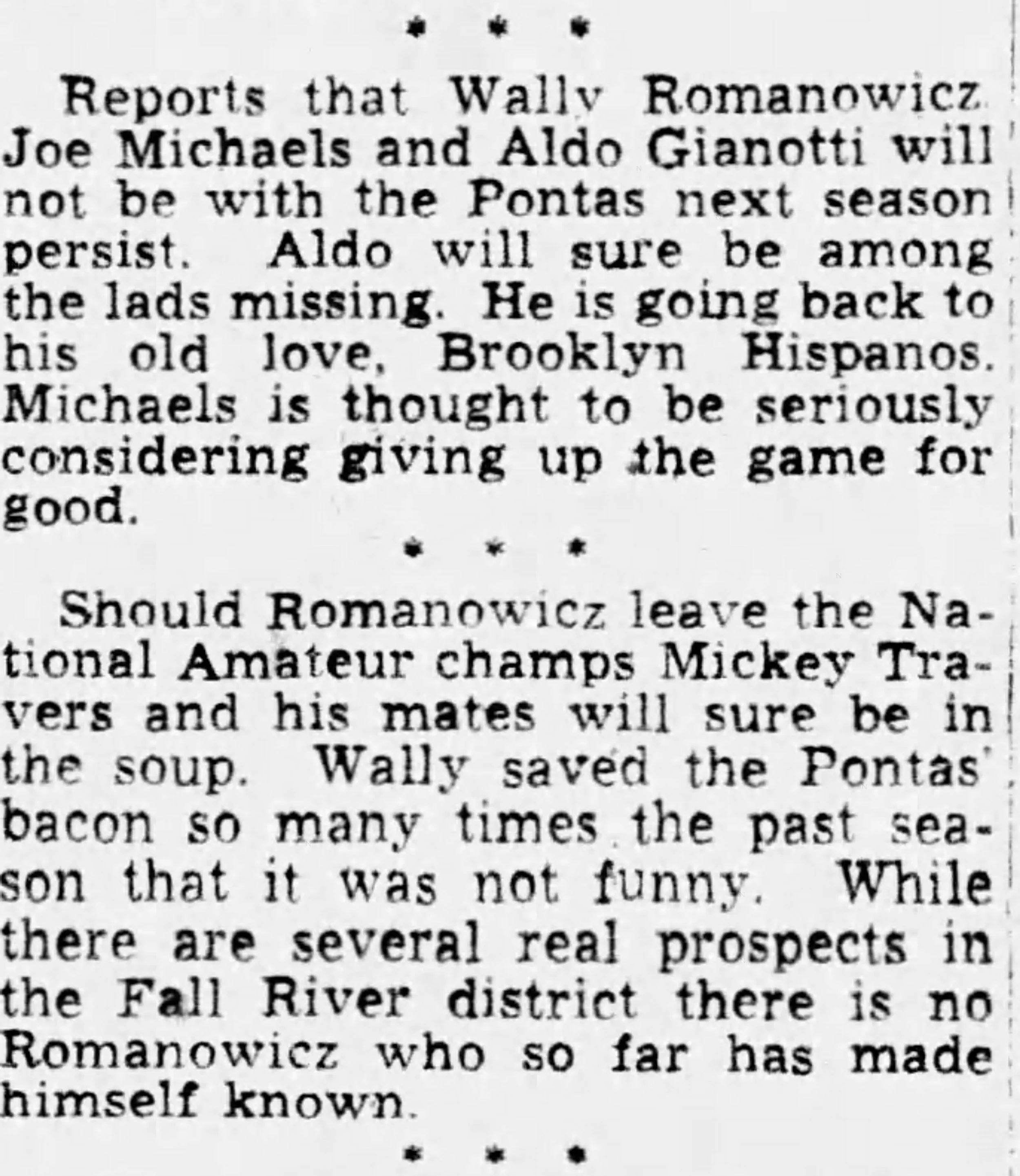
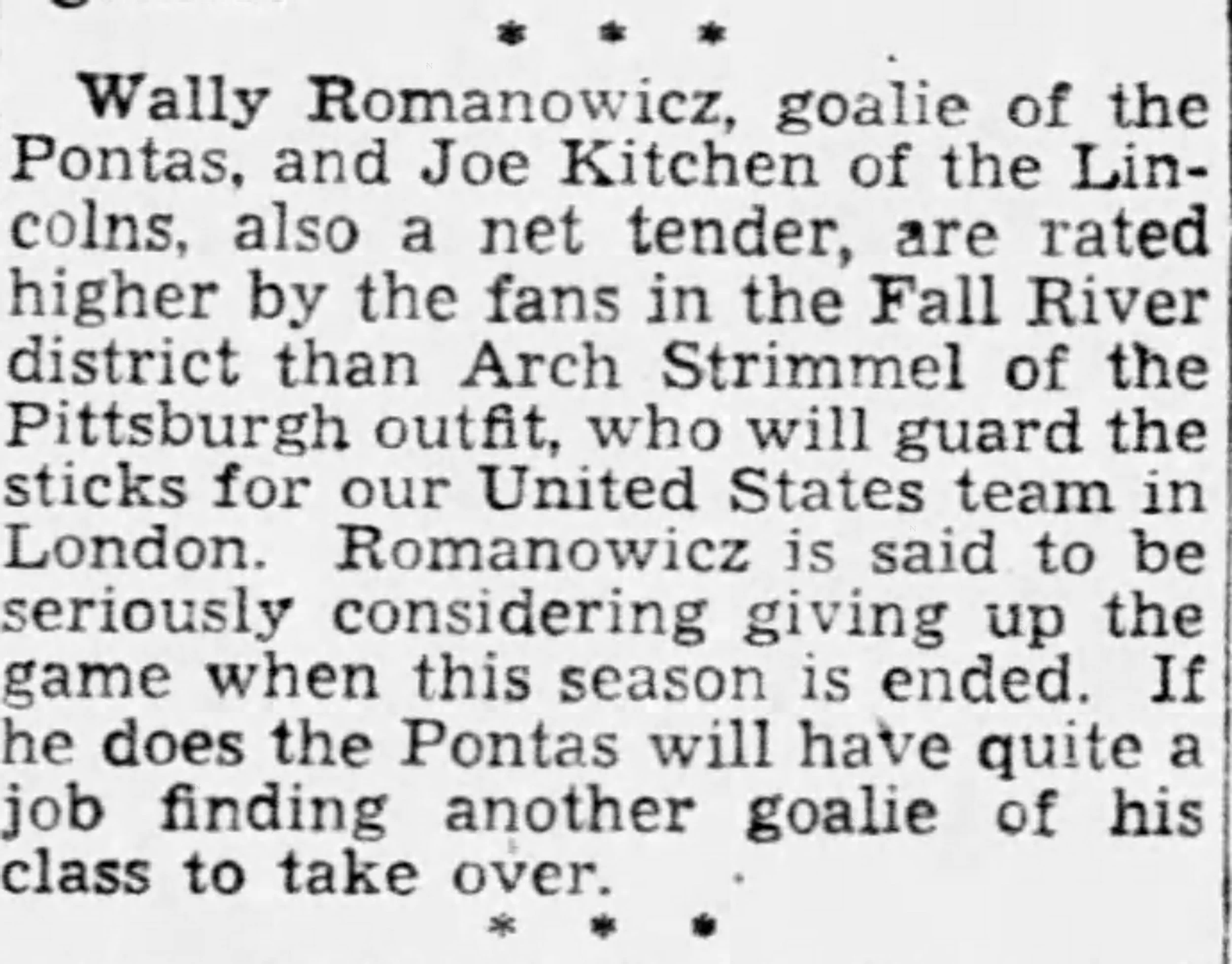
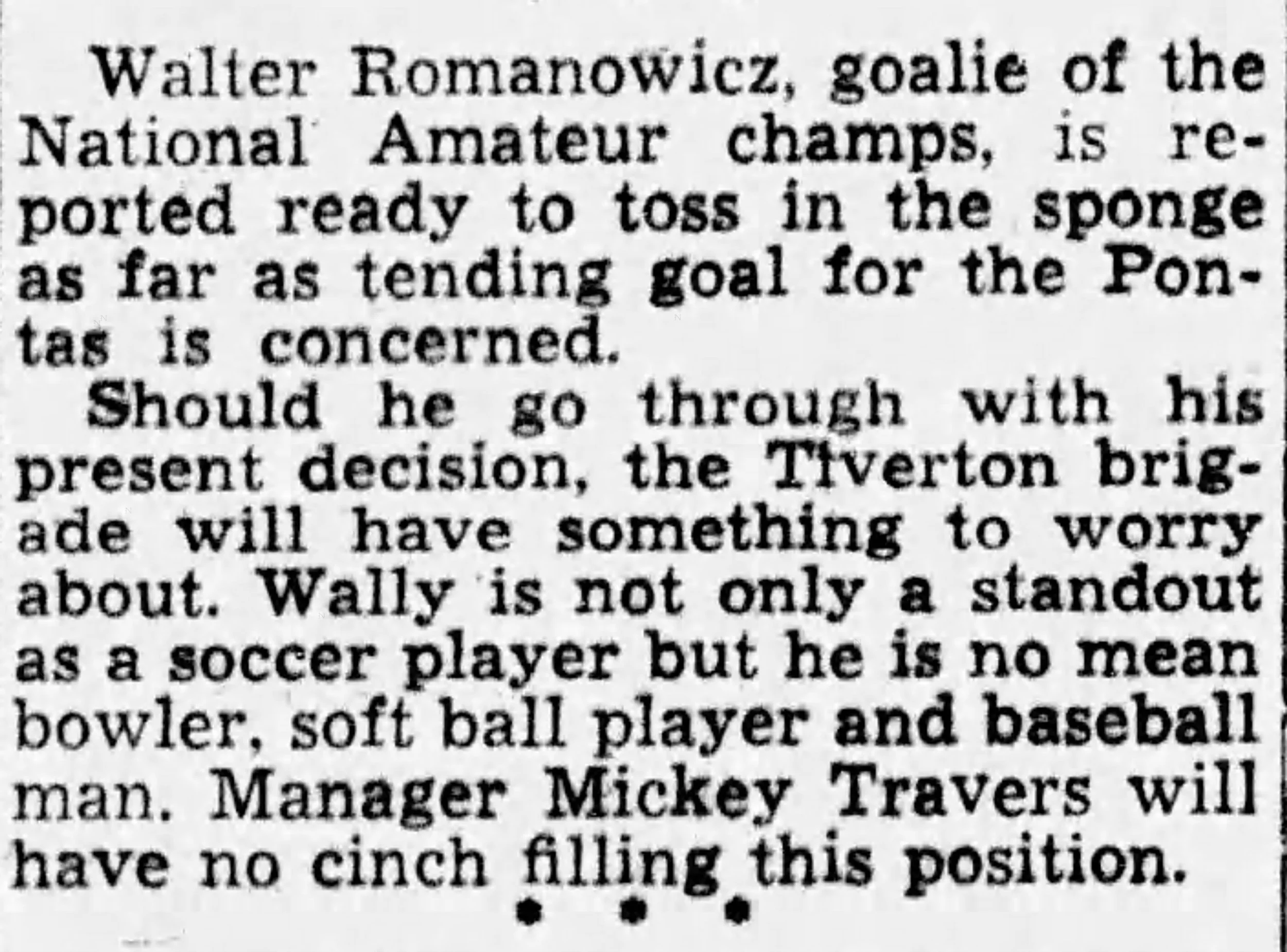
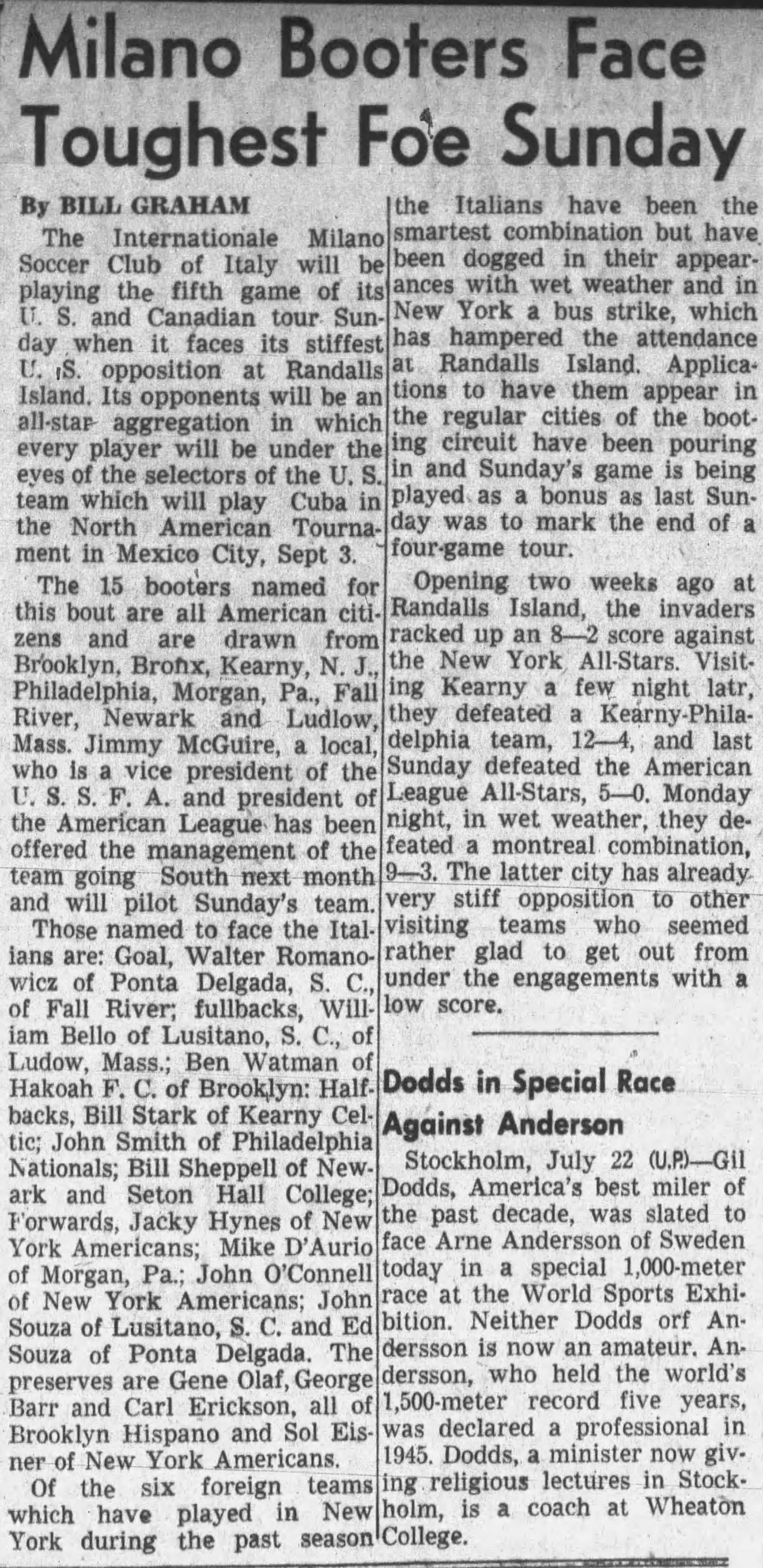
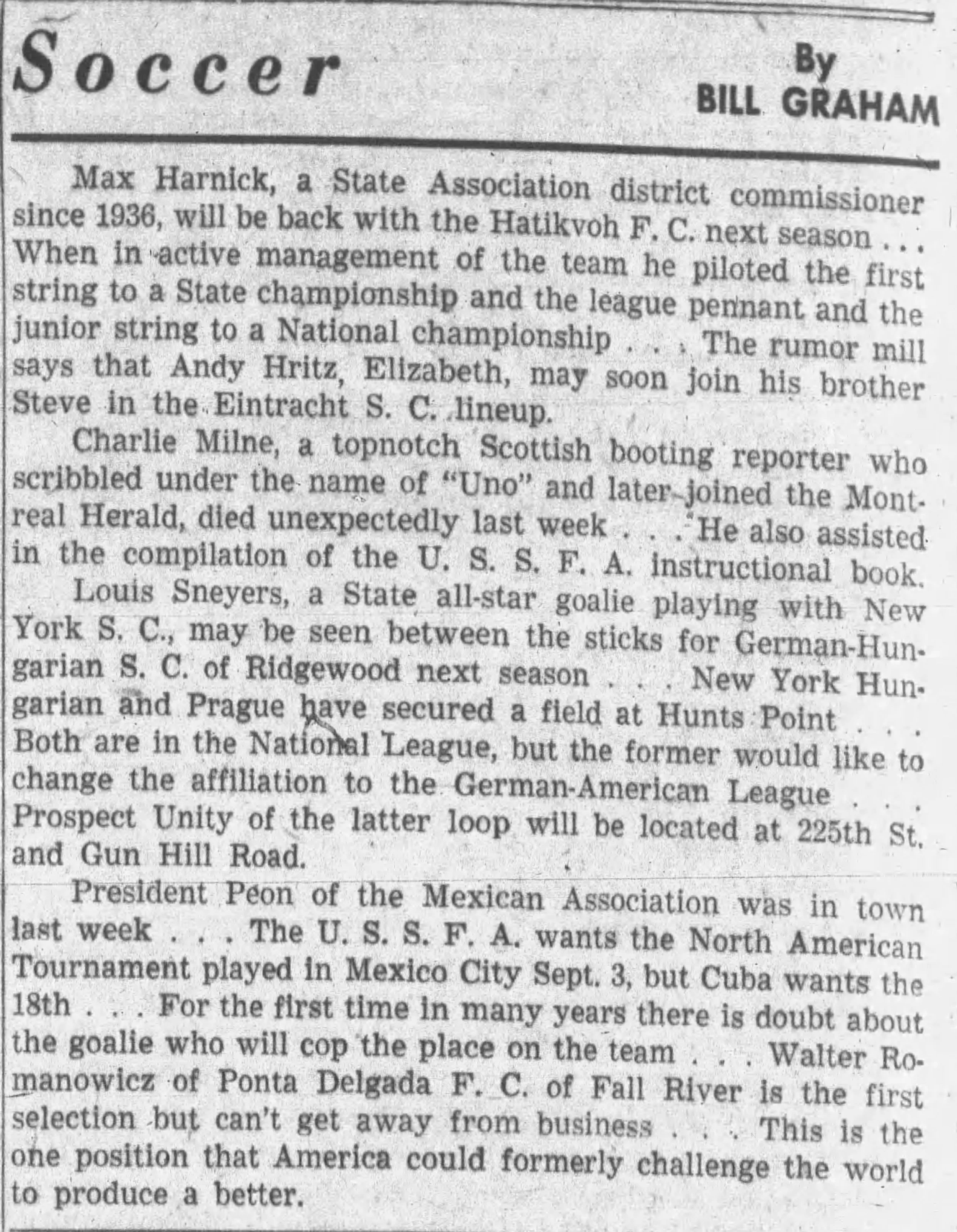
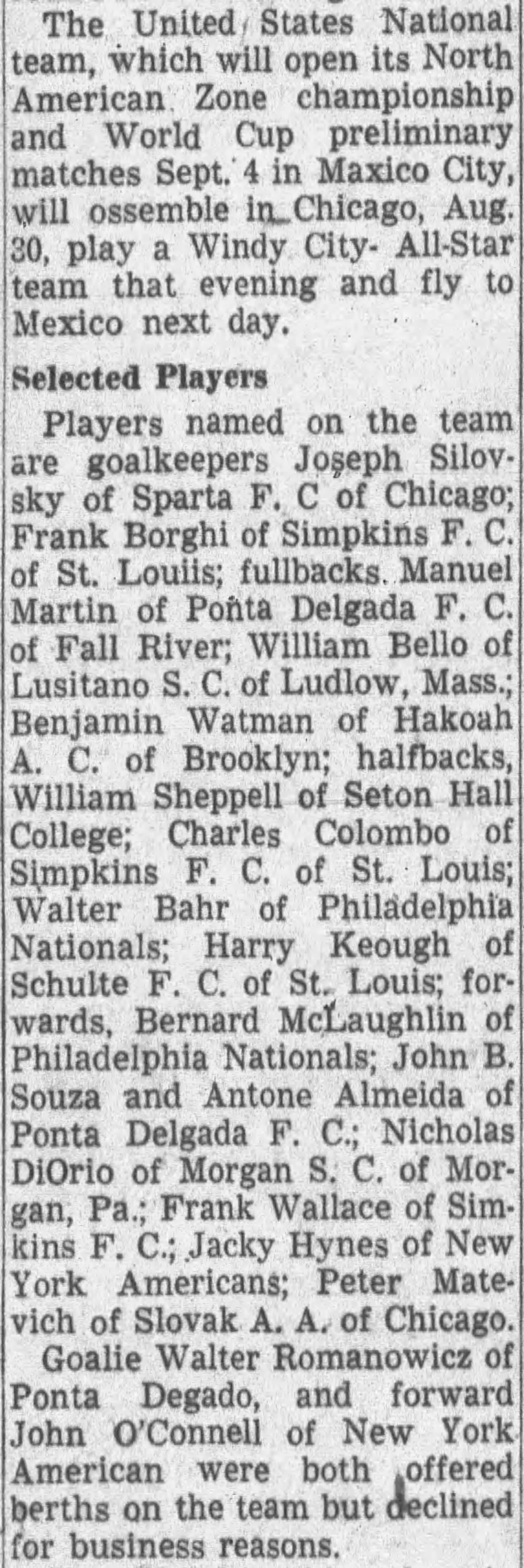
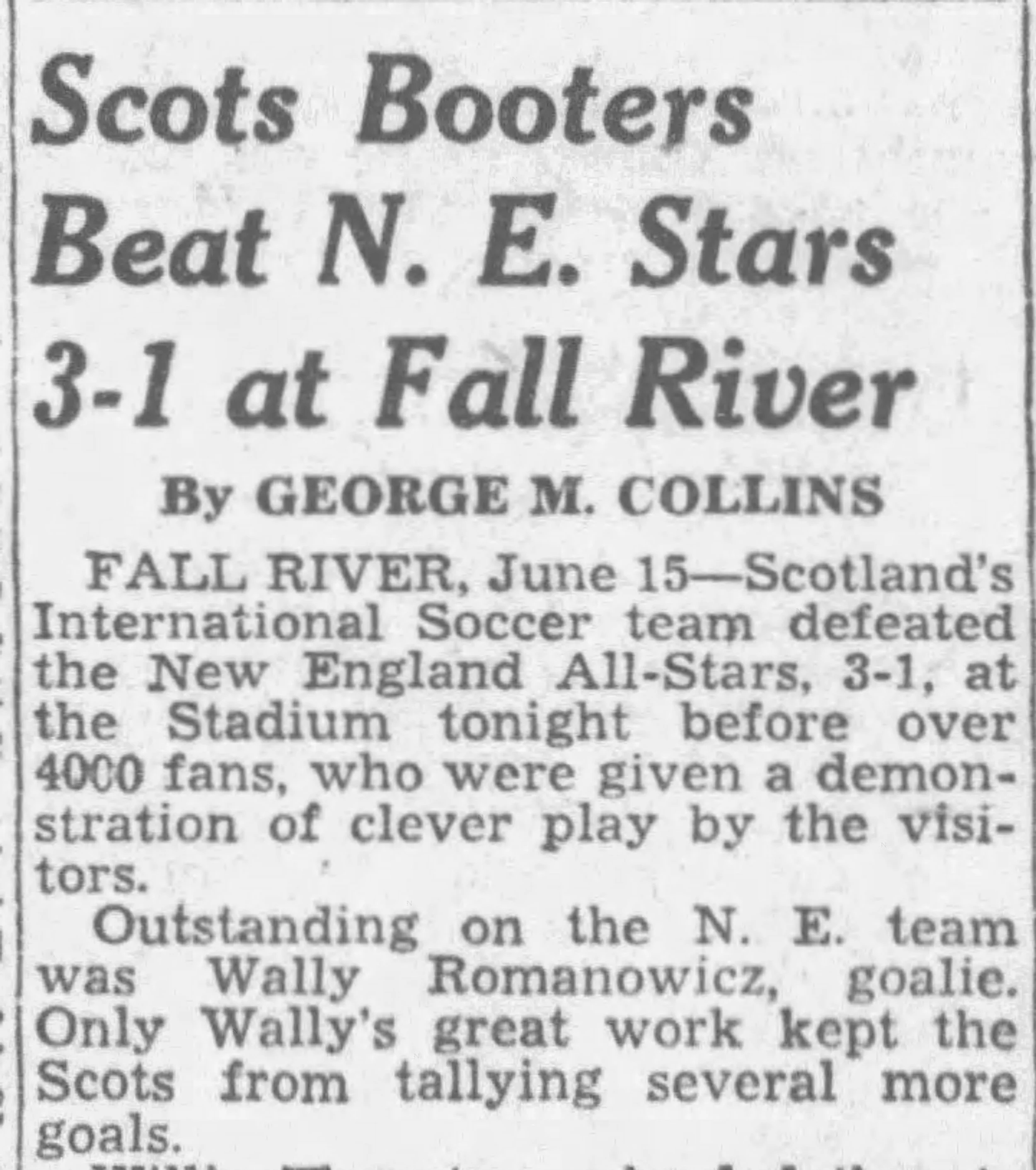
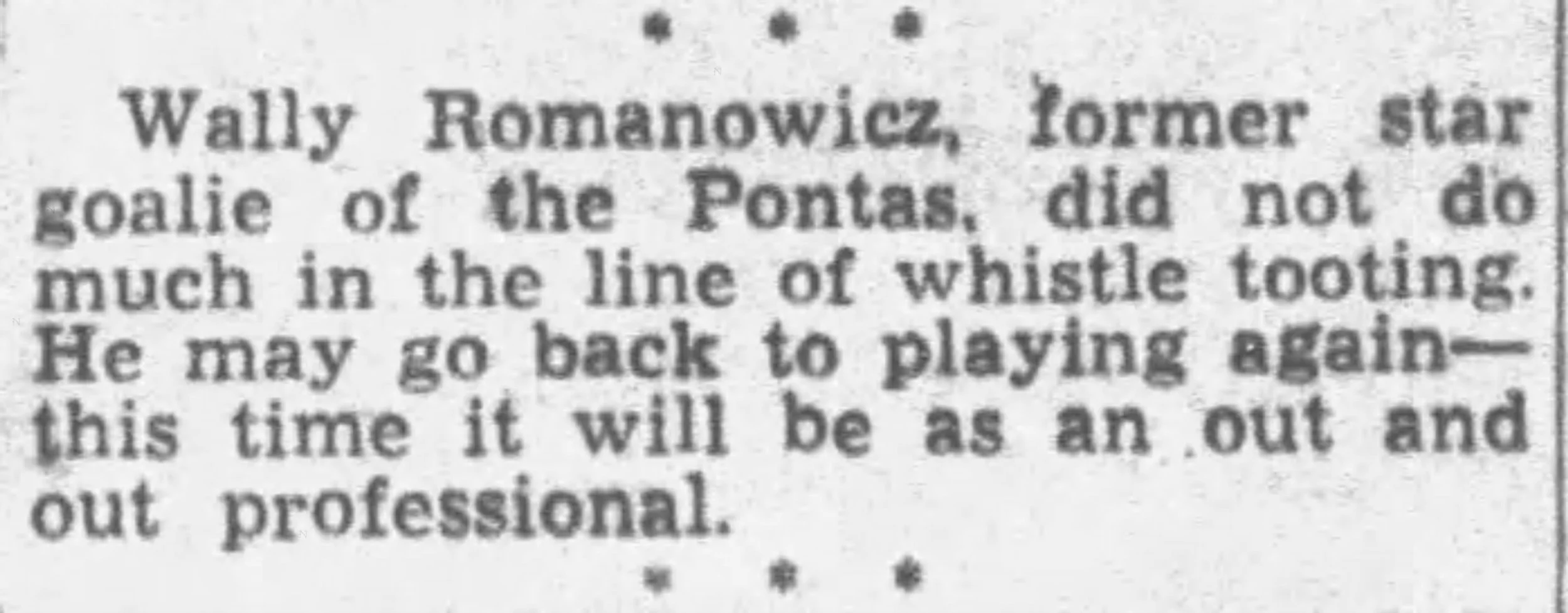
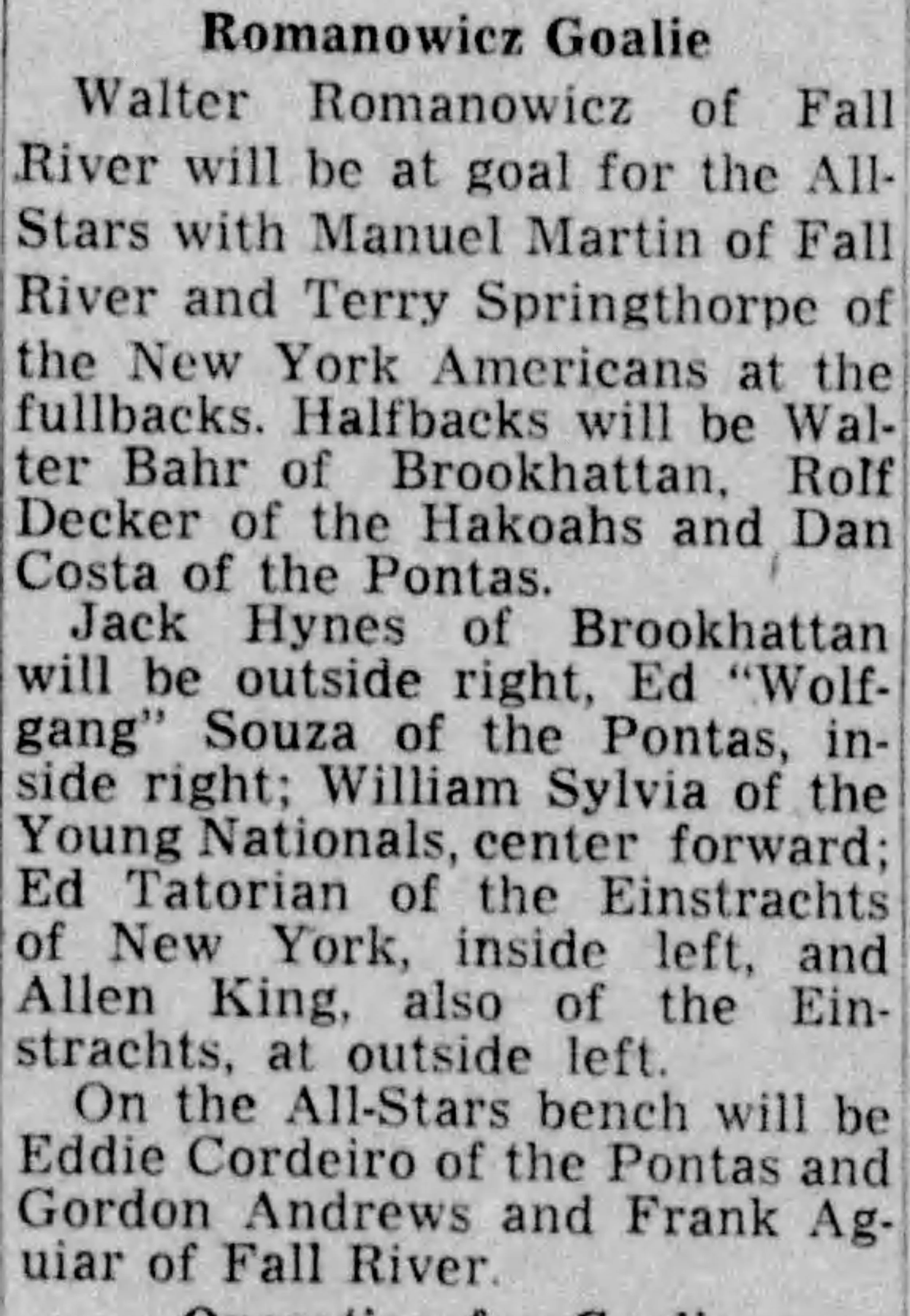
After a stint with St. John’s FC of Fall River, Romanowicz joined Ponta Delgada in the mid-1940’s to start a dominant run in national play. Romanowicz and Ponta Delgada reached the National Challenge Cup semifinals three times from 1946 to 1948, winning the prestigious tournament in 1947. Alongside these efforts, Romanowicz retained his amateur status and won the National Amateur Cup three years in a row (1946-48). With Romanowicz and Ponta Delgada winning the rare double in 1947, Romanowicz was propelled to the national team for the two-game 1947 NAFC Championship tournament. Although the US would lose both matches, Romanowicz would continue to be requested back to the national team as far as 1950. Ahead of the iconic 1950 World Cup matchup against England, it was Walter Romanowicz, not Frank Borghi, who was first requested onto the team. Bill Graham wrote for the Brooklyn Eagle in August of 1949, “For the first time in many years there is doubt about the goalie who will cop the place on the team. Walter Romanowicz of Ponta Delgada F.C. of Fall River is the first selection but can’t get away from business. This is the one position that America could formerly challenge the world to produce a better.”
Although a brief tenure with the national team and club soccer as a whole, Romanowicz was a quiet pillar in the post-war era, when American soccer was largely backed by ethnic clubs punching above their weight and players who balanced a playing career without the financial resources that today’s players receive.
85. Dan Kennedy
A four-year starter at UC Santa Barbara, Kennedy’s college career would come to a heartbreaking finish as the Gauchos fell to the Indiana Hoosiers in the 2004 NCAA final. Despite a strong senior season, the Gauchos subbed in penalty specialist Kyle Reynish at the end as Kennedy could only watch from the sidelines. Despite the sour finish, Kennedy showed well enough to be drafted just a month later by Chivas USA in the 2005 MLS SuperDraft, although the California franchise ultimately chose not to sign the new goalkeeper, leading Kennedy to carve his own path elsewhere.
Kennedy’s independence was rewarded as his standout play for the Puerto Rico Islanders led to being named USL’s Rookie of the Year in 2005. He would play for the Islanders for two years before heading south to Chile for a season. Kennedy would eventually make his way back to Chivas USA in 2008, but, once again, a door closed after untimely injuries derailed his return, as well as not being able to fulfill a national team call-up in the winter of 2008-09. Regardless, Kennedy continued pushing forward and in 2012, Kennedy finished third for the MLS Goalkeeper of the Year award. Seven years after each MLS franchise passed on him in the SuperDraft, Kennedy’s resilience proved the doubters wrong as he had now established himself as one of the best not only in MLS, but for all American goalkeepers.
Kennedy wowed fans with his quick reactions, backed by his Hispanic-influenced goalkeeping style. His hyper-mobile approach, as opposed to an English rigid set position, allowed him to bet on his ability through aggressive, front-footed defensive actions. Kennedy’s career isn’t littered with many team awards - as even his best season in 2012 was on the worst team in MLS - yet his determination to not let a closed door define him is an encouraging story for every goalkeeper who’s ever been overlooked before.
86. Charley LaBarge
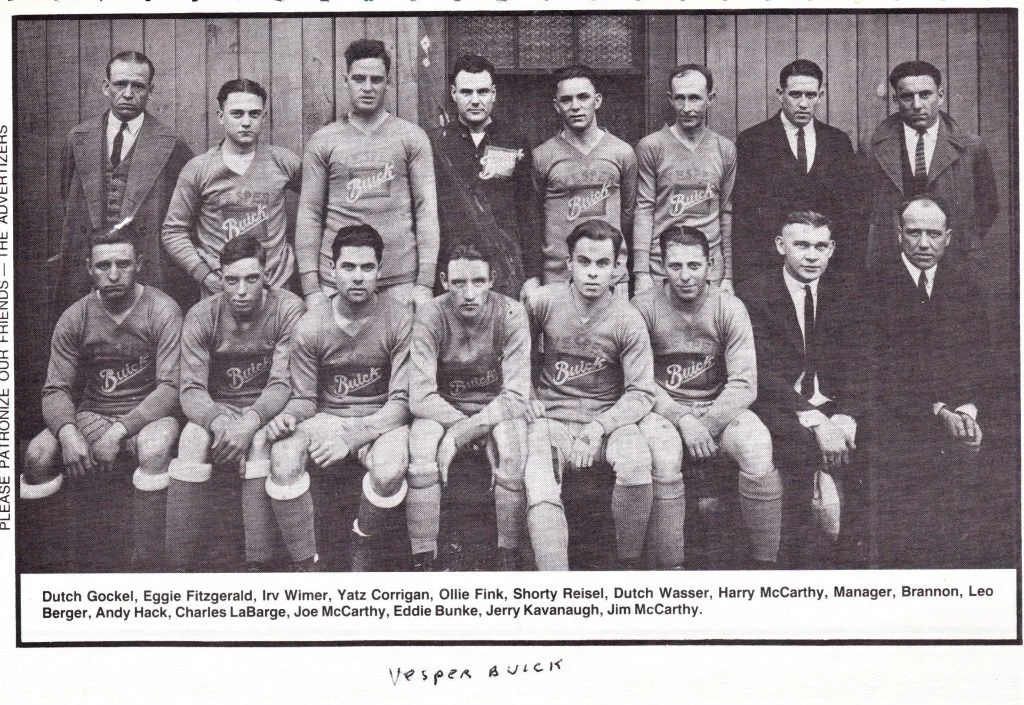
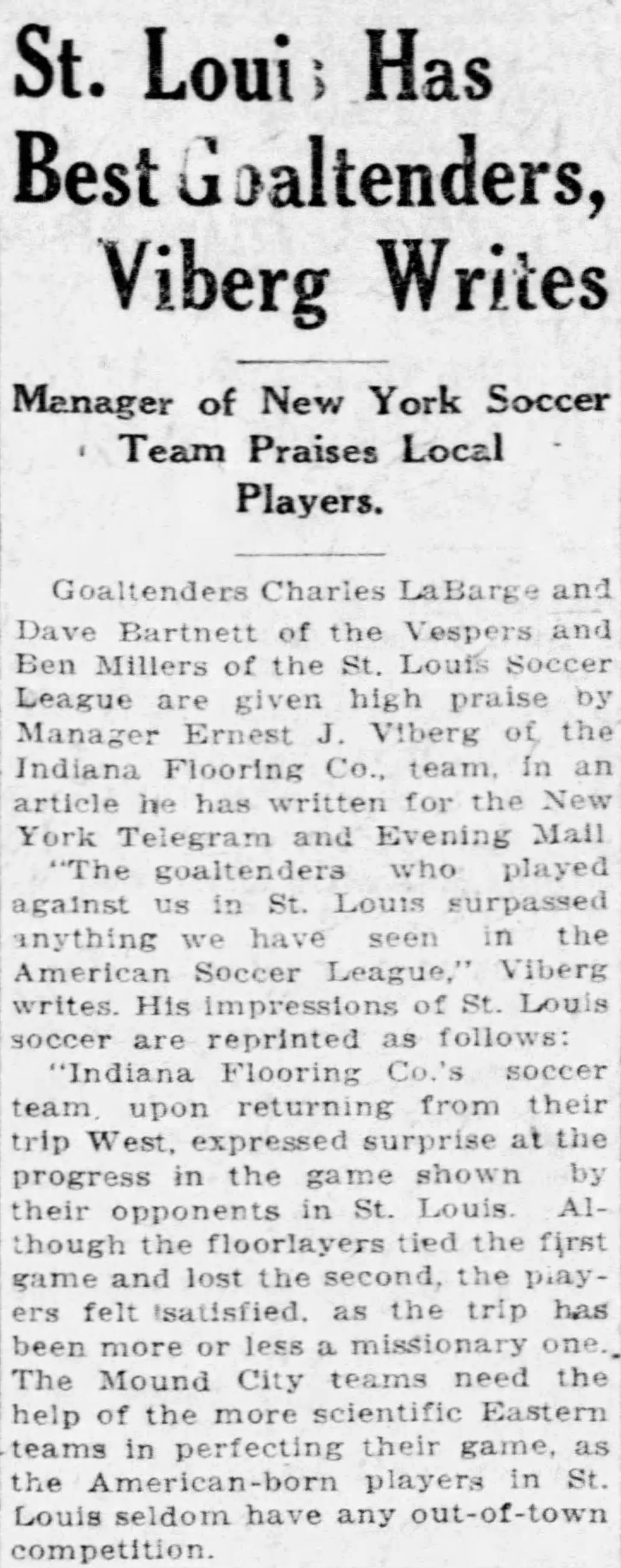
Over the course of the 1920’s and 30’s, LaBarge quickly made a name for himself inside St. Louis’ soccer circles as a promising young goalkeeper. LaBarge joined Vesper Buick ahead of the 1924 National Challenge Cup and elevated himself into a star player before the club even arrived at the final. Despite the 4-2 loss in the final, Indiana Flooring manager Ernest Viberg said that LaBarge and Dave Barnett’s goalkeeping talent “surpassed anything we have seen in the American Soccer League.”

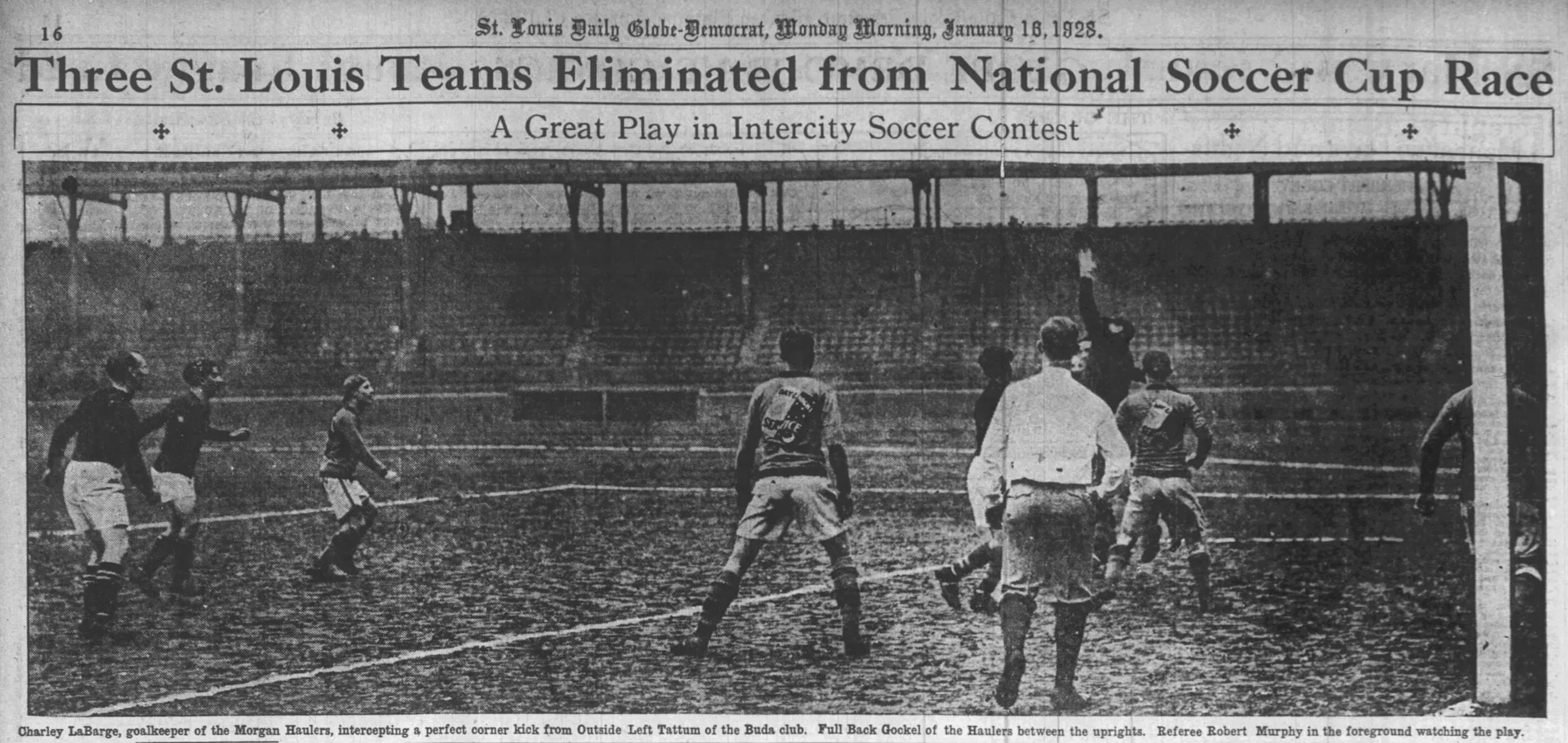
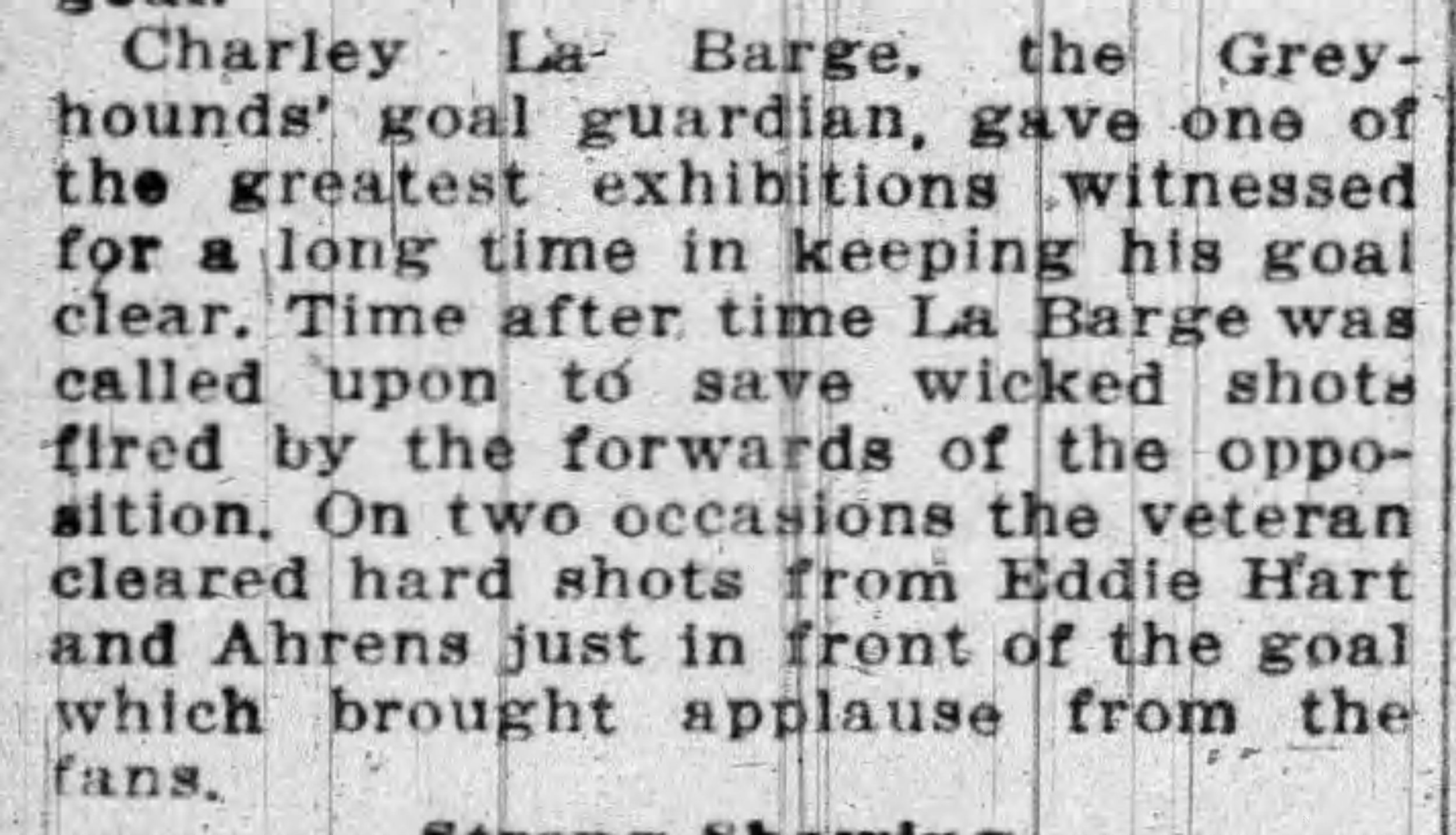
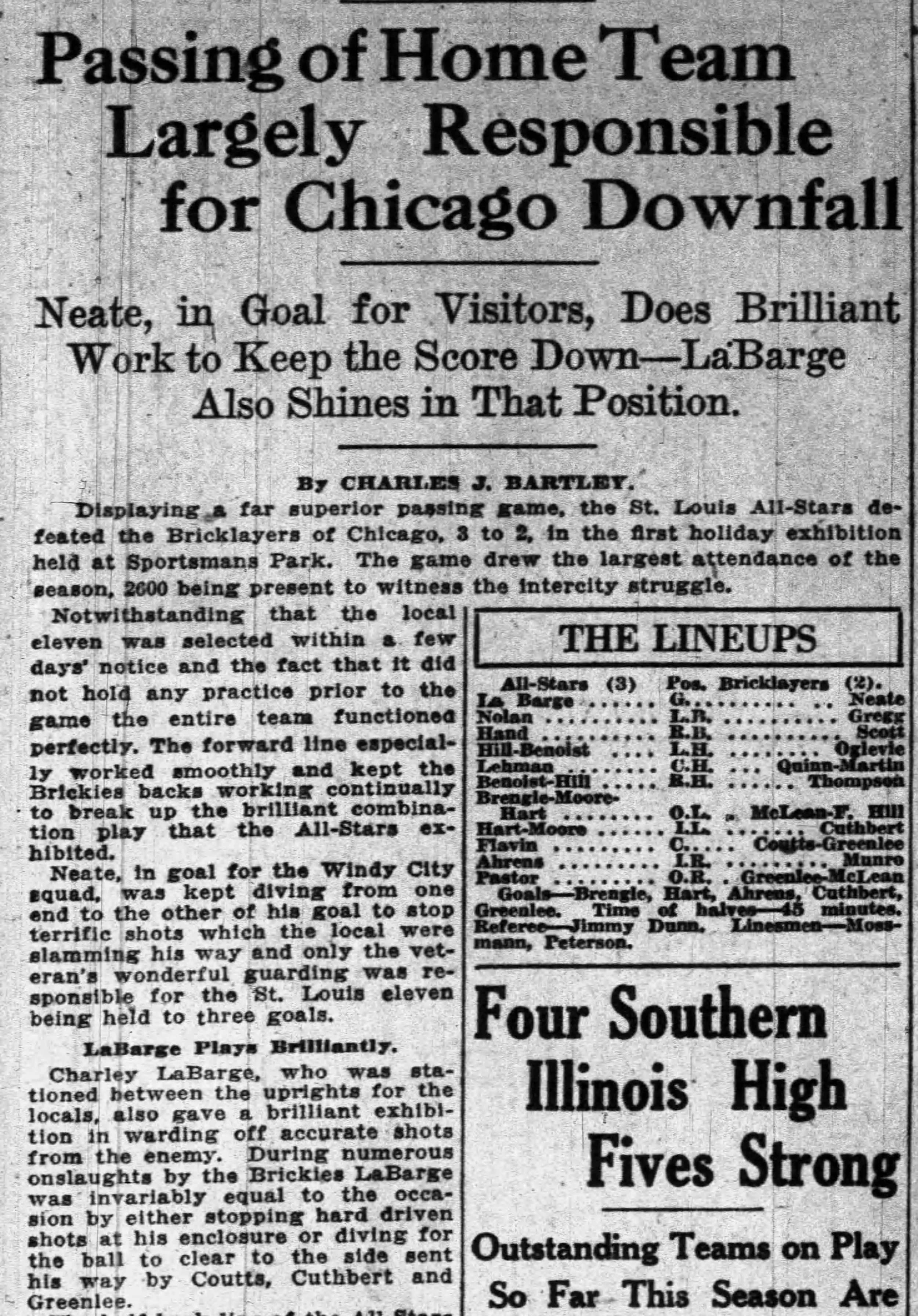

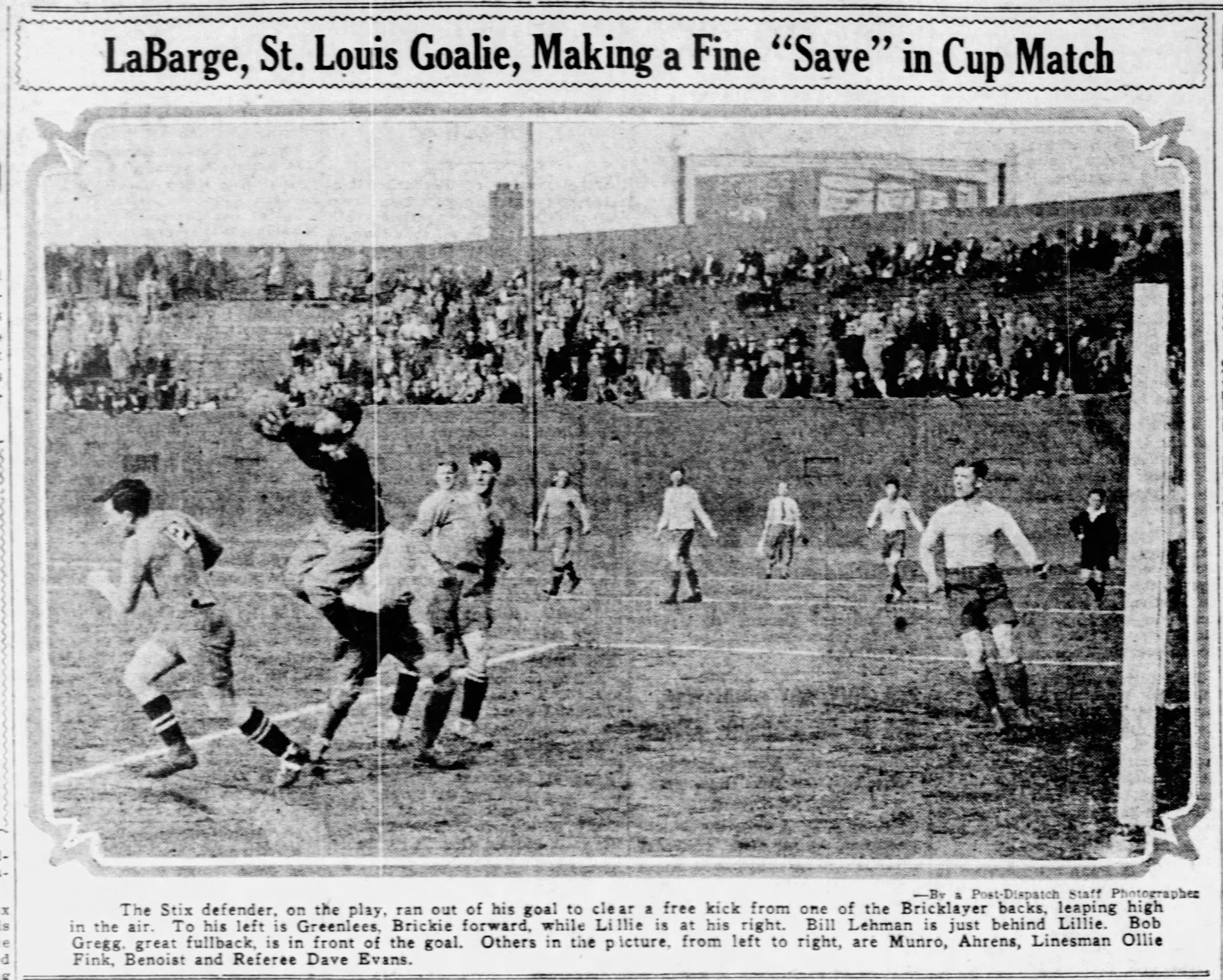
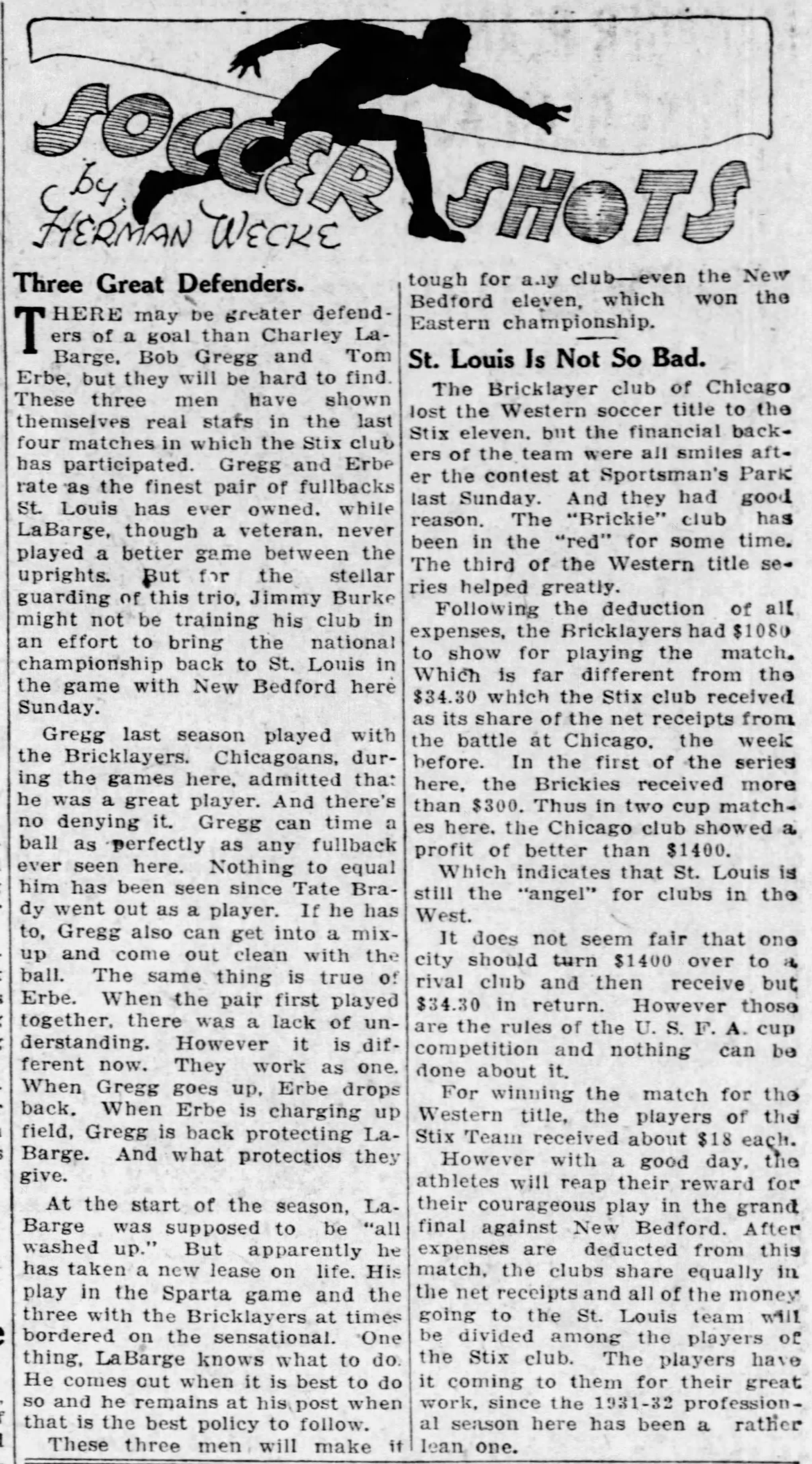
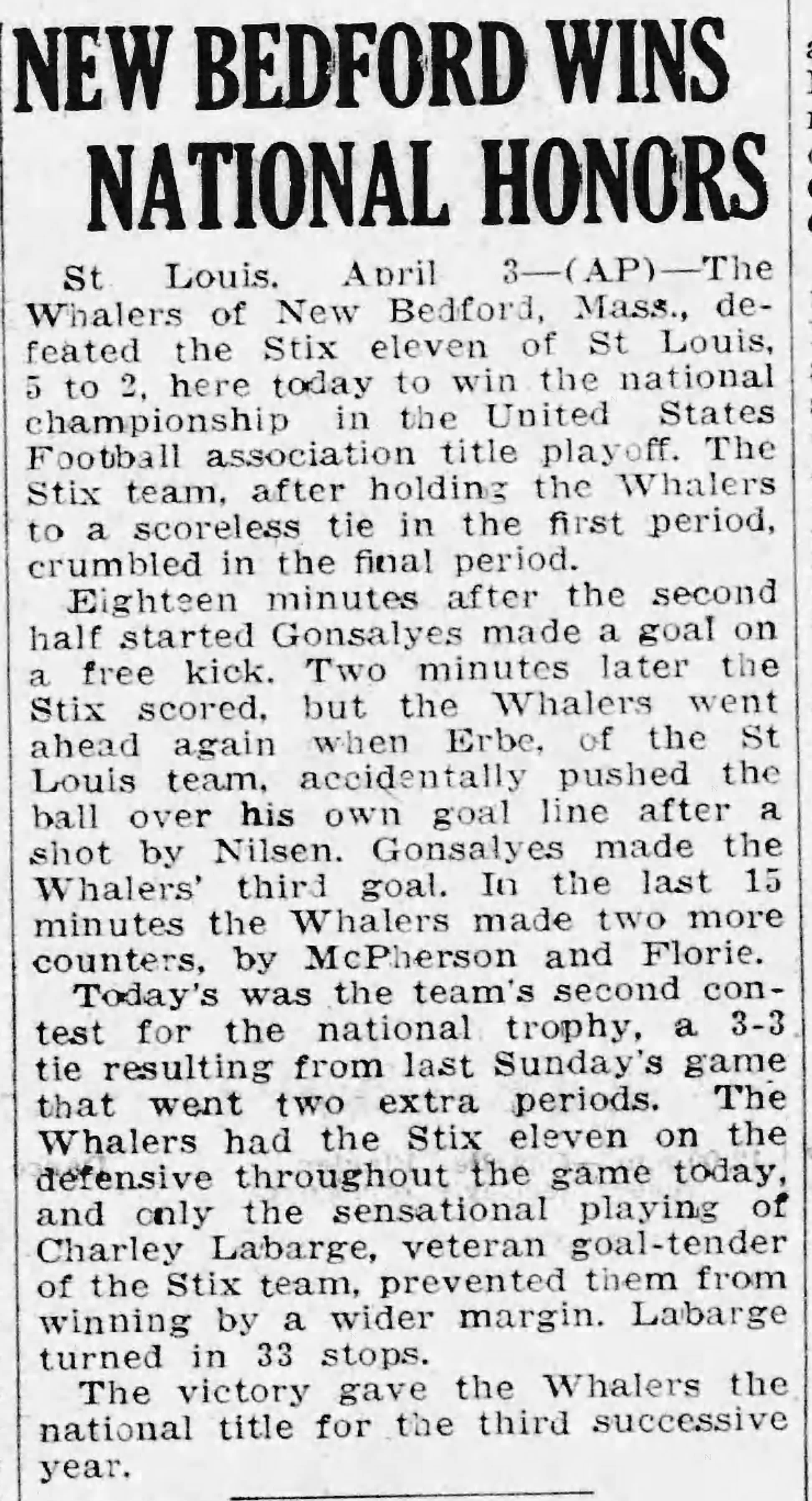
LaBarge would continually shine in the National Challenge Cup, returning to finals three more times, in 1929, 1932, and 1933, the last two with Stix, Baer, and Fuller. Unfortunately, LaBarge’s career was marred by injuries and much speculation arose on whether he had any talent later in his career. In 1932, Herman Wecke wrote that “At the start of the season, LaBarge was supposed to be ‘all washed up’. But apparently he has taken a new lease on life,” praising the goalkeeper for outstanding recent performances and decision-making in goal.
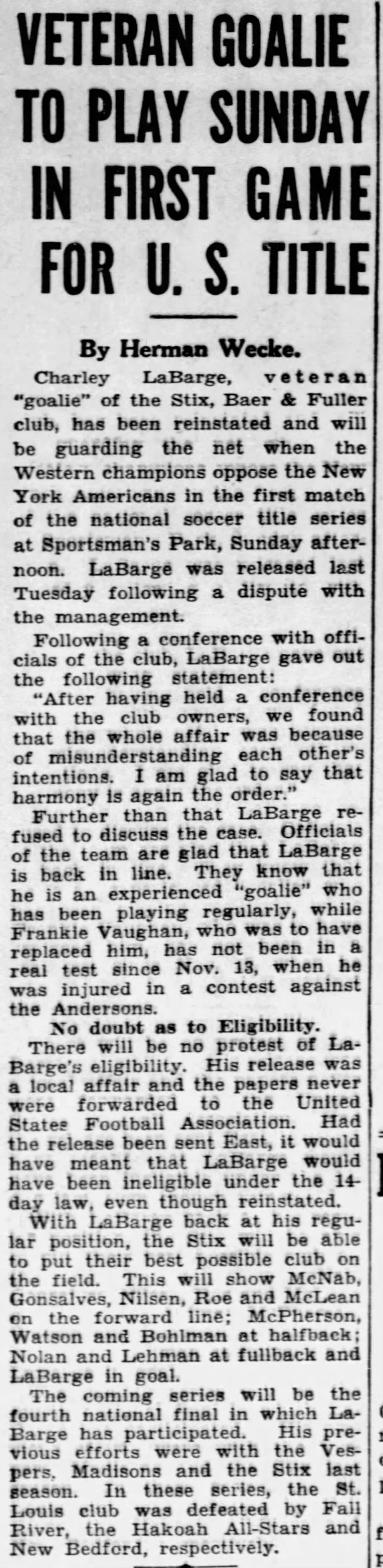
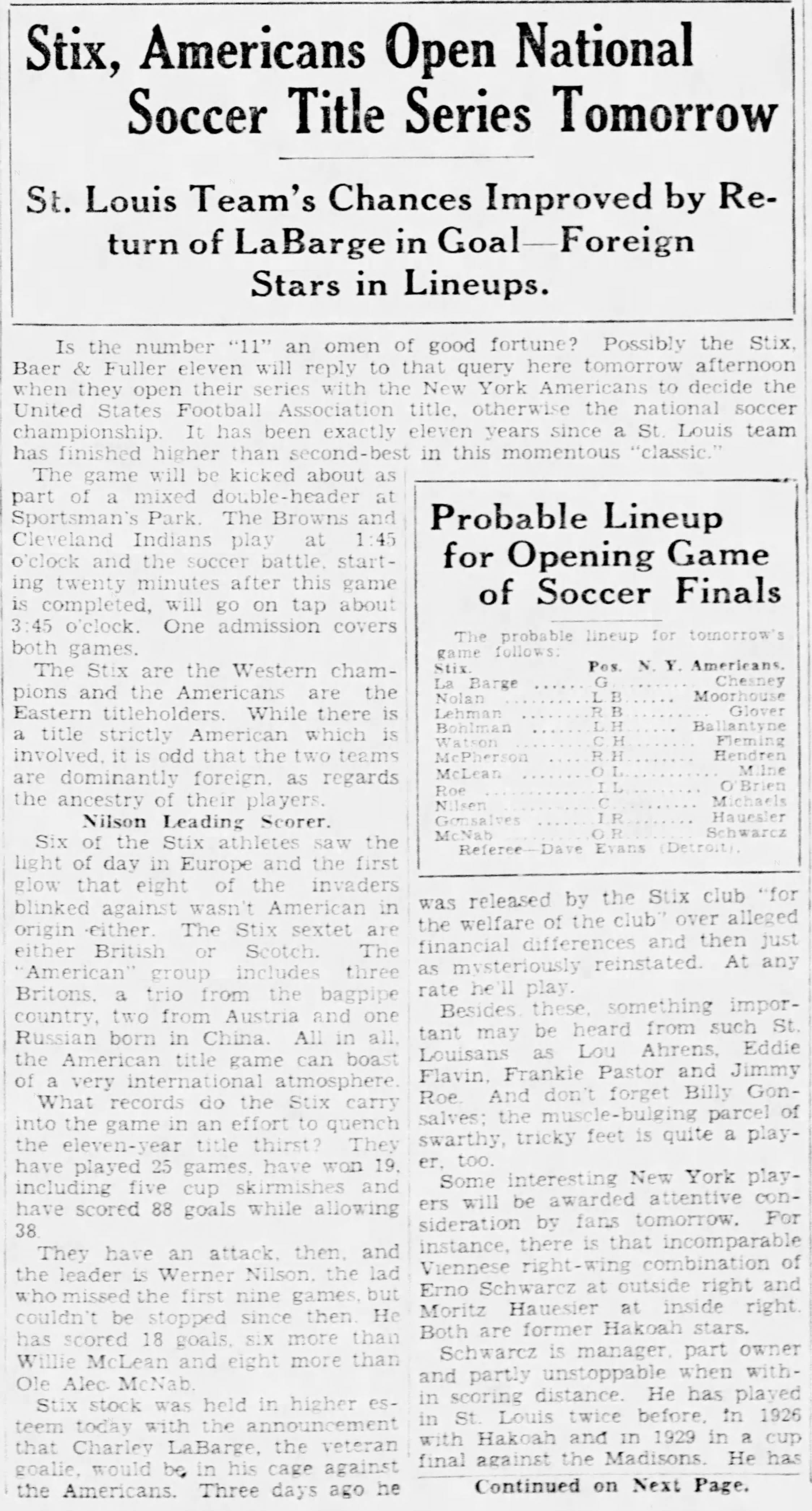
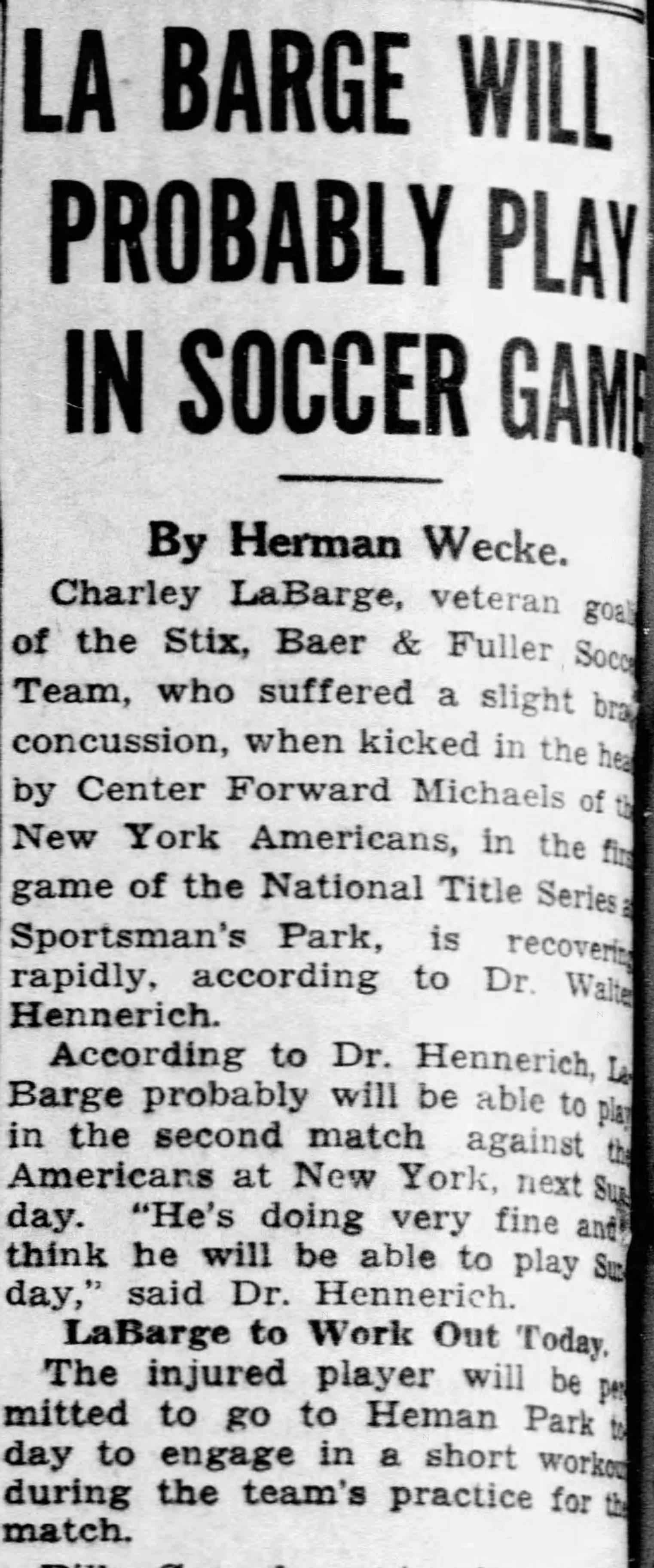
The road to capturing the Cup in 1933 was no easy task for LaBarge. Less than a week before the final, LaBarge was released from the club for “the welfare of the club” over financial disputes but was oddly reinstated just days later. LaBarge was tight-lipped about the specifics of the affair and set his sights on finally capturing the elusive trophy. The first of the two-legged was a shutout by LaBarge but the St. Louis goalkeeper received a concussion from a blow to the head, leaving his status for the second match in question. LaBarge was ultimately cleared to play by doctors, conceding only one goal in the second leg against the strong ASL representative, the New York Americans, and finally winning the National Challenge Cup.
Alongside David Barnett and Charles McGarry, LaBarge was inducted as one of the first goalkeepers into St. Louis’ prestigious Soccer Hall of Fame in 1971.
87. Joe Willis
Joe Willis’ career can largely be summed up as him banging on the door until someone opened it or the door fell off its hinges. Willis earned a call-up to the U20s in October of 2006 but ultimately lost out to Chris Seitz and Brian Perk being named to the World Cup squad. Willis, not one to take no for an answer, continued his successful, yet quiet, college career. In the 2011 draft, DC United acquired Willis as a backup for Bill Hamid and despite Willis’ clear role established by DC, he would still find moments to shine. In 2012, Willis rode a seven-game unbeaten streak while Hamid was with the U23s and would save a crucial penalty in the quarterfinals during the playoffs when Hamid went off with a red card.
After a trade sent Willis south to Houston, he once again had a difficult battle for the number one spot with Tyler Deric. Willis and Deric would repeatedly trade off time, although Willis would get his chances in the 2017 playoffs and the 2018 Open Cup, the latter of which he picked up his second US Open Cup trophy, this time starting in the Cup final.
After the back and forth with Houston, a trade with Nashville finally gave Willis a chance to showcase his talents. In 2021, Willis finished third in Goalkeeper of the Year voting, proving the long wait was worth it for the Denver Pioneer alum. The no-nonsense and drama-free goalkeeper enters the 2026 season ranked 7th all-time in MLS starts for a goalkeeper and has yet to let go of his starting position in his 16th year as a pro.
88. Theodore Bondi
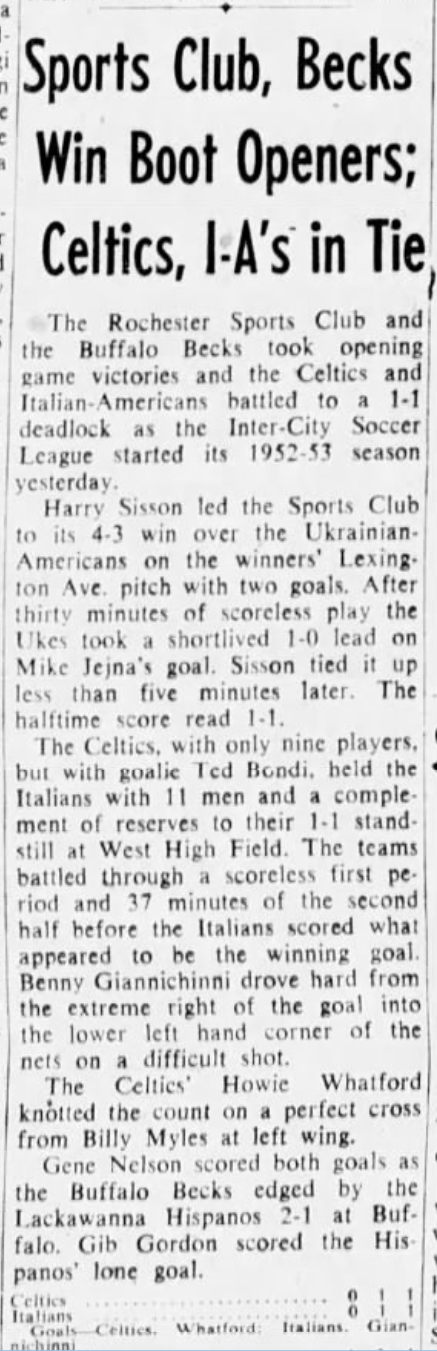
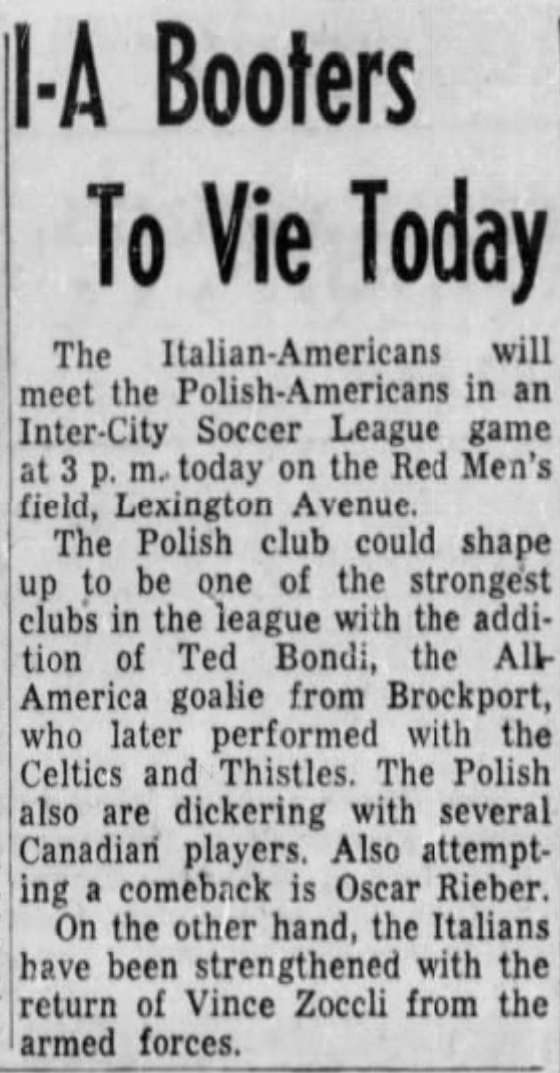
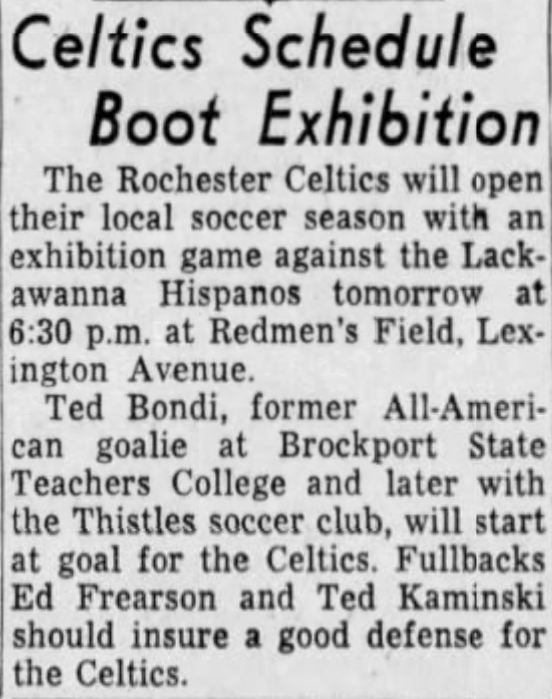
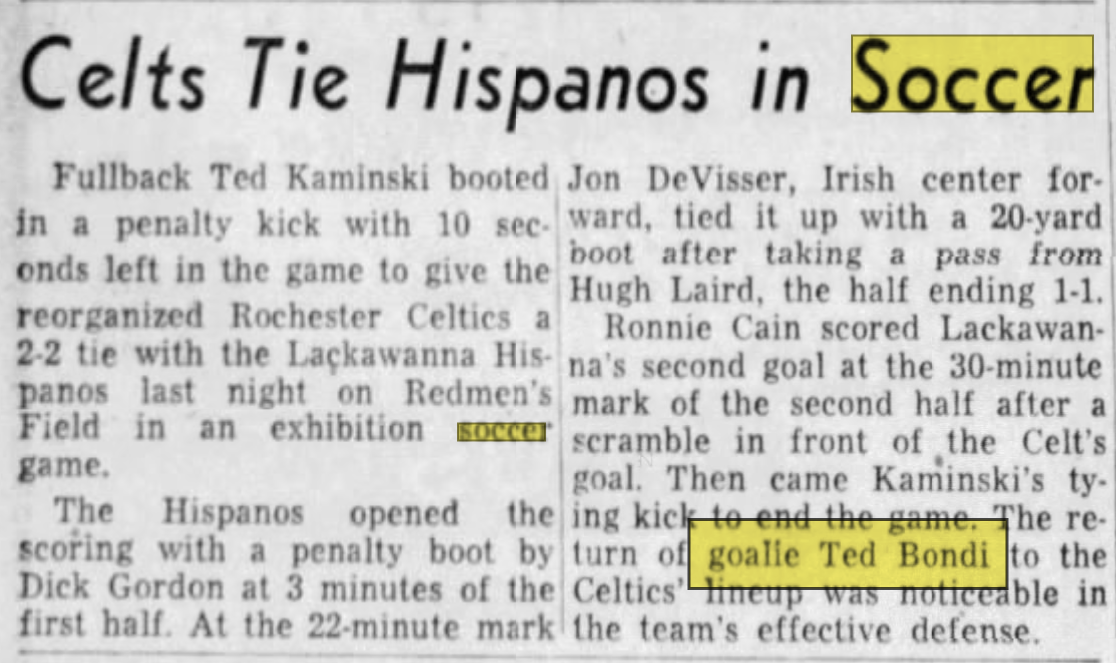
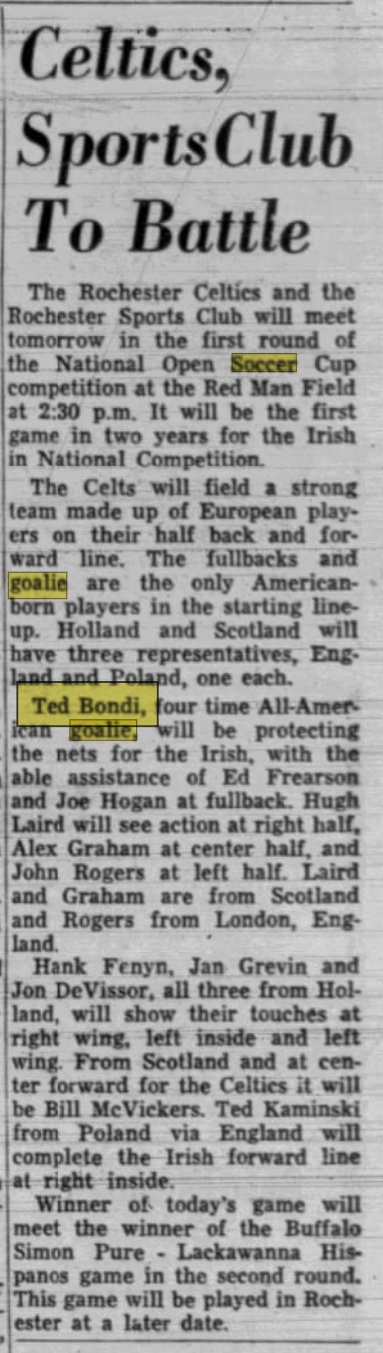
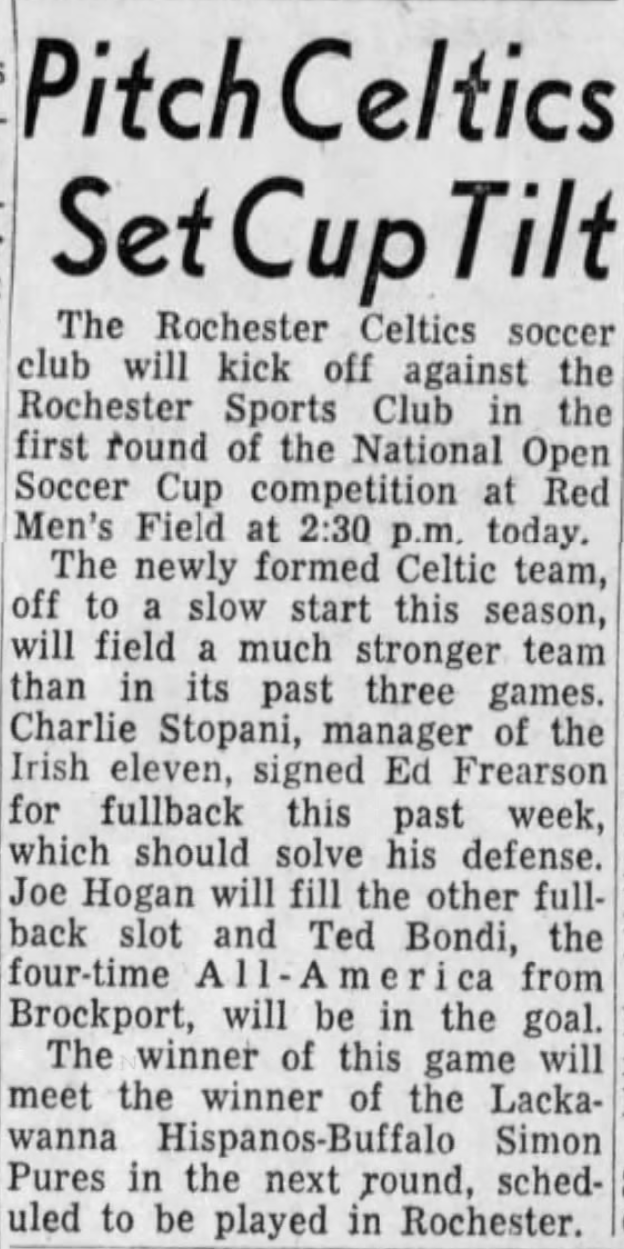
Theodore “Ted” Bondi was the perennial multi-sport athlete. In addition to being on the basketball, baseball, and swimming teams at Brockport, Ted Bondi was a standout goalkeeper. Despite Brockport’s limited success on the national level, Bondi was named an All-American goalkeeper each year, the only goalkeeper to ever accomplish this.
After graduating Brockport and earning his master’s in education at UNC, Bondi joined the Air Force and eventually returned to his hometown of Genoso, NY, where he would begin playing soccer again, as well as coaching soccer, basketball, football, baseball, lacrosse, and swimming in the area.
Despite domestic soccer being at a very low point in the 1950s, Bondi’s untouched collegiate accomplishment and loyalty to his hometown highlight him as both the common man and an outstanding goalkeeper for his time. Bondi passed away in 2010 after being named in multiple Hall of Fames in the northeast and now has a memorial scholarship named after him.
Whereas goalkeepers like Brad Friedel and Tony Meola managed to dominate the college level at a time when there was no professional structure, Bondi’s accomplishments were a level above even those national team stalwarts when it comes to recognition at the collegiate level, putting the everyday sportsman into a tier of his own.
89. Bob Denton
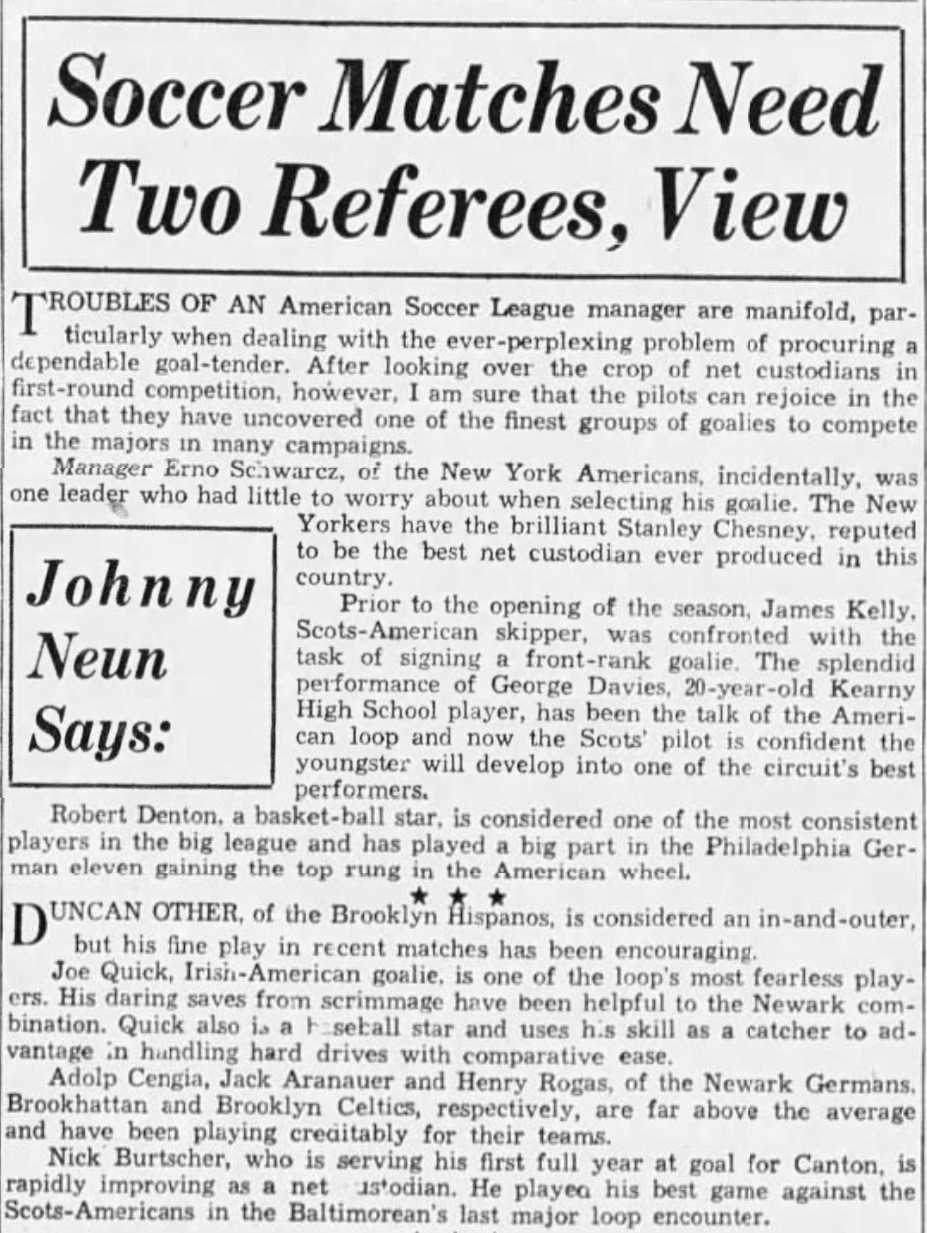
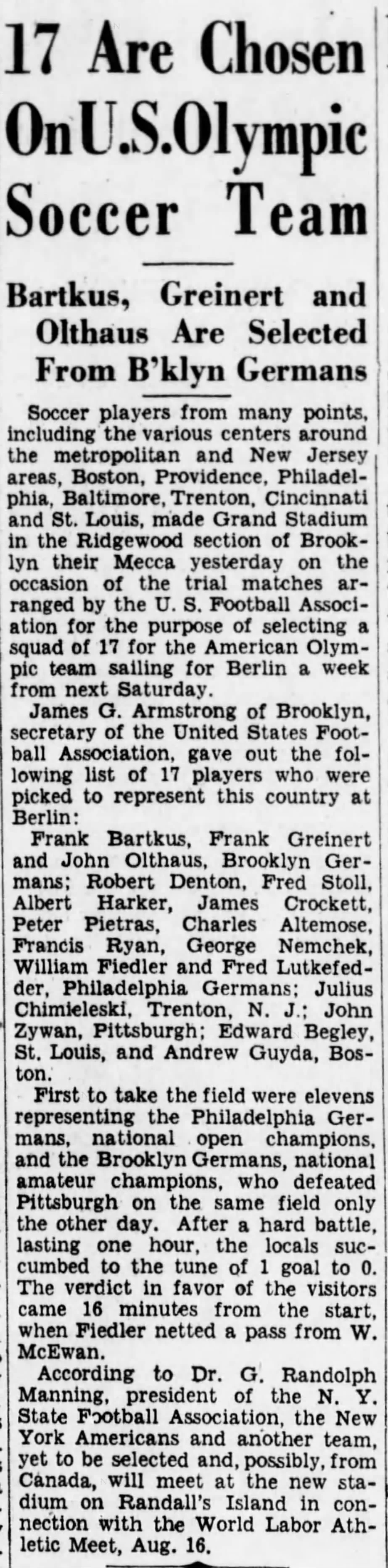
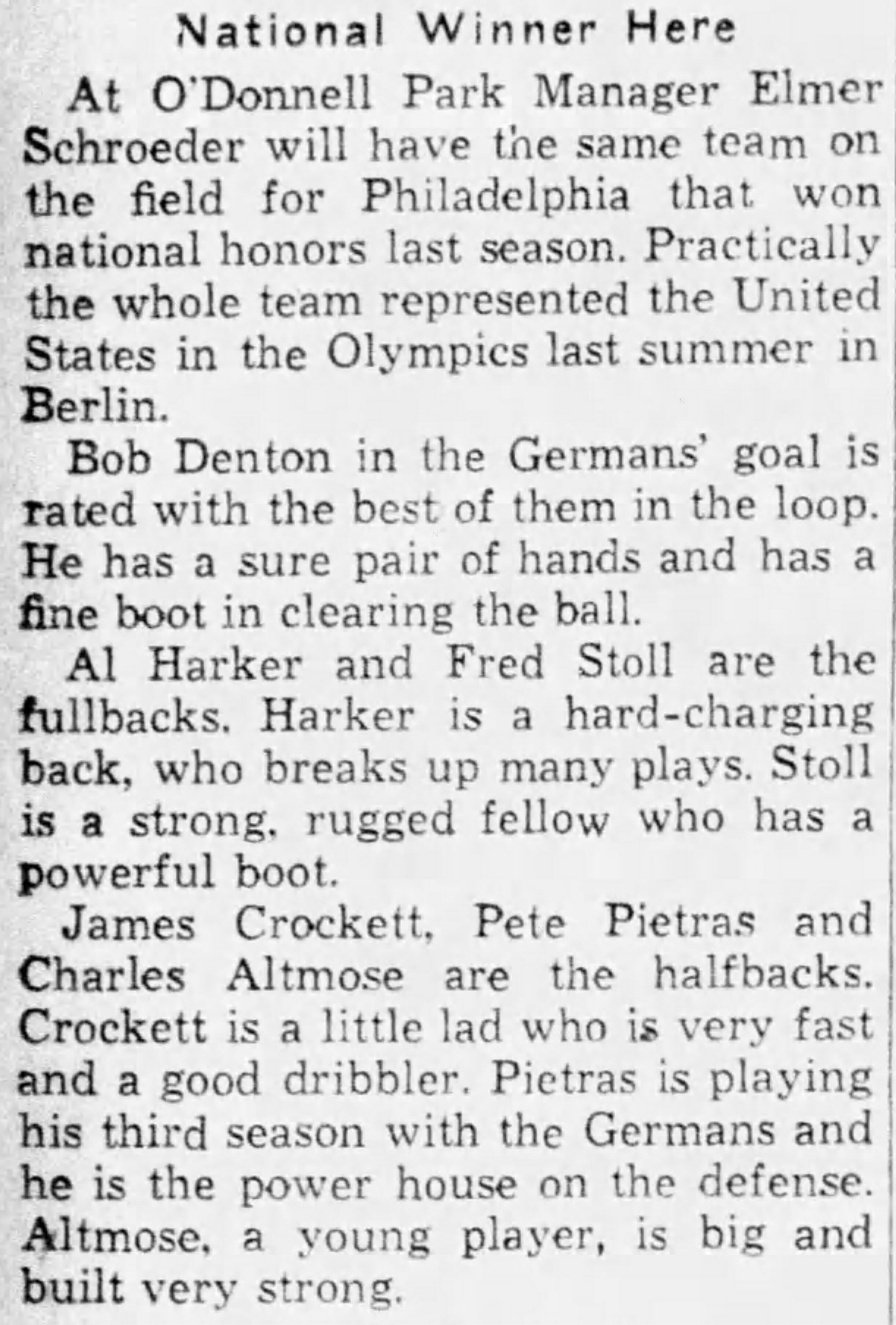
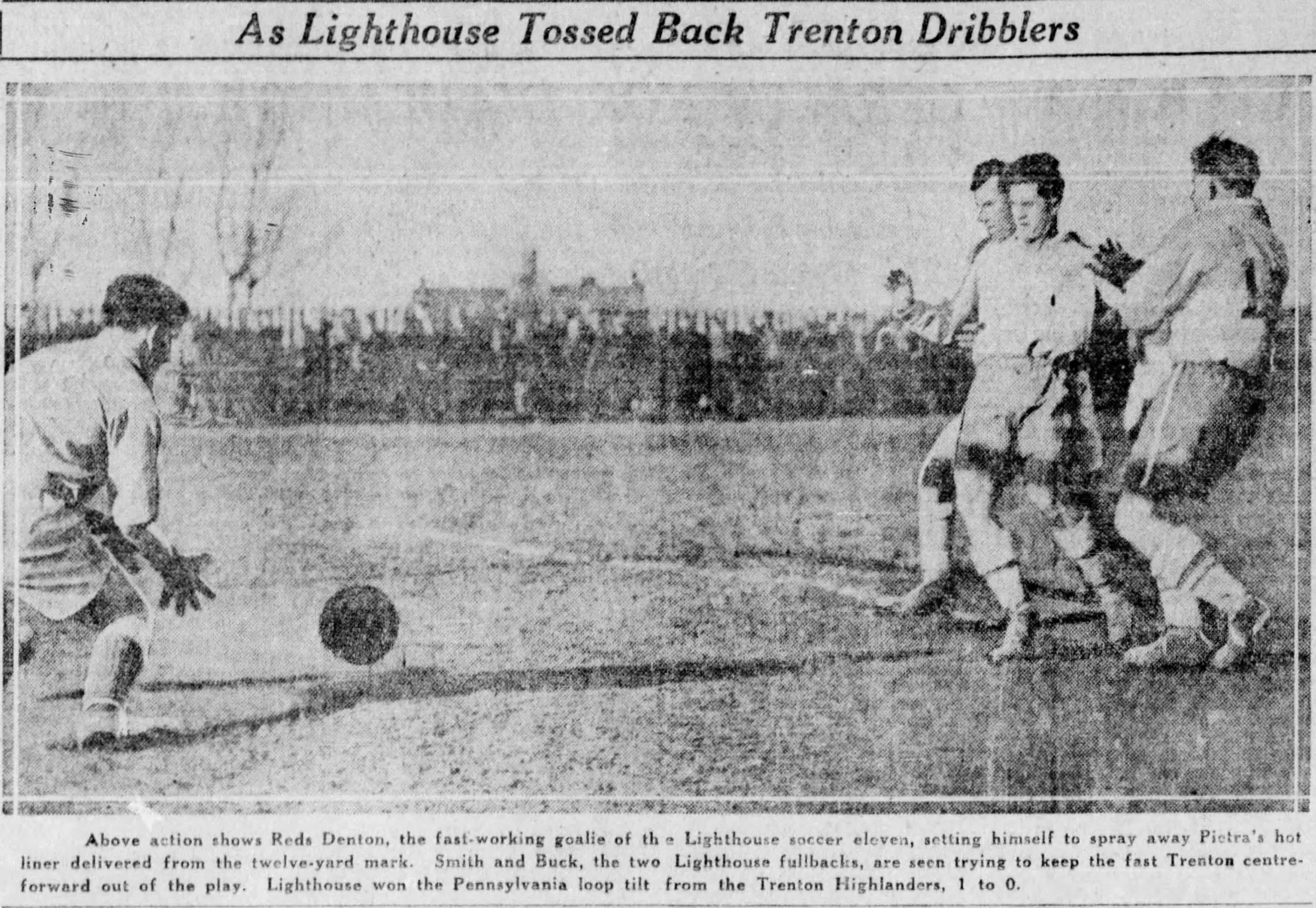
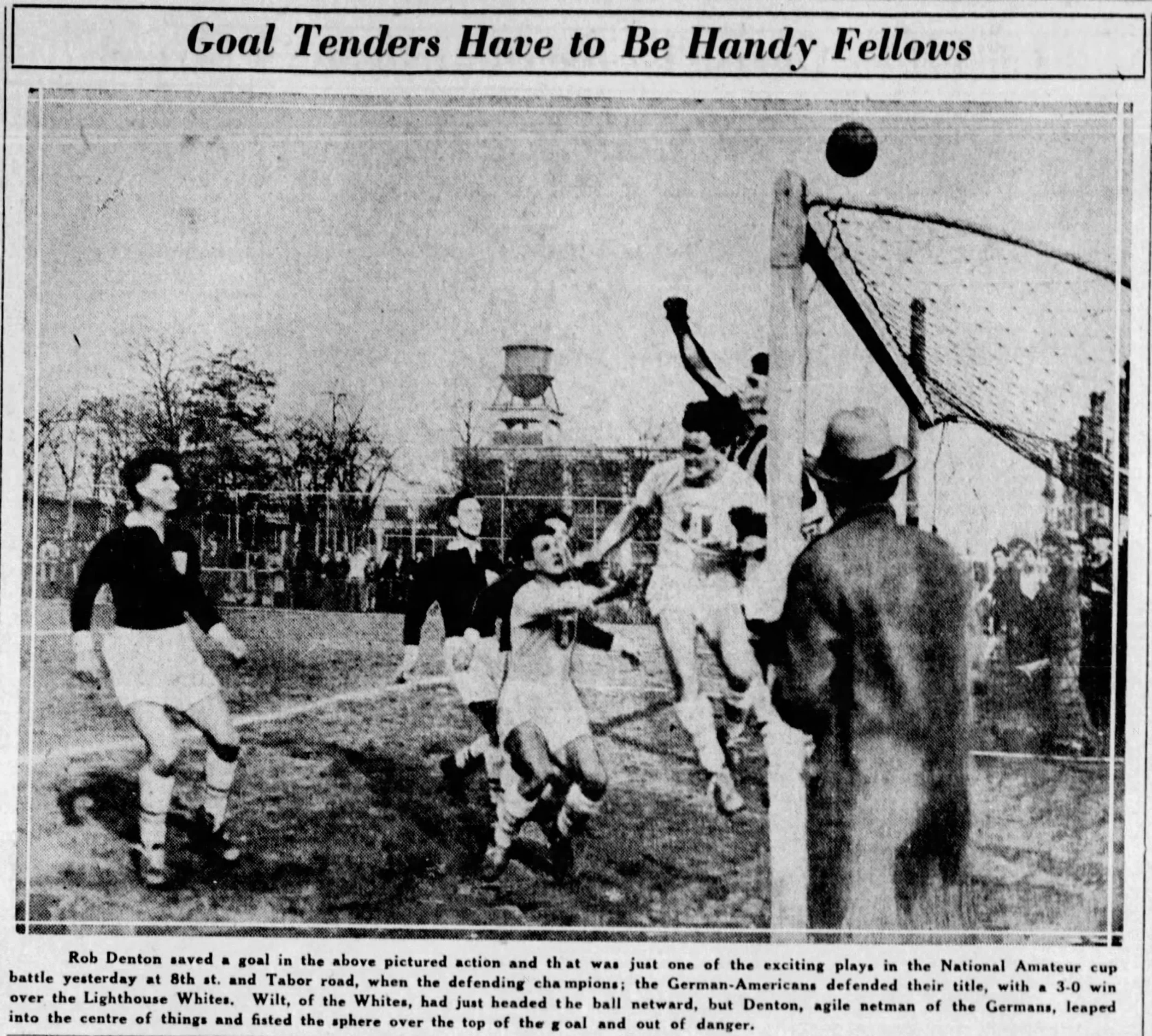
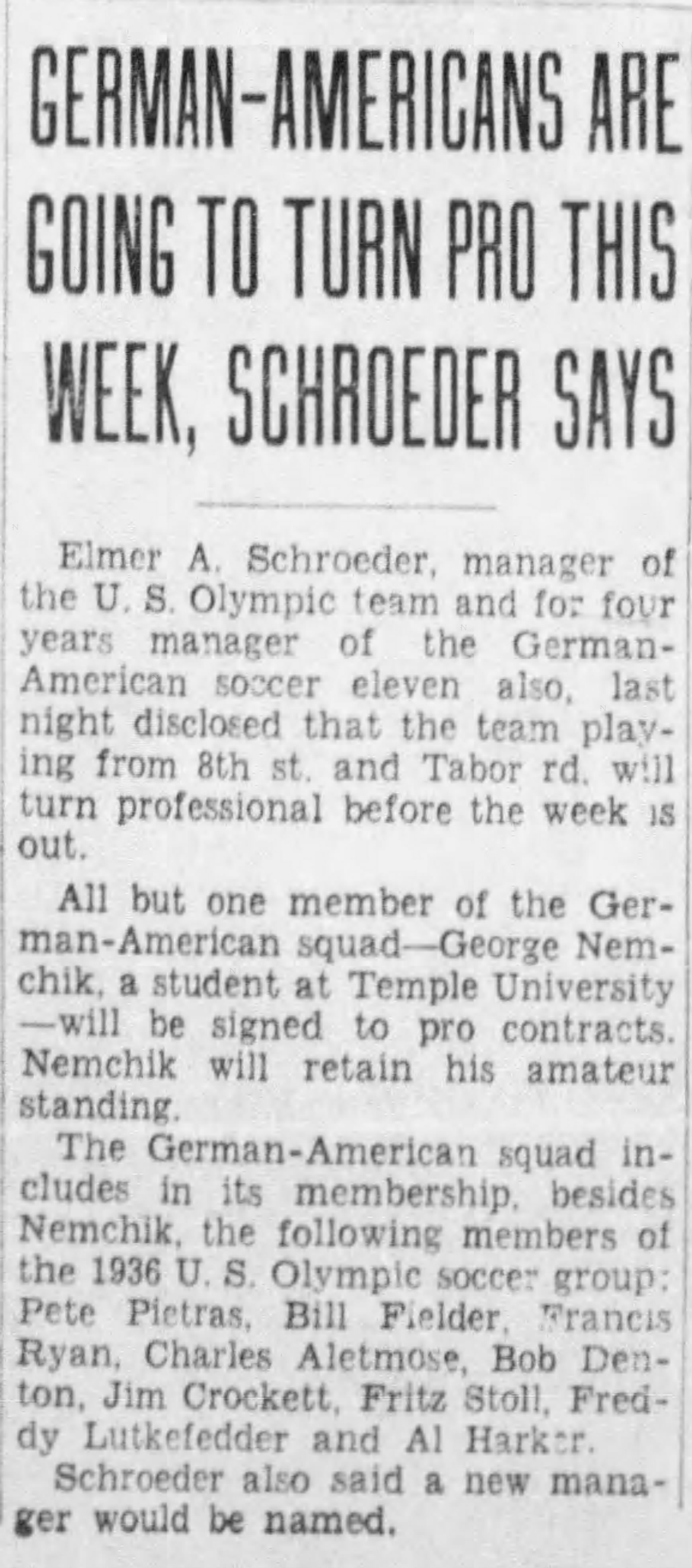
After stints with Disston (1929-30) and Lighthouse (1931), Denton would make substantial waves for himself in 1933 after a quarterfinal finish in the National Challenge Cup with the Philadelphia German-Americans, as well as capturing the first of two back-to-back trophies in the National Amateur Cup (‘33 and ‘34). Denton would add to his trophy case with an ASL Championship in 1935 and winning the 1936 National Challenge Cup. The success with the German-Americans made Denton a mainstay in the conversation for top goalkeepers in the country during the 1930’s, whether amateur or professional.
For the 1936 Olympics, Denton earned an invitation into the 17-person squad. Although Denton didn’t feature in the Olympics - starter Frank Bartkus was lauded as being the second best goalkeeper at the entire tournament after conceding only one goal to eventual champions, Italy - Denton continued his strong run in ASL play through the back part of the 30’s. A nearly career man with the Philadelphia German-Americans, Denton is one of Pennsylvania’s top goalkeepers of all time.
90. Dragan Radovich
Throughout college soccer’s entire existence, there have been many standout goalkeepers, including Randy Phillips, Skip Gilbert, Peter Mannos, Peter Arnautoff, and Ed Gettemeier. Although all these goalkeepers were standouts for a time, Radovich matched their efforts and then some. A 1978 graduate of St. Francis College, Radovich was a three-time first-team All-American goalkeeper and a first-round draft pick for the NASL’s Washington Diplomats. Radovich reached the playoffs in his rookie season but was later signed by the Timbers in 1982, before the team - and then soon after the league - both ceased operations. Radovich finished with 48 appearances in the NASL during his limited time, 11th all-time for American goalkeepers.
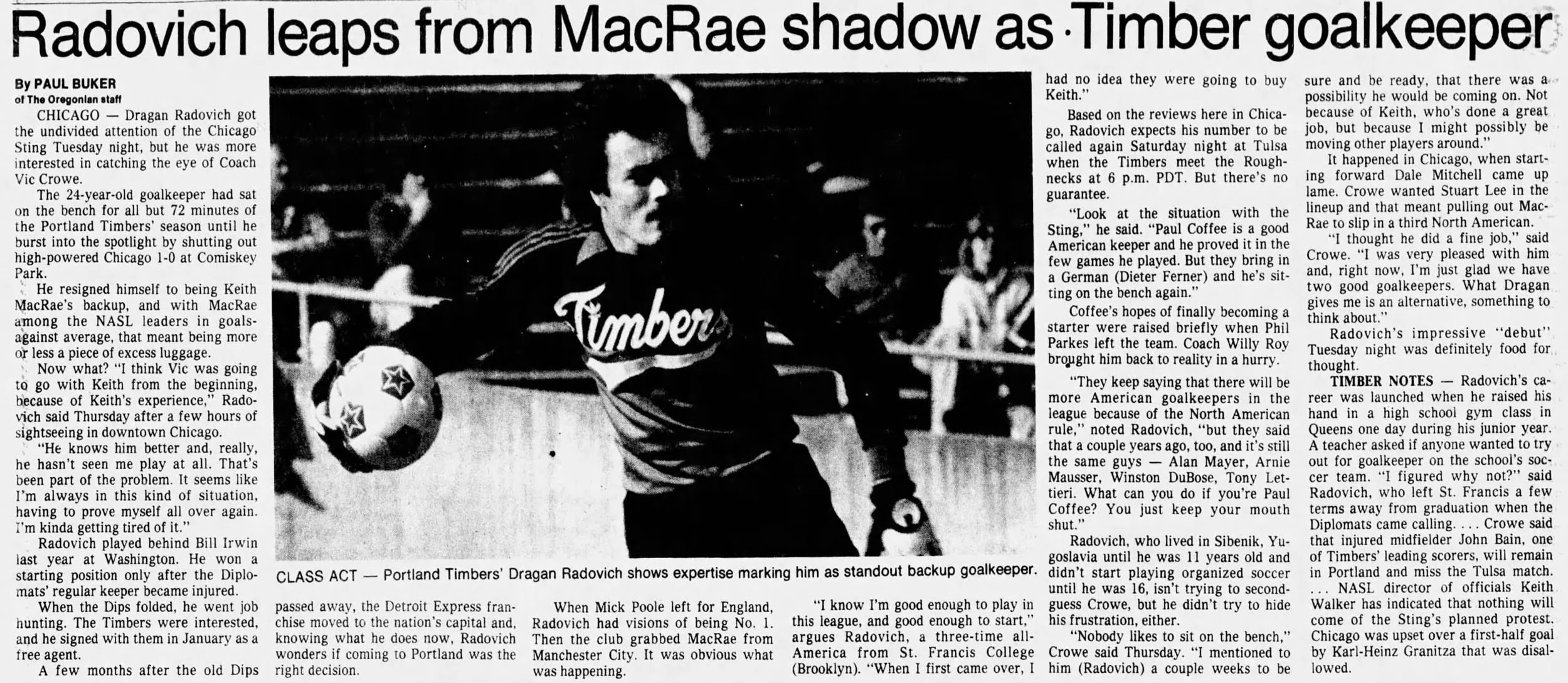
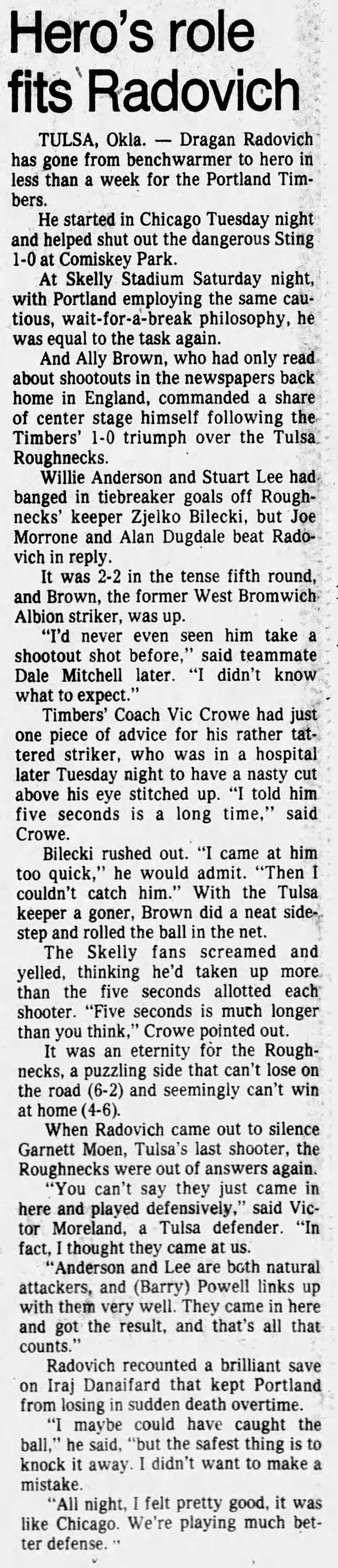
Despite the NASL closing its doors, Radovich’s passion for the game would not be subdued, playing wherever he could for as long as he could. In 1986, Radovich was featured in the NY Mundalito (a "Long Island version of the World Cup") while in 1989, Radovich was featured in the Northeastern Super Soccer League All-Stars squad, facing off against Zalgiris Vilnius of the Soviet Union's First Division. But Radovich’s career was not without its bumps in the road. In 1989, Radovich and the Greek-Americans made it to the US Open Cup final only to fall in extra time. The following year was even more heartbreaking for Radovich, now with the Brooklyn Italians, as a soft goal by the Croatian-American ended up leading to a 2-1 loss in the final. However, in 1991, Radovich’s third trip to the final would appropriately cap off a long and winding career with a 1-0 win over the Richardson Rockets. “We kept our cool,” Radovich would say after the game.
Radovich would later go on to tackle other great feats of strength, but his career can be summed up as a goalkeeper who did everything to continue playing, regardless of each setback and hurdle placed in front of him.
Main Page
Goalkeepers 1-10
Goalkeepers 11-20
Goalkeepers 21-30
Goalkeepers 31-40
Goalkeepers 41-50
Goalkeepers 51-60
Goalkeepers 61-70
Goalkeepers 71-80
Goalkeepers 81-90
Goalkeepers 91-100
Honorable Mentions