Photo by Caroline Whitfield
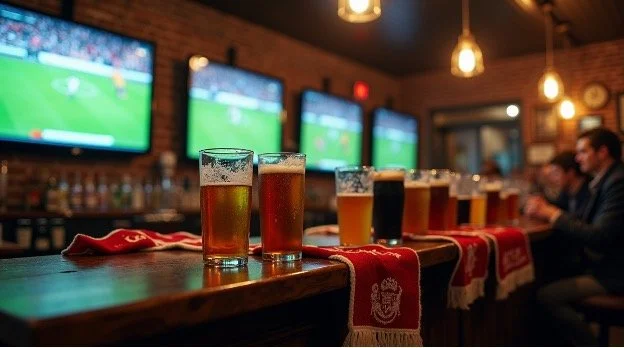
The American soccer pub on a Saturday morning has a sound texture that nothing else in the United States quite replicates. The murmur builds through the warm-ups, breaks into a chorus when the first scarves go up, and settles into a steady, percussive rhythm of chants, taps clinking, and the soft tap of phones flipping face up between attacking moves. By 2026 that scene has expanded well beyond the dozen or so Premier League hotspots that defined the early 2010s. It now stretches from Brooklyn back rooms running NWSL doubleheaders to San Diego rooftop bars hosting Liga MX viewing parties, and from Atlanta breweries projecting Apple TV's MLS Season Pass on dome screens to suburban Phoenix sports bars that finally have a regular USMNT crowd. The American soccer fan, for the first time, is no longer apologetic. The American soccer fan, in other words, has arrived.
That arrival has done something subtle to the surrounding economy. Soccer fans in the United States skew younger than NFL fans, are more diverse, are statistically more comfortable with apps, and spend more of their match-day hours staring at second screens. The same demographic profile, by happy coincidence for the operators tracking it, overlaps almost exactly with the audience that drove the post-2018 expansion of legal real-money gaming. So the pub becomes the petri dish. A 2026 Nielsen survey of US World Cup viewers found that interest in the sport had jumped seventeen points since 2020, with Hispanic and Gen-Z growth doing most of the heavy lifting, and the people running watch parties have noticed that those same viewers are very comfortable holding a phone in one hand and a pint in the other for the full ninety minutes.
For US-based soccer fans curious about how the wider real-money entertainment market looks alongside the matchday experience, one reasonable starting point is to find games at PlayUSA, a US-facing portal that catalogues licensed online games, sweepstakes formats and state-by-state availability so the curious can see what is actually legal in their own state without wading through marketing pages. The rest of this article focuses on the cultural side of that pivot: how American soccer-fan habits, watch-party rituals, fantasy products and streaming patterns are quietly reshaping how this audience spends a Saturday in 2026.
Why American Soccer Fans Are a Different Demographic Than the Rest of US Sports
The numbers that surface in 2026 league reports tell a story that older marketing decks still struggle to catch up to. American soccer supporters are, on average, twelve years younger than NBC's Premier League US viewing average from 2014, and the median MLS season-ticket holder in 2025 was thirty-four. Two in five identify as Hispanic or Latino, a demographic share roughly double that of the NFL. The supporter base is also more urban, more bilingual, and more likely to follow at least three competitions at once: a domestic team, a European club, and a national side. That stack of allegiances is part of what makes this audience a marketer's puzzle. It also means the supporter is comfortable juggling apps, schedules and time zones in a way that older sports audiences are not. Operators who came up through NFL parlays and NBA player props have spent the last two seasons retrofitting their products for users who watch a Liga MX match on Apple TV, switch to NWSL on Paramount+, and check their fantasy lineup between the two without thinking twice about it.
The Watch-Party Economy and the Quiet Rise of Fan-First Pubs
Walk into Smithfield Hall in Manhattan on a Saturday morning in March and you can see the watch-party economy at work without anyone explaining it to you. Two screens carry an early-window Premier League match. A third screen, smaller but louder, runs a midweek Concacaf qualifier replay for the regulars who never miss one. Drink minimums for premium tables have crept up since 2022, and yet the tables still book out two weeks in advance. Pub operators in Chicago, Austin, Portland and Seattle report similar patterns, with average per-patron spend on soccer Saturdays climbing roughly twenty-eight percent since the legalisation push, and a noticeable shift in what fans buy. The new spend is not just on beer. It is on small parlays the size of a tip, on second-screen fantasy entries played live, and on increasingly popular community pools where the whole bar contributes a few dollars and tracks the result on a chalkboard. The pub becomes a hub, a tracker and a small social wager rolled together, and the soccer match is the metronome the whole room runs on.
How MLS, NWSL and the National Sides Have Quietly Rebuilt Around Real-Money Partnerships
The leagues themselves have responded to that pub-floor reality with a string of partnership deals that would have been unthinkable in 2018. MLS and FanDuel's multi-year integration into the Apple TV Season Pass platform is the most visible example, but it is not the most interesting one. The more telling moves are the smaller franchise-level ones. Inter Miami's local sponsorship slate now includes a major operator on the practice-jersey patch. Austin FC has run two seasons of in-app fantasy contests aligned with a single sportsbook brand. The Portland Thorns and Angel City FC have both partnered with operators to fund women's-game-specific community programs that double as customer-acquisition channels. The pattern is a long way from the early skeptical years when leagues worried about brand contamination. It now looks like a normal, lightly negotiated revenue layer, slotted in beside jersey deals, stadium naming, and the broadcasting tier. For the supporter culture, the upshot is that the visual language of the modern American matchday already includes operator logos, and the conversation has moved on to where they belong rather than whether they belong.
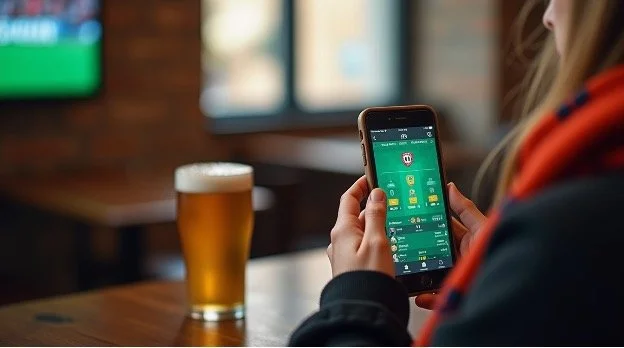
Photo by Marcus Delgado
The Long American Goalkeeping Lineage and Why Lists Like the Hundred Greatest Still Matter
One of the side effects of US soccer becoming a mass-market product is that lifelong fans now share oxygen with curious newcomers, and the deep-history content that used to live on niche blogs has become a working reference library for the wider crowd. Specialist fan sites have responded by curating their archives more carefully. The ranked list of America's hundred greatest goalkeepers that Everybody Soccer published in early 2026, for example, has become an unexpectedly common reference in pub-floor arguments and in fantasy-draft Slack channels because it offers the kind of historical scaffolding that newcomers need to understand why the goalkeeping pool matters so much in the US system. That kind of editorial anchor is part of what makes the new American soccer audience different from a typical betting-market audience. Fans want context, they want lineage, they want the names of the women and men who came before, and they reward publications that supply that context in a serious, non-condescending tone.
Streaming, Second Screens and the App-Native Match Experience
The Apple TV MLS Season Pass deal is probably the most consequential change to the American soccer fan's daily life since the rise of NBC's Premier League broadcast in 2013. The streaming home for league matches has pulled the audience deeper into a phone-first viewing pattern, and once you watch on a single app, you start to notice how much of the match is now mediated through second-screen layers. Operator apps are open. Fantasy apps are open. Group chats are open. A typical NWSL Saturday in 2026 has four screens running simultaneously in any house with two soccer fans in it. The behavior matters because it changes what the broadcasters and the operators have to design for. A goal celebration on television used to be the only output. Now the celebration ripples out into community chats, into a fantasy app that auto-credits points, and into a real-money app that auto-settles a small parlay leg. None of these are isolated experiences anymore. They are stitched together by a generation that grew up assuming every important moment would be cross-posted within seconds.
The 2026 World Cup as a Cultural Pivot, Not Just a Sporting One
The hosting summer of 2026 is the moment every league plan has been quietly written around. There is genuine optimism about ticket revenue, attendance records and television numbers, and there is also a hard-headed conversation, captured well in a Los Angeles Times piece on US soccer growth, about whether the World Cup uplift will trickle down to MLS and NWSL or simply give the European leagues another visibility boost on US soil. That tension is the subtext of every 2026 marketing meeting in the American soccer industry. For the supporter on the ground, though, the macro question is less interesting than the lived one. Will the local pub still feel like home in late July when the Round of Sixteen pulls fans who have never watched a regular-season MLS match? Will the Saturday-morning regulars adapt to a temporary World Cup crowd? Will fantasy products and small community pools survive the influx of tourists? The honest answer in early May is that nobody knows yet. The pubs that have prepared the most carefully, with structured programming, with thoughtful second-screen integrations and with a clear cohort of regulars, have the best chance of converting summer visitors into autumn supporters.
Fantasy Soccer and the Soft Bridge Into Real-Money Play
The most underrated piece of the American real-money pivot is fantasy soccer. The product is not new; the audience is. Underdog Fantasy and Sleeper, both popular among American soccer fans under thirty-five, have spent the last two seasons rolling out NWSL and MLS contests that look, feel and reward like the daily-fantasy NBA and NFL contests their users grew up on. The bridge from fantasy to real-money is gentle by design. A weekly cash contest, a free-to-enter community pool, a small daily-fantasy pick-em entry, then eventually a more confident match-result selection. Operators have noticed that soccer fans convert more slowly than NFL fans but stay engaged for longer once they do. The reason, almost certainly, is that the soccer audience is not in a hurry. The matches arrive every weekend, the league season runs ten months, and the international fixture windows give the calendar a steady rhythm rather than the seasonal sprint that defines NFL Sunday culture. That patience is also why the most successful operator products in 2026 are the ones that look least like a betting product and most like a season-long supporter ritual.
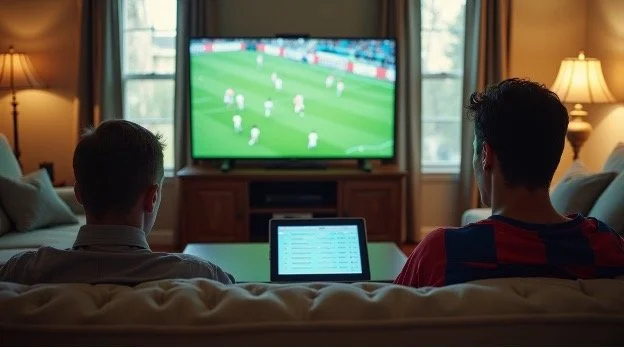
Photo by Hannah Brennan
What the New American Soccer Fan Actually Spends a Saturday On
It is worth pulling these threads together with a concrete picture. The table below sketches a typical Saturday for three composite American soccer fans in 2026, drawn from operator usage data, MLS supporter surveys and pub-floor observation.
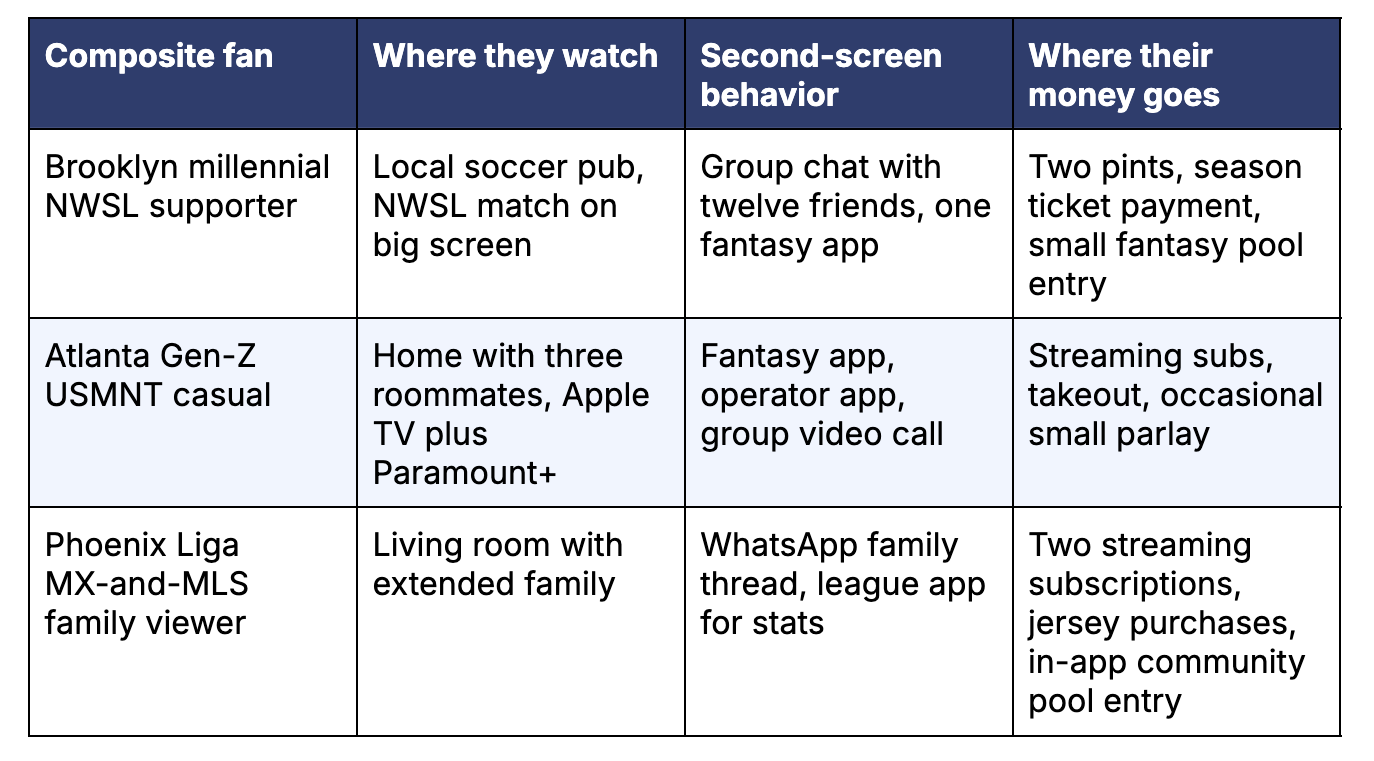
The point is not that every fan does all of these things. The point is that the surrounding ecosystem has matured to the level where each of these composite Saturdays is now visible to operators, leagues and pub owners, and each of those parties is designing for it rather than around it. The American soccer fan has gone from being a niche commercial puzzle to being one of the better-mapped audiences in the US sports economy.
What This Means for Soccer Culture in the Second Half of the Twenty-Twenties
It would be lazy to read the developments above as soccer fan culture being absorbed by a real-money entertainment industry. The reality is more interesting, and more reciprocal. The audience that defines American soccer in 2026 is the same audience that grew up paying for streaming, debating fantasy lineups in group chats, and assuming every game-day ritual would have a digital companion. That audience has carried its habits into the soccer pub, and the leagues, the operators and the platforms have responded by adapting the products to fit the fan rather than the other way around. The pub still books out two weeks ahead because supporters keep coming back, and the chants are louder in 2026 than they were in 2014, and the watch parties have become small, self-organising communities that pre-pay their tabs and book their tables months in advance. None of that is going away. What is changing is the texture of what fans do during the ninety minutes, and that texture has become, for better or worse, an increasingly diverse and increasingly digital one. The next eighteen months, with a home World Cup, an expanded MLS season and an NWSL on the verge of overtaking several mid-size European leagues in commercial value, will probably be remembered as the moment when American soccer culture stopped being an underdog story and started being a mature, self-confident sub-economy with its own rituals, its own currencies, and its own pubs.