Can Italy Miss the World Cup for a Third Consecutive Time?

The last time Italy played in a World Cup, they won it. That was 2006. They attended 2010 and 2014, accomplishing nothing of note in either, and then failed to show up to the next 2 altogether.

A 4-time world champion was reduced to watching from home while nations with a fraction of their football history competed. It happened in 2018. It happened again in 2022. And now, with the 2026 tournament approaching, Italy finds itself in the playoffs for a third straight qualifying cycle, staring at the same trapdoor that swallowed them twice before. The situation is familiar in a way that should unsettle anyone wearing an Azzurri shirt.

How Italy Ended Up Here Again

Italy finished second in Group I of UEFA’s qualifying round, behind Norway. They collected 18 points across the group, winning 6 matches but losing twice to Norway. That second-place finish meant they could not book a direct ticket to the 2026 World Cup in the United States, Canada, and Mexico. Instead, they were funneled into the playoff bracket, a place that has brought them nothing but misery in recent years.

In 2017, Sweden knocked Italy out over 2 legs in the playoff round, and the Azzurri missed the 2018 World Cup in Russia. It was the first time since 1958 that Italy had failed to qualify. Then, in March 2022, North Macedonia beat them 1-0 in the playoff semi-finals. A single goal from a country with a population smaller than Rome kept the reigning European champions out of Qatar. The defeats were different in character but identical in outcome.

The Playoff Draw and What It Means

Italy will host Northern Ireland on March 26 in a single-legged semi-final at Bergamo. There is no return leg, no aggregate scoreline to fall back on. One match, one result. If Italy wins, they travel away to face the winner of Wales versus Bosnia and Herzegovina on March 31 in the playoff final.

The single-leg format is worth paying attention to. It compresses the margin for error into 90 minutes. North Macedonia proved in 2022 that anything can happen in that kind of setup. Italy was at home that night too, and it did not save them.

Gattuso’s Preparations and Squad Building

Gennaro Gattuso took over the national team with this playoff as his first real test. Reports indicate he has been traveling to meet with key players ahead of the March window. He and Gianluigi Buffon, now serving in a team ambassador or advisory role, reportedly sat down with Marco Verratti to discuss a potential return to the squad.

Gattuso has also visited Gianluigi Donnarumma and Sandro Tonali in England, as well as Mateo Retegui in Saudi Arabia.

These meetings suggest that Gattuso is treating the playoffs with the urgency they deserve. The squad he selects will tell us a lot about his priorities, specifically how much he values veteran presence against Northern Ireland versus younger legs who might carry the team through both rounds if they advance.

Where the Betting Lines Sit for Italy’s Playoff Path

Sportsbooks have priced Italy as heavy favorites to beat Northern Ireland, with ESPN listing them at -320 on the moneyline. DraftKings and BetMGM both offer outright World Cup odds of +3000 and +3300 on Italy to win the tournament, placing them well behind favorites like France, Argentina, and England. Those numbers tell you bookmakers expect Italy to qualify, but see them as long shots beyond that.

Playoff Path A odds sit at 1.53 for Italy to advance through both rounds. Wales and Bosnia and Herzegovina remain as possible final opponents if Italy gets past Bergamo.

What Happens If They Get Through

Should Italy qualify, they land in Group B at the 2026 World Cup alongside Canada, Qatar, and Switzerland. On paper, that group looks manageable for a team of Italy’s pedigree, though pedigree has proven to be an unreliable predictor in their case lately.

The +3000 and +3300 odds to win the tournament outright show where the market thinks Italy sits among the contenders. They are not considered serious threats to win the whole thing. Getting there would be the first real achievement for this generation.

Why Northern Ireland Should Not Be Underestimated

Northern Ireland earned their playoff spot through the Nations League after finishing third in Group A behind Germany and Slovakia. Their squad is made up almost entirely of lower-division English league players, with Conor Bradley at Liverpool being the notable exception. On paper, they have no business being in this conversation. But Michael O’Neill has called this group young and fearless, and that description should sound familiar.

The history between these two teams adds an uncomfortable footnote. Northern Ireland beat Italy 2-1 in Belfast in January 1958 and knocked them out of that year’s World Cup. Their most recent meeting was a 0-0 draw in Belfast in November 2021, a result that helped push Italy into the very playoff round where North Macedonia eliminated them.

Northern Ireland has not qualified for a World Cup since 1986, and they have nothing to lose. Italy, on the other hand, has everything to lose, and recent history says that imbalance tends to work against it.

The Real Question

Can Italy miss the World Cup for a third straight time? Yes. The probability is low according to betting markets, but the probability was low the last 2 times as well. Italy were the favorites against Sweden in 2017. They were heavy favorites against North Macedonia in 2022. Favorites lose in football. It happens with enough regularity that the word “favorite” comes with an asterisk in knockout rounds.

Northern Ireland is a significant underdog at +900. They are not expected to win. But expectation and outcome have parted ways for Italy before, and the Azzurri know better than anyone that qualification is earned on the pitch, not on a betting slip. March 26 in Bergamo will answer the question one way or the other.
America's 100 Greatest Goalkeepers (81-90)

These goalkeepers are part of a bigger project, which you can find here. Pictures of the goalkeepers were posted when available. Newspaper clippings’ date and newspaper are found in the file name. Click on the photo galleries to enlarge the picture to read more about the goalkeeper.

81. Tom Presthus

The drive from Minnesota to Texas isn’t a short one but it was one Tom Presthus made to kickstart his collegiate career at Southern Methodist University. Hailing from Edina, Minnesota, Presthus quickly established himself as a standout goalkeeper with the Mustangs. In Presthus’ junior year, SMU received a two-seed entering the national tournament before losing out to eventual winners, Wisconsin, in the Elite Eight. But heading into the 1997 MLS draft, Presthus had put himself on national radars and was selected by DC United with the 20th pick.

The Minnesotan quickly gathered his footing in DC, starting seven games his rookie season and becoming the hero of the penalty shootout against New England in the quarterfinal playoff matchup. The following season, head coach Bruce Arena made a late-season switch to put Tom Presthus in goal over Scott Garlick, and the call paid off with the young goalkeeper leading the team to the final. Although the final was a 2-0 loss to the Chicago Fire, refs would later admit they missed a crucial offside call on one of the goals, casting a large “what if” over the final score.

Looking to avenge a sour final, Presthus and DC United came back strong in 1999. Riding high, Presthus notched his lone cap with the national team in February before starting a dominant run in MLS play that year, winning the Supporters’ Shield and capturing a 2-0 win over the Galaxy in the MLS Cup final.

Unfortunately, the good times did not last long in DC as the team failed to make the playoffs the following year and the franchise immediately entered a rebuild mode. Presthus was traded to Columbus before the 2001 season, where Presthus would face a young upstart goalkeeper named Jon Busch. In 2002, Presthus lost the starting spot to Busch and “rather than sulking, Presthus supported and mentored Busch, who backstopped Columbus to the 2002 Lamar Hunt U.S. Open Cup championship that year.” After the 2003 season, Presthus would retire due to a lingering elbow injury.

From 1998 to 2001, Presthus played in two MLS Cup finals, was capped by the national team, won two MLS Supporters’ Shields, was named an MLS All-Star, and was a finalist for MLS’s Goalkeeper of the Year award twice. Unfortunately, stacking injuries and limited professional opportunities forced the 28-year-old’s hand to call it quits heading into the 2004 season. For newer MLS fans, Tom Presthus’ career is often overlooked but the SMU alum is a great example of a goalkeeper who was a top goalkeeping prospect before injuries derailed his momentum, denying fans a chance to see Presthus’ true ceiling.


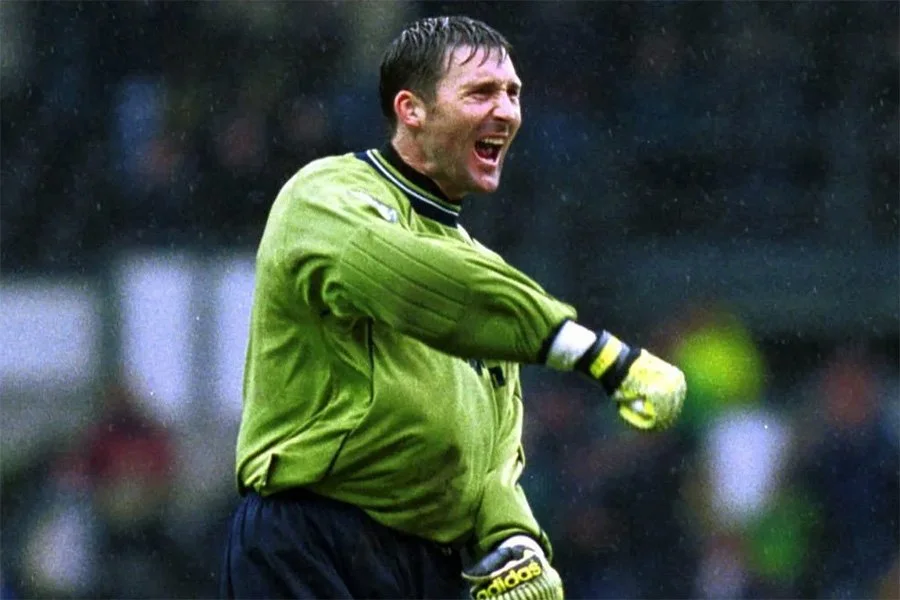
82. Ian Feuer

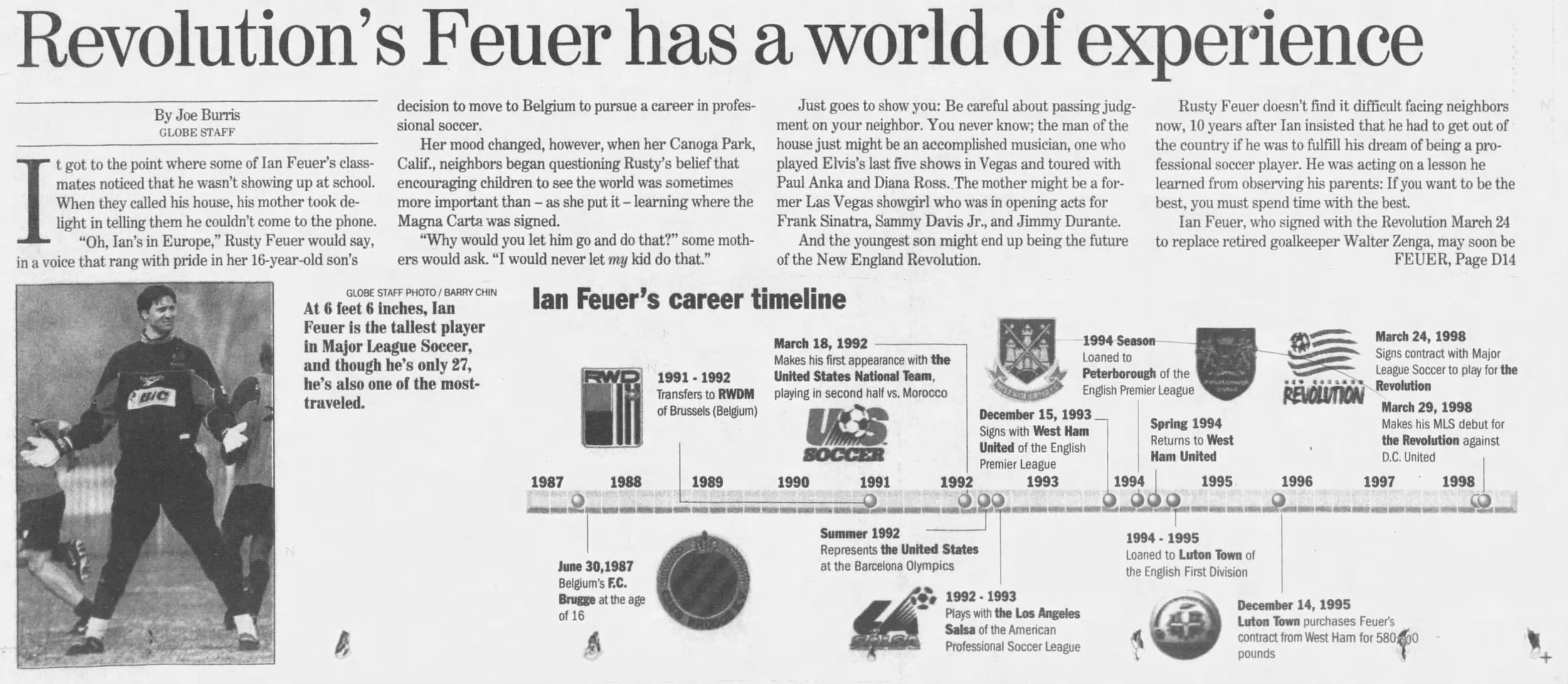
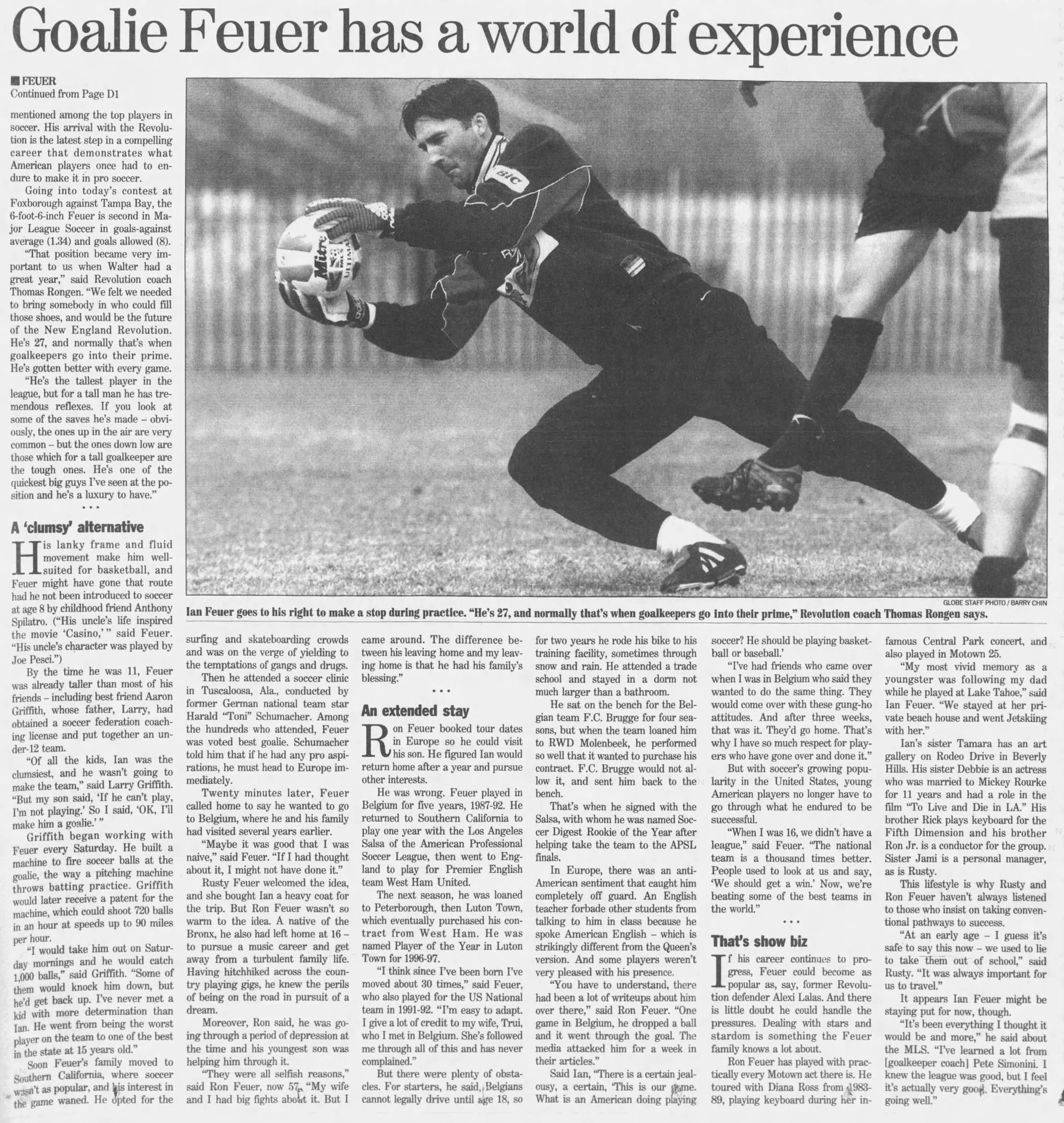
Before skipping college to go play in Europe wasn’t much of a conversation in 1988 but Feuer did just that. Standing at an imposing 6'7", Feuer left the States at 16 to join Club Brugge. While Feuer was a reserve in the Belgian league, the Las Vegas native was called up to the 1992 Olympic team as a backup to Brad Friedel and earned a cap with the senior national team in the same year. As limited opportunities stunted his time overseas, Feuer returned to the US in 1993 to earn Rookie of the Year honors for the Los Angeles Salsa in MLS precursor, the APSL.

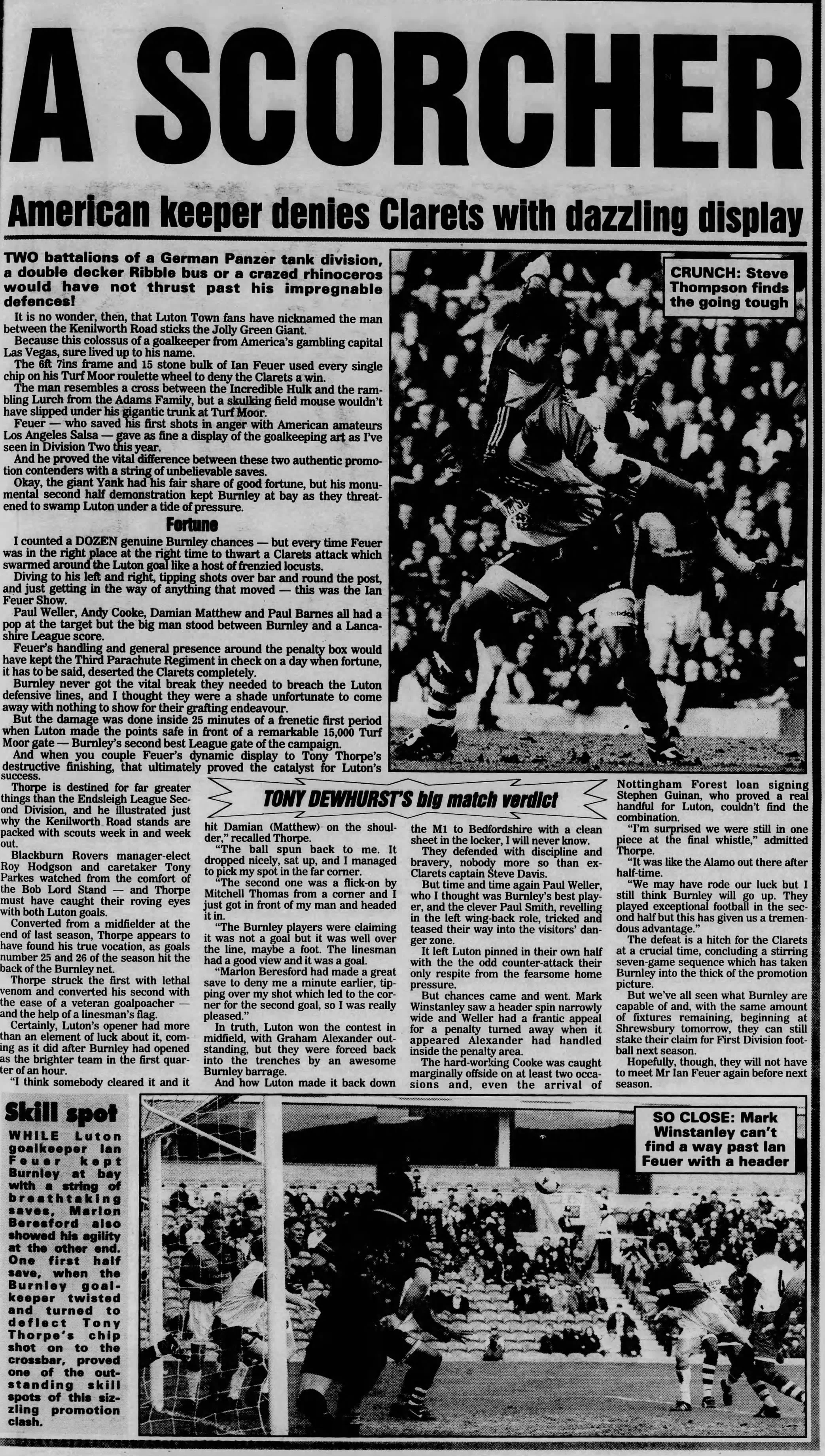
Feuer used this success to bounce back across the pond, this time with West Ham United and then a loan-turned-permanent move to Luton Town, following Juergen Sommer’s time with the club. After years of finally grinding in the trenches, Feuer was given the reins at Luton Town in 1995, a second-tier English club, only to have a front row seat to the Hatters relegation in 1996. In spite of Luton Town’s offensive woes (scoring less than one goal a game on average), Feuer was hailed as the player of the season and retained his starting spot for the 1996-97 season, where the team would narrowly miss promotion, finishing third in the table.

Feuer’s 90-game starting streak with Luton Town was broken in the 1997-98 season when inconsistent play and a muscle tear in his shoulder ultimately led to his return to the US. However, Feuer’s persistent efforts to make it in England would be rewarded with his first start in the English Premier League coming with West Ham in April of 2000, before retiring in 2002.

Feuer isn’t just remembered for his imposing height, which granted the ability to display jaw-dropping saves, but his continued efforts helped garner confidence in English managers and owners to bring in more American goalkeepers after Feuer proved Americans could handle England’s physical and unforgiving game.


83. Don Malinowski

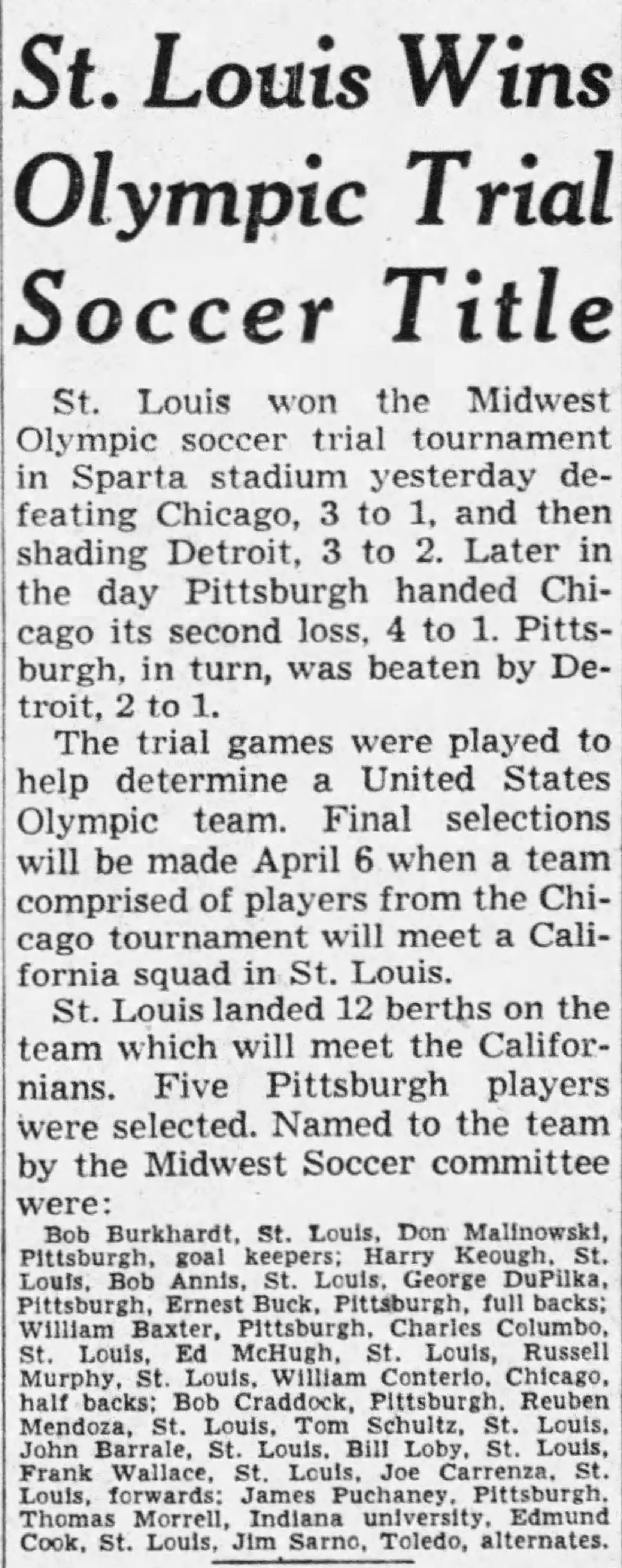
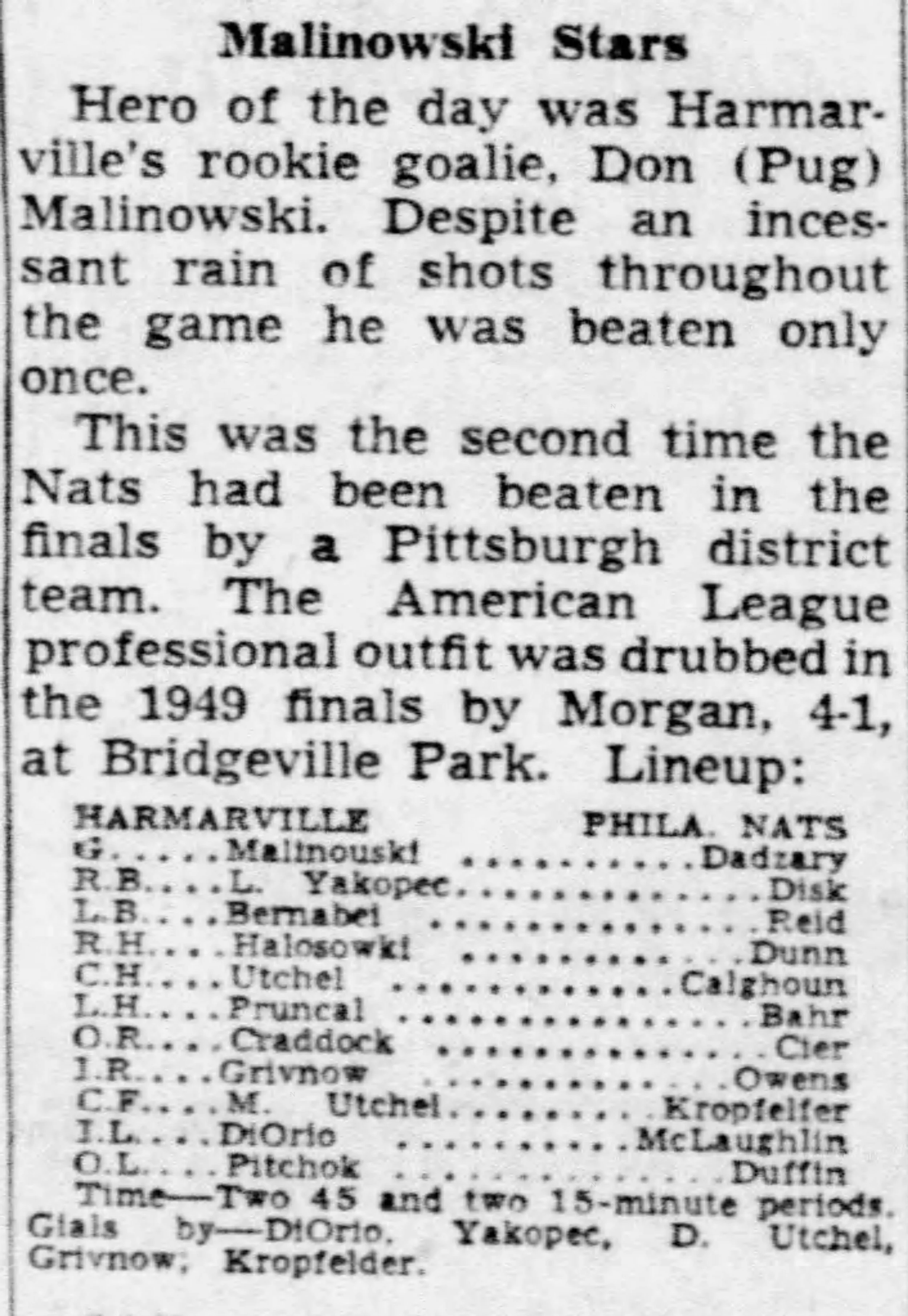
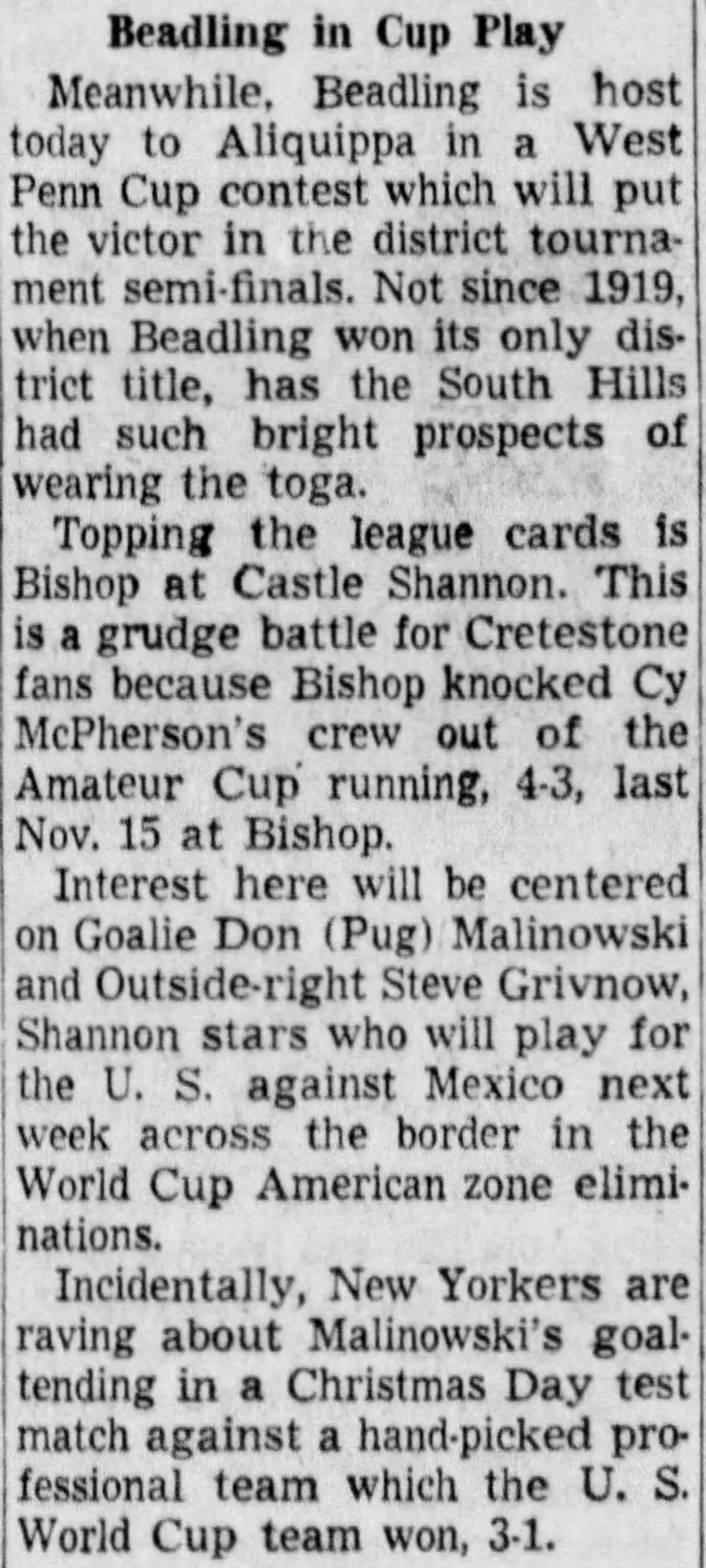
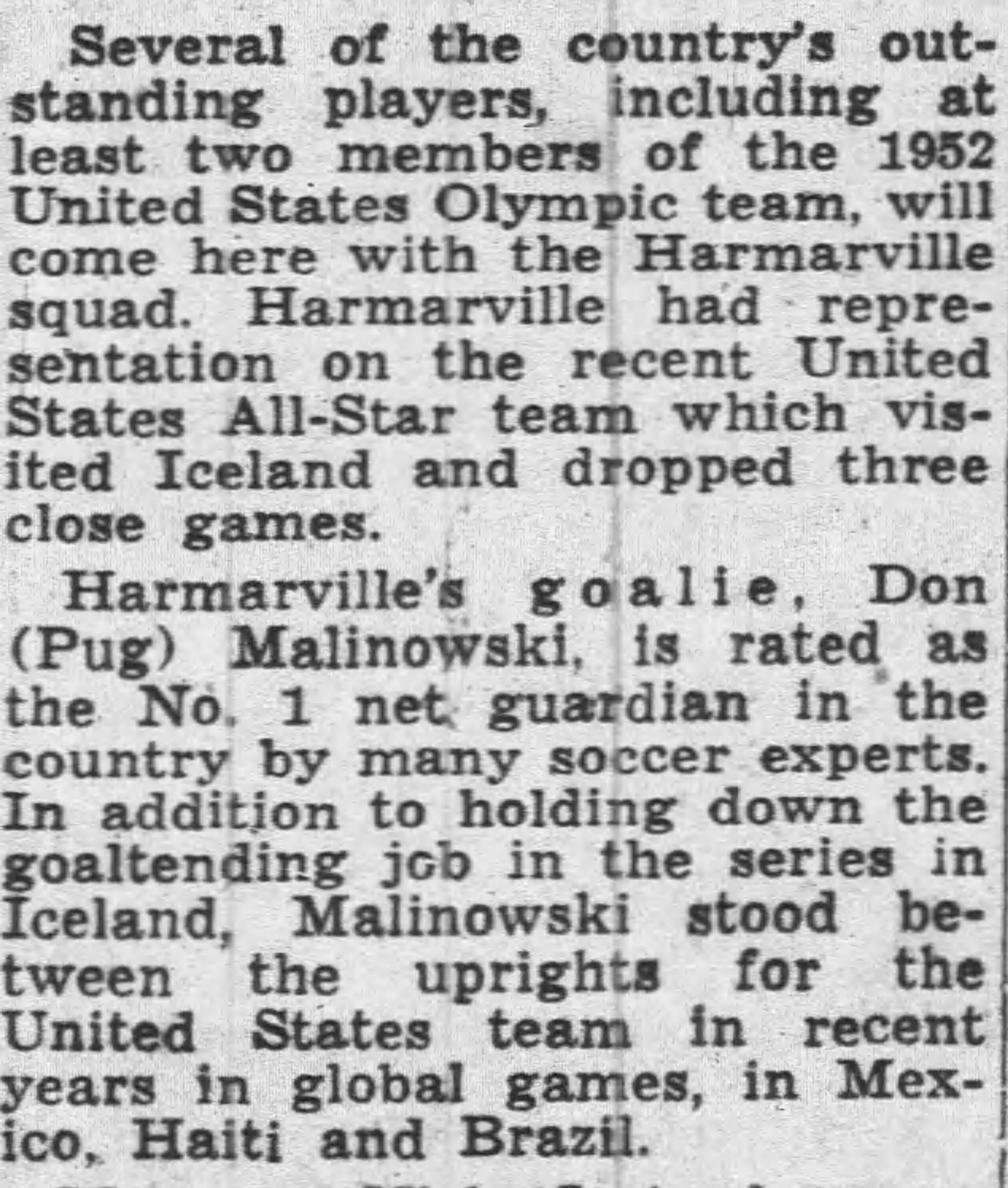
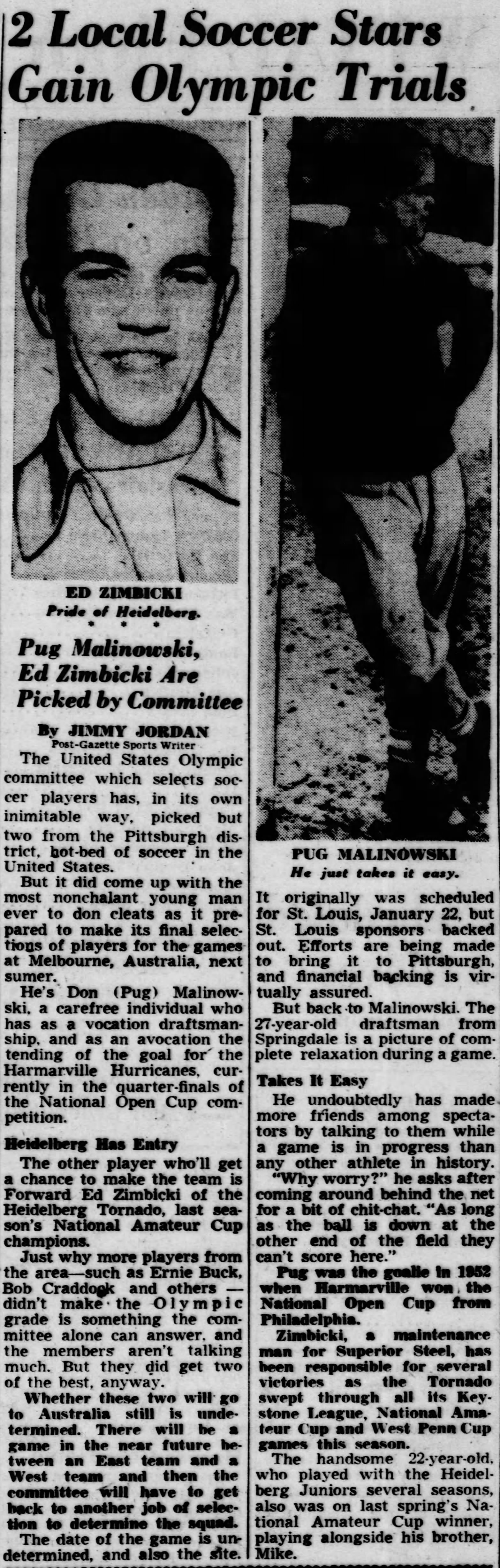
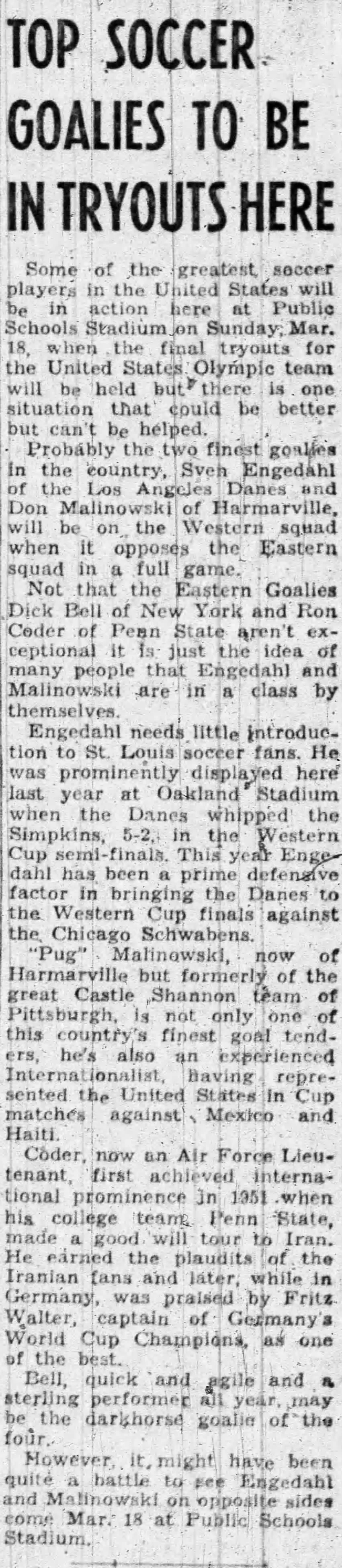
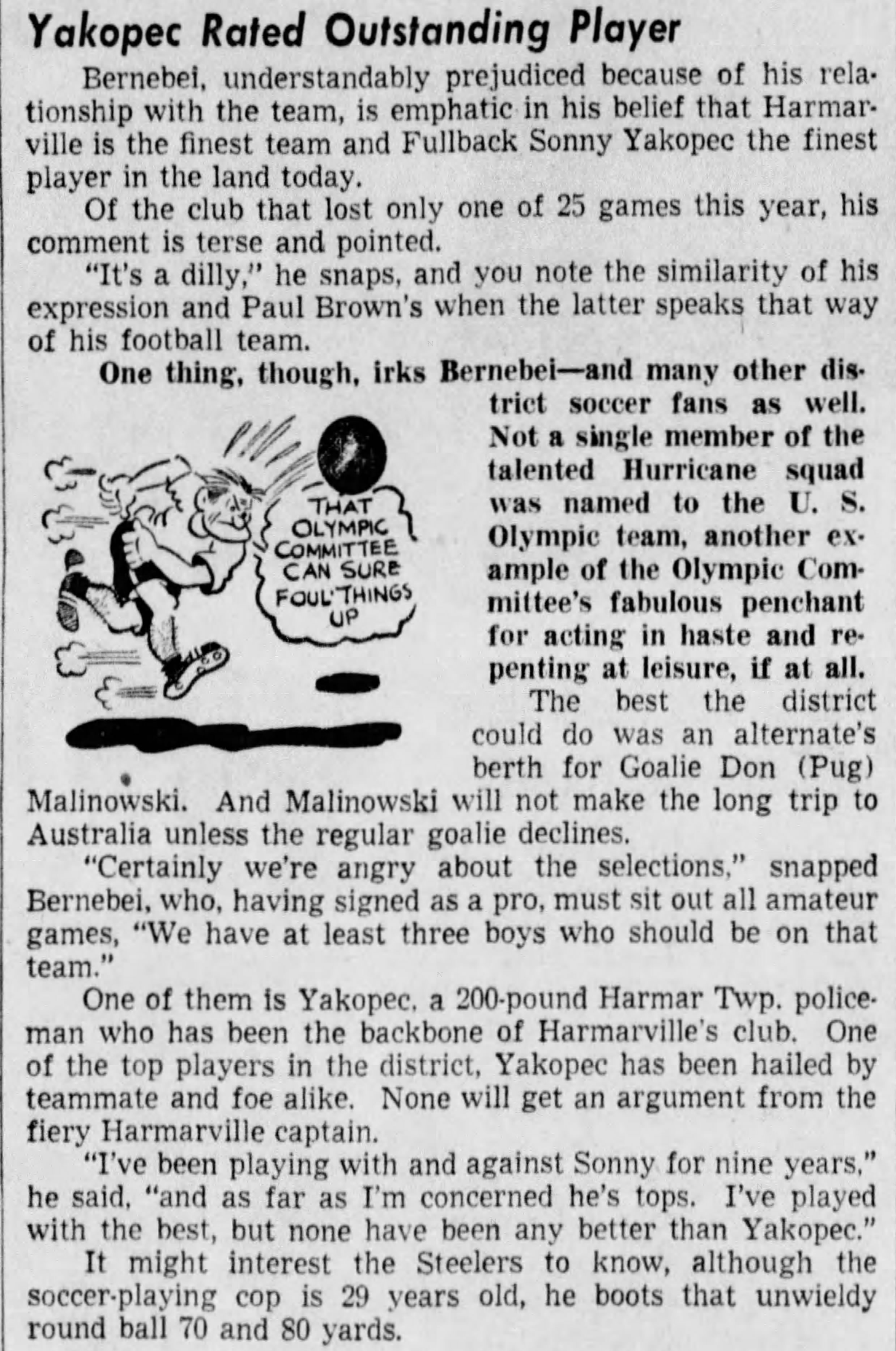
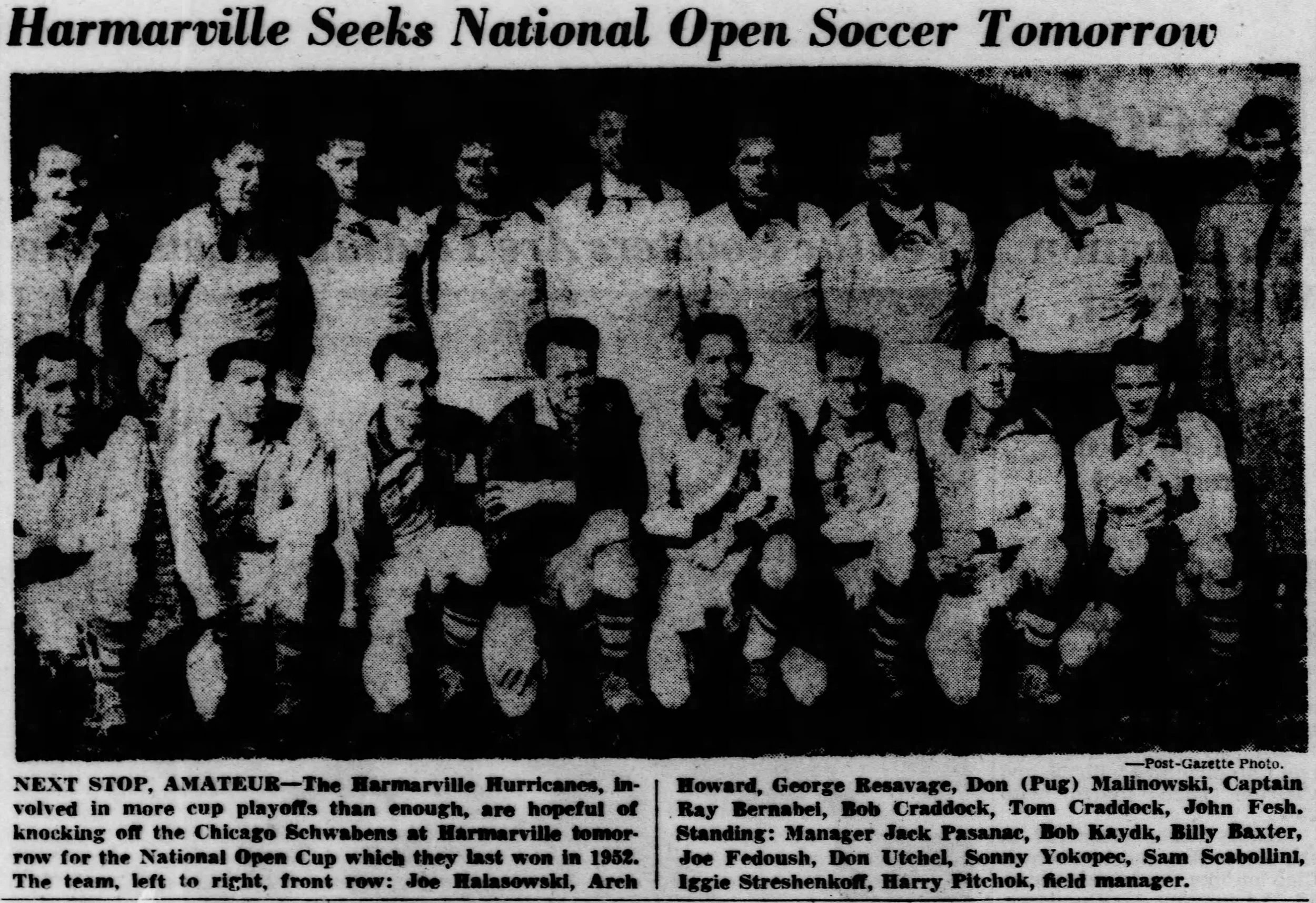
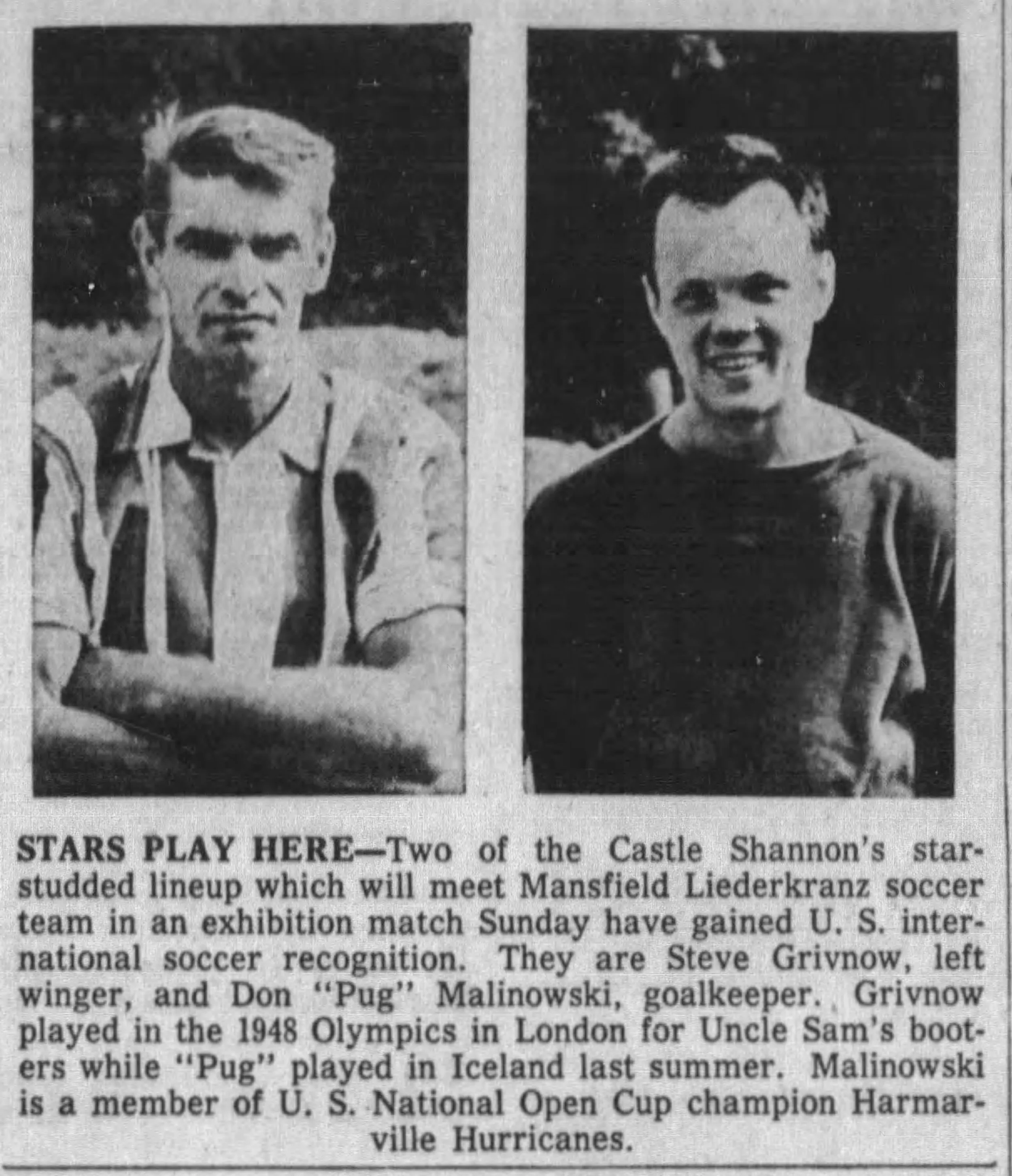
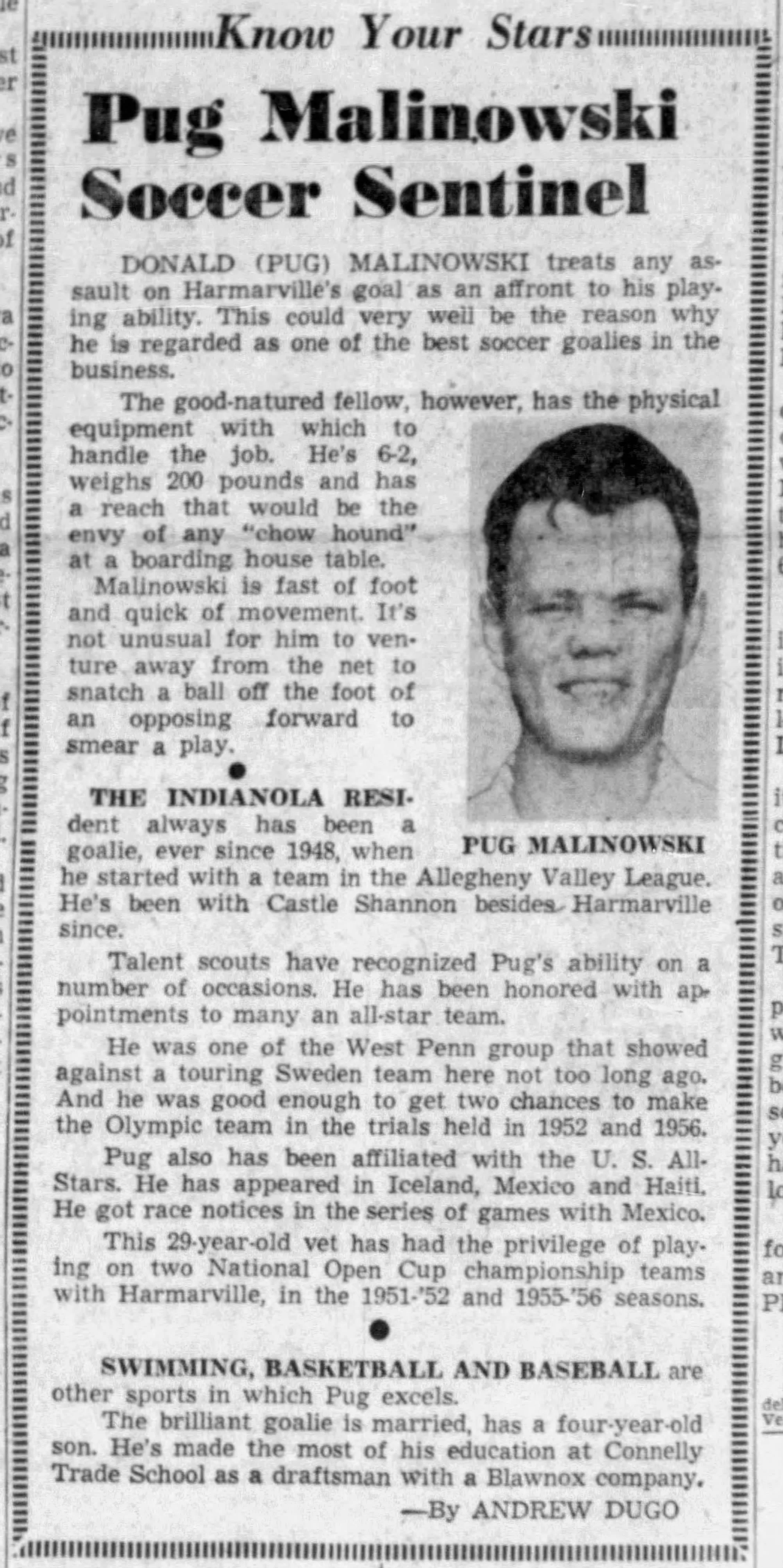
Off the heels of a strong showing at the 1950 World Cup, the federation did very little to capitalize on the national team's success. Just two years later, the US would suffer an embarrassing 8-0 loss at the 1952 Olympics against Italy, which would be a sign of more to come. The national team wouldn’t crack the world’s top fifty until the mid 1980’s, leaving goalkeepers like Don “Pug” Malinowski left with little to build off of. Although Don “Pug” Malinowski was named a backup to the 1952 Olympic squad, it was stateside where he shined brightest. Malinowski and the Harmville Hurricanes won the National Challenge Cup in 1952 and 1956, as Malinowski would also take the Hurricanes to the semifinals in ‘53 and ‘57, with a brief effort with Castle Shannon reaching the 1954 semifinal as well. With his team’s success giving him a foundation to showcase his own skills, Malinowski was routinely referred to as one of, if not the best, goalkeeper in the country throughout the 50’s.

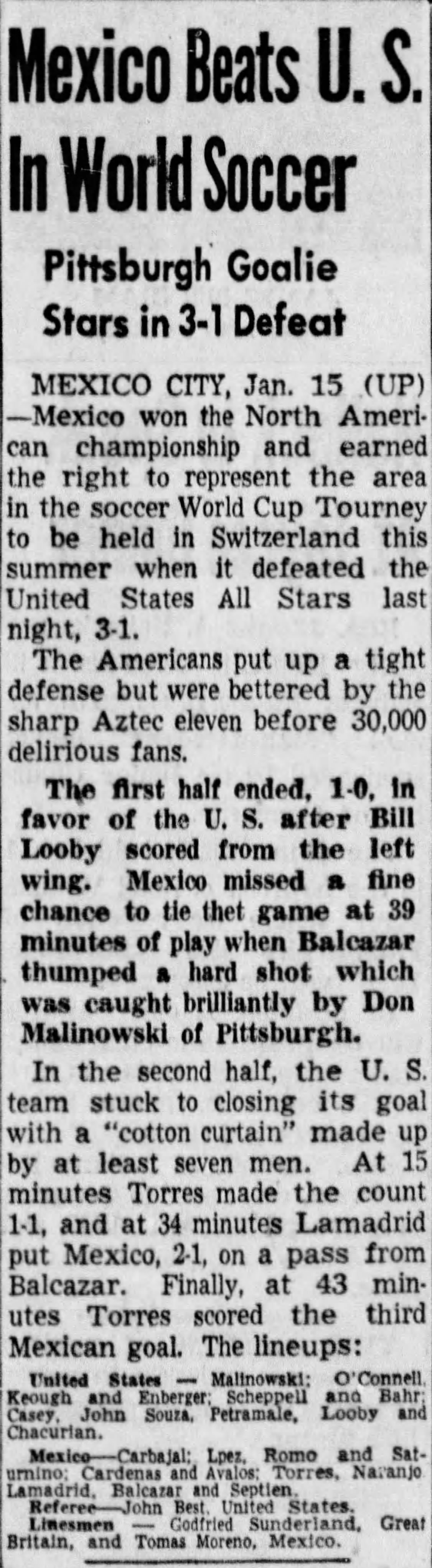
In January of 1954, Malinowski joined the national team for their World Cup qualifying, while the US federation had seemingly self-sabotaged their World Cup chances. The federation agreed to play the home-and-home matches exclusively in Mexico, complained about FIFA’s new rules for only allowing fully fledged citizens on the field, scheduled the senior team to arrive just one day before their first match against Mexico, and only organized two international matches in the 3.5 years since the 1950 win over England.

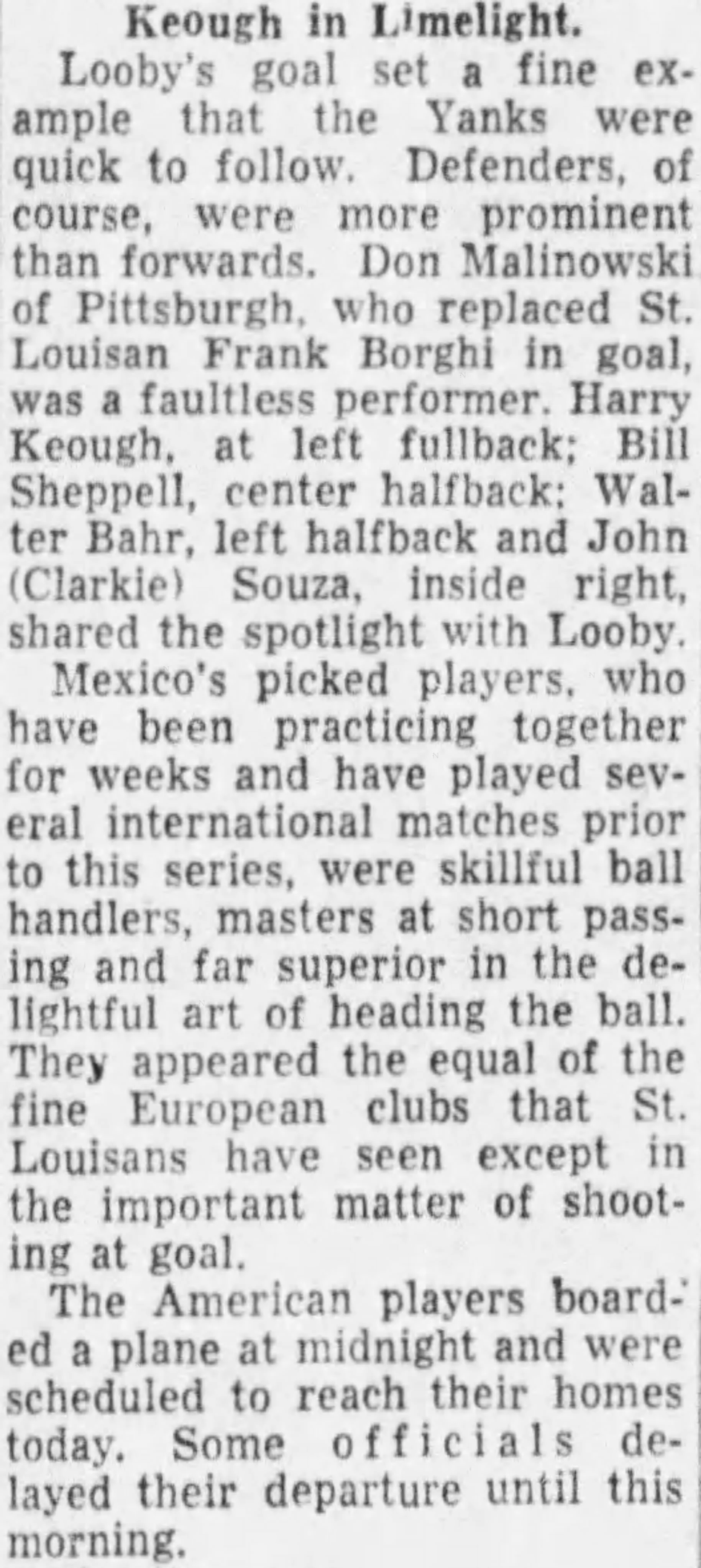
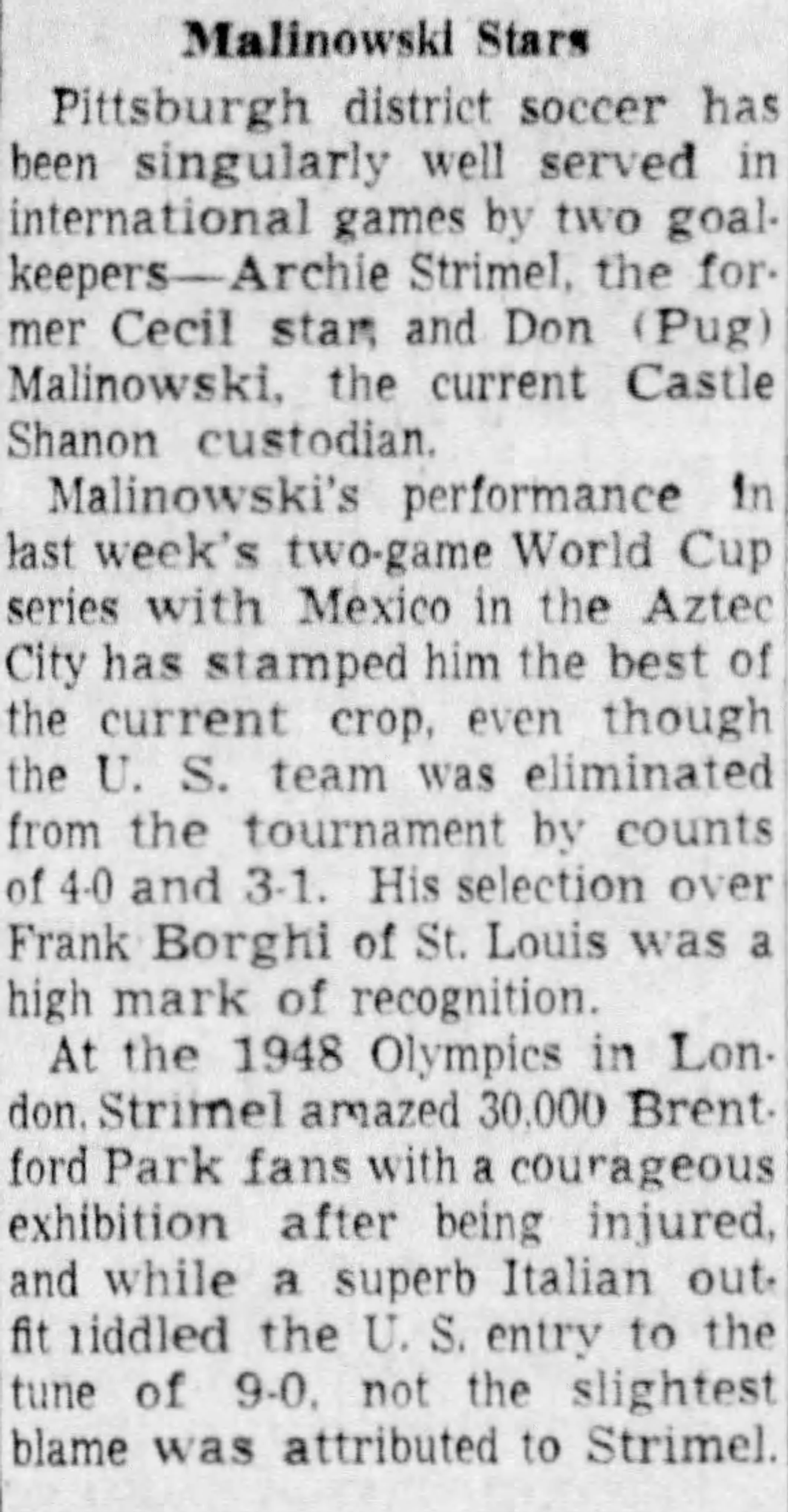
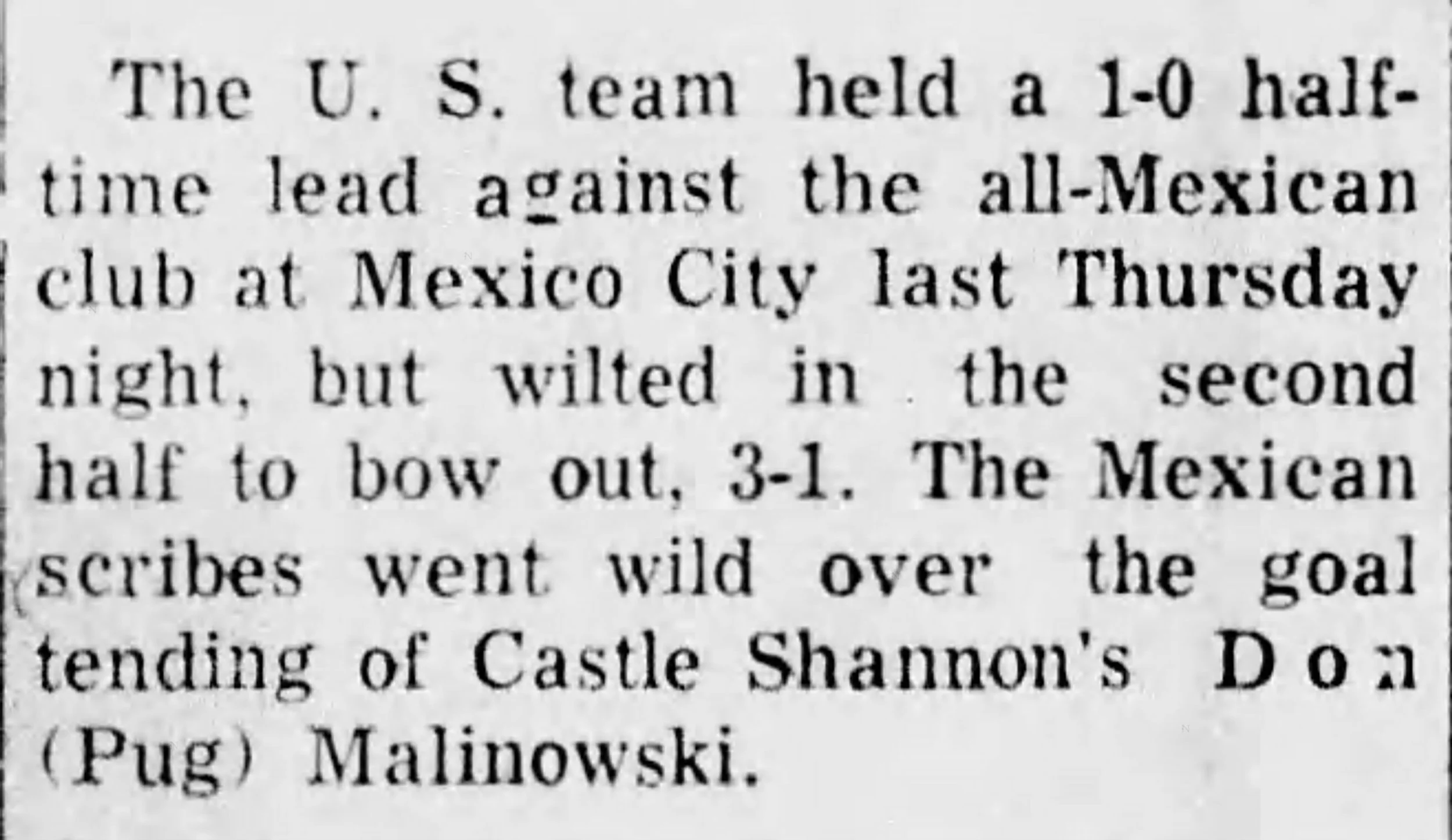
With the USSFA’s secretary JJ Barriskill openly announcing "We seem to have little chance [against Mexico]", the US unsurprisingly dropped the first match against Mexico, 4-0 and effectively were knocked from World Cup contention in just the one game. For the second game, Malinowski started over Frank Borghi and earned much praise for his efforts in the 3-1 loss as the US held a lead going into halftime.

After a 1955 friendly against Iceland, Malinowski was relegated to the alternate goalkeeper for the 1956 Olympic team, which was met with outrage in various outlets, and his time with the national team ended there. Malinowski kept his amateur status his entire career, trying out for the Olympic team one more time in 1960, and was a real hometown hero. Reportedly known for making friends with fans during the game, he was characterized as a good-natured, fun-loving goalkeeper who would do whatever it took to keep the ball out of the net.


84. Walter Romanowicz

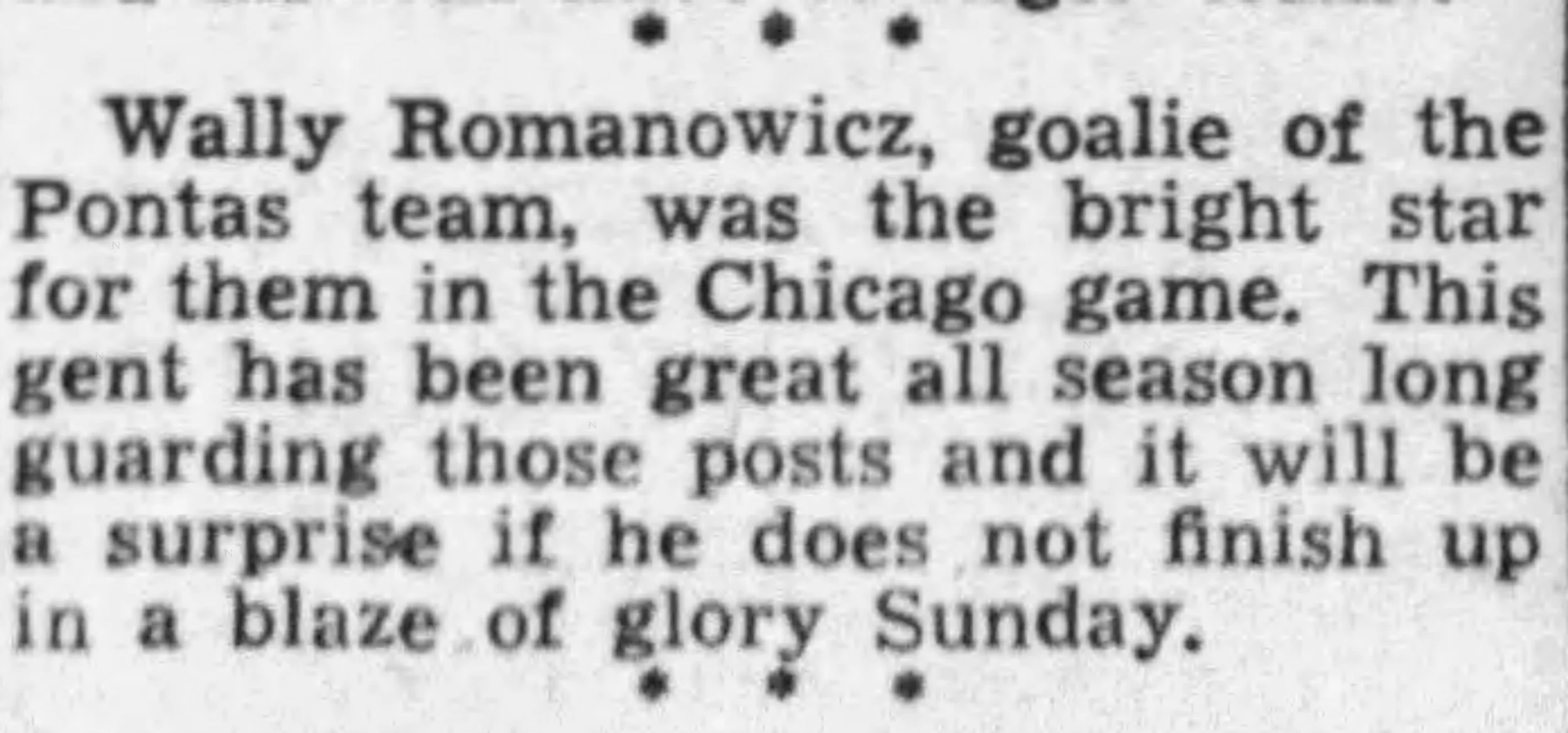
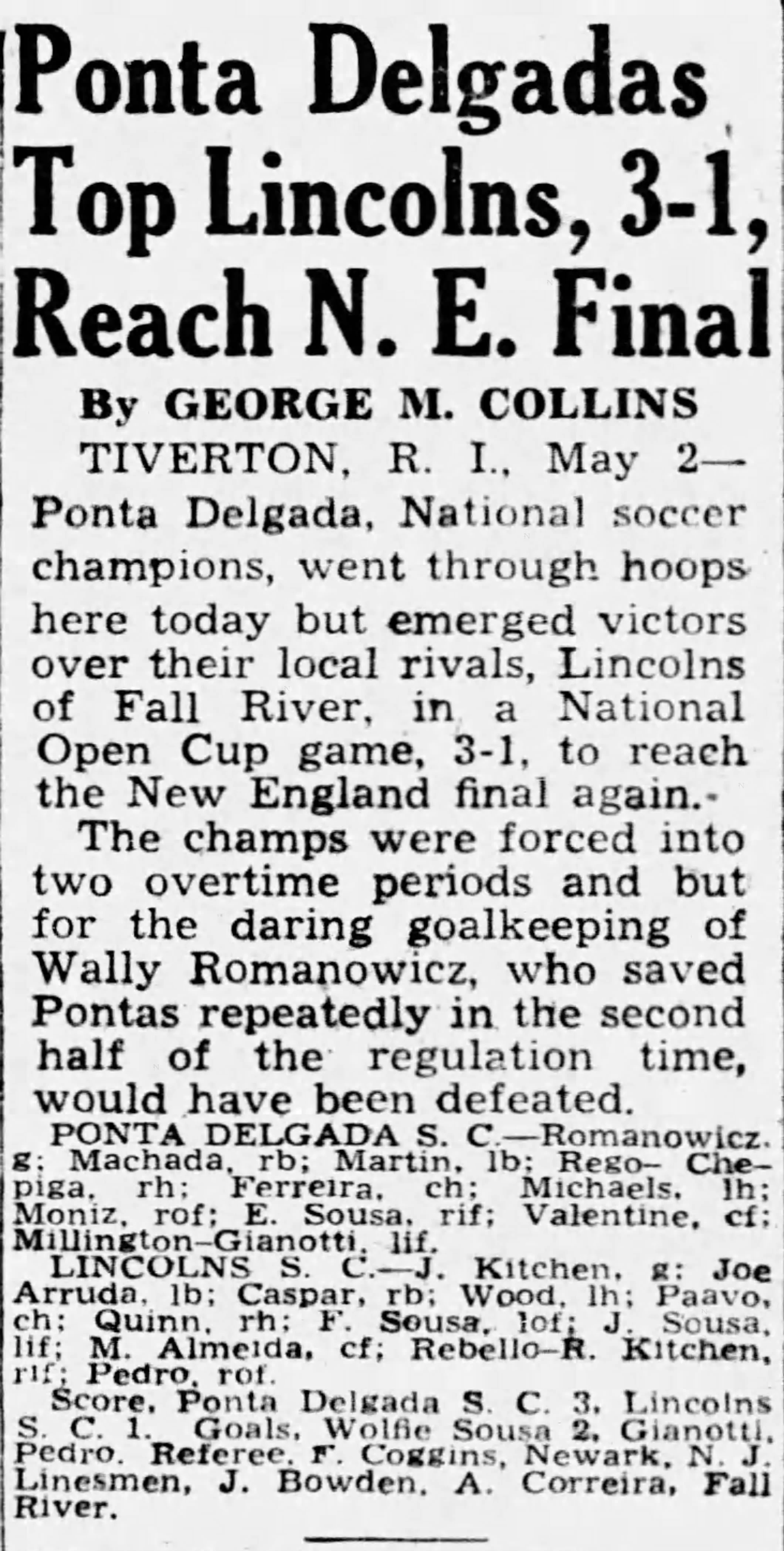
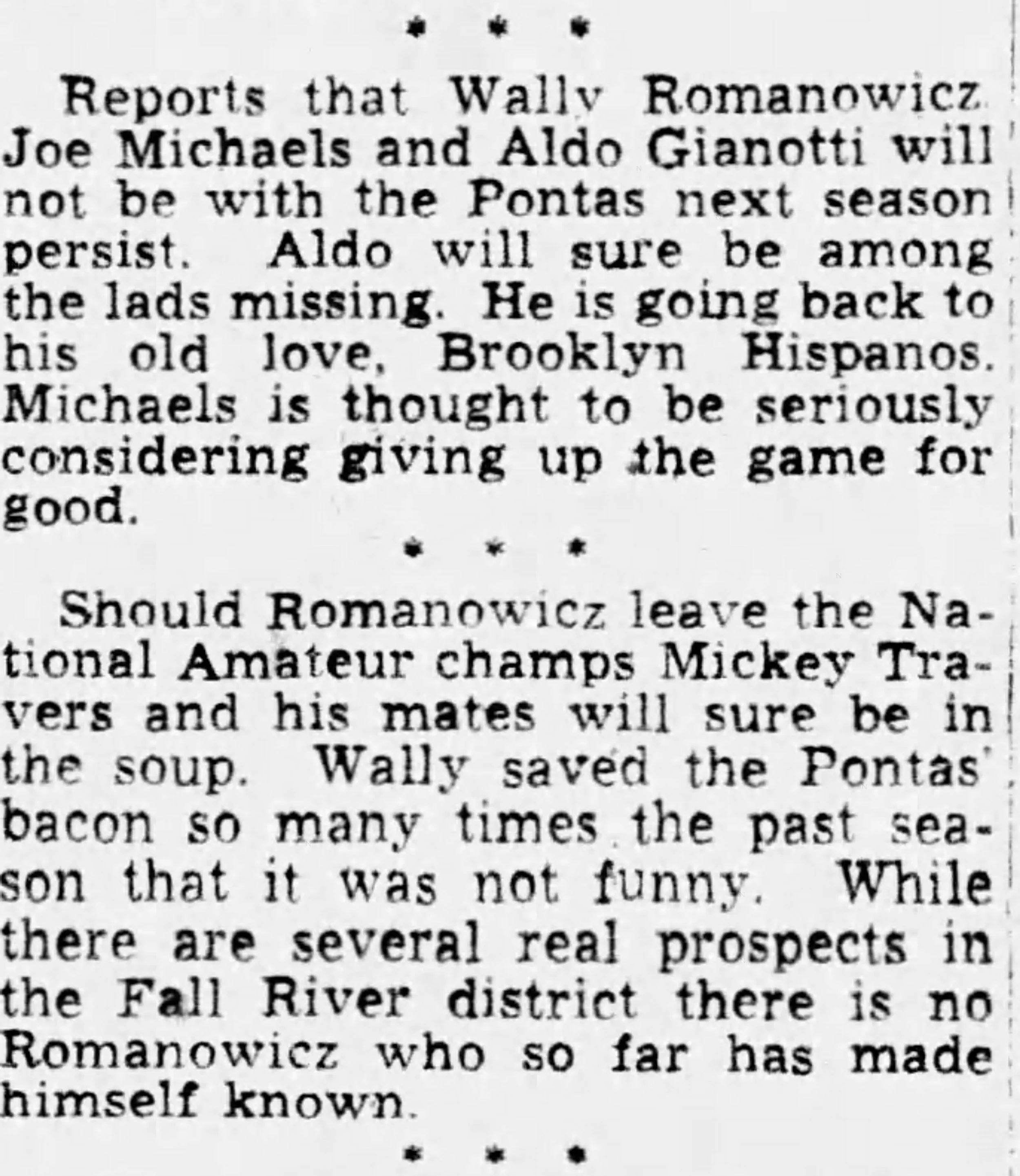
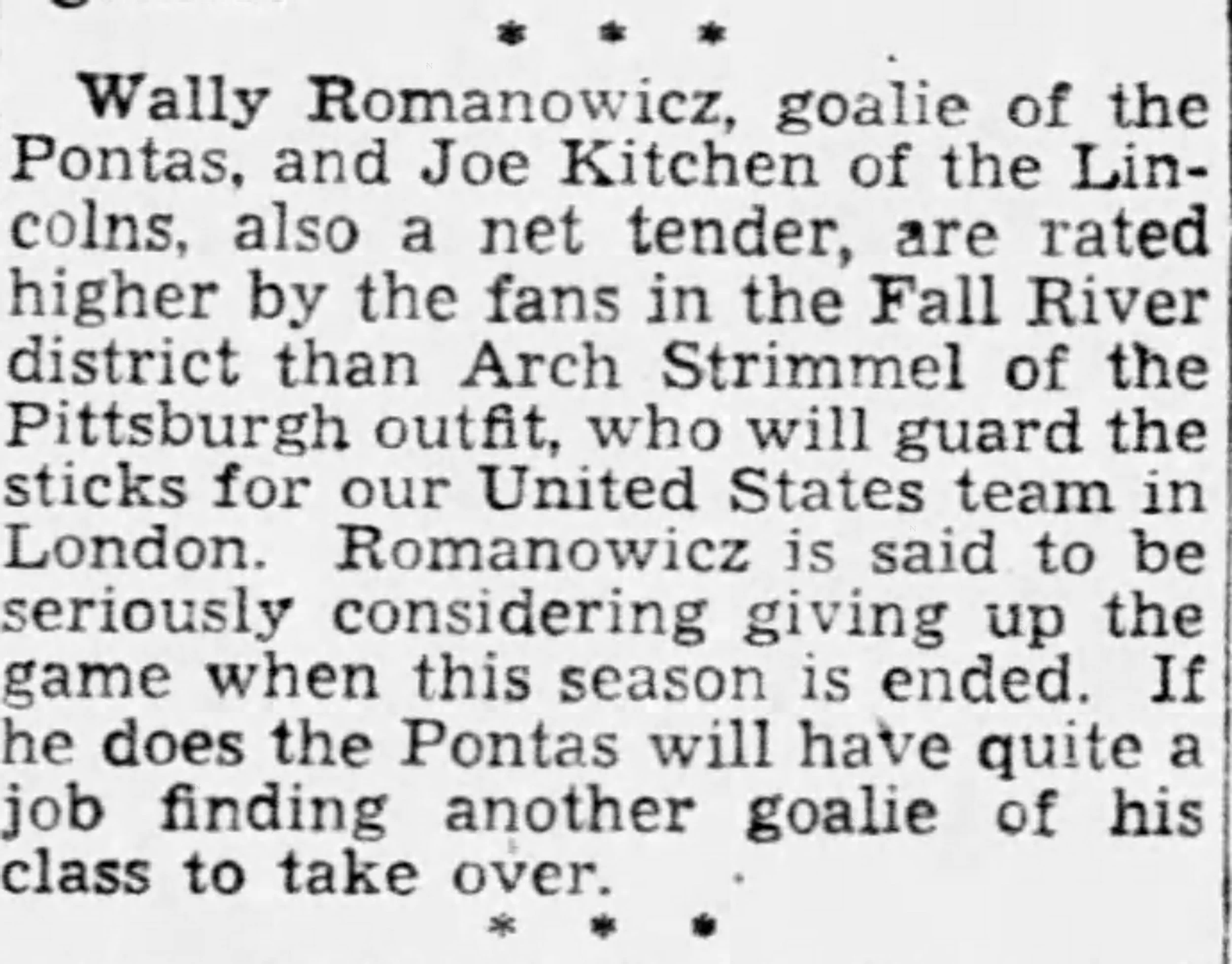
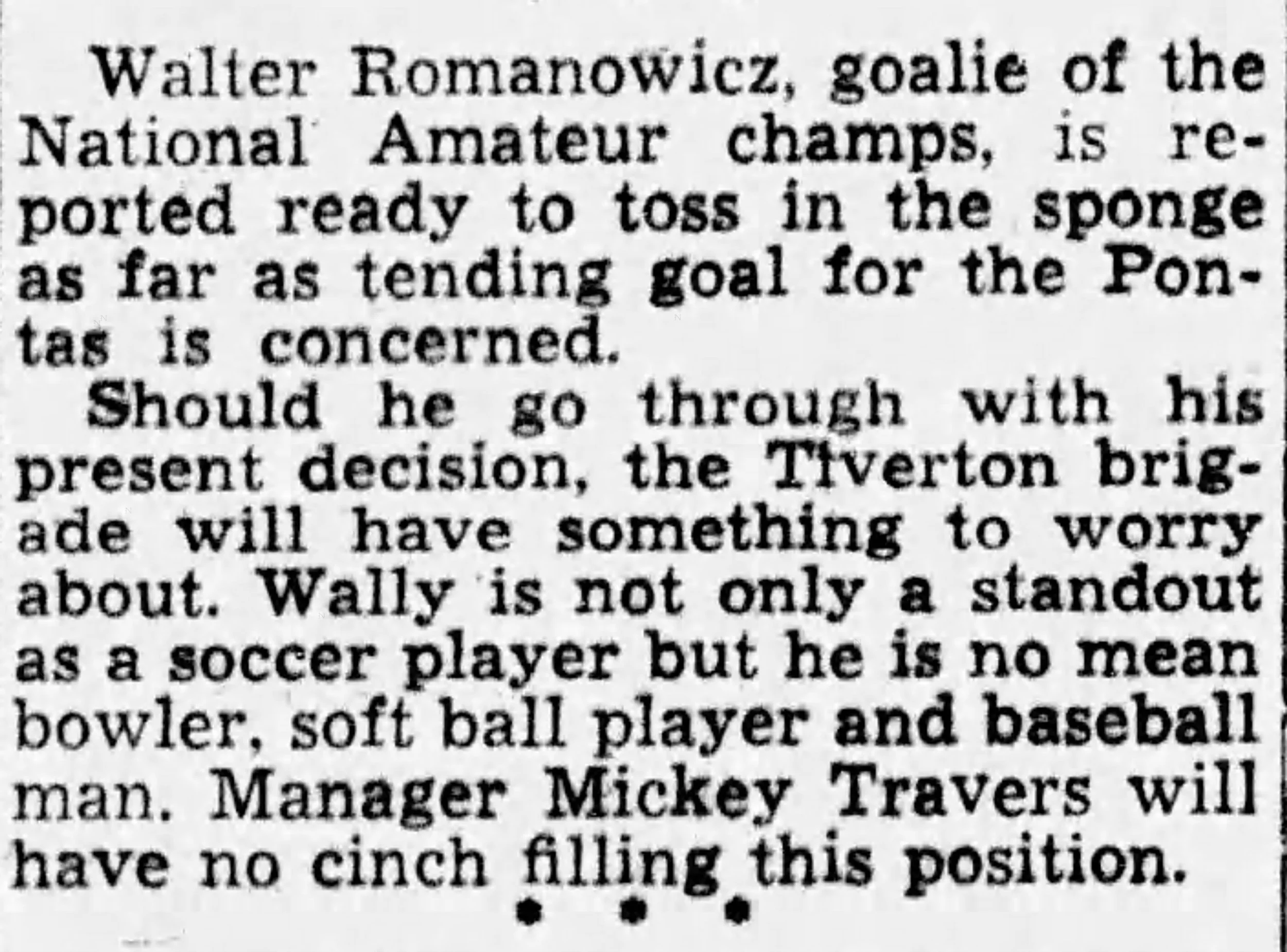
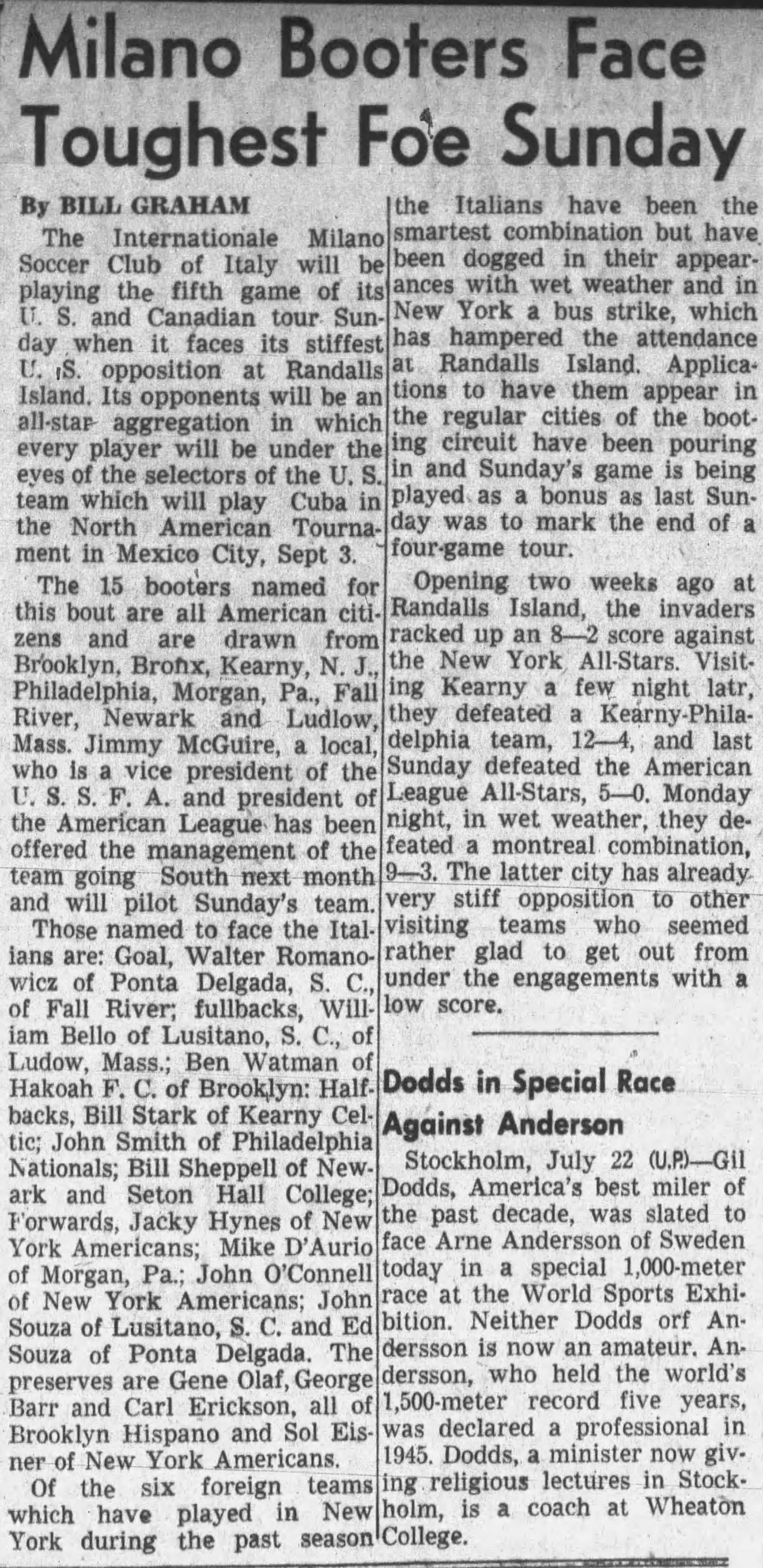
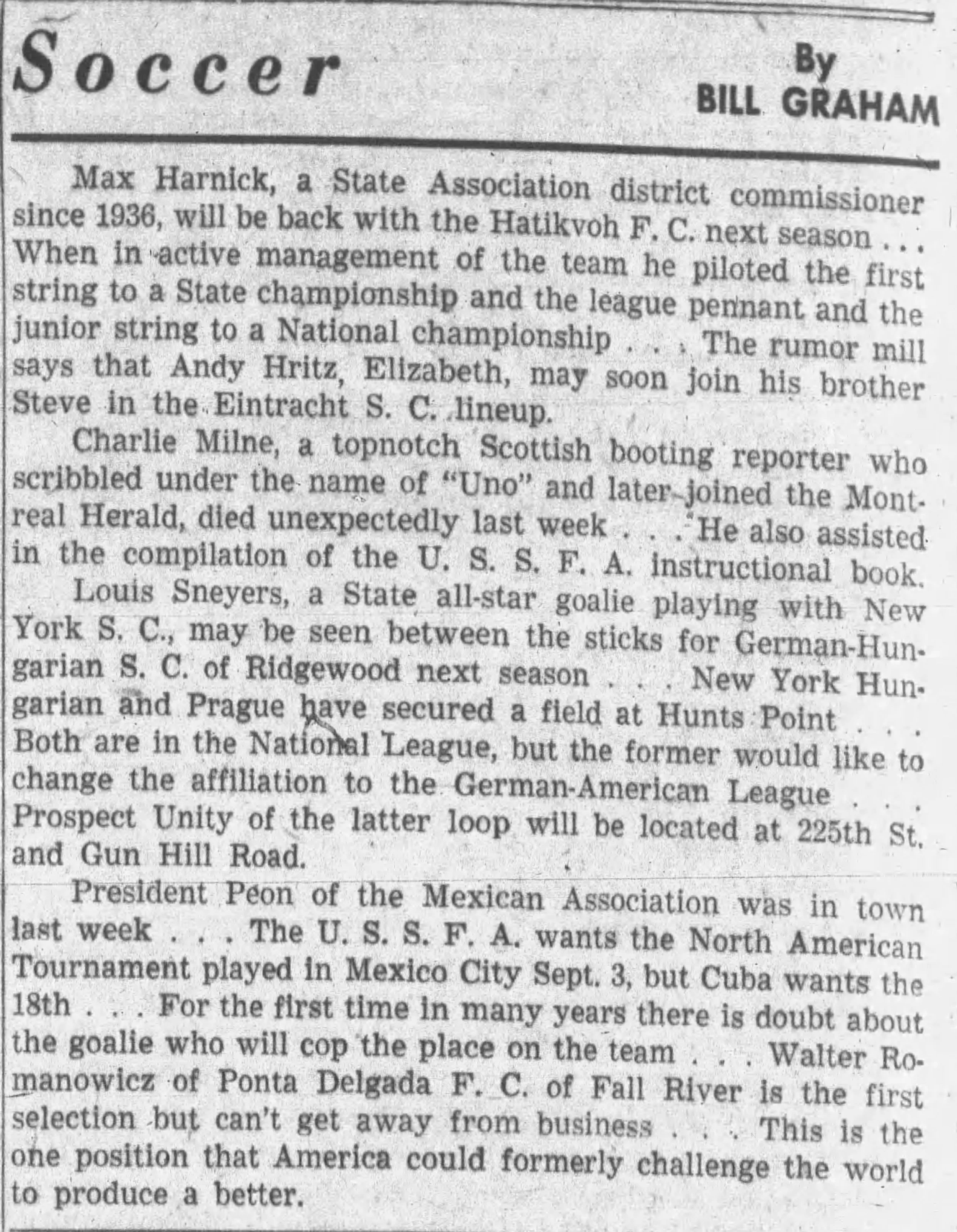
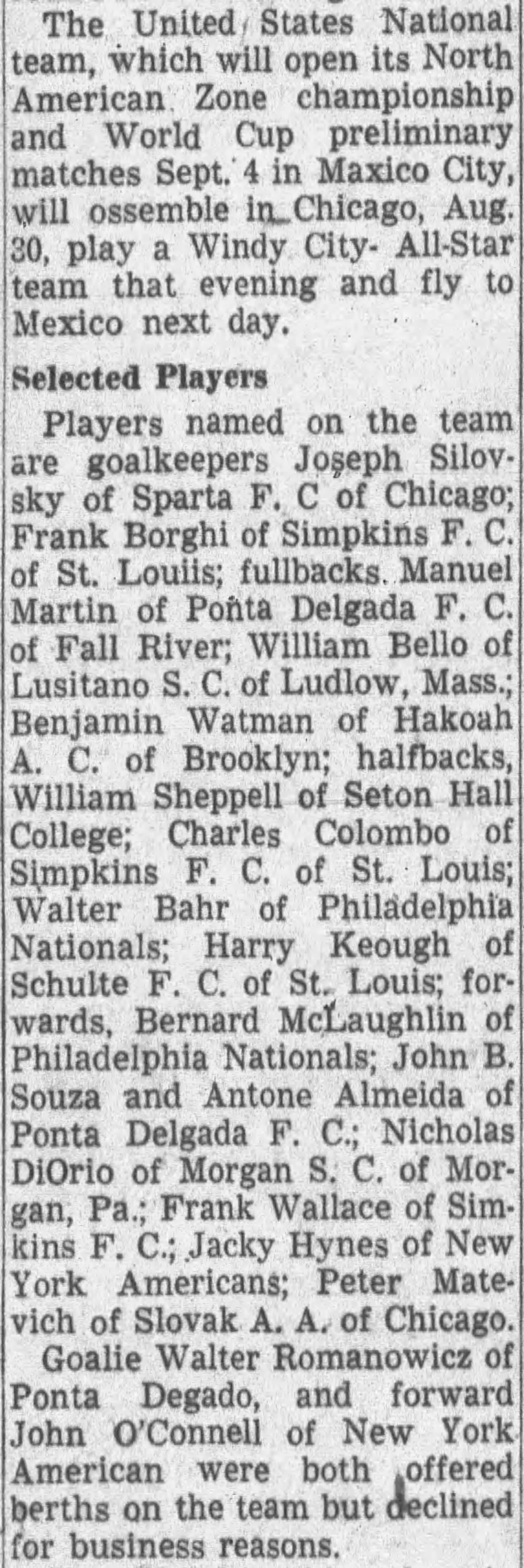
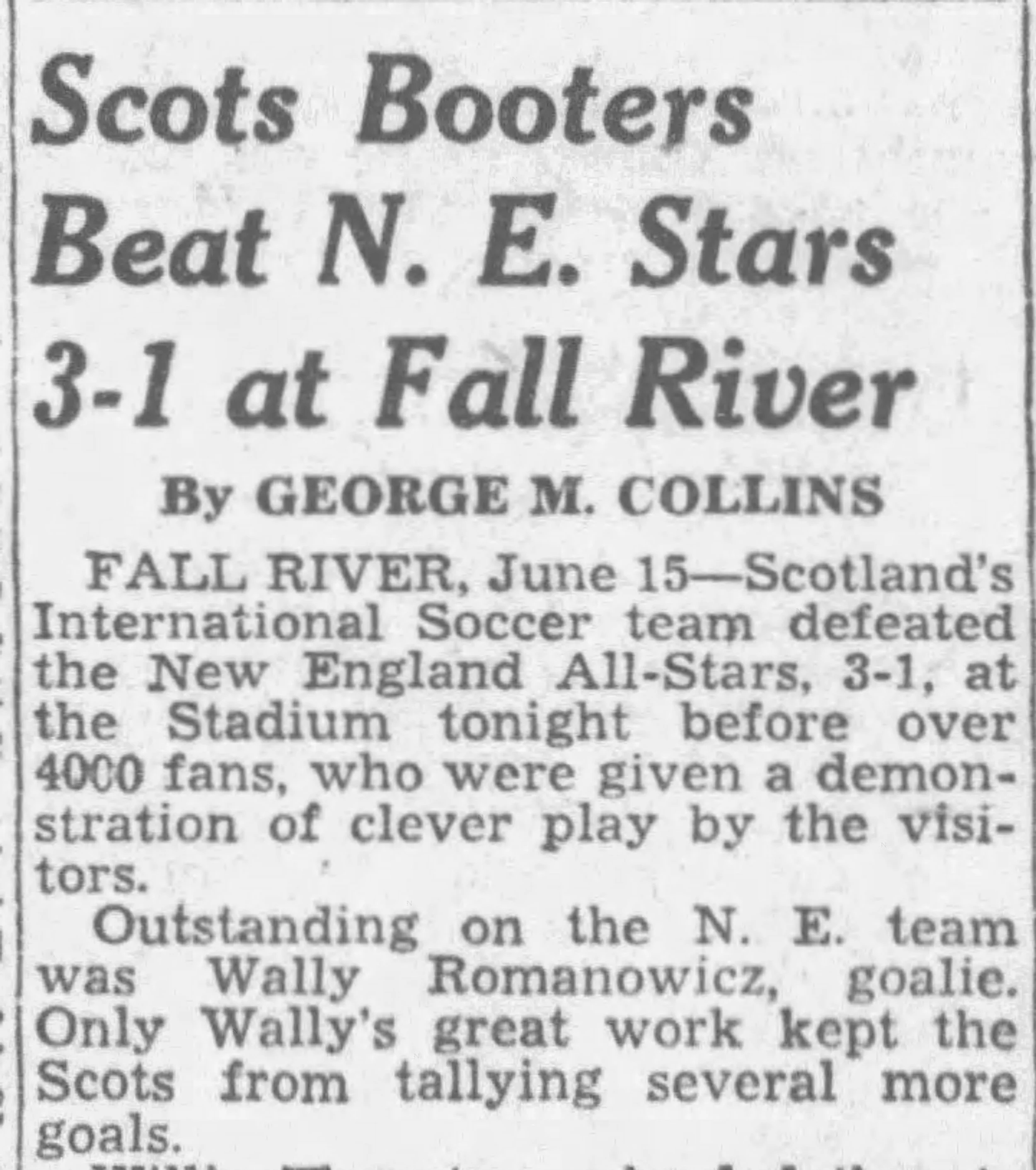
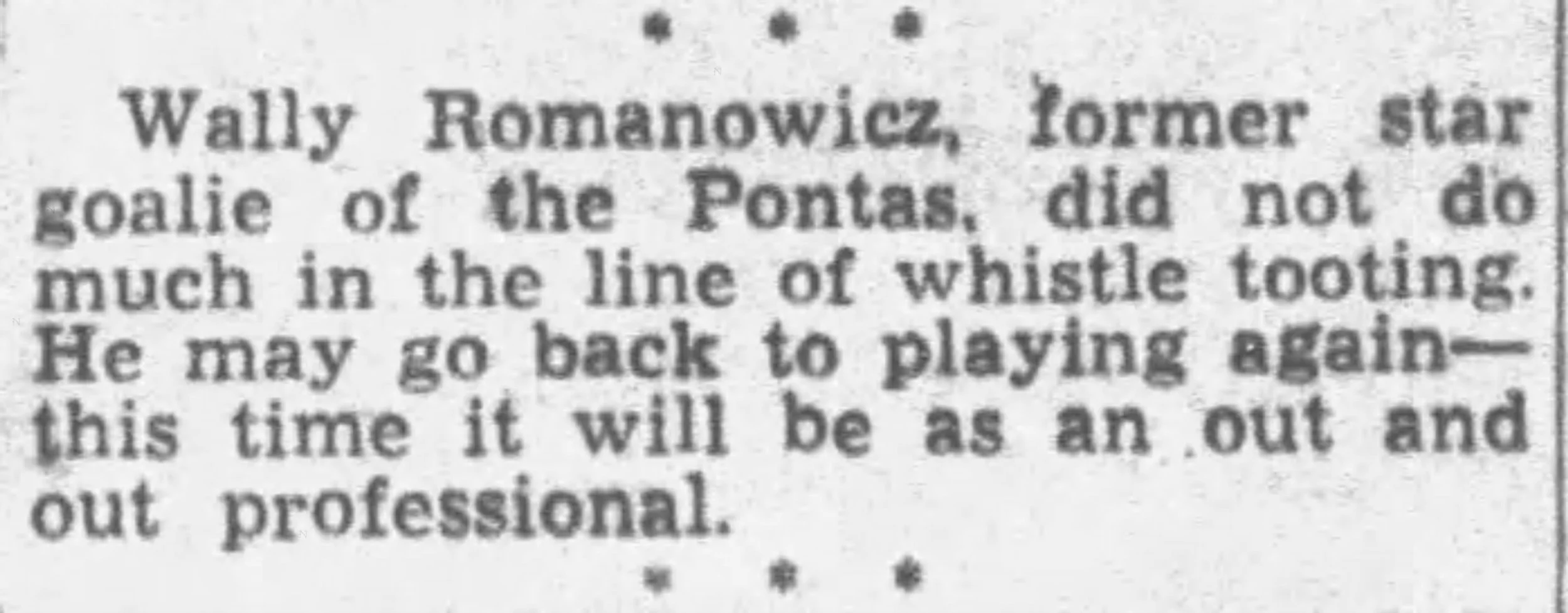
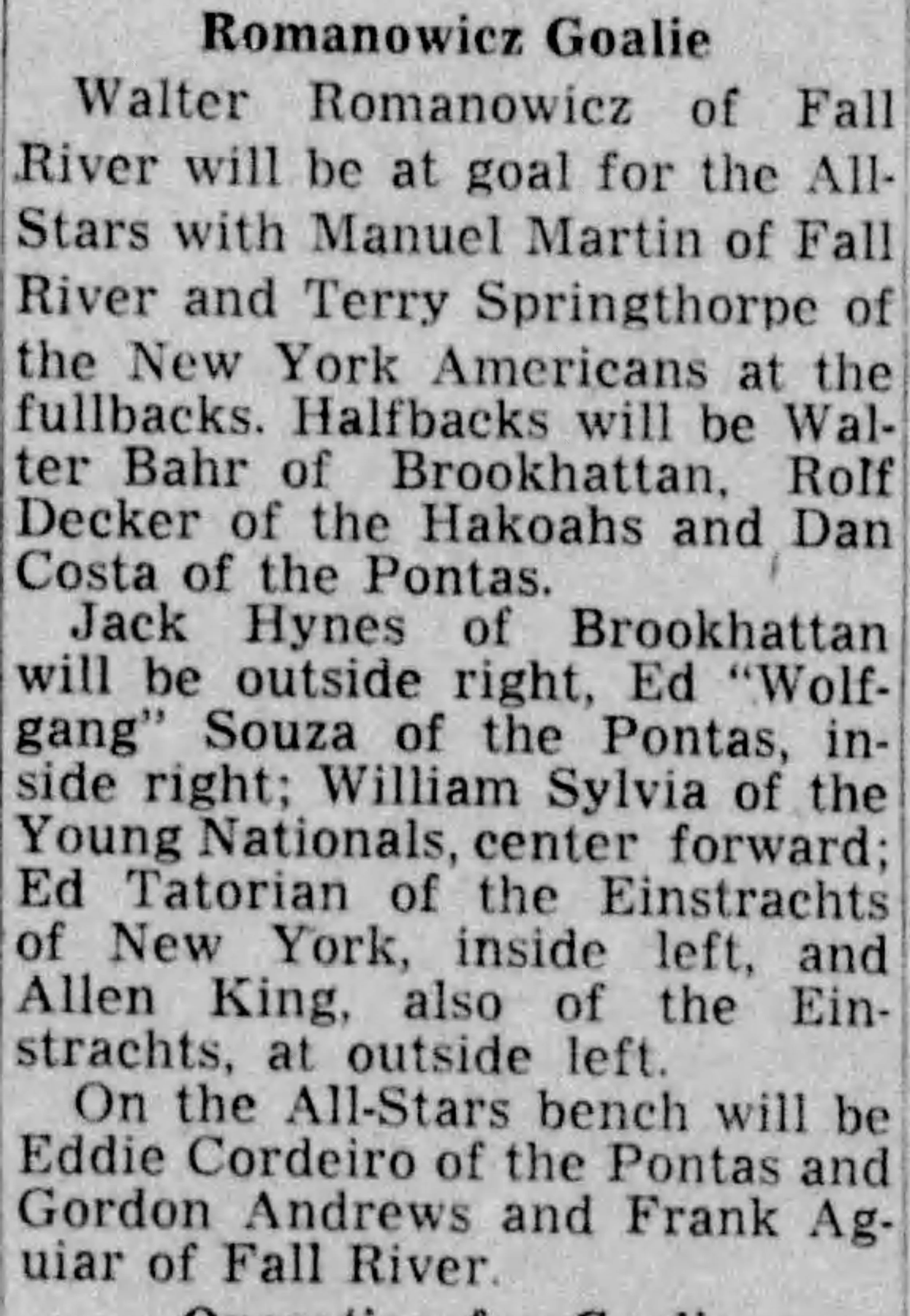
After a stint with St. John’s FC of Fall River, Romanowicz joined Ponta Delgada in the mid-1940’s to start a dominant run in national play. Romanowicz and Ponta Delgada reached the National Challenge Cup semifinals three times from 1946 to 1948, winning the prestigious tournament in 1947. Alongside these efforts, Romanowicz retained his amateur status and won the National Amateur Cup three years in a row (1946-48). With Romanowicz and Ponta Delgada winning the rare double in 1947, Romanowicz was propelled to the national team for the two-game 1947 NAFC Championship tournament. Although the US would lose both matches, Romanowicz would continue to be requested back to the national team as far as 1950. Ahead of the iconic 1950 World Cup matchup against England, it was Walter Romanowicz, not Frank Borghi, who was first requested onto the team. Bill Graham wrote for the Brooklyn Eagle in August of 1949, “For the first time in many years there is doubt about the goalie who will cop the place on the team. Walter Romanowicz of Ponta Delgada F.C. of Fall River is the first selection but can’t get away from business. This is the one position that America could formerly challenge the world to produce a better.”

Although a brief tenure with the national team and club soccer as a whole, Romanowicz was a quiet pillar in the post-war era, when American soccer was largely backed by ethnic clubs punching above their weight and players who balanced a playing career without the financial resources that today’s players receive.


85. Dan Kennedy

A four-year starter at UC Santa Barbara, Kennedy’s college career would come to a heartbreaking finish as the Gauchos fell to the Indiana Hoosiers in the 2004 NCAA final. Despite a strong senior season, the Gauchos subbed in penalty specialist Kyle Reynish at the end as Kennedy could only watch from the sidelines. Despite the sour finish, Kennedy showed well enough to be drafted just a month later by Chivas USA in the 2005 MLS SuperDraft, although the California franchise ultimately chose not to sign the new goalkeeper, leading Kennedy to carve his own path elsewhere.

Kennedy’s independence was rewarded as his standout play for the Puerto Rico Islanders led to being named USL’s Rookie of the Year in 2005. He would play for the Islanders for two years before heading south to Chile for a season. Kennedy would eventually make his way back to Chivas USA in 2008, but, once again, a door closed after untimely injuries derailed his return, as well as not being able to fulfill a national team call-up in the winter of 2008-09. Regardless, Kennedy continued pushing forward and in 2012, Kennedy finished third for the MLS Goalkeeper of the Year award. Seven years after each MLS franchise passed on him in the SuperDraft, Kennedy’s resilience proved the doubters wrong as he had now established himself as one of the best not only in MLS, but for all American goalkeepers.

Kennedy wowed fans with his quick reactions, backed by his Hispanic-influenced goalkeeping style. His hyper-mobile approach, as opposed to an English rigid set position, allowed him to bet on his ability through aggressive, front-footed defensive actions. Kennedy’s career isn’t littered with many team awards - as even his best season in 2012 was on the worst team in MLS - yet his determination to not let a closed door define him is an encouraging story for every goalkeeper who’s ever been overlooked before.

86. Charley LaBarge

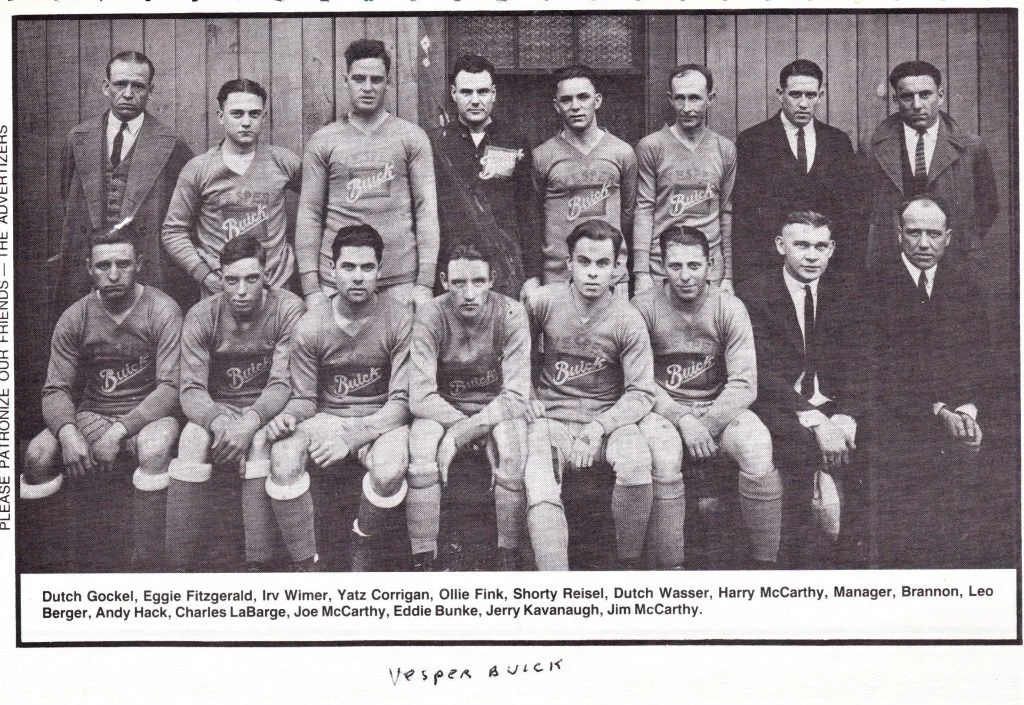
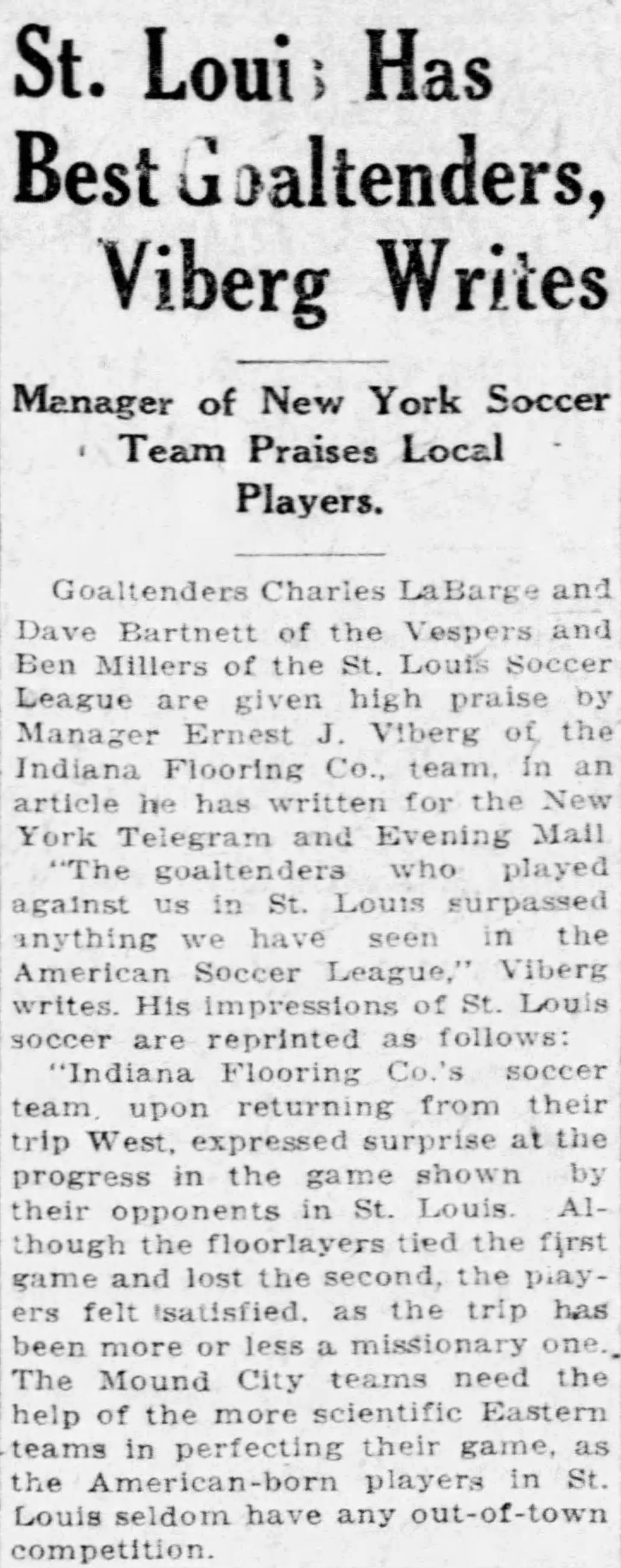
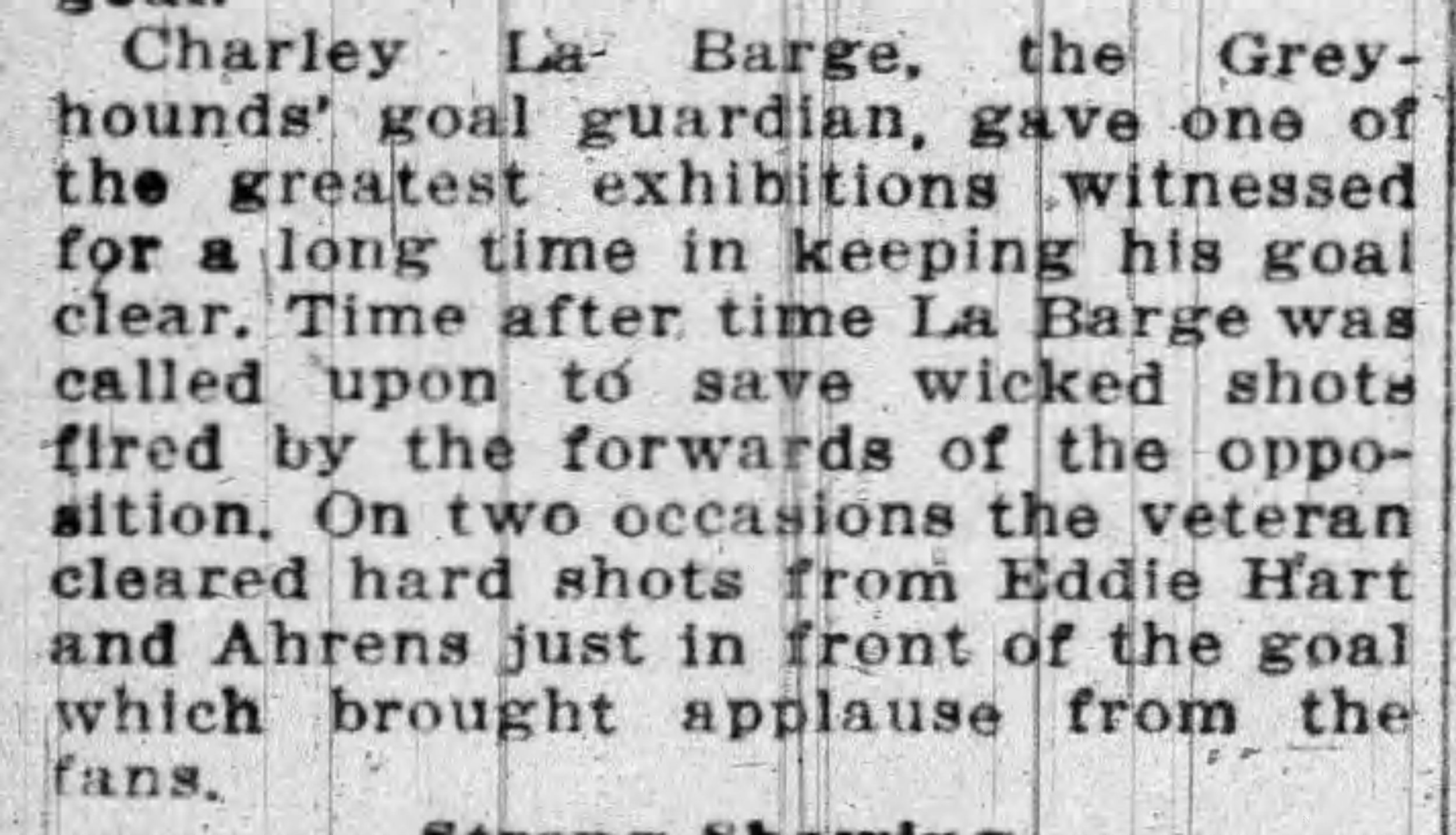
Over the course of the 1920’s and 30’s, LaBarge quickly made a name for himself inside St. Louis’ soccer circles as a promising young goalkeeper. LaBarge joined Vesper Buick ahead of the 1924 National Challenge Cup and elevated himself into a star player before the club even arrived at the final. Despite the 4-2 loss in the final, Indiana Flooring manager Ernest Viberg said that LaBarge and Dave Barnett’s goalkeeping talent “surpassed anything we have seen in the American Soccer League.”

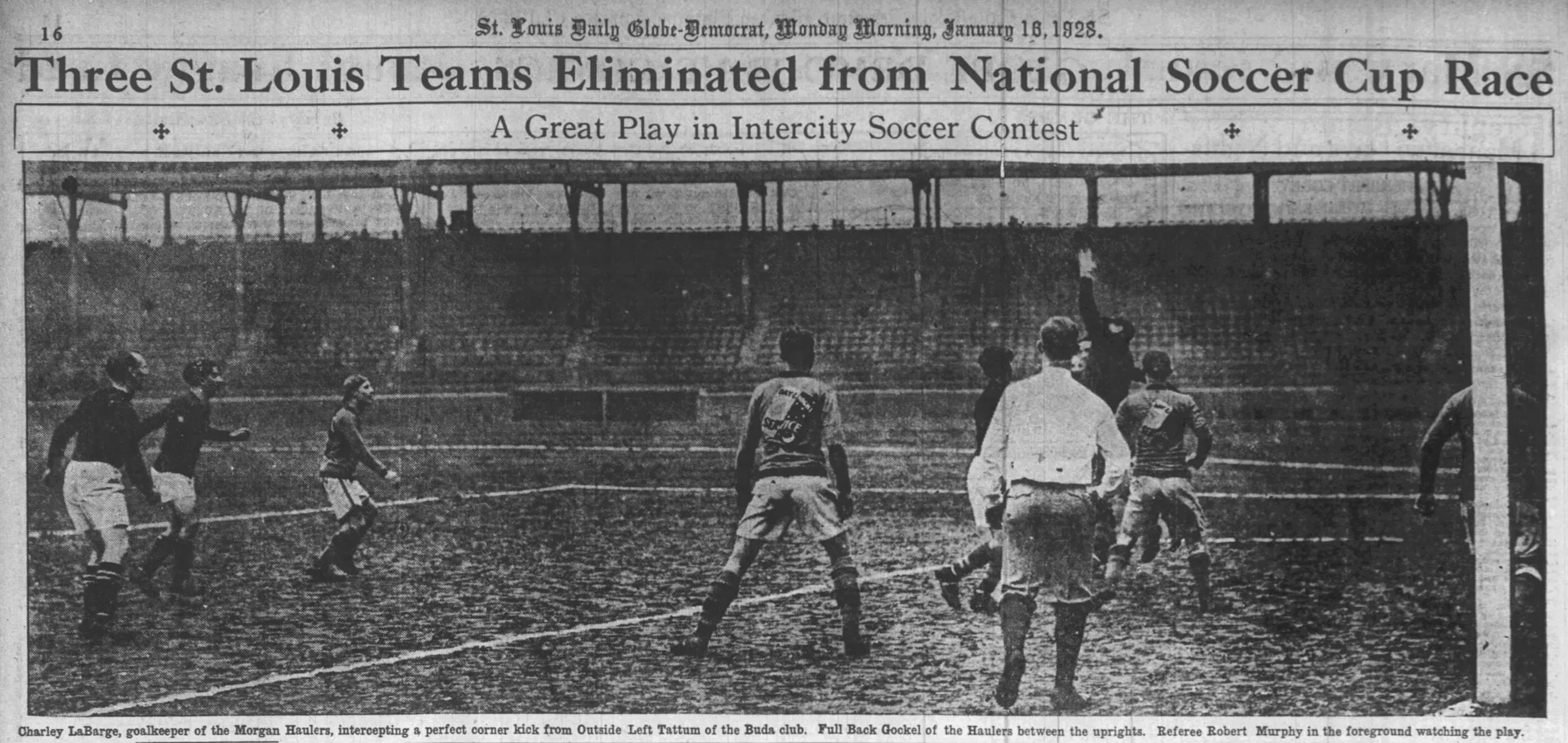
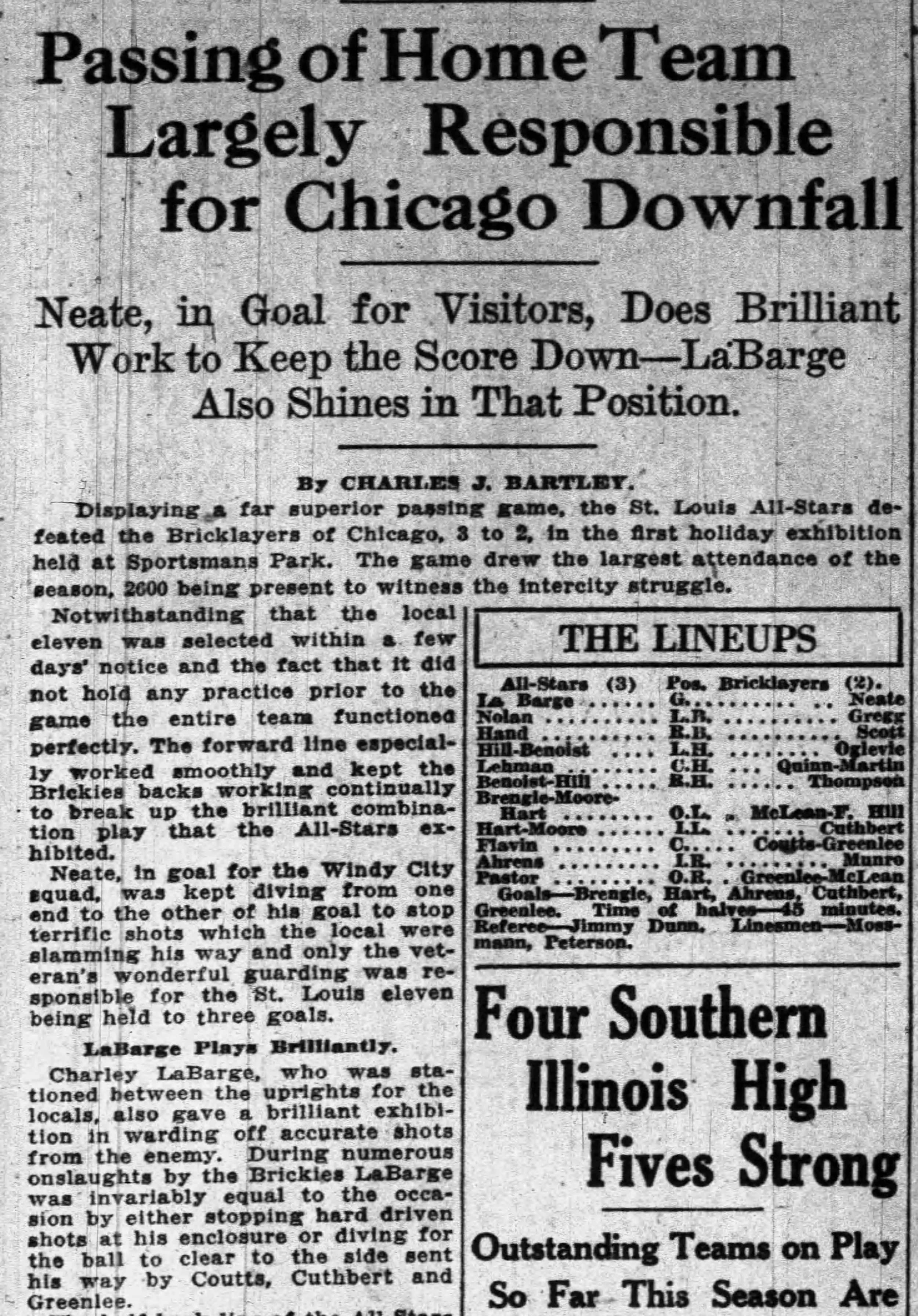
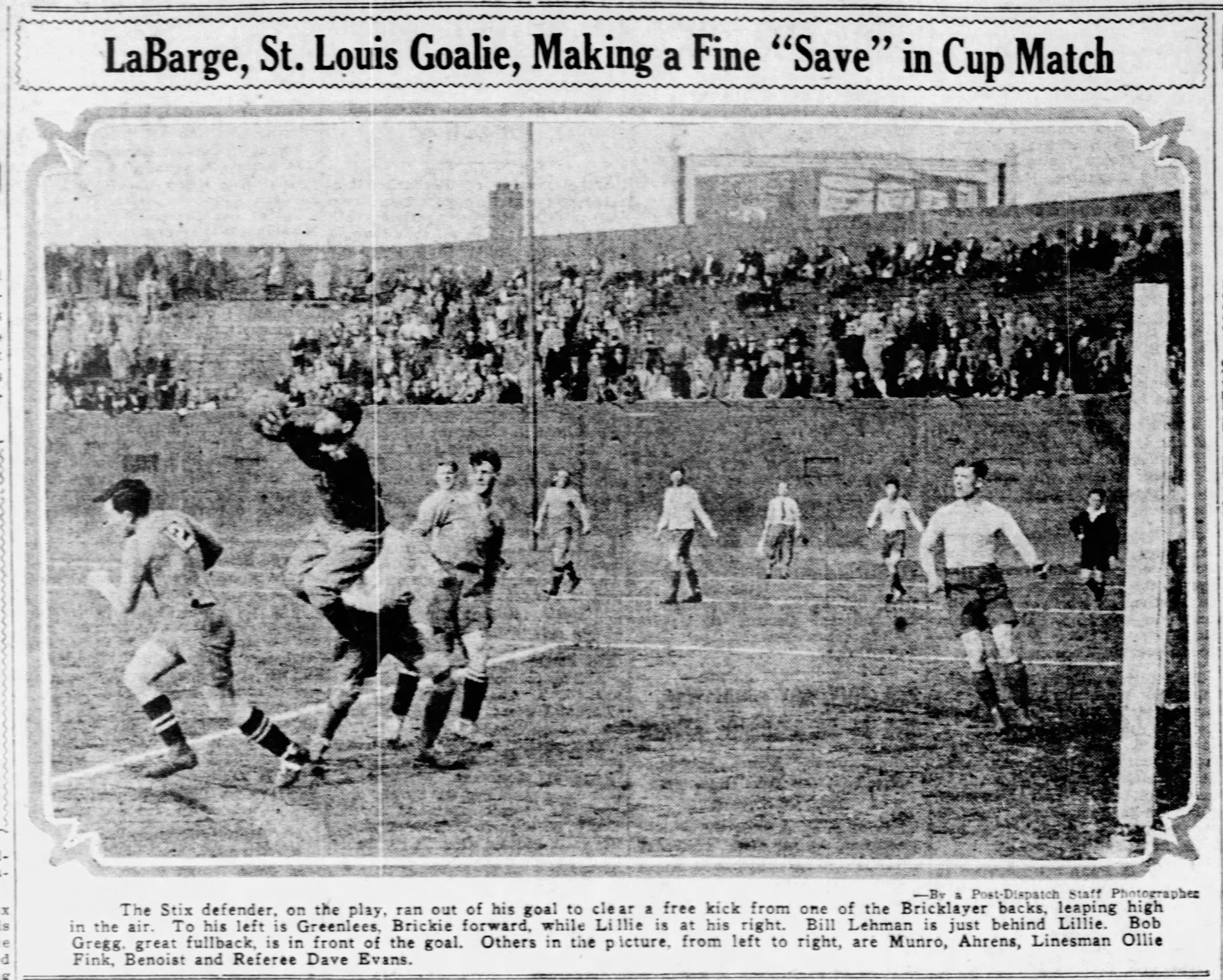
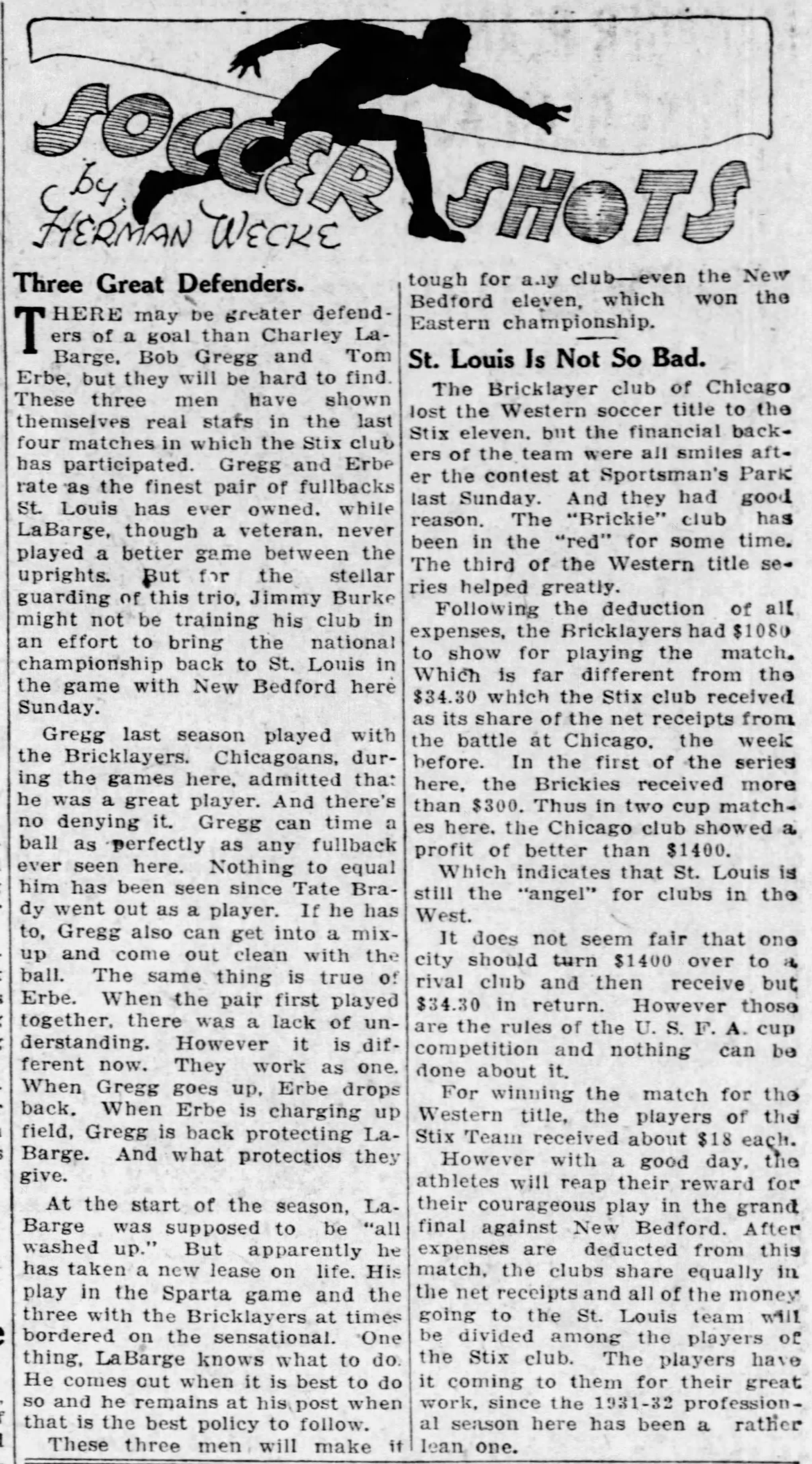
LaBarge would continually shine in the National Challenge Cup, returning to finals three more times, in 1929, 1932, and 1933, the last two with Stix, Baer, and Fuller. Unfortunately, LaBarge’s career was marred by injuries and much speculation arose on whether he had any talent later in his career. In 1932, Herman Wecke wrote that “At the start of the season, LaBarge was supposed to be ‘all washed up’. But apparently he has taken a new lease on life,” praising the goalkeeper for outstanding recent performances and decision-making in goal.

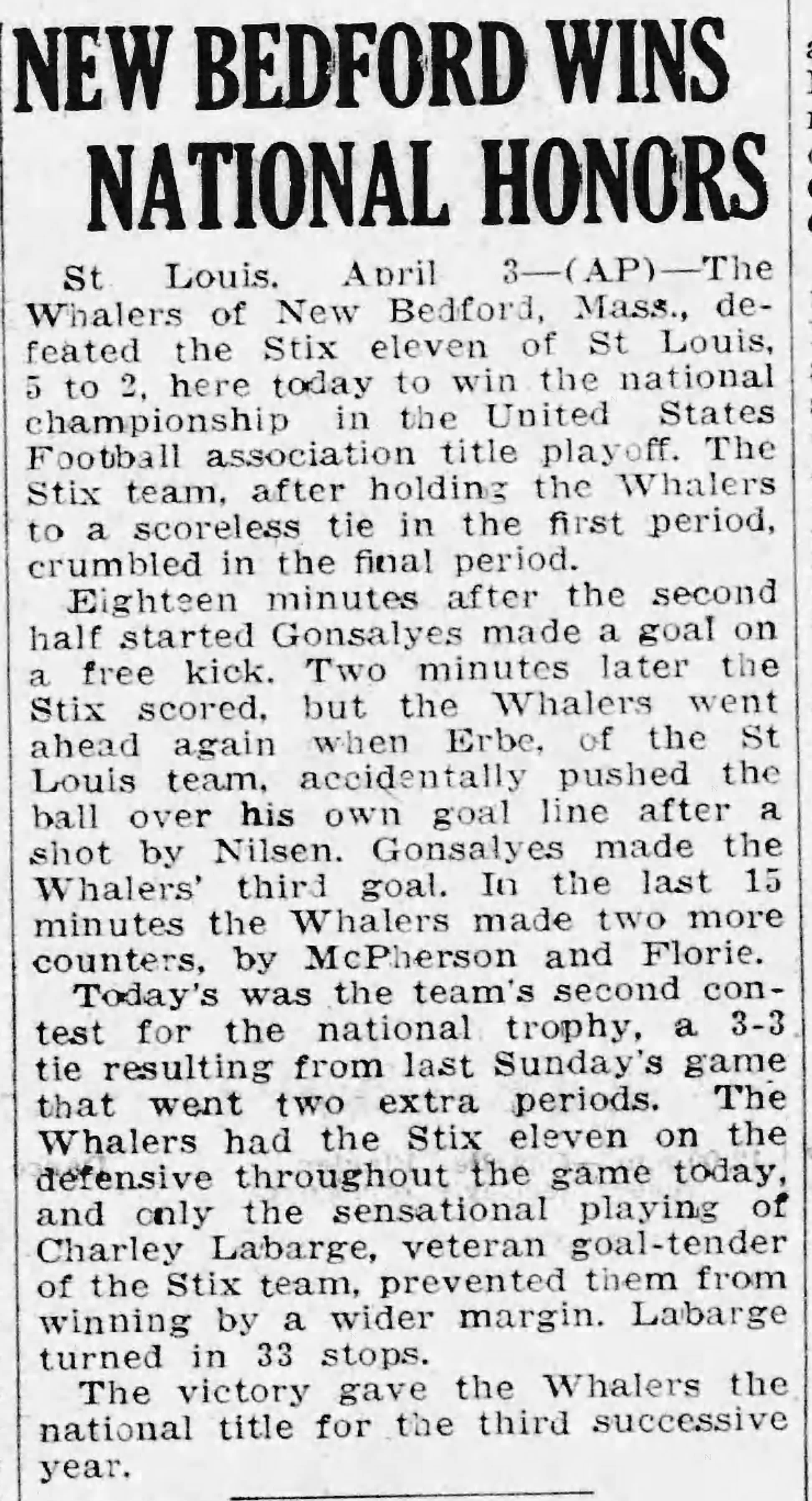
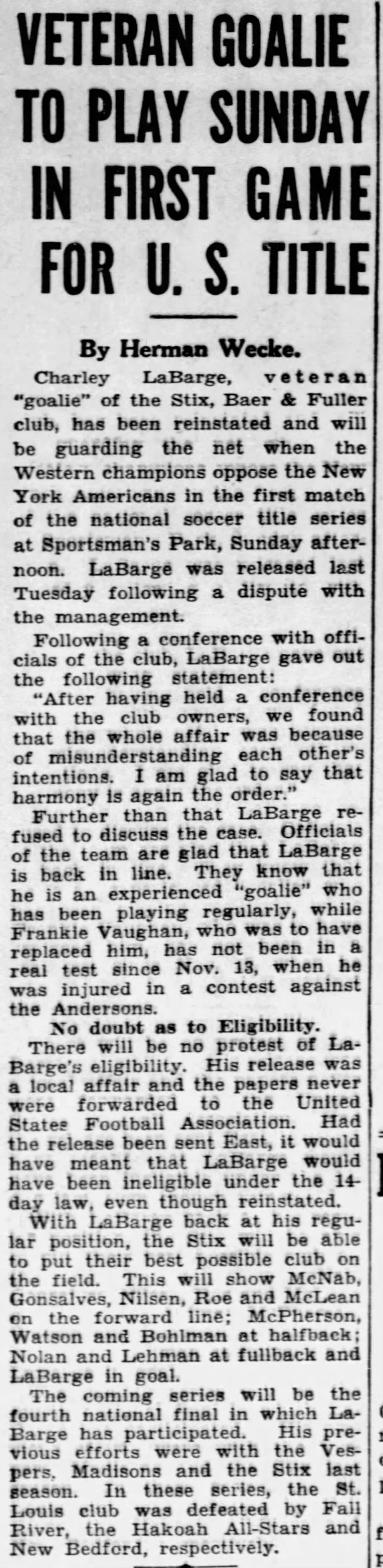
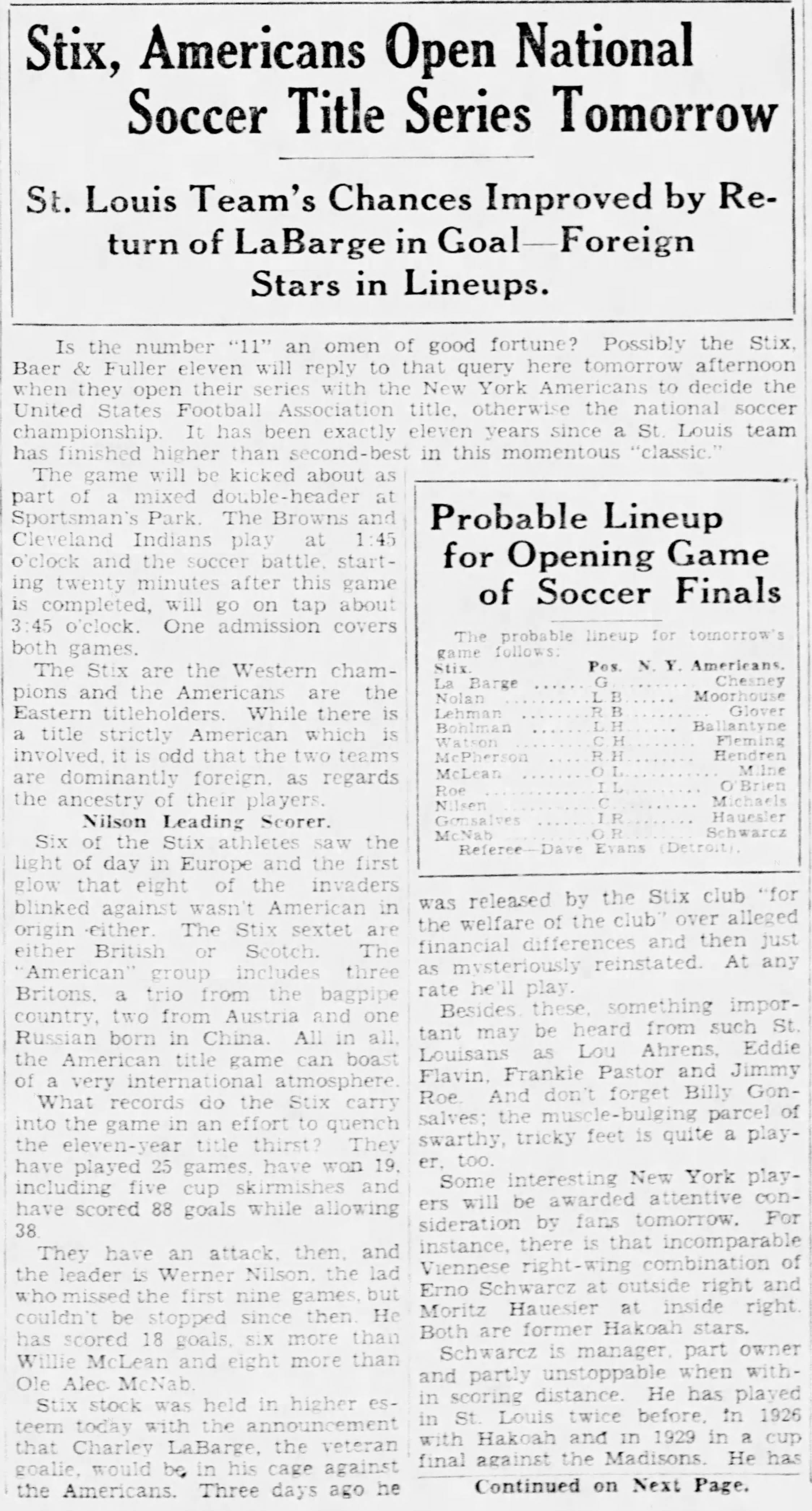
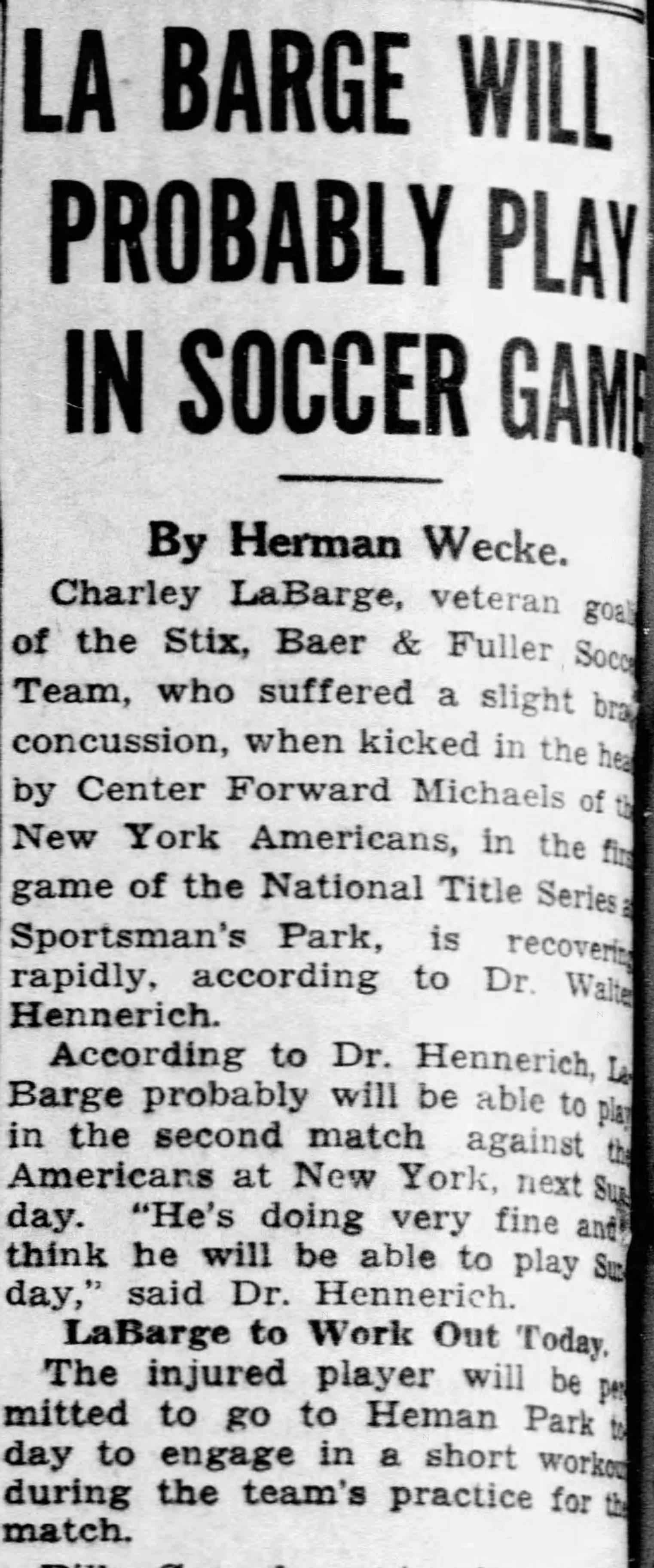
The road to capturing the Cup in 1933 was no easy task for LaBarge. Less than a week before the final, LaBarge was released from the club for “the welfare of the club” over financial disputes but was oddly reinstated just days later. LaBarge was tight-lipped about the specifics of the affair and set his sights on finally capturing the elusive trophy. The first of the two-legged was a shutout by LaBarge but the St. Louis goalkeeper received a concussion from a blow to the head, leaving his status for the second match in question. LaBarge was ultimately cleared to play by doctors, conceding only one goal in the second leg against the strong ASL representative, the New York Americans, and finally winning the National Challenge Cup.

Alongside David Barnett and Charles McGarry, LaBarge was inducted as one of the first goalkeepers into St. Louis’ prestigious Soccer Hall of Fame in 1971.


87. Joe Willis

Joe Willis’ career can largely be summed up as him banging on the door until someone opened it or the door fell off its hinges. Willis earned a call-up to the U20s in October of 2006 but ultimately lost out to Chris Seitz and Brian Perk being named to the World Cup squad. Willis, not one to take no for an answer, continued his successful, yet quiet, college career. In the 2011 draft, DC United acquired Willis as a backup for Bill Hamid and despite Willis’ clear role established by DC, he would still find moments to shine. In 2012, Willis rode a seven-game unbeaten streak while Hamid was with the U23s and would save a crucial penalty in the quarterfinals during the playoffs when Hamid went off with a red card.

After a trade sent Willis south to Houston, he once again had a difficult battle for the number one spot with Tyler Deric. Willis and Deric would repeatedly trade off time, although Willis would get his chances in the 2017 playoffs and the 2018 Open Cup, the latter of which he picked up his second US Open Cup trophy, this time starting in the Cup final.

After the back and forth with Houston, a trade with Nashville finally gave Willis a chance to showcase his talents. In 2021, Willis finished third in Goalkeeper of the Year voting, proving the long wait was worth it for the Denver Pioneer alum. The no-nonsense and drama-free goalkeeper enters the 2026 season ranked 7th all-time in MLS starts for a goalkeeper and has yet to let go of his starting position in his 16th year as a pro.

88. Theodore Bondi

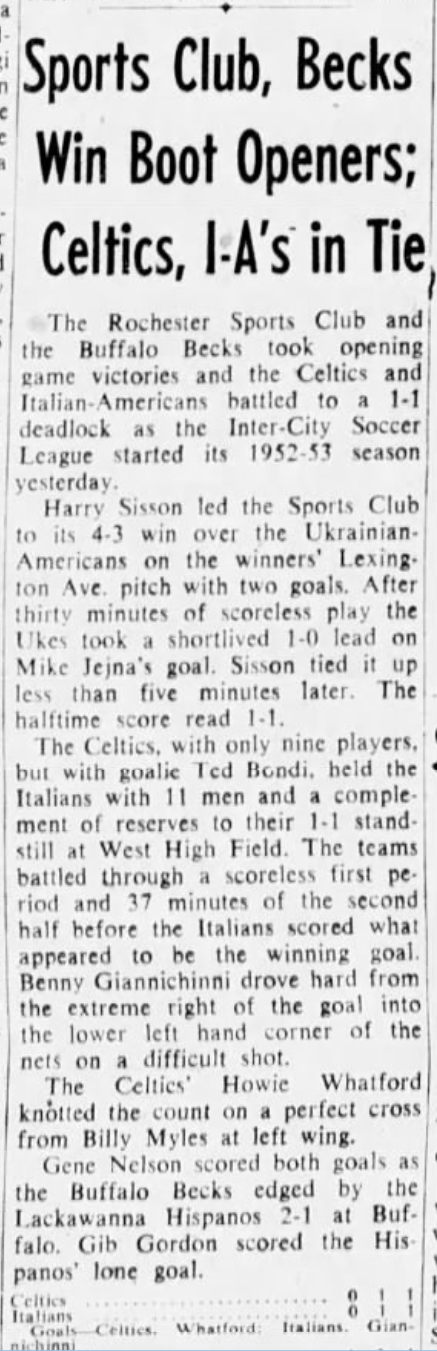
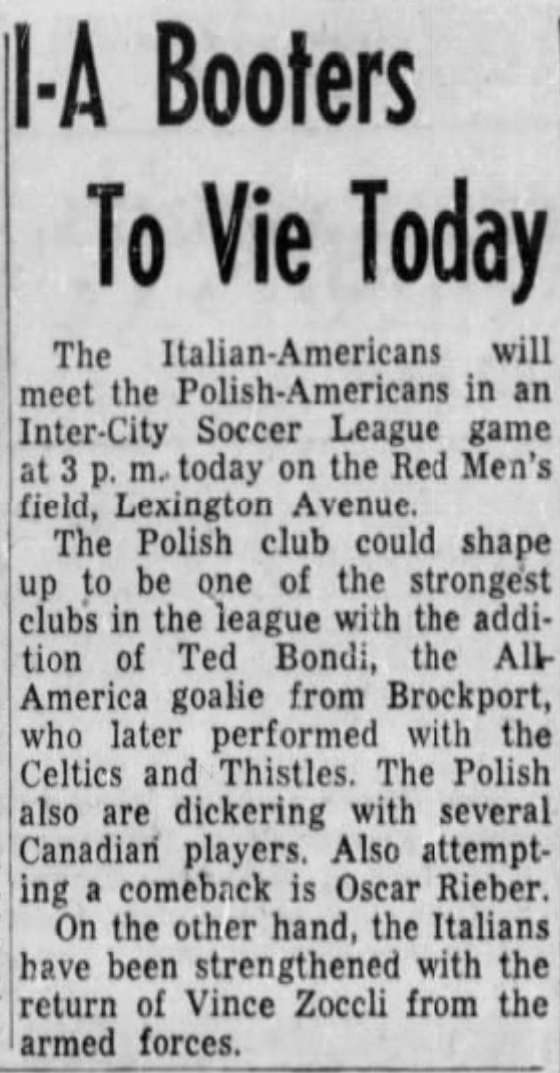
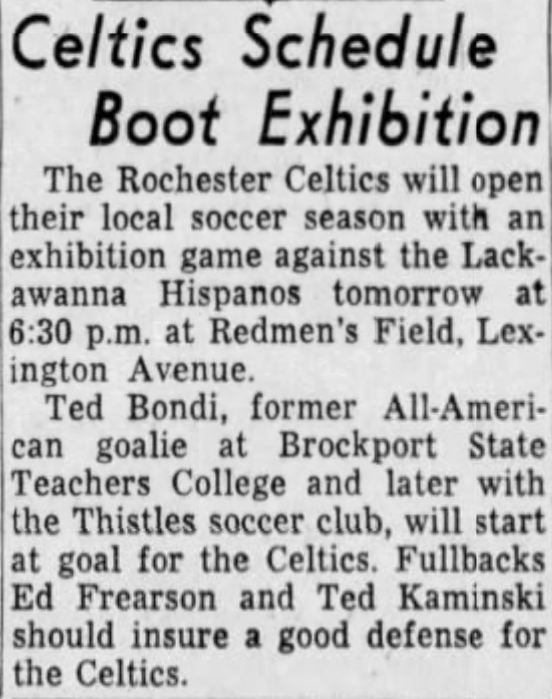
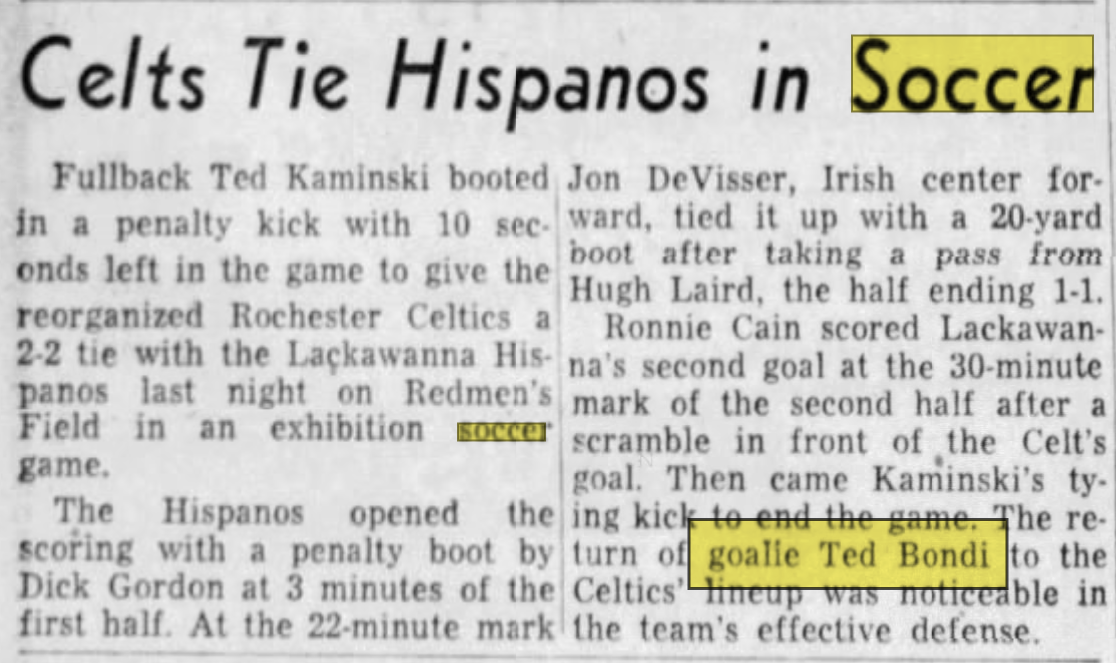
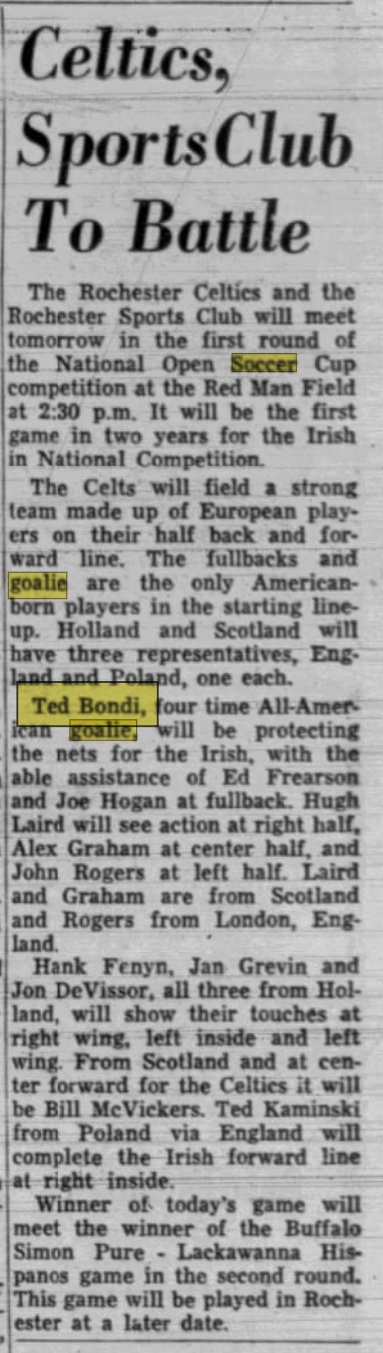
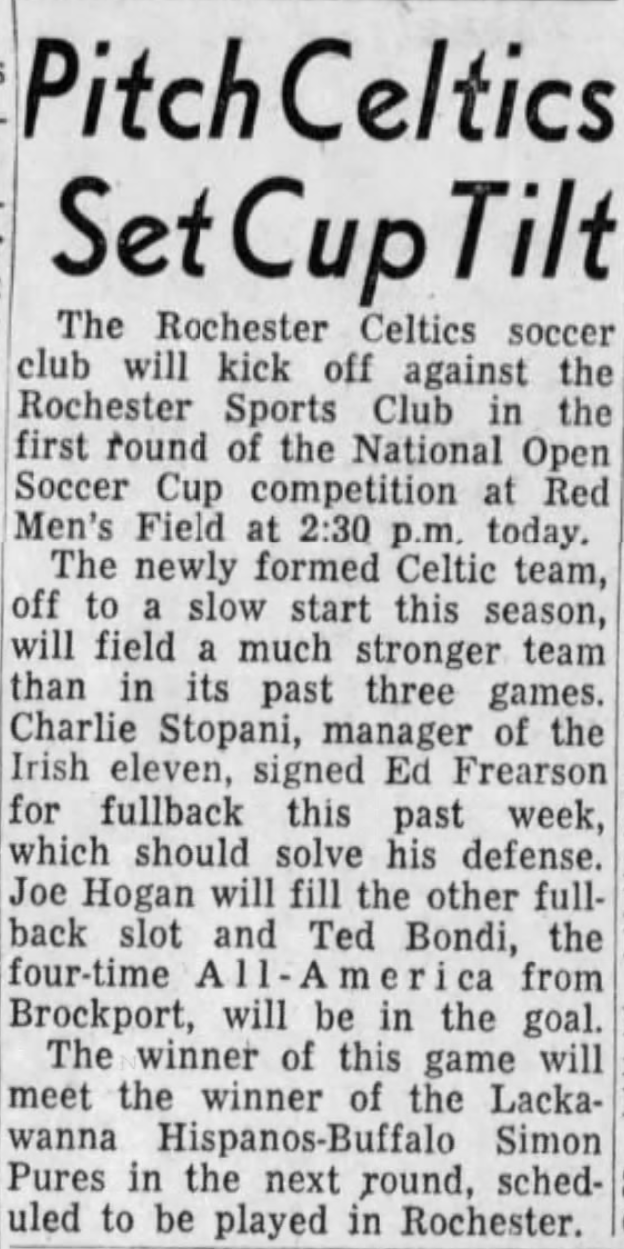
Theodore “Ted” Bondi was the perennial multi-sport athlete. In addition to being on the basketball, baseball, and swimming teams at Brockport, Ted Bondi was a standout goalkeeper. Despite Brockport’s limited success on the national level, Bondi was named an All-American goalkeeper each year, the only goalkeeper to ever accomplish this.

After graduating Brockport and earning his master’s in education at UNC, Bondi joined the Air Force and eventually returned to his hometown of Genoso, NY, where he would begin playing soccer again, as well as coaching soccer, basketball, football, baseball, lacrosse, and swimming in the area.

Despite domestic soccer being at a very low point in the 1950s, Bondi’s untouched collegiate accomplishment and loyalty to his hometown highlight him as both the common man and an outstanding goalkeeper for his time. Bondi passed away in 2010 after being named in multiple Hall of Fames in the northeast and now has a memorial scholarship named after him.

Whereas goalkeepers like Brad Friedel and Tony Meola managed to dominate the college level at a time when there was no professional structure, Bondi’s accomplishments were a level above even those national team stalwarts when it comes to recognition at the collegiate level, putting the everyday sportsman into a tier of his own.

89. Bob Denton

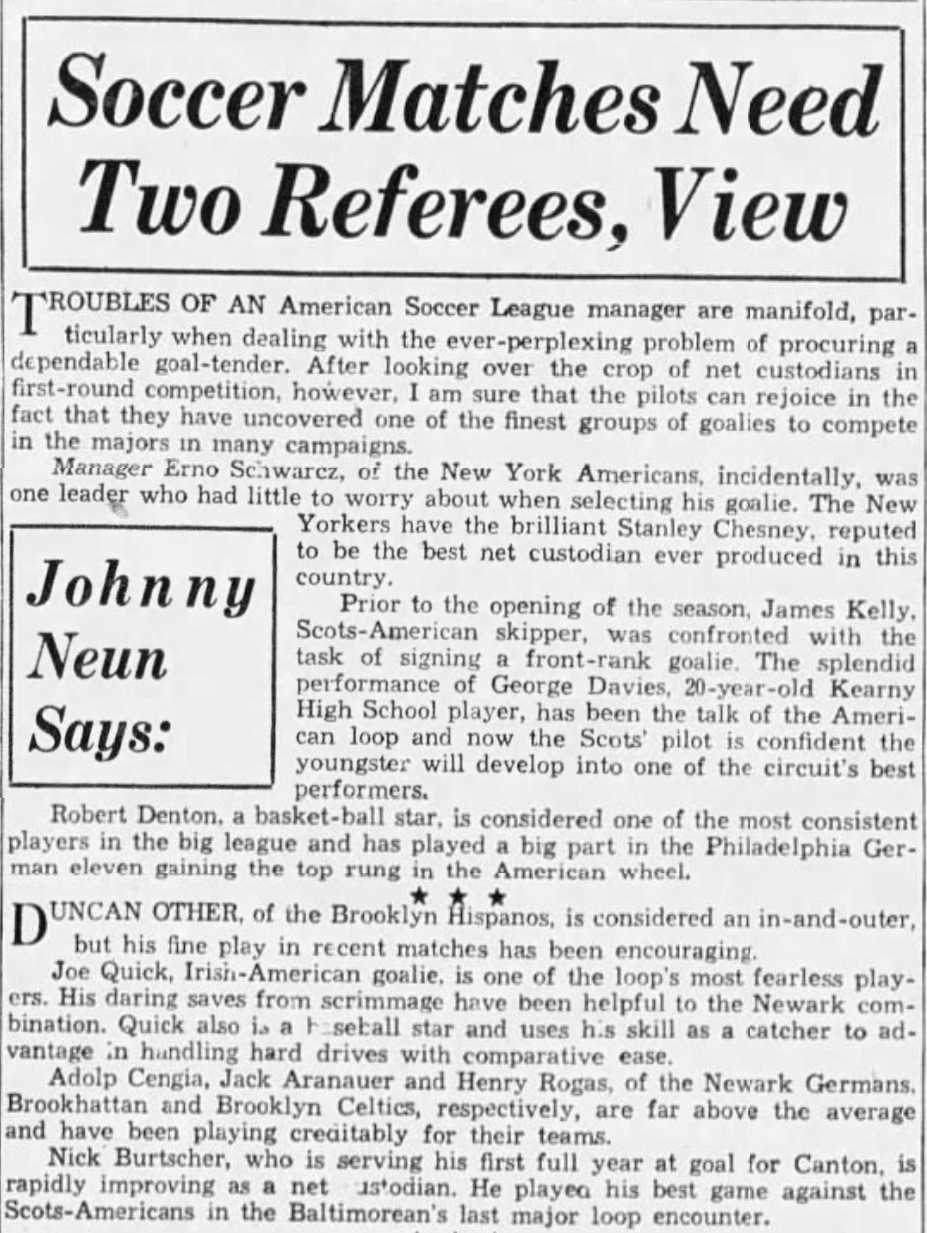
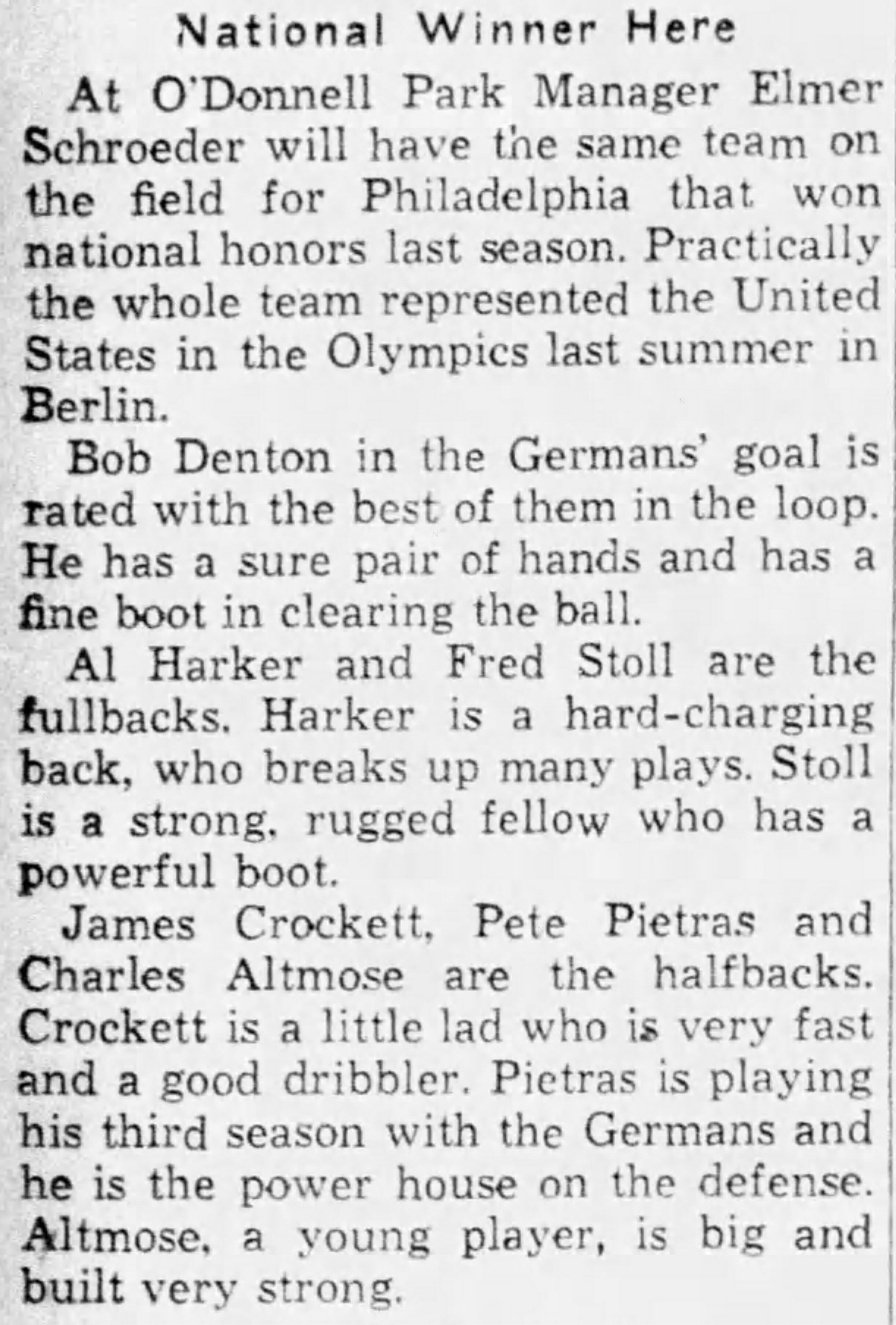
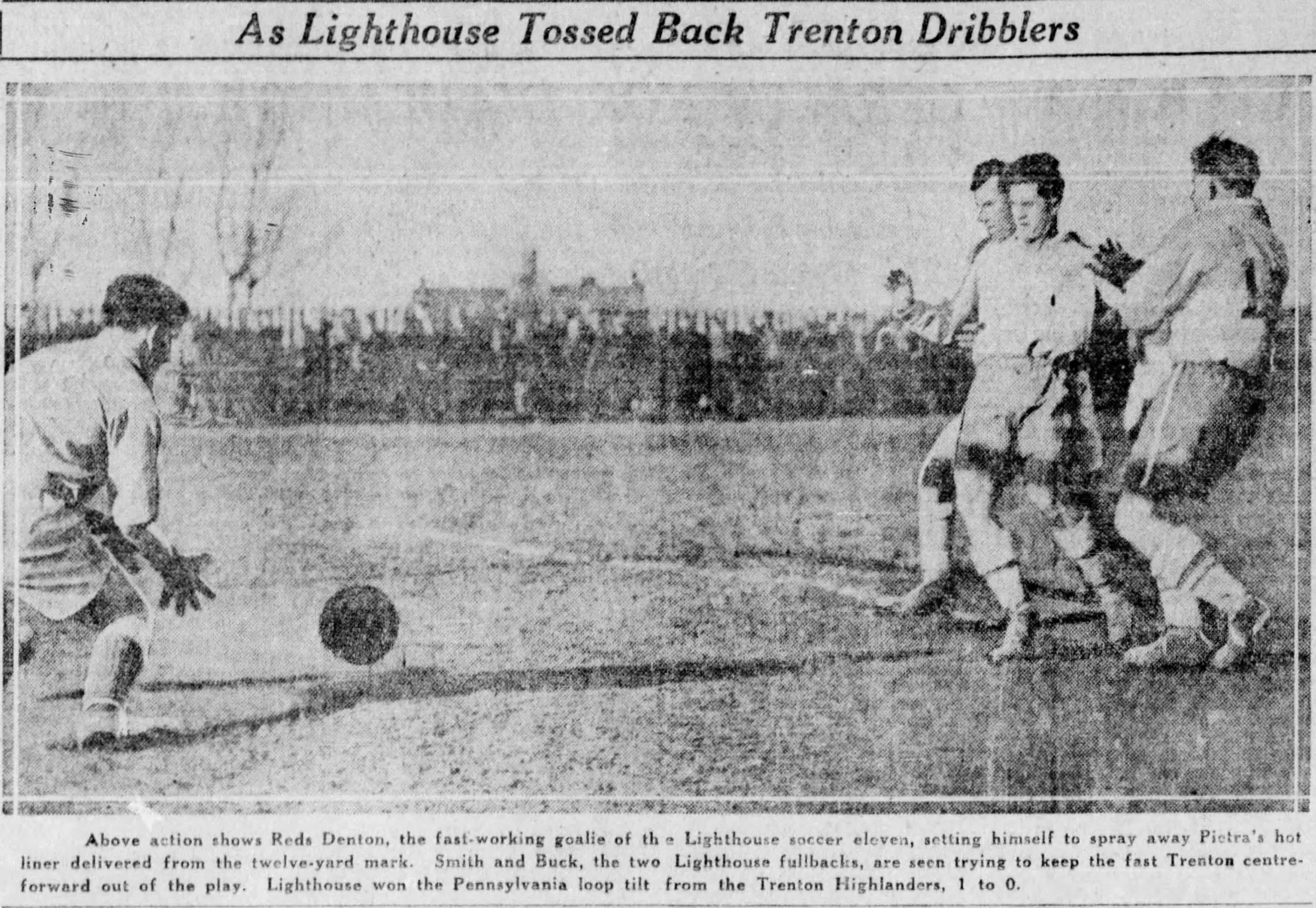
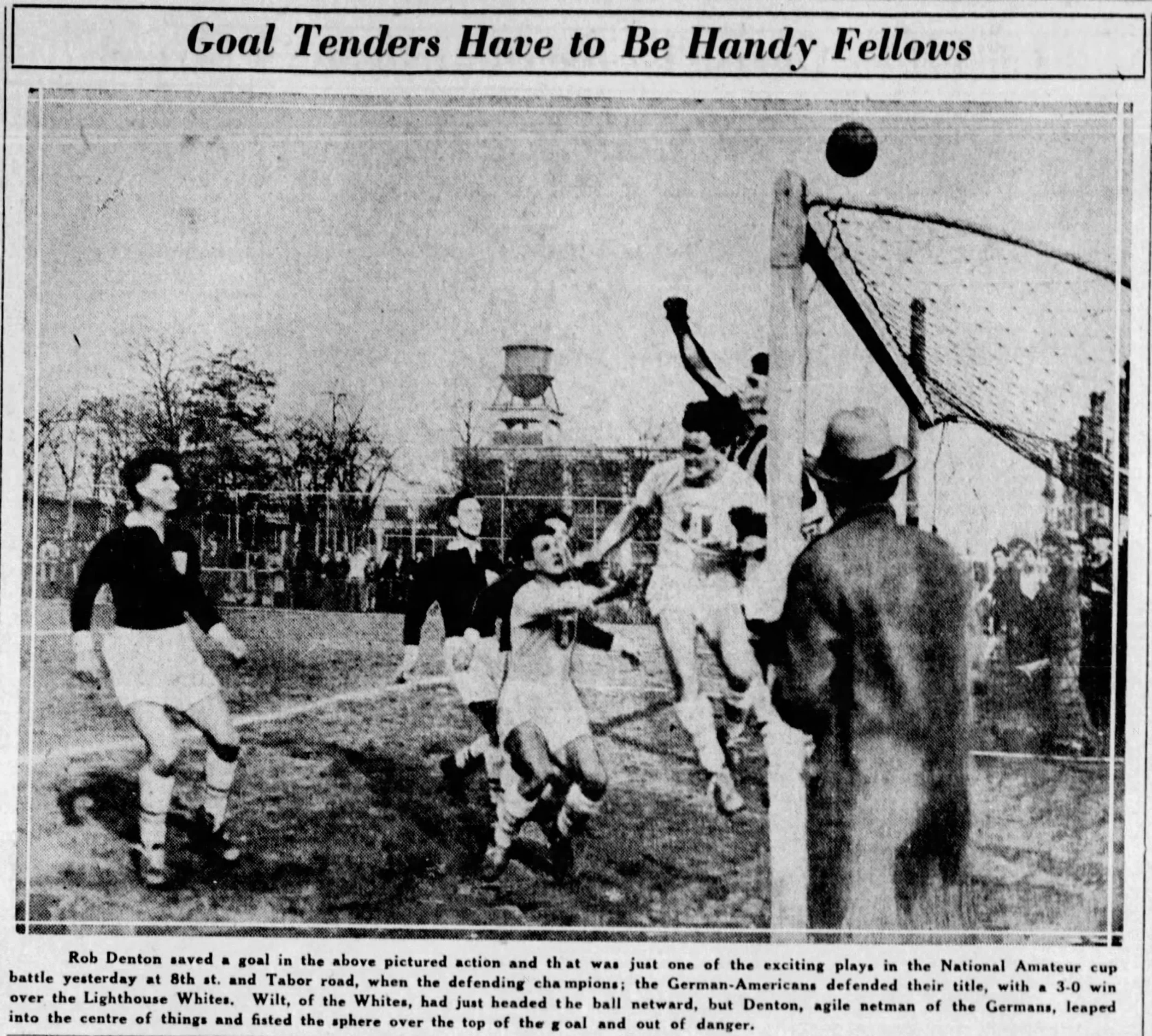
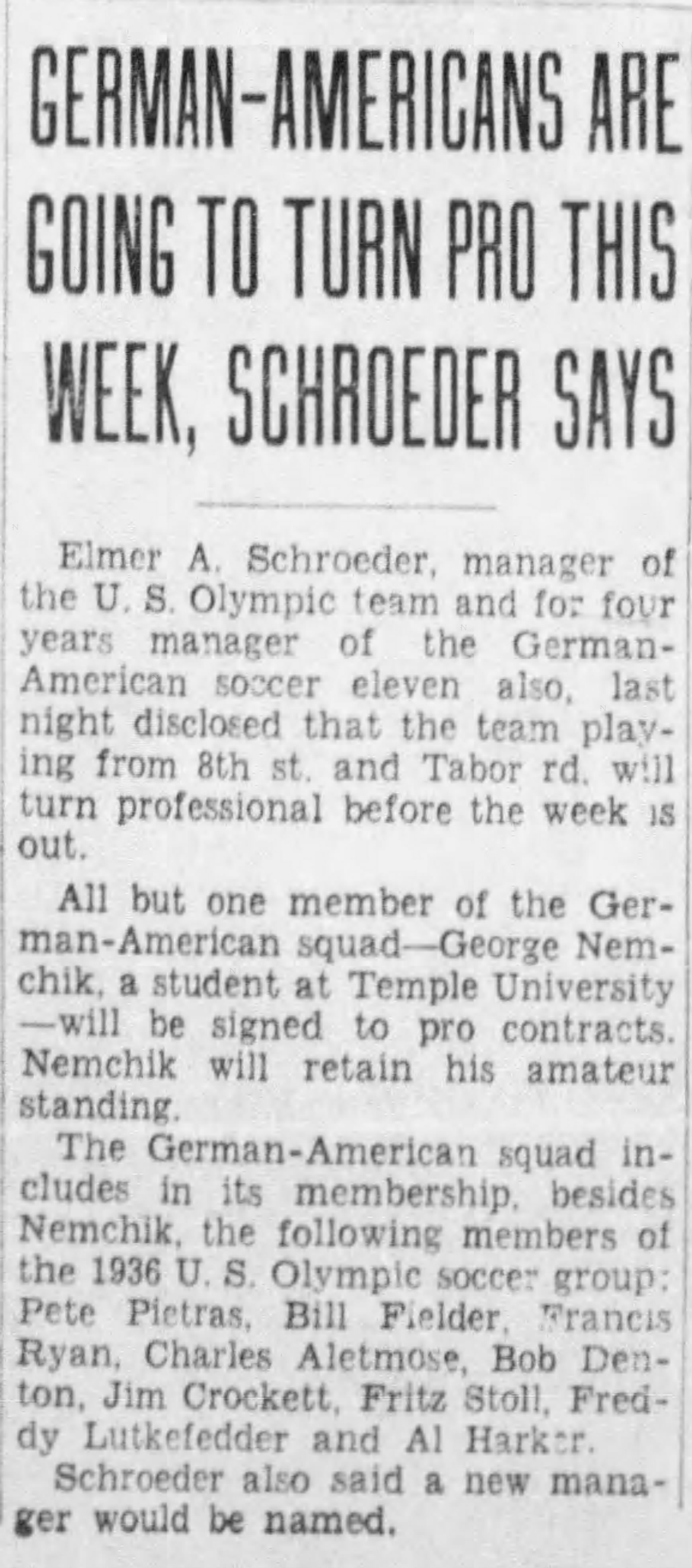
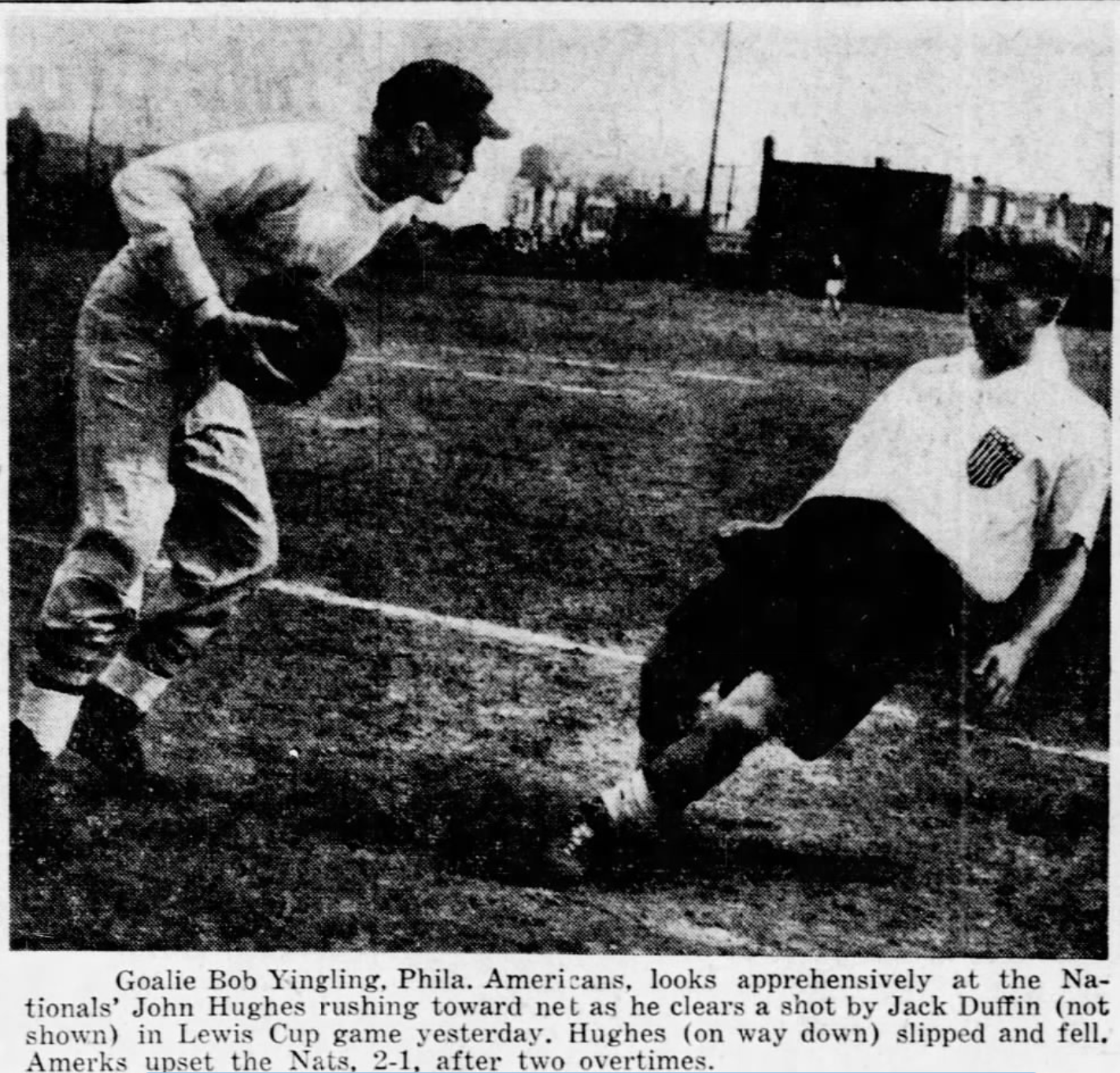
After stints with Disston (1929-30) and Lighthouse (1931), Denton would make substantial waves for himself in 1933 after a quarterfinal finish in the National Challenge Cup with the Philadelphia German-Americans, as well as capturing the first of two back-to-back trophies in the National Amateur Cup (‘33 and ‘34). Denton would add to his trophy case with an ASL Championship in 1935 and winning the 1936 National Challenge Cup. The success with the German-Americans made Denton a mainstay in the conversation for top goalkeepers in the country during the 1930’s, whether amateur or professional.

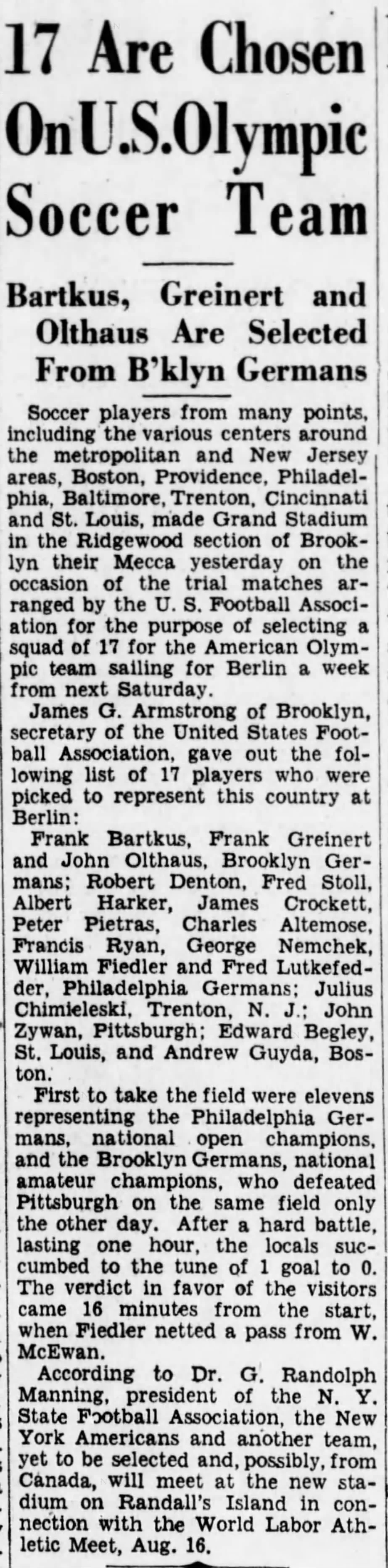
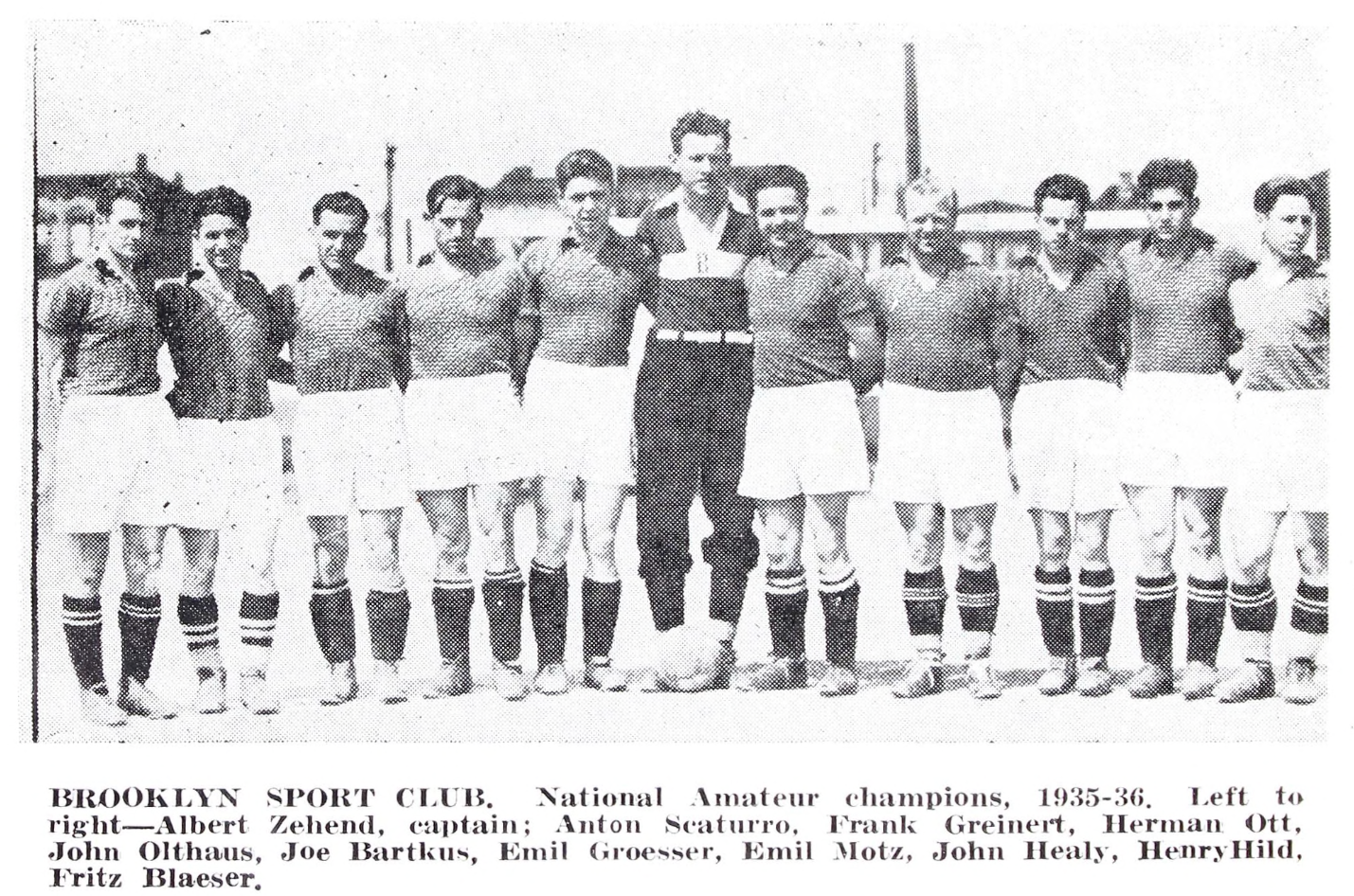
For the 1936 Olympics, Denton earned an invitation into the 17-person squad. Although Denton didn’t feature in the Olympics - starter Frank Bartkus was lauded as being the second best goalkeeper at the entire tournament after conceding only one goal to eventual champions, Italy - Denton continued his strong run in ASL play through the back part of the 30’s. A nearly career man with the Philadelphia German-Americans, Denton is one of Pennsylvania’s top goalkeepers of all time.

90. Dragan Radovich

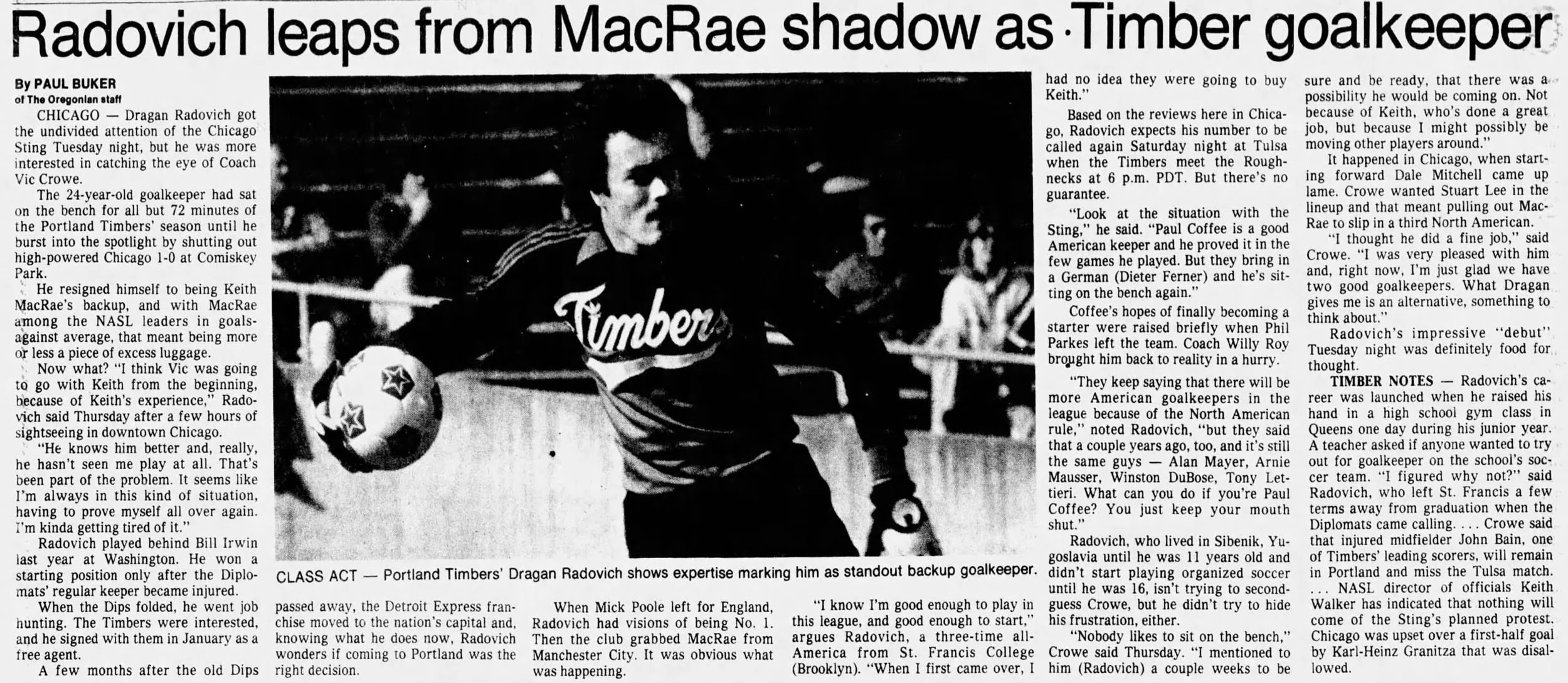
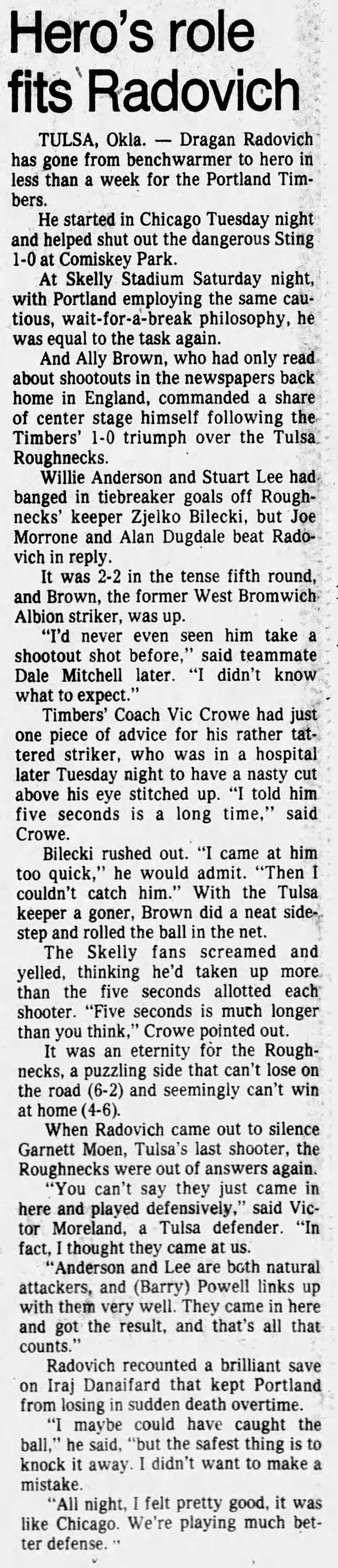
Throughout college soccer’s entire existence, there have been many standout goalkeepers, including Randy Phillips, Skip Gilbert, Peter Mannos, Peter Arnautoff, and Ed Gettemeier. Although all these goalkeepers were standouts for a time, Radovich matched their efforts and then some. A 1978 graduate of St. Francis College, Radovich was a three-time first-team All-American goalkeeper and a first-round draft pick for the NASL’s Washington Diplomats. Radovich reached the playoffs in his rookie season but was later signed by the Timbers in 1982, before the team - and then soon after the league - both ceased operations. Radovich finished with 48 appearances in the NASL during his limited time, 11th all-time for American goalkeepers.

Despite the NASL closing its doors, Radovich’s passion for the game would not be subdued, playing wherever he could for as long as he could. In 1986, Radovich was featured in the NY Mundalito (a "Long Island version of the World Cup") while in 1989, Radovich was featured in the Northeastern Super Soccer League All-Stars squad, facing off against Zalgiris Vilnius of the Soviet Union's First Division. But Radovich’s career was not without its bumps in the road. In 1989, Radovich and the Greek-Americans made it to the US Open Cup final only to fall in extra time. The following year was even more heartbreaking for Radovich, now with the Brooklyn Italians, as a soft goal by the Croatian-American ended up leading to a 2-1 loss in the final. However, in 1991, Radovich’s third trip to the final would appropriately cap off a long and winding career with a 1-0 win over the Richardson Rockets. “We kept our cool,” Radovich would say after the game.

Radovich would later go on to tackle other great feats of strength, but his career can be summed up as a goalkeeper who did everything to continue playing, regardless of each setback and hurdle placed in front of him.

Main Page
Goalkeepers 1-10
Goalkeepers 11-20
Goalkeepers 21-30
Goalkeepers 31-40
Goalkeepers 41-50
Goalkeepers 51-60
Goalkeepers 61-70
Goalkeepers 71-80
Goalkeepers 81-90
Goalkeepers 91-100
Honorable Mentions

America's 100 Greatest Goalkeepers (Honorable Mentions)

Clearly it’s an impossible task to neatly narrow down 150 years into 100 names so we’d be in error to overlook early pioneers like Patrick Hughes (Clark ONT’s stellar goalkeeping from 1884-1889) and J. Crossan Cooper (Princeton’s three-time All-American goalkeeper from 1920-1922). In the early part of the 20th century, goalkeepers like Cooper had limited availability to play, thus making international tournaments not only exciting and novel but also a rare moment for goalkeepers to really test their mettle.

Goalkeepers like Archie Strimel (1948 Olympics) and even - what should have been - 1980 Olympic goalkeepers Paul Coffee and Peter Arnautoff should be remembered for being as good as they were, despite the lowered ceiling that was dropped on them from the era they played in.

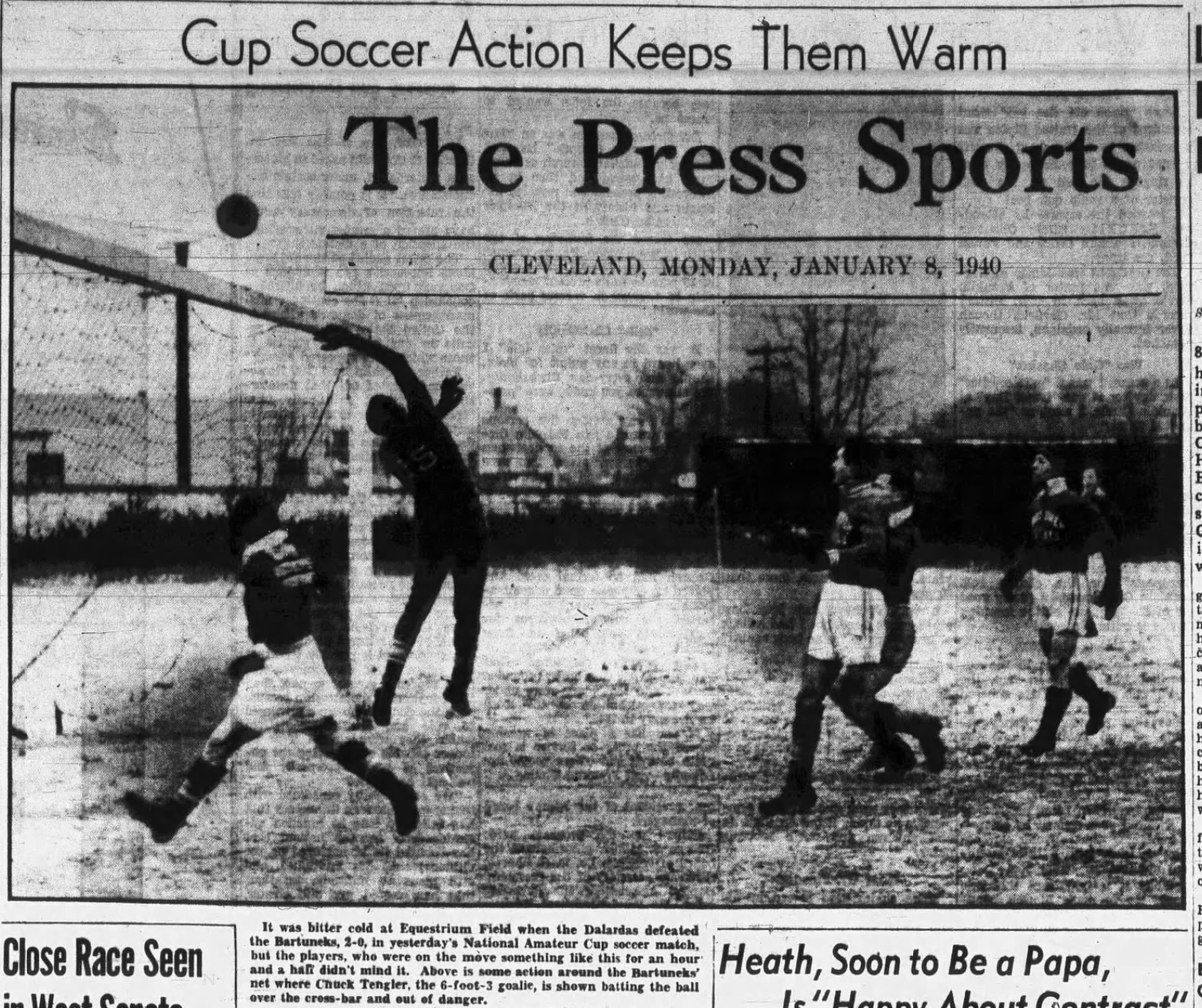
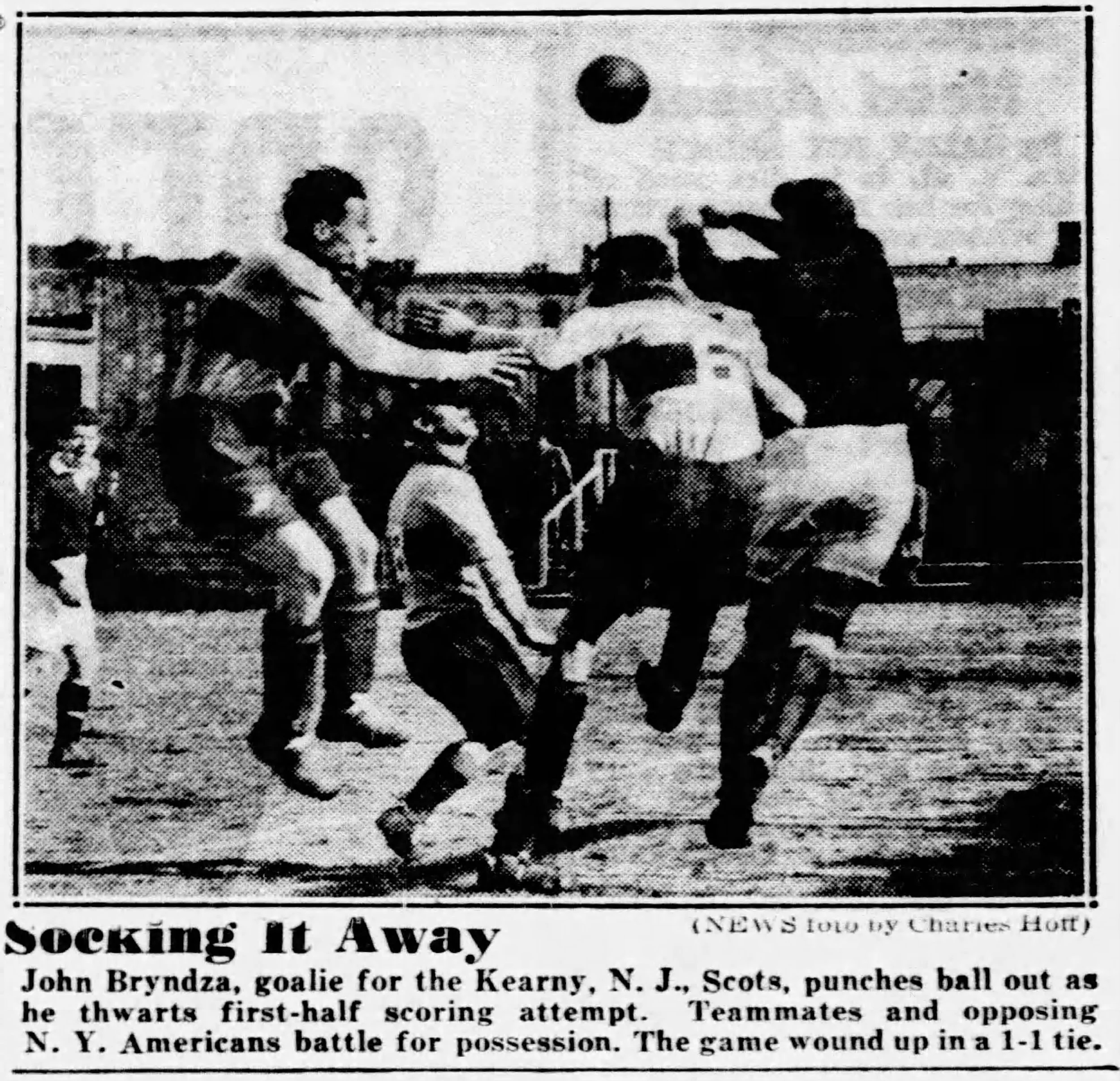
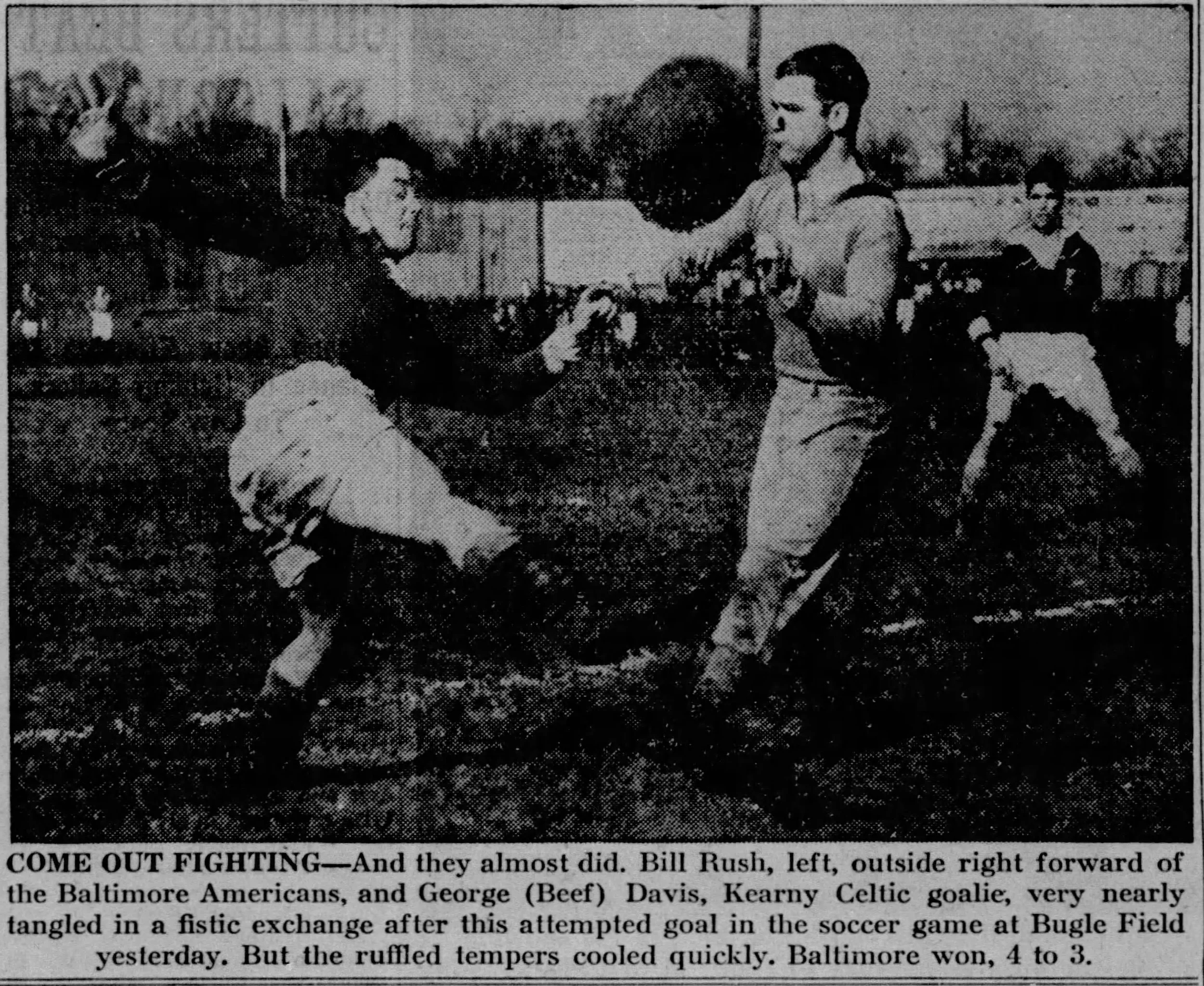
Although the 1920’s was a bright spot for American soccer, the second ASL that followed after the Great Depression is largely overlooked in favor of the NASL or MLS, despite the league producing standout goalkeeping with Johnny Hamm (3x National Challenge Cup finalist) and Steve Rozbora (1945 ASL MVP and triple crown winner). Digging deeper leads us to the likes of Chuck Tengler (Cleveland’s perennial goalkeeper throughout the 1940’s), John Bryndza, and George “Beef” Davis (contemporary ASL goalkeepers in the 1930’s and 40’s).

On the women’s side, early collegiate stars included Heather Taggart, Karen Richter, and Lori Kats (the first All-American goalkeeper in women’s soccer). And then looking outside the box a bit, American soccer history must recognize Karen Bardsley, who was born in the US but went on to be the number one goalkeeper for England’s national team. Inversely, the NASL’s Paul Hammond was born in England but naturalized, allowing him to play for Team America in 1983.

For overlooked stars on the men’s side at the same time, we have highly acclaimed goalkeepers Randy Phillips (3x All-American 1978-80), Jamie Swanner (1983 NCAA GOTY), and Victor Nogueira (2011 Indoor Soccer HOF inductee), paving the way for MLS standouts like Scott Garlick, Adin Brown, and Jonny Walker. And of course, rising stars like Angelina Anderson and Jordan Silkowitz follow in the footsteps of Bella Bixby and Melissa Moore as they continue to carve out a career for themselves. From Nogueira to Anderson, each goalkeeper battled year-to-year uncertainty when navigating the professional scene yet persevered in net, showcasing their talent for whichever team was lucky enough to have them.

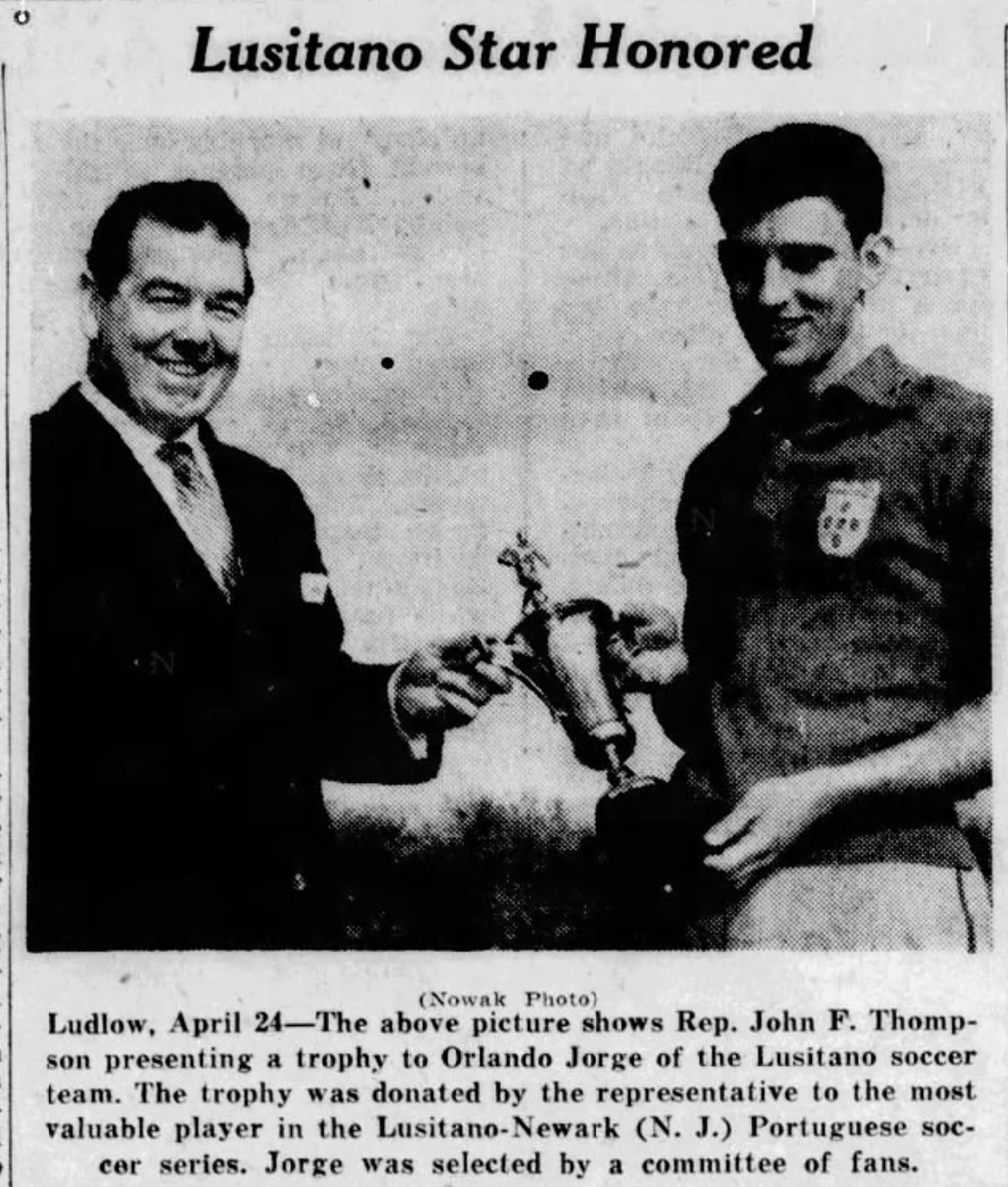
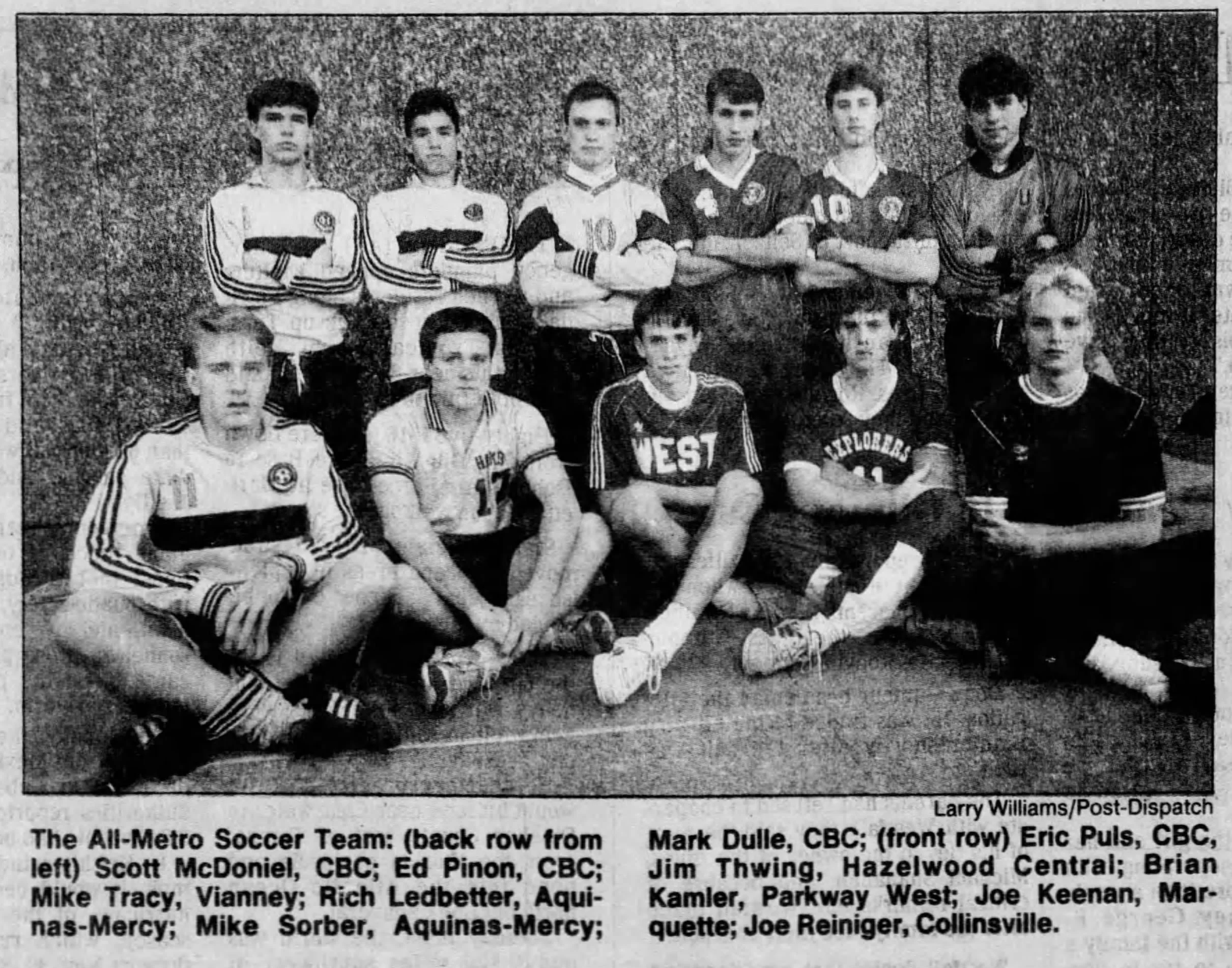
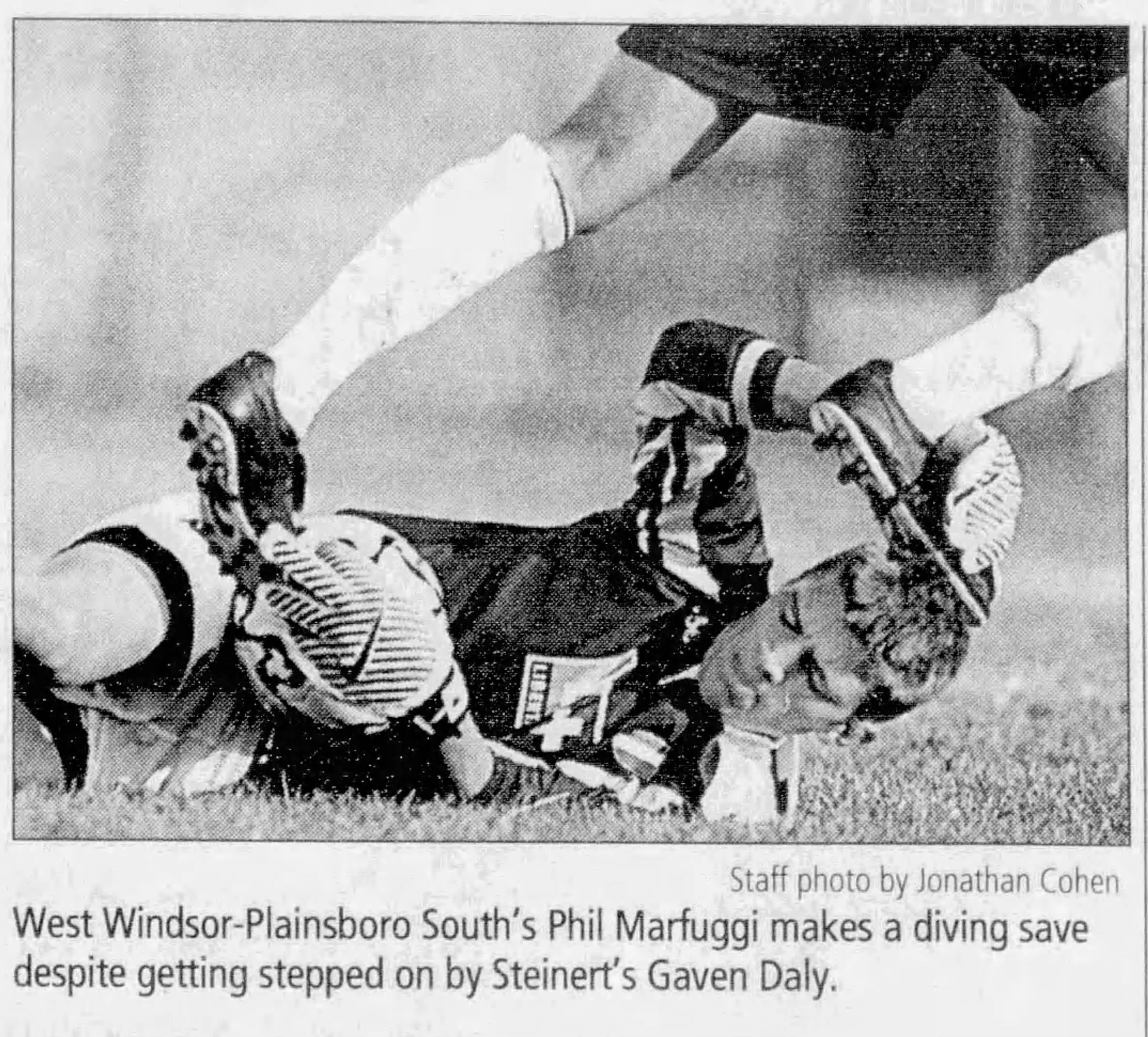
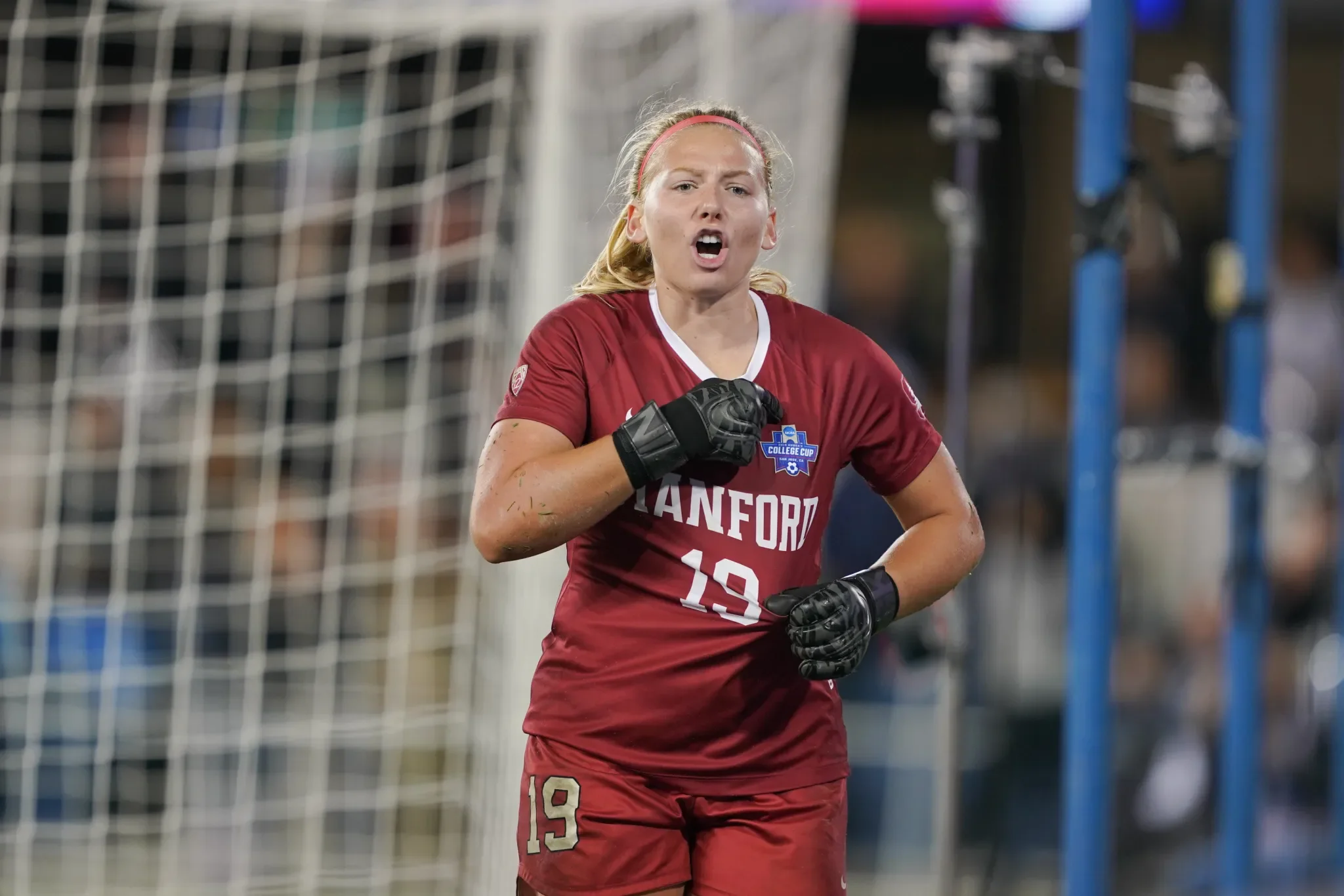
And lastly, some goalkeepers just didn’t get enough time for one reason or another, despite showcasing an immense level of skill. From Frank Bartkus (1936 Olympics) to Orlando Jorge (1950’s ASL standout) to Mark Dulle (1987 U16) to Phil Marfuggi (2003 U17) to Katie Meyer (2019 NCAA Champion), each goalkeeper - and several not named - is remembered fondly by those who were close to the individual, by teammates and family members alike.

The more you dig into the country’s history of goalkeeping, the more amazing stories and people you can find. A career in soccer has long been a difficult pathway for most of our country’s history. Whether it was the Soccer Wars in the 1920s, the dark times between stable professional leagues, or the early attempts at professional women’s soccer, goalkeepers continued their personal journey of stepping between the posts and playing the position most people avoid like the plague. This list of 100 goalkeepers and a handful of honorable mentions only scratches the surface of a deeper history that has always been the backbone of American soccer. Look at any accomplishment in American soccer and you’ll find great goalkeeping nearby.

Main Page
Goalkeepers 1-10
Goalkeepers 11-20
Goalkeepers 21-30
Goalkeepers 31-40
Goalkeepers 41-50
Goalkeepers 51-60
Goalkeepers 61-70
Goalkeepers 71-80
Goalkeepers 81-90
Goalkeepers 91-100
Honorable Mentions

Is the USWNT Avoiding the USMNT's Goalkeeping Problems?

For several decades, the starting goalkeeper for the US national team possessed a supernatural aura that convinced fans the US would always have a chance at a result, no matter how difficult the opponent was. From Borghi to Scurry to Howard, each goalkeeper provided iconic moments that now live on as some of the greatest performances by an American goalkeeper. However, the two national teams’ goalkeeping pools have diverged significantly in recent years. Whereas the USMNT’s goalkeepers have clearly failed to uphold their reputation as English Premier League-level talent, there’s some debate on whether the USWNT’s goalkeepers are still in the conversation for best in the world. So has the USWNT managed to avoid the USMNT’s woes? Or has the USWNT learned nothing from the USMNT’s problems?

How the USMNT Got Here

There are many factors that go into a country’s goalkeeping pipeline and the USMNT has unfortunately struggled to continue to execute on most of them in the 21st century. After the USSF decided to not replace Peter Mellor as the federation’s goalkeeping director in 2005 and continue on without anyone overseeing the goalkeeping department, the federation’s goalkeeping education decayed so badly that in 2015, they pulled it off the shelf. Although the USC would continue with its grassroots goalkeeping courses during this time, the federation would also pull back any serious goalkeeping focus on the common letter licenses (A, B, C, etc.) for aspiring head coaches.

On top of the removal of goalkeeping education, the distilling of traditional pathways like ODP in favor of MLS academies ended up outsourcing the position’s development to a handful of turbulent places, instead of being led by a clear governing body. MLS’s goalkeeper coaches arrived and left every 3-5 years, continually bringing new ideas and discarding old philosophies, making the American goalkeeping pipeline akin to a truck spinning its wheels in mud.

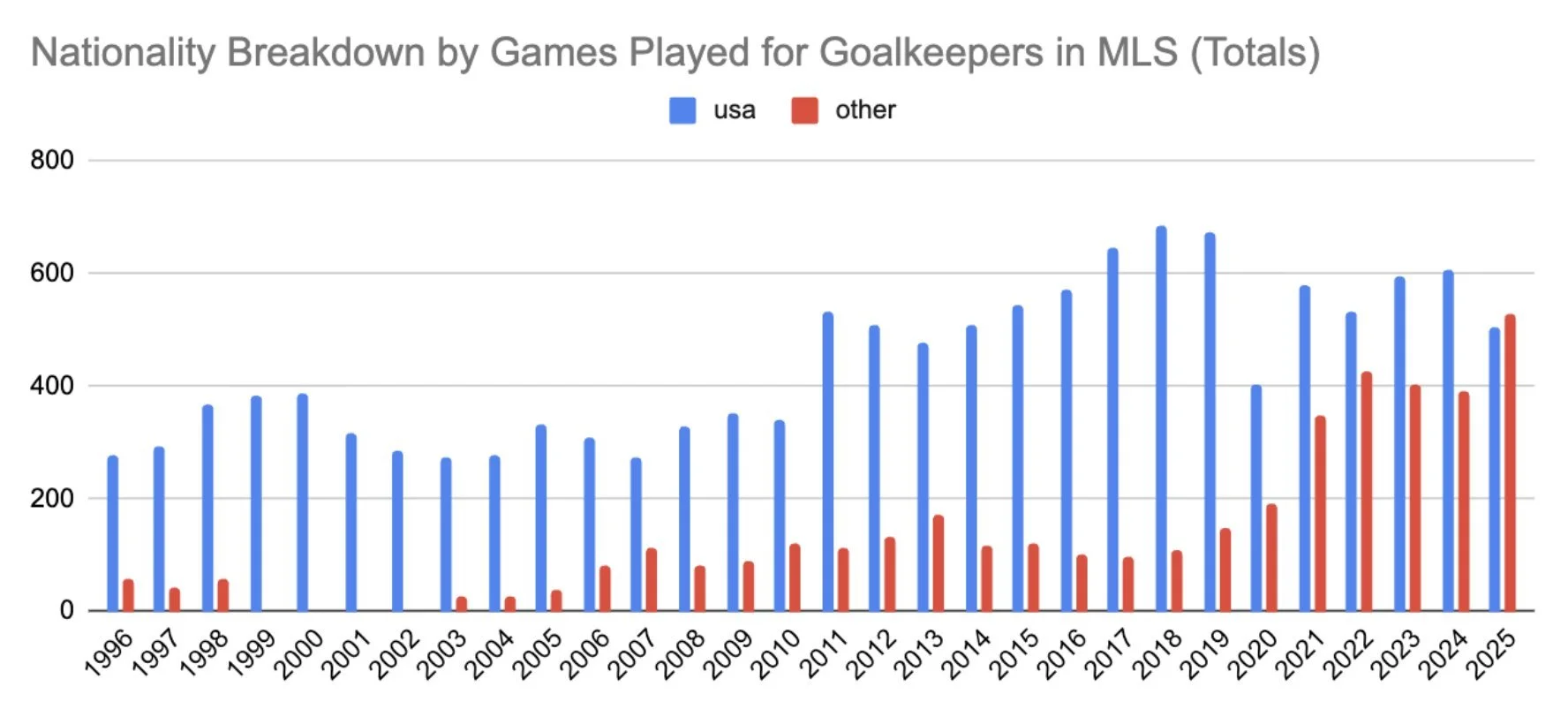
In an attempt to bolster the newly minted league, MLS Next started pulling in more clubs with the promise that the non-MLS-affiliated sides would receive solidarity payments, but only if they joined MLS Next. These efforts put young, talented goalkeepers in a bind, leaving them with essentially the choice of finding an MLS Next team in order to receive any investment from the federation or being left out in the cold. Fast-forward to 2025 and this half-baked effort led to a league that rarely produces American goalkeeping talent and plays more foreign than domestic goalkeepers, while the country faces a unique problem of a goalkeeping logjam where goalkeepers’ professional pathways get choked out, stifling their development at a crucial stage.

In 2025, MLS featured more foreign goalkeepers than American for the first time in the league’s history.

But what’s to say about the women’s setup? Four former professional goalkeepers from the women’s game weighed in on the current USMNT/USWNT goalkeeping situation: Saskia Webber (Rutgers, USWNT), Jill Loyden (Villanova, USWNT), Michele Dalton (Wisconsin, Chicago Red Stars), and Emily Armstrong (UConn, IBV).

Are the USWNT Avoiding the USMNT’s Potholes?

For most of its existence, the women have largely been forced to carve their own path as the federation would not treat the two national teams equally. As former NT goalkeeper Janine Szpara explained it, “US Soccer has a pattern of not supporting and giving the women what they need or what they deserve.” Even in more recent years, we’ve still seen an imbalance in investment. In 2018, when the USSF tried to kickstart a new goalkeeping license, it was MLS coaches, not NWSL coaches, who were invited to the pilot course.

So left adrift from the federation, the main saving grace for the women’s goalkeeping pipeline was that the US had the elite youth system in the entire world for the last 50 years, and, whenever afloat, a top professional league as well. The US enjoyed an early advantage in goalkeeping due to these investments. Emily Armstrong, who finished her career with UConn in 2016, spoke on her difficulty in going from the US to Europe when it came to what she expected to receive.

“While training with the Thorns and the Spirit, I had access to goalkeeper training on a daily basis, and even had opportunities for additional training outside of the daily practices. This was not the case overseas. In some situations, there was no goalkeeper-specific training offered, and I had to advocate for myself. At the time I was a little frustrated by this fact, but looking back on my experience, I am thankful that I was put into situations where I had to speak up, and find ways to improve my game without the routine goalkeeper training I was used to at UConn and in the NWSL. In Norway, I would train with the men’s keepers, because the women’s team did not have a goalkeeper coach of their own.”

But as the US gained a significant and early lead, with early stalwarts of Brianna Scurry and Hope Solo shining brightly on the world stage, these advantages started to erode. What Armstrong faced just ten years ago is now largely referred to as “back then” or a time that’s not really relevant to top European clubs. The US, in turn, didn’t do much.

“We haven’t put resources into education,” states Loyden. “Our goalkeeper coaches thought, ‘Oh, it’s a technical position.’ Coaches became overly technical and killed athleticism. Then the game evolved for goalkeepers to use their feet and we were even further behind.”

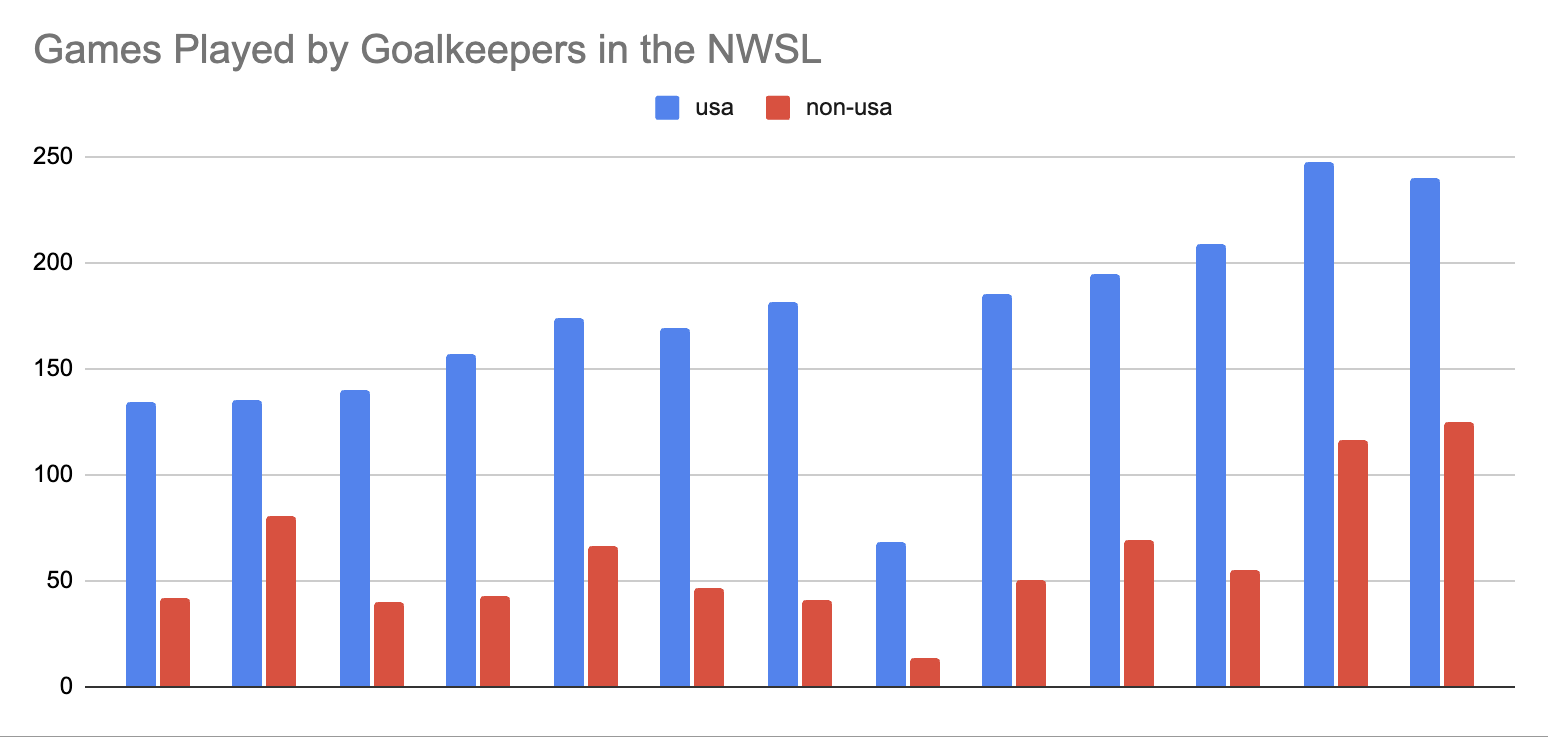
Exiting 2025, the NWSL’s top goalkeeper has now come from outside the US three out of the last four years and they’re starting to see a similar trend line that MLS faced just five years ago: games for Americans are going down while games for international goalkeepers are at an all-time high.

So while the US was once reaping the rewards of having the top league in the world filled with American goalkeepers, NWSL coaches are looking more and more overseas to find goalkeepers who are well-rounded out, having less trust in the underdeveloped American goalkeepers. Webber and Dalton express concern about the next steps for the USWNT when trying to replace Naeher.

“I don’t know if I would say [the USWNT] are having an easier time [than the men],” writes Webber, “None of the goalkeepers in the [USWNT] pool right now have enough experience or have proven themselves in a major tournament to grab the number one spot.”

“I actually don’t think the USWNT is having an easy time replacing Naeher,” echoes Dalton. “I do think Naeher replaced Solo pretty seamlessly. The men seem to always be behind the rest of the world, and instead of closing that gap, we continue to further ourselves. On the women’s side, more resources are becoming available to women internationally, so other countries have been able to close the gap.”

Substance Over Style

Continuing to invest in American goalkeeping poses a difficult question. “What exactly is American goalkeeping? What does it look like? How does one define it?” These questions are difficult to answer largely because it’s hard to find a consistent thread from the top. From Friedel to Howard to Freese, the USMNT has started three very different goalkeepers in a relatively short time. From Scurry to Solo to Naeher, again, three very different goalkeepers wore the number one shirt for the national team. And while the lack of a specific identity may not be met with a consensus, all four retired goalkeepers speak about the importance of a clear blueprint to uplift American goalkeeping, even if it is just a detailed approach for one specific individual.

“What is our identity?” asks Loyden. “I don’t know what that is. But I don’t think that’s necessarily a bad thing. We teach the ABCs at The Keeper Institute. Adaptable, brave, and consistent problem solvers. But consistent problem solvers can do that in a variety of ways.”

Loyden’s modern approach works well for goalkeeper coaches, as one team may have three vastly different skillsets that the coach must now work with collectively. And for the goalkeepers themselves, the intangible focus of the ABCs is a breath of fresh air, allowing the individual to figure out what works best for them, as opposed to shoehorning a calloused approach.

“I had goalkeeper coaches who worked with my style of play and made adaptations as needed,” said Armstrong. “I also had goalkeeper coaches who tried to change my style to fit theirs. I believe there is always room for growth, but I also think it’s important to meet the goalkeeper where they are, and progress from there. Every keeper has their own style, and there really is no ‘correct’ approach to the position. The goalkeeper coaches I appreciated most were those who would break down film and give me pointers, plus also listen to my perspective. I had the most growth with goalkeeper coaches who I could discuss both positive and negative plays in the game.”

Both Armstrong and Dalton now work with the next generation of goalkeepers and they haven’t forgotten what did and didn’t work for them in their playing careers. The intangible lessons learn are a signficiant compass in how their now coaching young, aspiring goalkeepers.

“An individual’s ability to take in new information while staying true to themselves is pretty paramount in being successful. I’m a big believer that instilling confidence and belief in a goalkeeper has to come above style. Maintaining consistent principles is key when styles vary,” says Dalton.

Tracking all the way back through playing in WUSA, Japan, and at Rutgers, Webber recognizes the problem young goalkeepers today face when they’re pulled in too many different directions. “The funny thing is all my coaches [across my career] had the same basic philosophies around the position and training. Possibly because they had all worked together. The problem today is that doesn’t happen as much, so young goalkeepers can be all over the place when they move from team to team or coach to coach.”
Optimistic Future

As we enter the next quarter of the century, our retired goalkeepers are still making positive impacts on the game, whether it is by becoming a goalkeeper coach themselves or offering insightful goalkeeping-specific commentary on nationally televised broadcasts. These efforts go a long way but the need for a federation-coordinated effort is still paramount. In Fall 2024, Jack Robinson was hired as Head of Goalkeeping after a nearly two-decade run through the highest ranks in England. Recently, Robinson talked about his efforts with the federation to help goalkeeping in our country, highlighting an expansion in goalkeeping education, more talent identification across the country, and the benefit of national team managers who want to utilize their goalkeepers as something more than a line sitter. These are encouraging signs, but for the last twenty years, American fans have been waiting on the federation to fulfill its promise that goalkeeping investment was on the way.
As of right now, the USWNT are still able to boast about having one of the top goalkeepers in the world between the posts. So things aren’t currently as dire for the women as they are for the men. However, when looking back to where the USMNT was with their 2002 and 2006 World Cup rosters - featuring Brad Friedel, Tim Howard, Kasey Keller, Tony Meola, and Marcus Hahnemann - Ernest Hemingway’s quote comes to mind. “How do you go bankrupt? Two ways, gradually. Then suddenly.”

Can the USWNT avoid the USMNT’s pitfalls? Time will tell. If we embrace the country’s strengths and continue ramping up investment into the position, the ceiling will skyrocket. On the other hand, unkept promises will only put the US further behind with its goalkeeping for not just the men, but the women as well.

“I don’t believe there’s one way to play the position,” Loyden says. “You can interpret it in so many ways. The more adaptable you are, the more solutions you have. If we’re not preparing goalkeepers for the demands of ten years from now, that’s a problem. We won’t know what they will look like [in ten years], but if we develop them to be adaptable goalkeepers, they’ll be able to play in that modern game.”