Why Messi is the American Secret Weapon for 2026 World Cup Glory

When Lionel Messi stepped off that plane in Miami, I'll admit—I had mixed feelings. The greatest player of all time choosing MLS for his twilight years? Was this a retirement tour or something more? But as an absolute diehard USMNT supporter counting down the days until we host the 2026 World Cup, I've come to realize something incredible: Messi isn't just good for MLS. He might be the best thing that's ever happened to American soccer, and our boys in red, white, and blue are the ultimate beneficiaries.

The Messi Effect: More Than Just Goals and Highlights

Let's talk numbers for a second. Since Messi arrived at Inter Miami, MLS viewership has absolutely exploded. We're talking record-breaking TV ratings, sold-out stadiums from coast to coast, and a level of international attention that American soccer has been desperately chasing for decades. When the world's best player chooses your league, suddenly everyone's watching. And when everyone's watching, the money follows.

This isn't just about one team or one superstar—it's about transforming the entire ecosystem of American soccer. The increased revenue from broadcasting deals, sponsorships, and ticket sales is flowing into every MLS franchise. That means better training facilities, improved youth academies, and most importantly, the financial muscle to attract genuine world-class talent who can elevate our domestic players every single day in training.

Building a Pipeline: How Better Competition Creates Better Americans

Here's where it gets really exciting for us USMNT fans. When MLS can recruit top-tier international players, our American guys aren't just competing against them—they're learning from them. Think about young American talents like Diego Luna, Cade Cowell, and Benjamin Cremaschi training alongside and against players who've competed at the absolute highest level. That's invaluable experience you simply cannot replicate in a classroom or through video analysis.

The presence of elite talent raises everyone's game. Our domestic players are forced to adapt, to think faster, to execute with more precision. It's like having a world-class training camp running 365 days a year across the entire league. As MLS continues to invest in talent thanks to the Messi-driven boom, that competitive environment only intensifies, creating a virtuous cycle of development.

The Investment Tsunami: Money Talks, Champions Walk

Let's be real—professional sports run on investment, and Messi has opened the floodgates. Major brands that previously overlooked MLS are now scrambling for partnerships. Apple's massive streaming deal has transformed how fans engage with the league globally. Stadiums are being renovated and expanded. Most crucially for 2026, youth development programs are receiving unprecedented funding.

This matters because the pathway from youth academy to professional contract to national team call-up is becoming smoother and more accessible than ever before. When clubs can invest properly in scouting and development, talented kids from every corner of America get discovered and nurtured. We're not just relying on the traditional soccer hotbeds anymore—we're building a truly national talent pool. And as fans look toward future competitions, many are exploring opportunities for sport betting to engage even more deeply with the beautiful game.

The Credibility Factor: MLS as a Legitimate Destination

Perhaps Messi's most underrated contribution is legitimacy. For years, European-based players viewed MLS as a retirement league or a stepping stone at best. But when an eight-time Ballon d'Or winner in his prime competitive years chooses MLS, that narrative shatters. Suddenly, talented South American and European players in their mid-twenties see MLS as a viable career move, not a career end.

This credibility shift is already bearing fruit. We're seeing younger, hungrier international signings who want to compete for titles and championships, not just collect paychecks. That competitive intensity transforms MLS from a comfortable landing spot into a genuinely challenging league—exactly the kind of environment that forges championship-caliber national team players.

2026: Perfect Timing for Perfect Glory

Here's what gets me absolutely pumped: the timing couldn't be more perfect. The 2026 World Cup isn't just any tournament—it's happening right here in our backyard during America's 250th birthday celebration. Can you imagine a more iconic moment than the USMNT lifting the trophy on home soil during our Semiquincentennial?

Thanks to the Messi effect accelerating MLS development, our 2026 squad will be the most prepared, most experienced, and most talented group we've ever fielded. Players like Christian Pulisic, Weston McKennie, and Tyler Adams will be hitting their absolute prime, backed by a new generation of MLS-developed stars who've been training in an elite environment. The foundation Messi helped build will manifest in real World Cup success.

The beautiful game has given America an incredible gift in Lionel Messi, and smart money says we'll repay that gift with our best-ever World Cup performance when it matters most—in front of our home fans, in our home stadiums, at the most significant moment in American history since 1976. Let's make 2026 unforgettable.
Can Italy Miss the World Cup for a Third Consecutive Time?

The last time Italy played in a World Cup, they won it. That was 2006. They attended 2010 and 2014, accomplishing nothing of note in either, and then failed to show up to the next 2 altogether.

A 4-time world champion was reduced to watching from home while nations with a fraction of their football history competed. It happened in 2018. It happened again in 2022. And now, with the 2026 tournament approaching, Italy finds itself in the playoffs for a third straight qualifying cycle, staring at the same trapdoor that swallowed them twice before. The situation is familiar in a way that should unsettle anyone wearing an Azzurri shirt.

How Italy Ended Up Here Again

Italy finished second in Group I of UEFA’s qualifying round, behind Norway. They collected 18 points across the group, winning 6 matches but losing twice to Norway. That second-place finish meant they could not book a direct ticket to the 2026 World Cup in the United States, Canada, and Mexico. Instead, they were funneled into the playoff bracket, a place that has brought them nothing but misery in recent years.

In 2017, Sweden knocked Italy out over 2 legs in the playoff round, and the Azzurri missed the 2018 World Cup in Russia. It was the first time since 1958 that Italy had failed to qualify. Then, in March 2022, North Macedonia beat them 1-0 in the playoff semi-finals. A single goal from a country with a population smaller than Rome kept the reigning European champions out of Qatar. The defeats were different in character but identical in outcome.

The Playoff Draw and What It Means

Italy will host Northern Ireland on March 26 in a single-legged semi-final at Bergamo. There is no return leg, no aggregate scoreline to fall back on. One match, one result. If Italy wins, they travel away to face the winner of Wales versus Bosnia and Herzegovina on March 31 in the playoff final.

The single-leg format is worth paying attention to. It compresses the margin for error into 90 minutes. North Macedonia proved in 2022 that anything can happen in that kind of setup. Italy was at home that night too, and it did not save them.

Gattuso’s Preparations and Squad Building

Gennaro Gattuso took over the national team with this playoff as his first real test. Reports indicate he has been traveling to meet with key players ahead of the March window. He and Gianluigi Buffon, now serving in a team ambassador or advisory role, reportedly sat down with Marco Verratti to discuss a potential return to the squad.

Gattuso has also visited Gianluigi Donnarumma and Sandro Tonali in England, as well as Mateo Retegui in Saudi Arabia.

These meetings suggest that Gattuso is treating the playoffs with the urgency they deserve. The squad he selects will tell us a lot about his priorities, specifically how much he values veteran presence against Northern Ireland versus younger legs who might carry the team through both rounds if they advance.

Where the Betting Lines Sit for Italy’s Playoff Path

Sportsbooks have priced Italy as heavy favorites to beat Northern Ireland, with ESPN listing them at -320 on the moneyline. DraftKings and BetMGM both offer outright World Cup odds of +3000 and +3300 on Italy to win the tournament, placing them well behind favorites like France, Argentina, and England. Those numbers tell you bookmakers expect Italy to qualify, but see them as long shots beyond that.

Playoff Path A odds sit at 1.53 for Italy to advance through both rounds. Wales and Bosnia and Herzegovina remain as possible final opponents if Italy gets past Bergamo.

What Happens If They Get Through

Should Italy qualify, they land in Group B at the 2026 World Cup alongside Canada, Qatar, and Switzerland. On paper, that group looks manageable for a team of Italy’s pedigree, though pedigree has proven to be an unreliable predictor in their case lately.

The +3000 and +3300 odds to win the tournament outright show where the market thinks Italy sits among the contenders. They are not considered serious threats to win the whole thing. Getting there would be the first real achievement for this generation.

Why Northern Ireland Should Not Be Underestimated

Northern Ireland earned their playoff spot through the Nations League after finishing third in Group A behind Germany and Slovakia. Their squad is made up almost entirely of lower-division English league players, with Conor Bradley at Liverpool being the notable exception. On paper, they have no business being in this conversation. But Michael O’Neill has called this group young and fearless, and that description should sound familiar.

The history between these two teams adds an uncomfortable footnote. Northern Ireland beat Italy 2-1 in Belfast in January 1958 and knocked them out of that year’s World Cup. Their most recent meeting was a 0-0 draw in Belfast in November 2021, a result that helped push Italy into the very playoff round where North Macedonia eliminated them.

Northern Ireland has not qualified for a World Cup since 1986, and they have nothing to lose. Italy, on the other hand, has everything to lose, and recent history says that imbalance tends to work against it.

The Real Question

Can Italy miss the World Cup for a third straight time? Yes. The probability is low according to betting markets, but the probability was low the last 2 times as well. Italy were the favorites against Sweden in 2017. They were heavy favorites against North Macedonia in 2022. Favorites lose in football. It happens with enough regularity that the word “favorite” comes with an asterisk in knockout rounds.

Northern Ireland is a significant underdog at +900. They are not expected to win. But expectation and outcome have parted ways for Italy before, and the Azzurri know better than anyone that qualification is earned on the pitch, not on a betting slip. March 26 in Bergamo will answer the question one way or the other.

America's 100 Greatest Goalkeepers (Honorable Mentions)

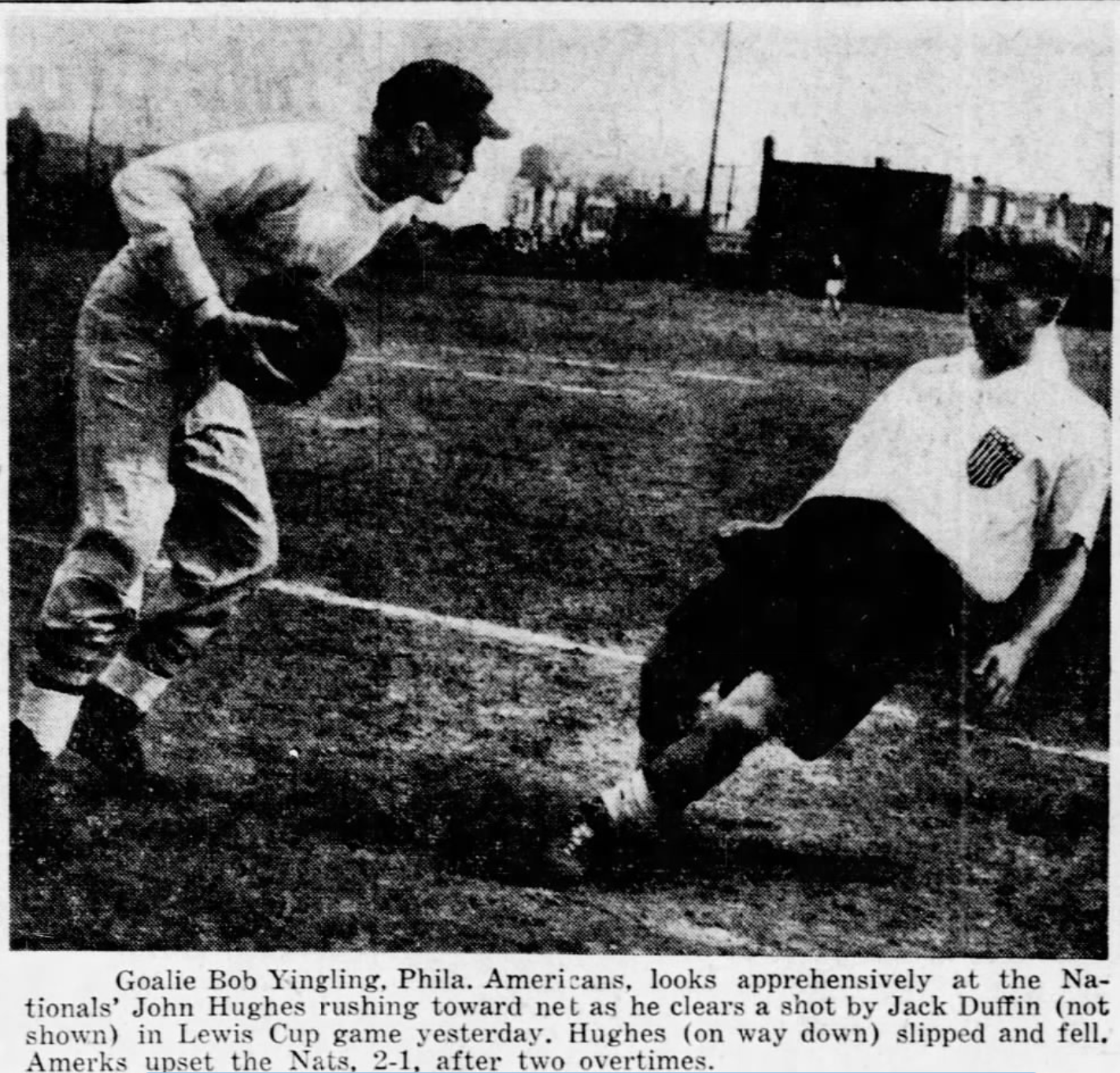
Clearly it’s an impossible task to neatly narrow down 150 years into 100 names so we’d be in error to overlook early pioneers like Patrick Hughes (Clark ONT’s stellar goalkeeping from 1884-1889) and J. Crossan Cooper (Princeton’s three-time All-American goalkeeper from 1920-1922). In the early part of the 20th century, goalkeepers like Cooper had limited availability to play, thus making international tournaments not only exciting and novel but also a rare moment for goalkeepers to really test their mettle.

Goalkeepers like Archie Strimel (1948 Olympics) and even - what should have been - 1980 Olympic goalkeepers Paul Coffee and Peter Arnautoff should be remembered for being as good as they were, despite the lowered ceiling that was dropped on them from the era they played in.

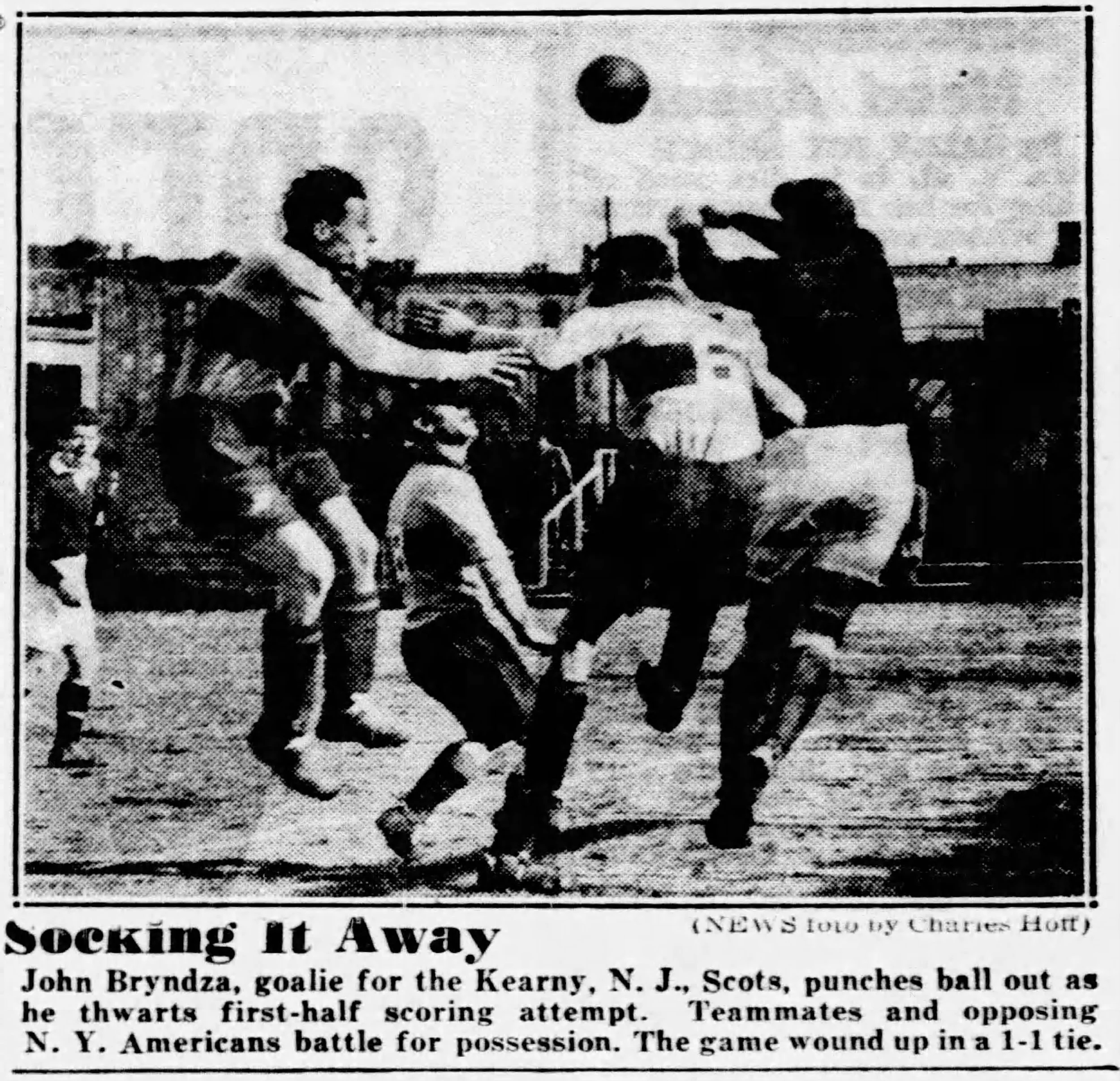
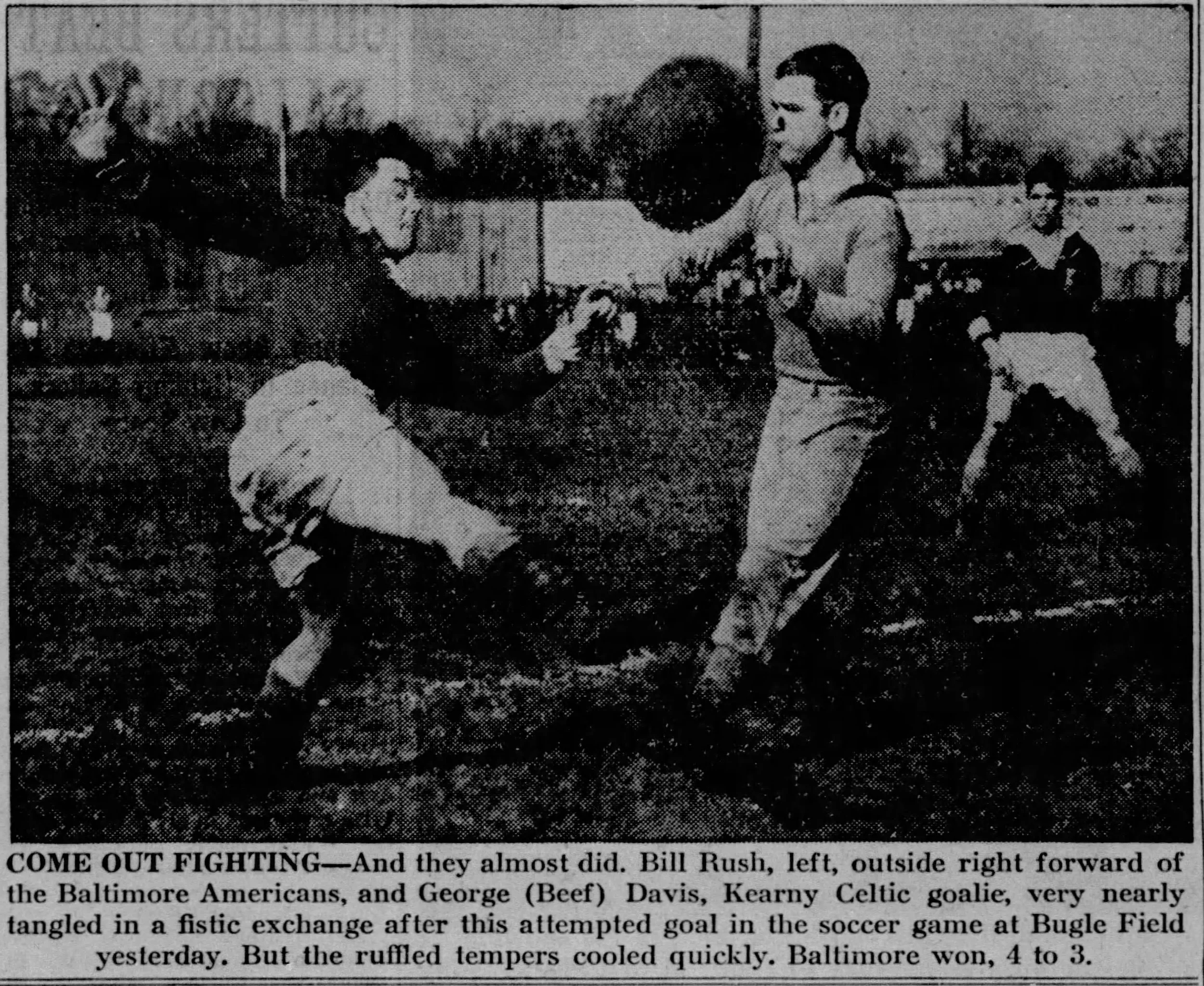
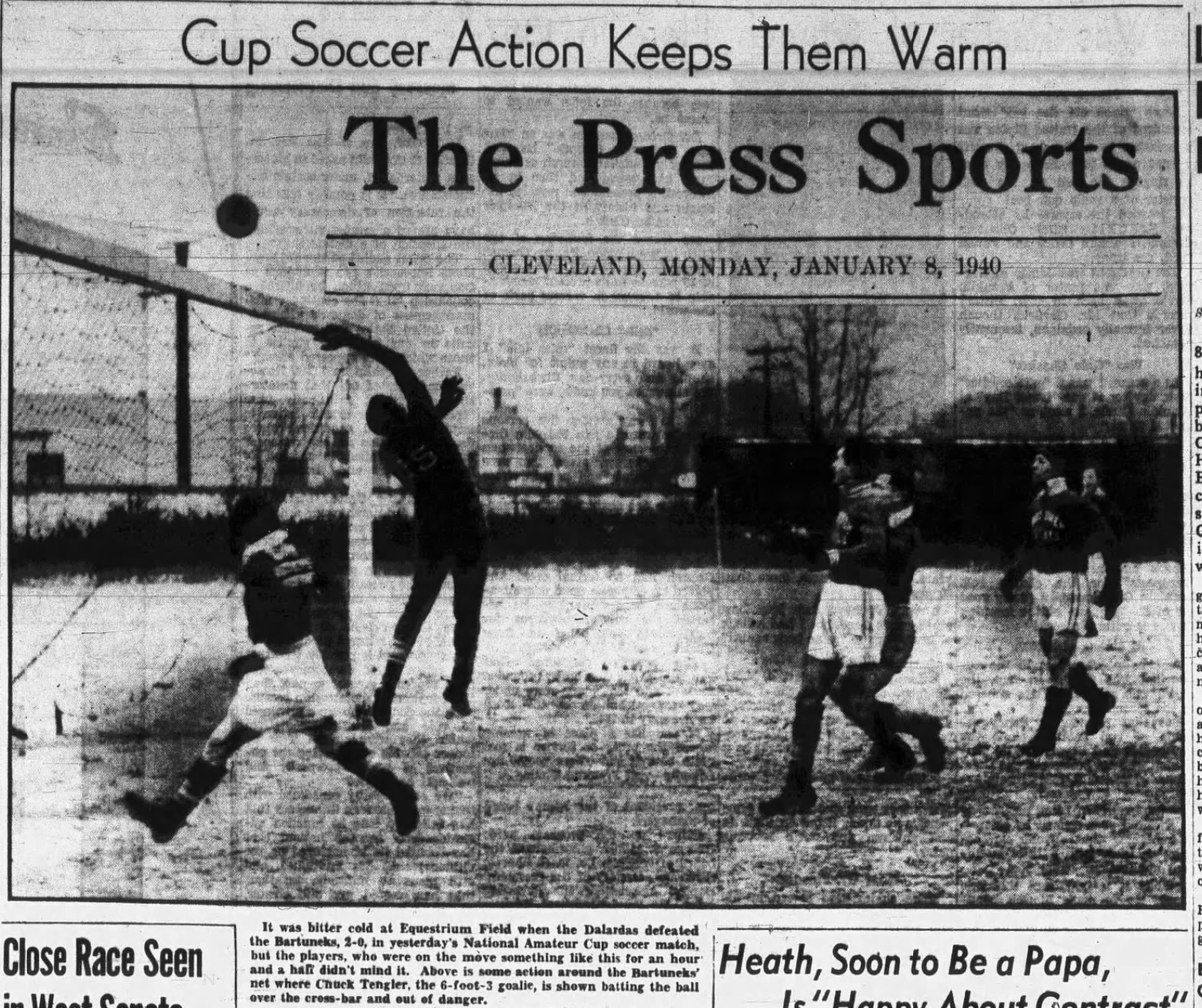
Although the 1920’s was a bright spot for American soccer, the second ASL that followed after the Great Depression is largely overlooked in favor of the NASL or MLS, despite the league producing standout goalkeeping with Johnny Hamm (3x National Challenge Cup finalist) and Steve Rozbora (1945 ASL MVP and triple crown winner). Digging deeper leads us to the likes of Chuck Tengler (Cleveland’s perennial goalkeeper throughout the 1940’s), John Bryndza, and George “Beef” Davis (contemporary ASL goalkeepers in the 1930’s and 40’s).

On the women’s side, early collegiate stars included Heather Taggart, Karen Richter, and Lori Kats (the first All-American goalkeeper in women’s soccer). And then looking outside the box a bit, American soccer history must recognize Karen Bardsley, who was born in the US but went on to be the number one goalkeeper for England’s national team. Inversely, the NASL’s Paul Hammond was born in England but naturalized, allowing him to play for Team America in 1983.

For overlooked stars on the men’s side at the same time, we have highly acclaimed goalkeepers Randy Phillips (3x All-American 1978-80), Jamie Swanner (1983 NCAA GOTY), and Victor Nogueira (2011 Indoor Soccer HOF inductee), paving the way for MLS standouts like Scott Garlick, Adin Brown, and Jonny Walker. And of course, rising stars like Angelina Anderson and Jordan Silkowitz follow in the footsteps of Bella Bixby and Melissa Moore as they continue to carve out a career for themselves. From Nogueira to Anderson, each goalkeeper battled year-to-year uncertainty when navigating the professional scene yet persevered in net, showcasing their talent for whichever team was lucky enough to have them.

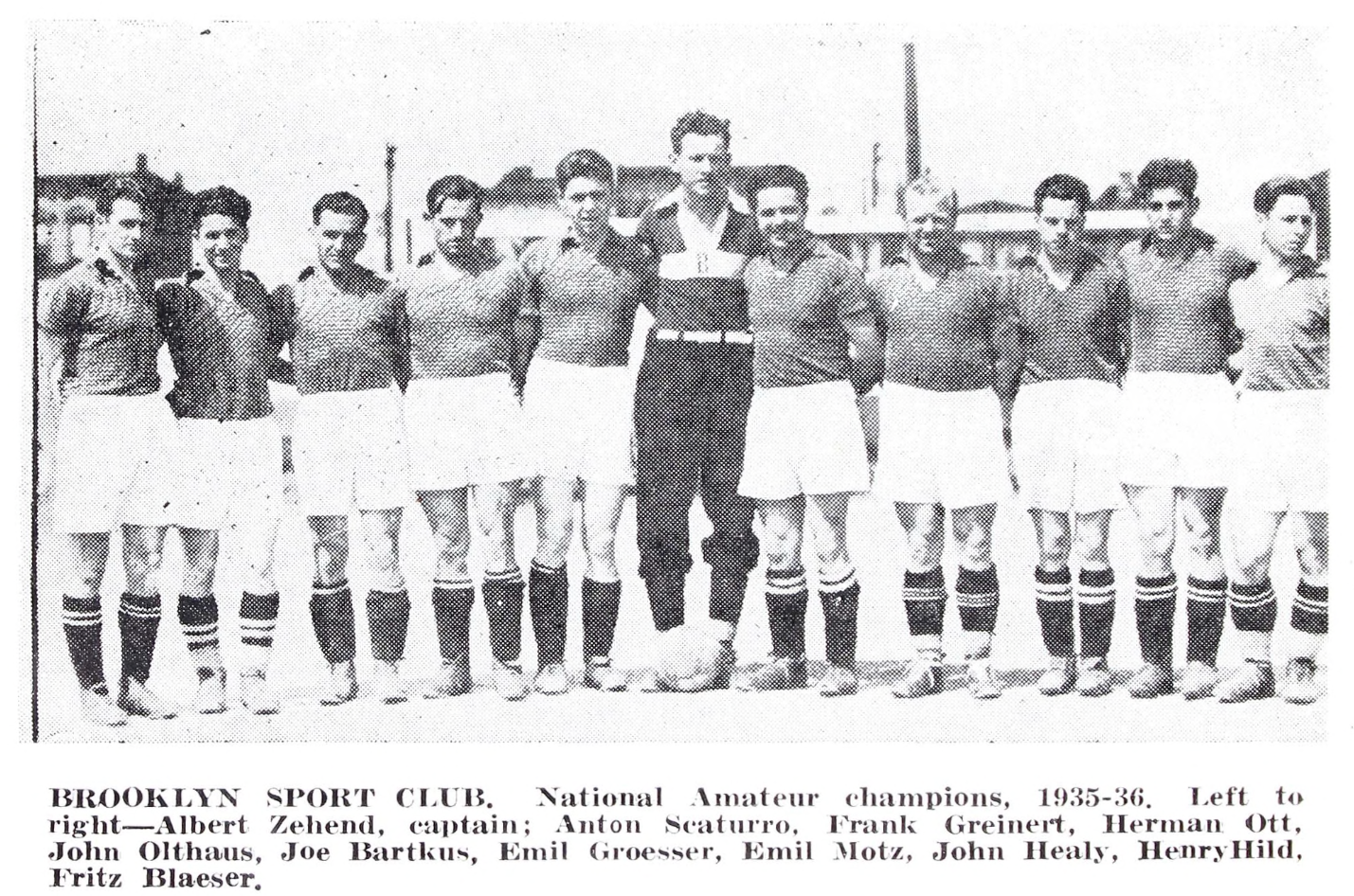
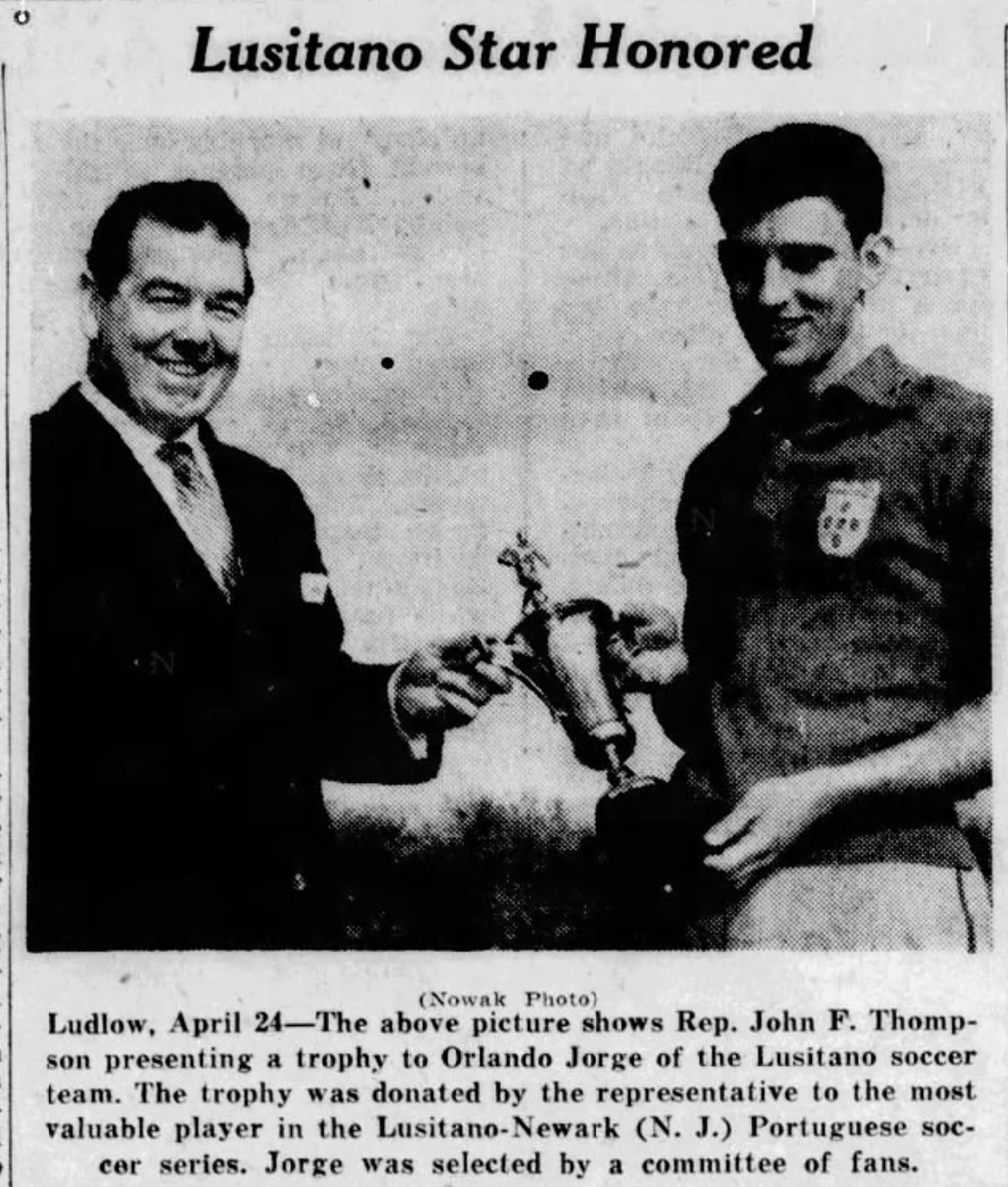
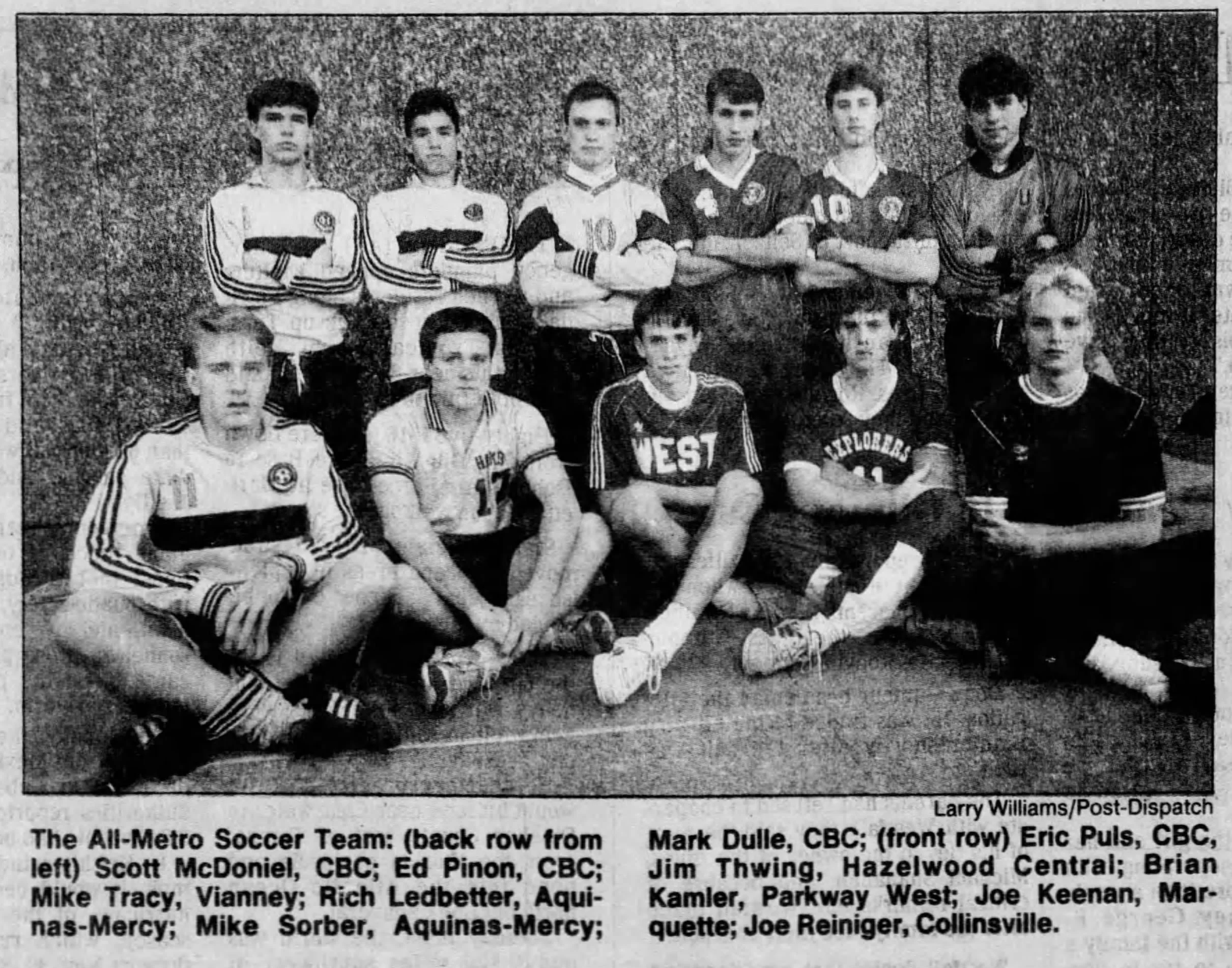
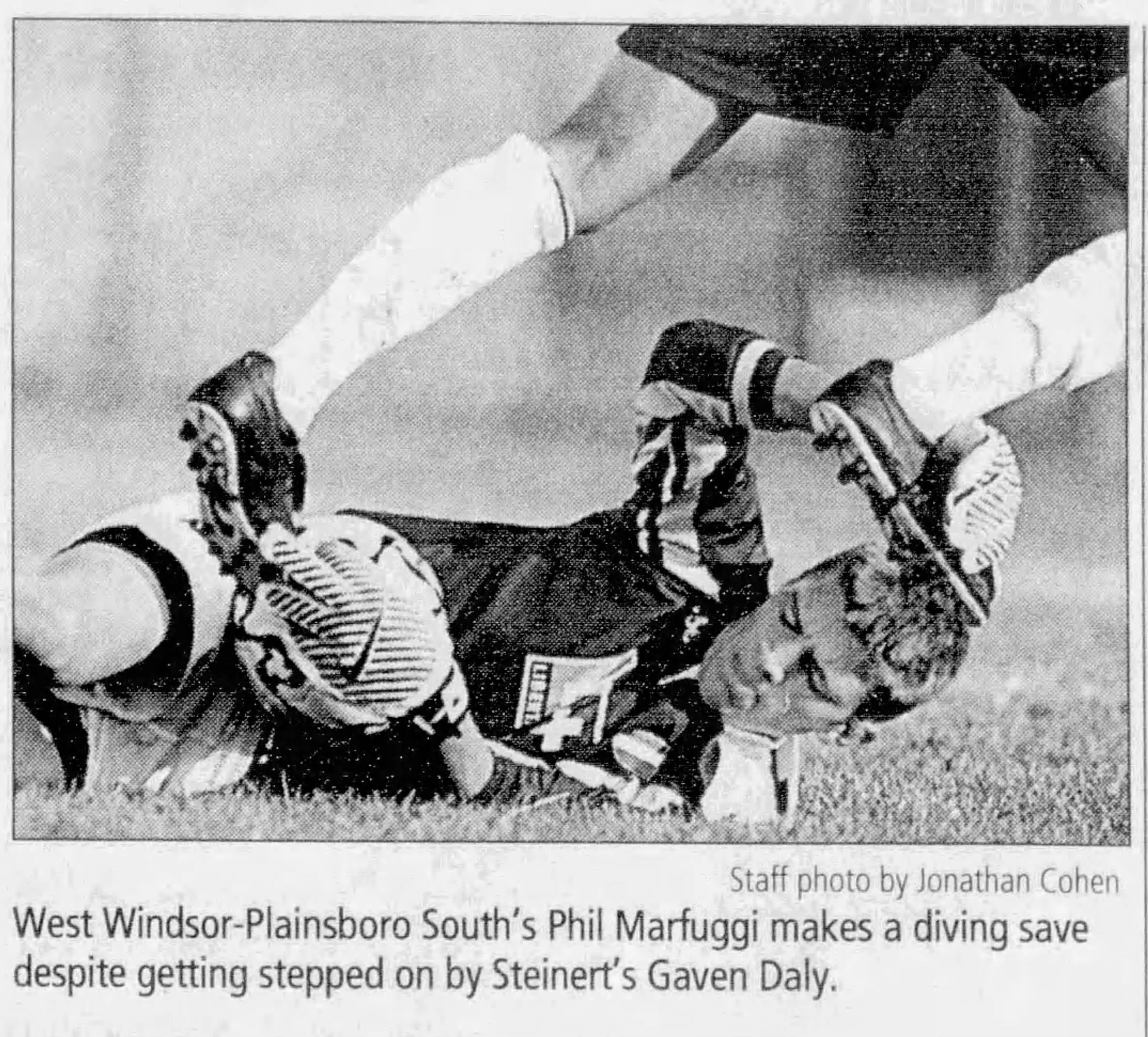
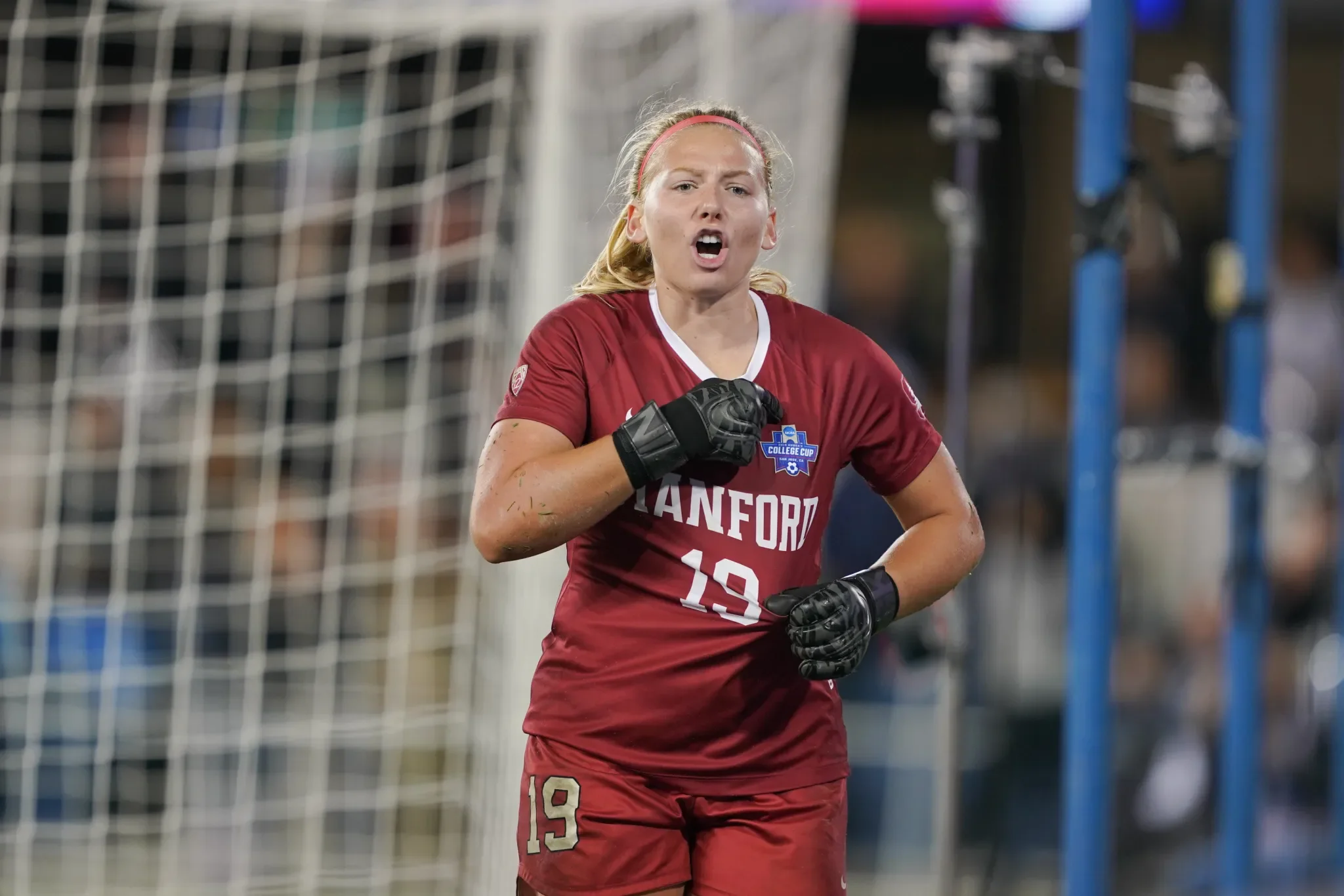
And lastly, some goalkeepers just didn’t get enough time for one reason or another, despite showcasing an immense level of skill. From Frank Bartkus (1936 Olympics) to Orlando Jorge (1950’s ASL standout) to Mark Dulle (1987 U16) to Phil Marfuggi (2003 U17) to Katie Meyer (2019 NCAA Champion), each goalkeeper - and several not named - is remembered fondly by those who were close to the individual, by teammates and family members alike.

The more you dig into the country’s history of goalkeeping, the more amazing stories and people you can find. A career in soccer has long been a difficult pathway for most of our country’s history. Whether it was the Soccer Wars in the 1920s, the dark times between stable professional leagues, or the early attempts at professional women’s soccer, goalkeepers continued their personal journey of stepping between the posts and playing the position most people avoid like the plague. This list of 100 goalkeepers and a handful of honorable mentions only scratches the surface of a deeper history that has always been the backbone of American soccer. Look at any accomplishment in American soccer and you’ll find great goalkeeping nearby.

Main Page
Goalkeepers 1-10
Goalkeepers 11-20
Goalkeepers 21-30
Goalkeepers 31-40
Goalkeepers 41-50
Goalkeepers 51-60
Goalkeepers 61-70
Goalkeepers 71-80
Goalkeepers 81-90
Goalkeepers 91-100
Honorable Mentions

Is the USWNT Avoiding the USMNT's Goalkeeping Problems?

For several decades, the starting goalkeeper for the US national team possessed a supernatural aura that convinced fans the US would always have a chance at a result, no matter how difficult the opponent was. From Borghi to Scurry to Howard, each goalkeeper provided iconic moments that now live on as some of the greatest performances by an American goalkeeper. However, the two national teams’ goalkeeping pools have diverged significantly in recent years. Whereas the USMNT’s goalkeepers have clearly failed to uphold their reputation as English Premier League-level talent, there’s some debate on whether the USWNT’s goalkeepers are still in the conversation for best in the world. So has the USWNT managed to avoid the USMNT’s woes? Or has the USWNT learned nothing from the USMNT’s problems?

How the USMNT Got Here

There are many factors that go into a country’s goalkeeping pipeline and the USMNT has unfortunately struggled to continue to execute on most of them in the 21st century. After the USSF decided to not replace Peter Mellor as the federation’s goalkeeping director in 2005 and continue on without anyone overseeing the goalkeeping department, the federation’s goalkeeping education decayed so badly that in 2015, they pulled it off the shelf. Although the USC would continue with its grassroots goalkeeping courses during this time, the federation would also pull back any serious goalkeeping focus on the common letter licenses (A, B, C, etc.) for aspiring head coaches.

On top of the removal of goalkeeping education, the distilling of traditional pathways like ODP in favor of MLS academies ended up outsourcing the position’s development to a handful of turbulent places, instead of being led by a clear governing body. MLS’s goalkeeper coaches arrived and left every 3-5 years, continually bringing new ideas and discarding old philosophies, making the American goalkeeping pipeline akin to a truck spinning its wheels in mud.

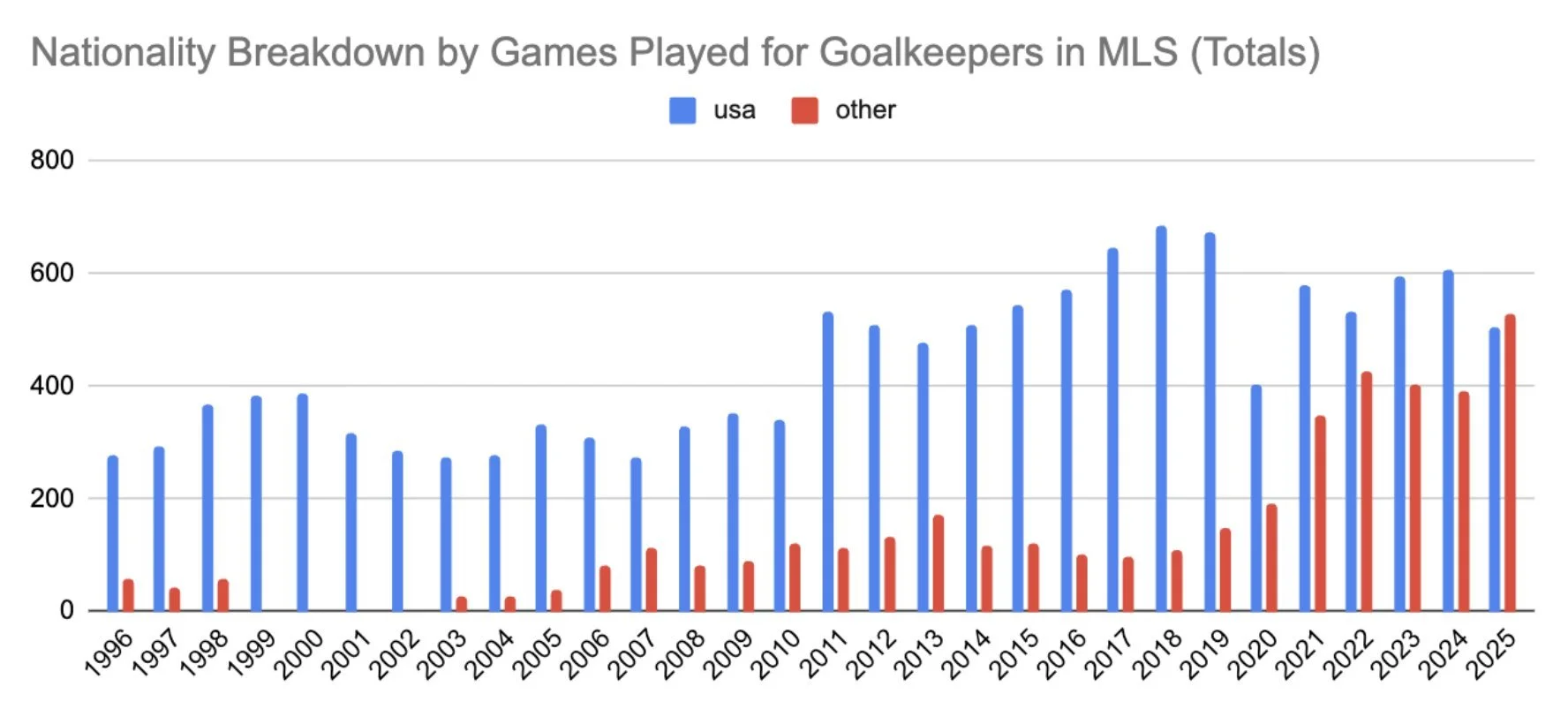
In an attempt to bolster the newly minted league, MLS Next started pulling in more clubs with the promise that the non-MLS-affiliated sides would receive solidarity payments, but only if they joined MLS Next. These efforts put young, talented goalkeepers in a bind, leaving them with essentially the choice of finding an MLS Next team in order to receive any investment from the federation or being left out in the cold. Fast-forward to 2025 and this half-baked effort led to a league that rarely produces American goalkeeping talent and plays more foreign than domestic goalkeepers, while the country faces a unique problem of a goalkeeping logjam where goalkeepers’ professional pathways get choked out, stifling their development at a crucial stage.

In 2025, MLS featured more foreign goalkeepers than American for the first time in the league’s history.

But what’s to say about the women’s setup? Four former professional goalkeepers from the women’s game weighed in on the current USMNT/USWNT goalkeeping situation: Saskia Webber (Rutgers, USWNT), Jill Loyden (Villanova, USWNT), Michele Dalton (Wisconsin, Chicago Red Stars), and Emily Armstrong (UConn, IBV).

Are the USWNT Avoiding the USMNT’s Potholes?

For most of its existence, the women have largely been forced to carve their own path as the federation would not treat the two national teams equally. As former NT goalkeeper Janine Szpara explained it, “US Soccer has a pattern of not supporting and giving the women what they need or what they deserve.” Even in more recent years, we’ve still seen an imbalance in investment. In 2018, when the USSF tried to kickstart a new goalkeeping license, it was MLS coaches, not NWSL coaches, who were invited to the pilot course.

So left adrift from the federation, the main saving grace for the women’s goalkeeping pipeline was that the US had the elite youth system in the entire world for the last 50 years, and, whenever afloat, a top professional league as well. The US enjoyed an early advantage in goalkeeping due to these investments. Emily Armstrong, who finished her career with UConn in 2016, spoke on her difficulty in going from the US to Europe when it came to what she expected to receive.

“While training with the Thorns and the Spirit, I had access to goalkeeper training on a daily basis, and even had opportunities for additional training outside of the daily practices. This was not the case overseas. In some situations, there was no goalkeeper-specific training offered, and I had to advocate for myself. At the time I was a little frustrated by this fact, but looking back on my experience, I am thankful that I was put into situations where I had to speak up, and find ways to improve my game without the routine goalkeeper training I was used to at UConn and in the NWSL. In Norway, I would train with the men’s keepers, because the women’s team did not have a goalkeeper coach of their own.”

But as the US gained a significant and early lead, with early stalwarts of Brianna Scurry and Hope Solo shining brightly on the world stage, these advantages started to erode. What Armstrong faced just ten years ago is now largely referred to as “back then” or a time that’s not really relevant to top European clubs. The US, in turn, didn’t do much.

“We haven’t put resources into education,” states Loyden. “Our goalkeeper coaches thought, ‘Oh, it’s a technical position.’ Coaches became overly technical and killed athleticism. Then the game evolved for goalkeepers to use their feet and we were even further behind.”

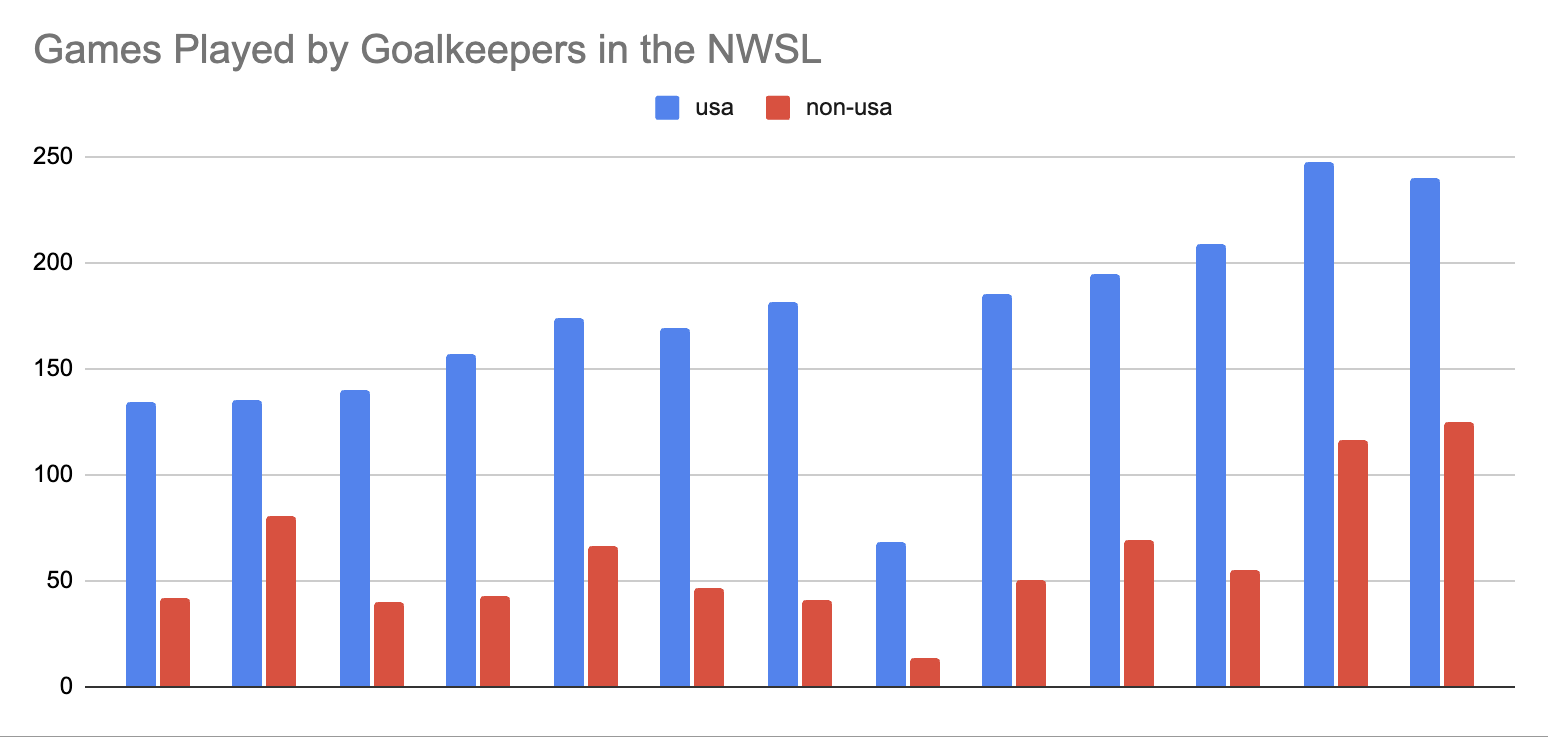
Exiting 2025, the NWSL’s top goalkeeper has now come from outside the US three out of the last four years and they’re starting to see a similar trend line that MLS faced just five years ago: games for Americans are going down while games for international goalkeepers are at an all-time high.

So while the US was once reaping the rewards of having the top league in the world filled with American goalkeepers, NWSL coaches are looking more and more overseas to find goalkeepers who are well-rounded out, having less trust in the underdeveloped American goalkeepers. Webber and Dalton express concern about the next steps for the USWNT when trying to replace Naeher.

“I don’t know if I would say [the USWNT] are having an easier time [than the men],” writes Webber, “None of the goalkeepers in the [USWNT] pool right now have enough experience or have proven themselves in a major tournament to grab the number one spot.”

“I actually don’t think the USWNT is having an easy time replacing Naeher,” echoes Dalton. “I do think Naeher replaced Solo pretty seamlessly. The men seem to always be behind the rest of the world, and instead of closing that gap, we continue to further ourselves. On the women’s side, more resources are becoming available to women internationally, so other countries have been able to close the gap.”

Substance Over Style

Continuing to invest in American goalkeeping poses a difficult question. “What exactly is American goalkeeping? What does it look like? How does one define it?” These questions are difficult to answer largely because it’s hard to find a consistent thread from the top. From Friedel to Howard to Freese, the USMNT has started three very different goalkeepers in a relatively short time. From Scurry to Solo to Naeher, again, three very different goalkeepers wore the number one shirt for the national team. And while the lack of a specific identity may not be met with a consensus, all four retired goalkeepers speak about the importance of a clear blueprint to uplift American goalkeeping, even if it is just a detailed approach for one specific individual.

“What is our identity?” asks Loyden. “I don’t know what that is. But I don’t think that’s necessarily a bad thing. We teach the ABCs at The Keeper Institute. Adaptable, brave, and consistent problem solvers. But consistent problem solvers can do that in a variety of ways.”

Loyden’s modern approach works well for goalkeeper coaches, as one team may have three vastly different skillsets that the coach must now work with collectively. And for the goalkeepers themselves, the intangible focus of the ABCs is a breath of fresh air, allowing the individual to figure out what works best for them, as opposed to shoehorning a calloused approach.

“I had goalkeeper coaches who worked with my style of play and made adaptations as needed,” said Armstrong. “I also had goalkeeper coaches who tried to change my style to fit theirs. I believe there is always room for growth, but I also think it’s important to meet the goalkeeper where they are, and progress from there. Every keeper has their own style, and there really is no ‘correct’ approach to the position. The goalkeeper coaches I appreciated most were those who would break down film and give me pointers, plus also listen to my perspective. I had the most growth with goalkeeper coaches who I could discuss both positive and negative plays in the game.”

Both Armstrong and Dalton now work with the next generation of goalkeepers and they haven’t forgotten what did and didn’t work for them in their playing careers. The intangible lessons learn are a signficiant compass in how their now coaching young, aspiring goalkeepers.

“An individual’s ability to take in new information while staying true to themselves is pretty paramount in being successful. I’m a big believer that instilling confidence and belief in a goalkeeper has to come above style. Maintaining consistent principles is key when styles vary,” says Dalton.

Tracking all the way back through playing in WUSA, Japan, and at Rutgers, Webber recognizes the problem young goalkeepers today face when they’re pulled in too many different directions. “The funny thing is all my coaches [across my career] had the same basic philosophies around the position and training. Possibly because they had all worked together. The problem today is that doesn’t happen as much, so young goalkeepers can be all over the place when they move from team to team or coach to coach.”

Optimistic Future

As we enter the next quarter of the century, our retired goalkeepers are still making positive impacts on the game, whether it is by becoming a goalkeeper coach themselves or offering insightful goalkeeping-specific commentary on nationally televised broadcasts. These efforts go a long way but the need for a federation-coordinated effort is still paramount. In Fall 2024, Jack Robinson was hired as Head of Goalkeeping after a nearly two-decade run through the highest ranks in England. Recently, Robinson talked about his efforts with the federation to help goalkeeping in our country, highlighting an expansion in goalkeeping education, more talent identification across the country, and the benefit of national team managers who want to utilize their goalkeepers as something more than a line sitter. These are encouraging signs, but for the last twenty years, American fans have been waiting on the federation to fulfill its promise that goalkeeping investment was on the way.

As of right now, the USWNT are still able to boast about having one of the top goalkeepers in the world between the posts. So things aren’t currently as dire for the women as they are for the men. However, when looking back to where the USMNT was with their 2002 and 2006 World Cup rosters - featuring Brad Friedel, Tim Howard, Kasey Keller, Tony Meola, and Marcus Hahnemann - Ernest Hemingway’s quote comes to mind. “How do you go bankrupt? Two ways, gradually. Then suddenly.”

Can the USWNT avoid the USMNT’s pitfalls? Time will tell. If we embrace the country’s strengths and continue ramping up investment into the position, the ceiling will skyrocket. On the other hand, unkept promises will only put the US further behind with its goalkeeping for not just the men, but the women as well.

“I don’t believe there’s one way to play the position,” Loyden says. “You can interpret it in so many ways. The more adaptable you are, the more solutions you have. If we’re not preparing goalkeepers for the demands of ten years from now, that’s a problem. We won’t know what they will look like [in ten years], but if we develop them to be adaptable goalkeepers, they’ll be able to play in that modern game.”